The Big Bell of Bordeaux: Medieval Gate and Civic Belfry
Site at a Glance
- Rating
- 4.6
- Popularity
- Very High
- Country
- France
- Primary era
- Medieval
- Eras represented
- Medieval, Early Modern
- Civilizations
- Duchy of Aquitaine, English, French
- Site type
- Military
- Remains
- Gate
On this page8 sections
History
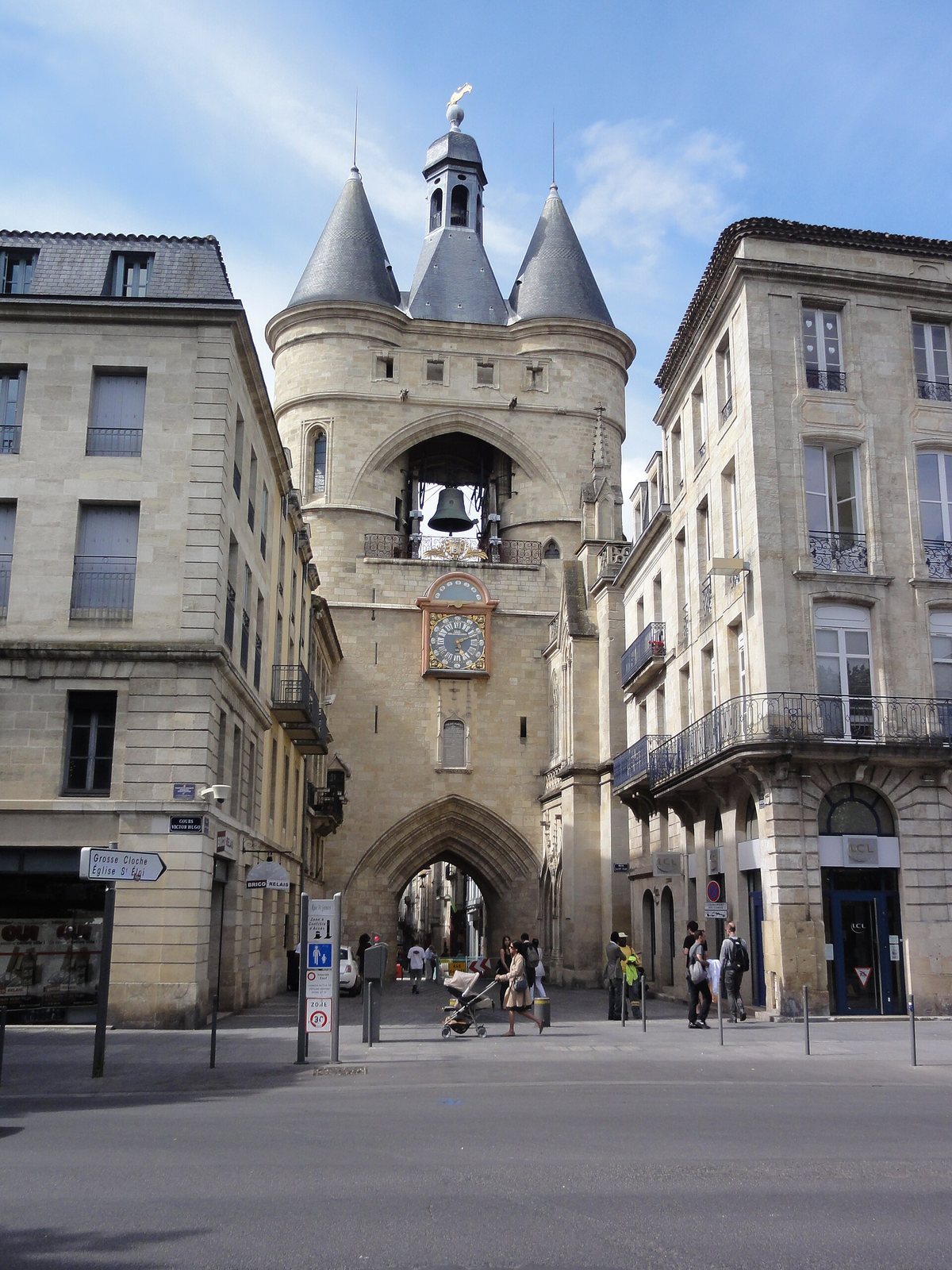
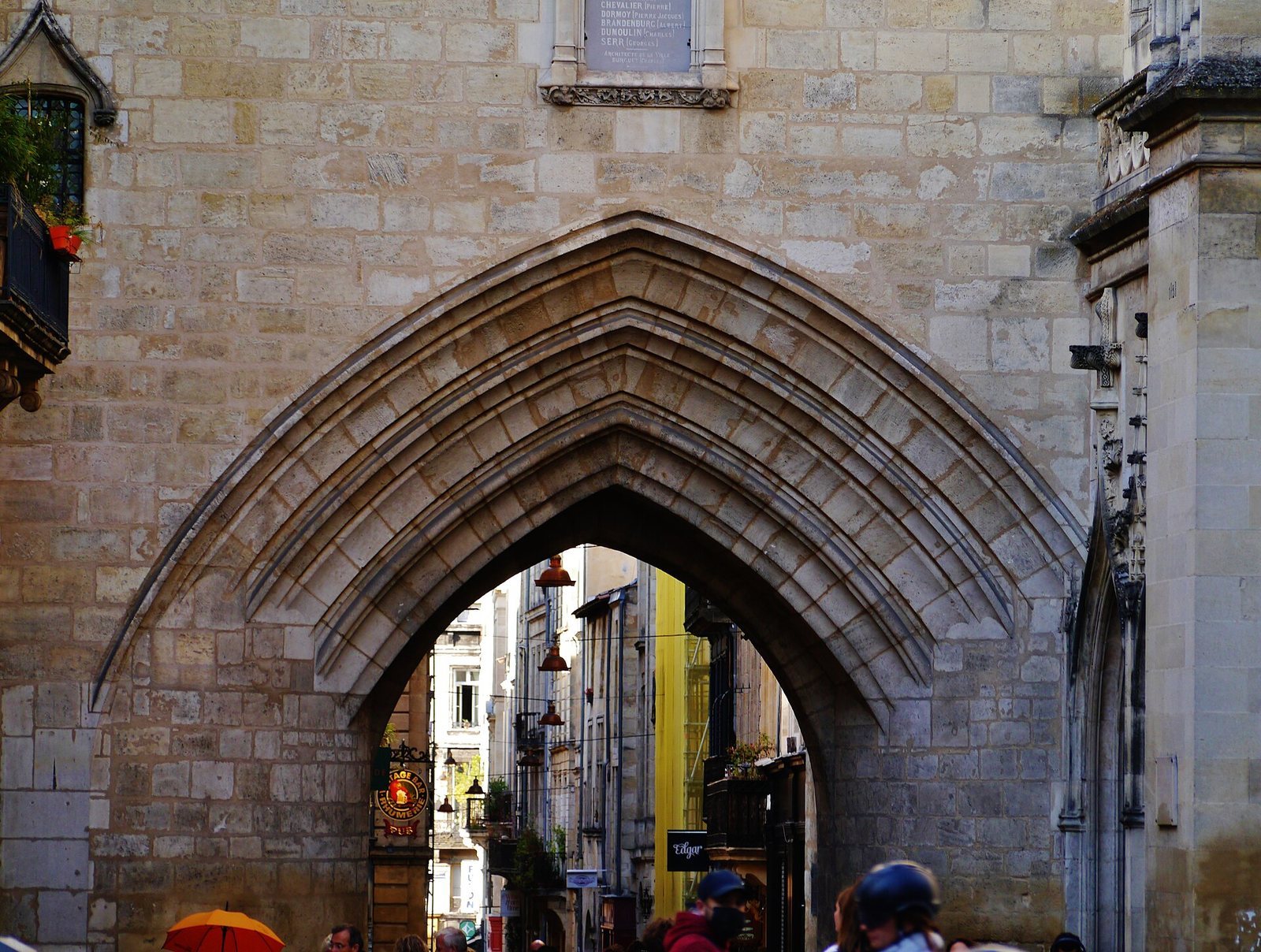
The Big Bell of Bordeaux is a Gothic gate and civic belfry in Bordeaux, France, built in its present form in 1493–1496. Gothic is a medieval style associated with pointed arches and elaborate stonework. The gate served the city’s rampart and the former town hall, and remains one of Bordeaux’s few surviving medieval civic monuments, alongside the Porte Cailhau.
Medieval gate and civic belfry
A gate stood here by the twelfth or thirteenth century. The existing structure was built over the remains of a thirteenth-century predecessor, beside the twelfth-century Church of Saint-Éloi and the city’s thirteenth-century rampart. Pilgrims travelling through Bordeaux toward Santiago de Compostela in Spain, a major medieval destination on the Way of Saint James, passed beneath it. The gate was also called the Porte Saint-Éloi, after the church, and the Porte Saint-James, in reference to the pilgrimage route.
The gate belonged to a group of three paired-tower entrances associated with access to the city hall. Changes between the fifteenth and seventeenth centuries altered its original defensive form, while a municipal belfry was added in the fifteenth century. City magistrates used its bell to announce the grape harvest, warn of fires and other emergencies, and mark ceremonies.
The bell and its civic use
During the Pitauds revolt, an uprising against French rule, Henri II ordered the bell removed and broken in 1548 as punishment for Bordeaux’s defiance. Henri II was king of France from 1547 to 1559. The bell was returned in 1561. A fire in 1755 brought further changes to the structure, and the present bell was cast in June 1775 by the founder Turmeau.
The bell became an emblem of Bordeaux and appears on the city’s coat of arms. It rang to mark the Allied victory of 8 May 1945 and during Charles de Gaulle’s visit on 10 April 1961. Until June 2016, it sounded at 11 a.m. on New Year’s Day, 8 May, 14 July, 28 August, and 11 November. Since then, it has also rung on the first Sunday of each month.
The gate and towers received historic-monument protection in 1886, and the bell was classified separately as a historic object in 1991. The monument was restored in 2016.
Remains
Towered gateway
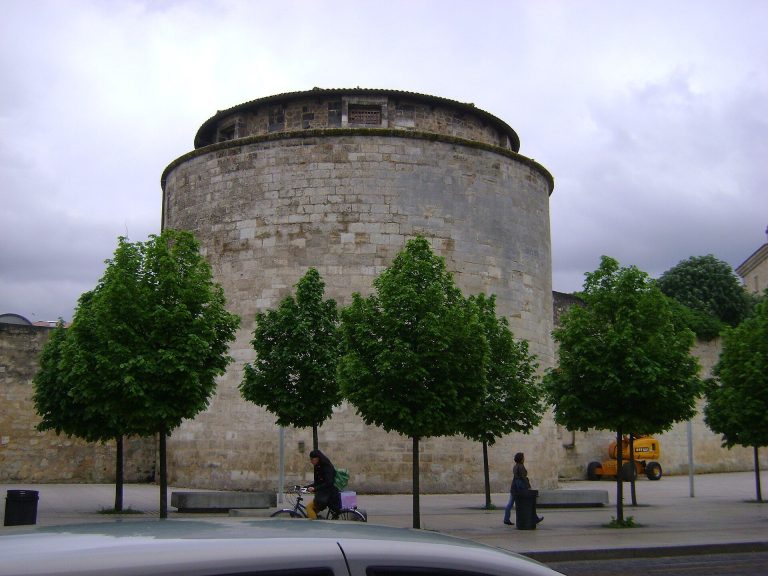
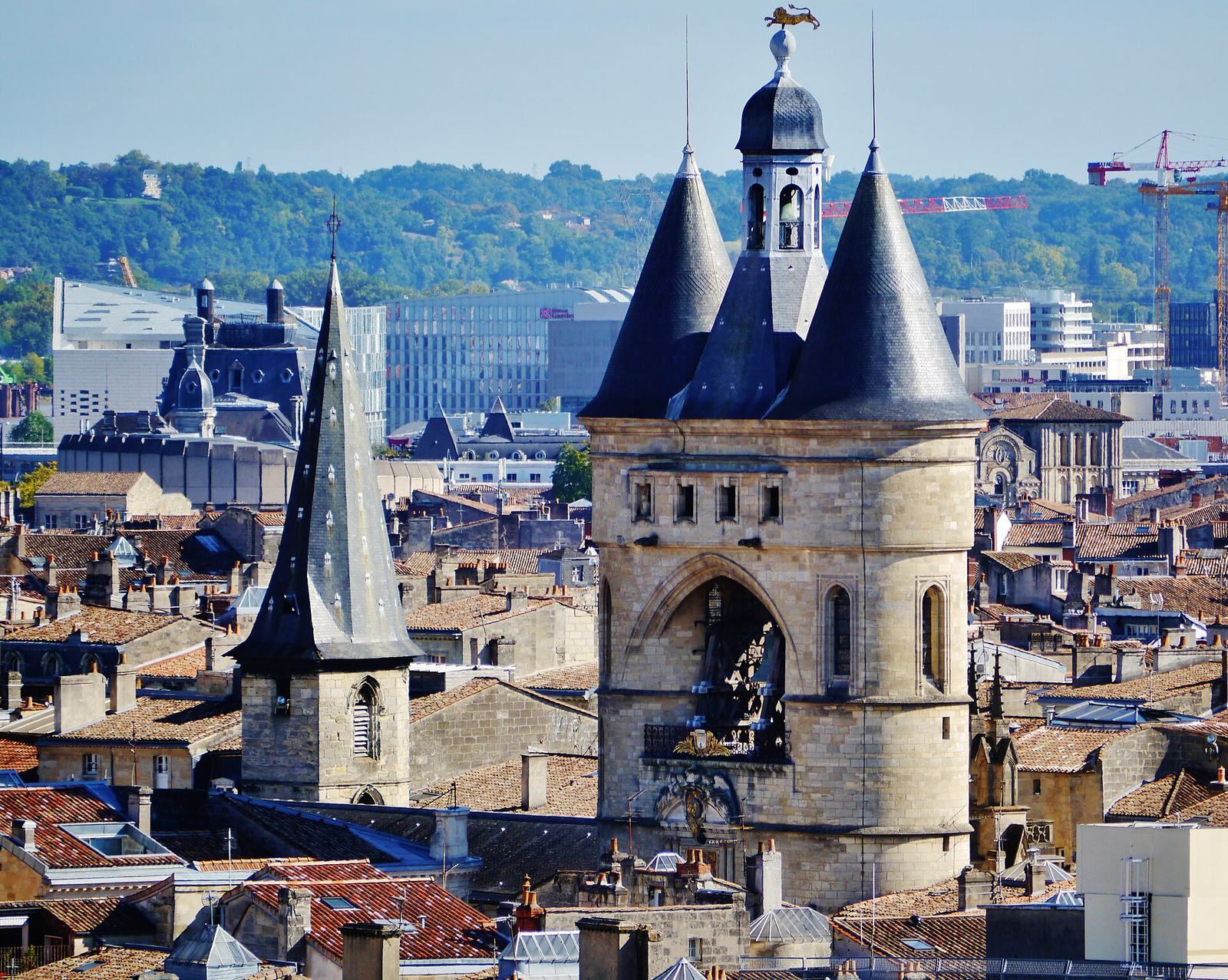
The 40-metre-high Gothic structure combines two circular towers with a central bell tower that rises slightly above them. The flanking towers have conical, pepper-pot-shaped roofs. The earliest described arrangement comprised four round towers with crenellations; two more were added in the twelfth century where Cours Victor Hugo now runs, beside what was then a ditch along the rampart.
Towers and entrance
After the 1755 fire, crenellations and the bell tower crowned the towers. A gilded leopard weather vane tops the building. The leopard represents the arms of English Guyenne, a historic region of southwestern France that was under English rule during part of the medieval period.
Bell chamber
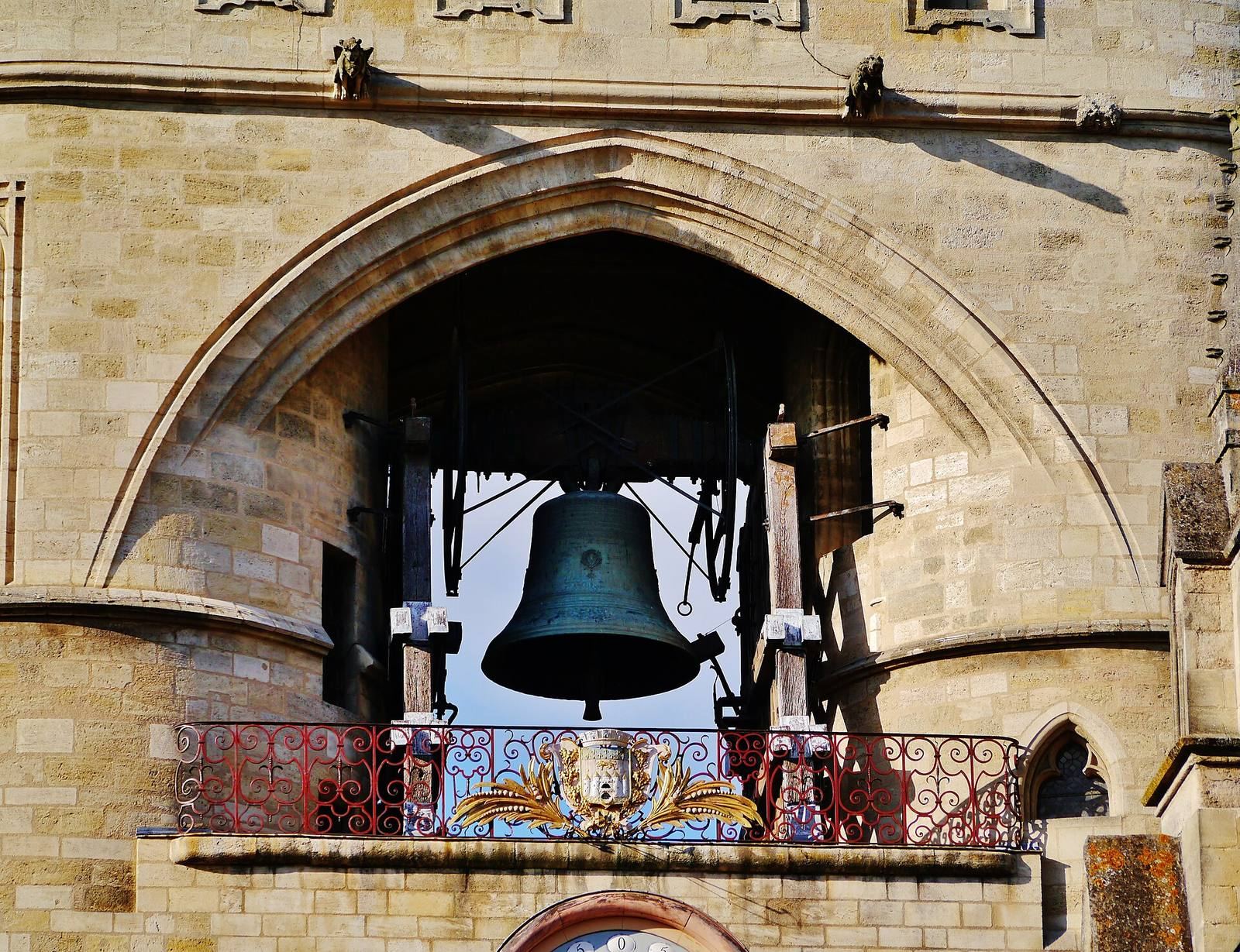
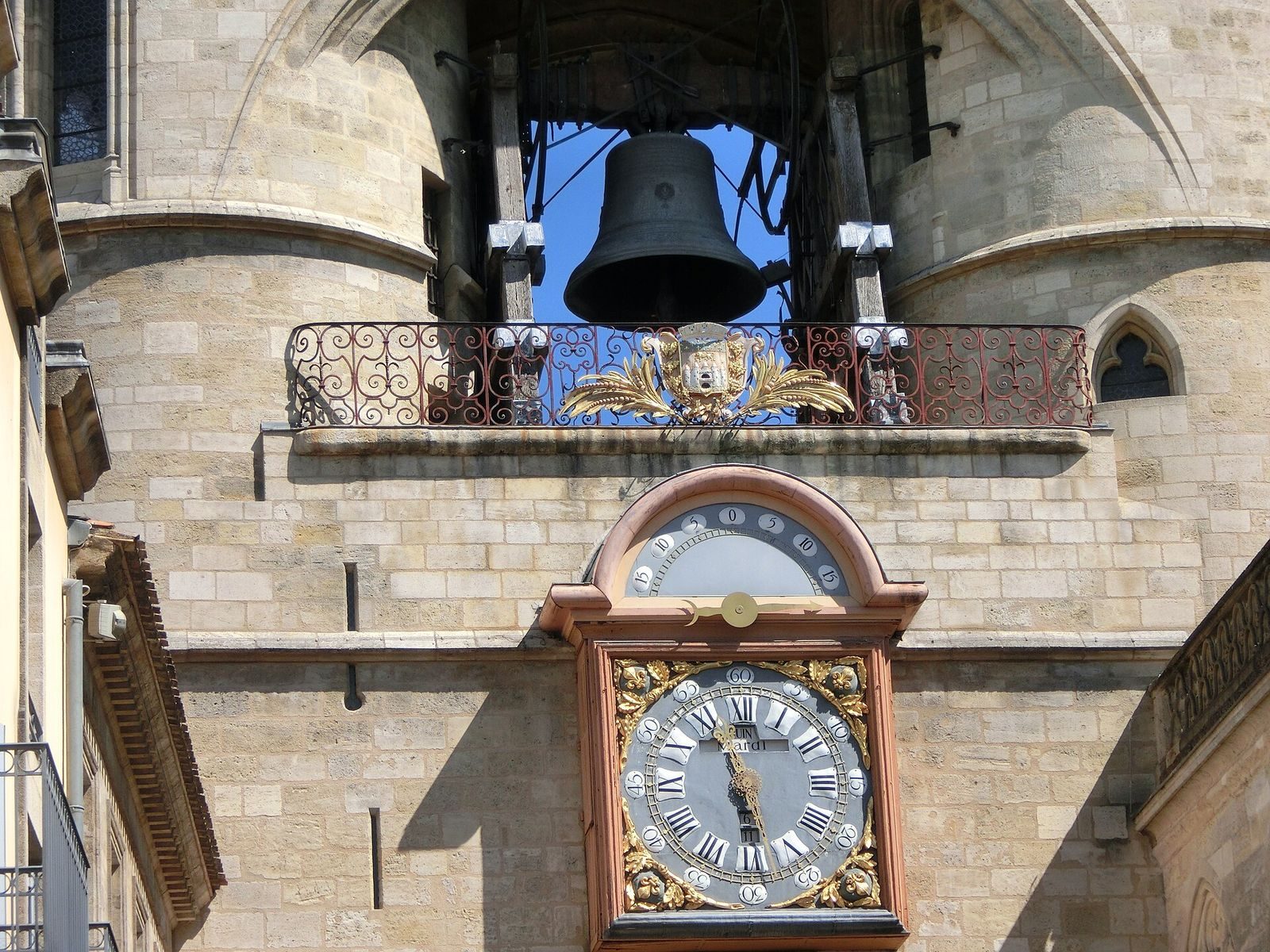
An eighteenth-century wrought-iron grille closes the opening around the bell, with Bordeaux’s coat of arms at its centre. The bell hangs above a balcony with an ornamental iron railing. It measures two metres in both height and diameter and weighs 7,800 kilograms. Its weight makes cracking from vibration a risk, so its use is limited.
Clock and carved details
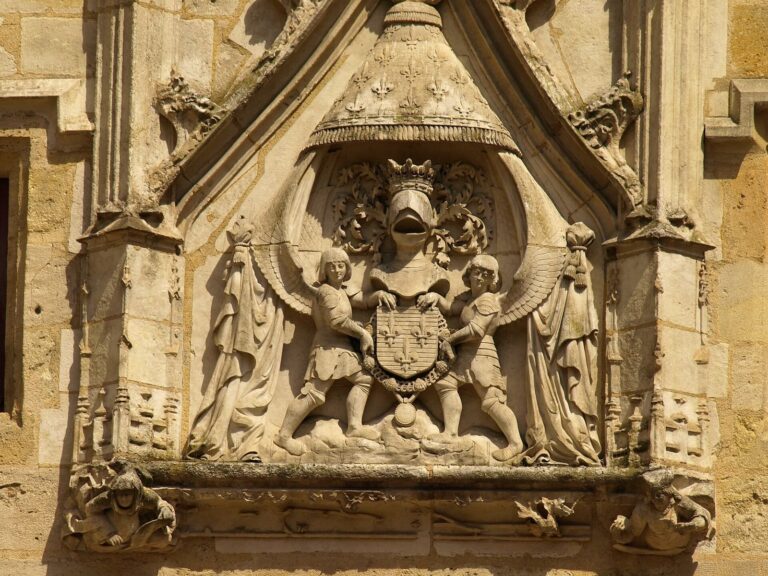
The clock is on the north side of the gate. Raymond Sudre made its original mechanism in 1567; in 1759 it was replaced by a clock built to plans by mathematician and astronomer Paul Larroque. A dial above it displays the equation of time, the difference between apparent solar time and the mean time used by clocks. Fifteenth-century gargoyles remain on the north face, with inscriptions dated 1592 engraved on black marble beneath them.