Kraków Gate in Lublin: A Medieval City Gateway
Site at a Glance
- Rating
- 4.8
- Popularity
- Very High
- Country
- Poland
- Primary era
- Medieval
- Eras represented
- Medieval, Early Modern, Modern
- Civilizations
- Kingdom of Poland, Russian
- Site type
- Military
- Remains
- Gate
On this page13 sections
History
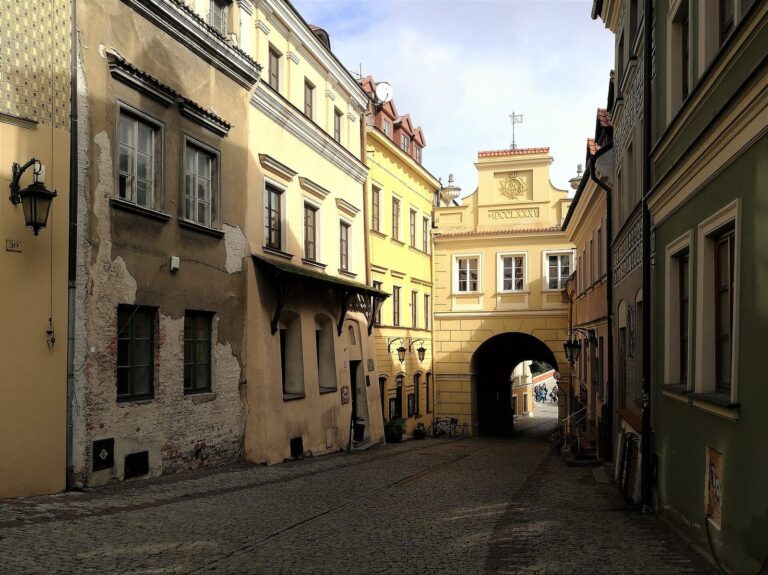
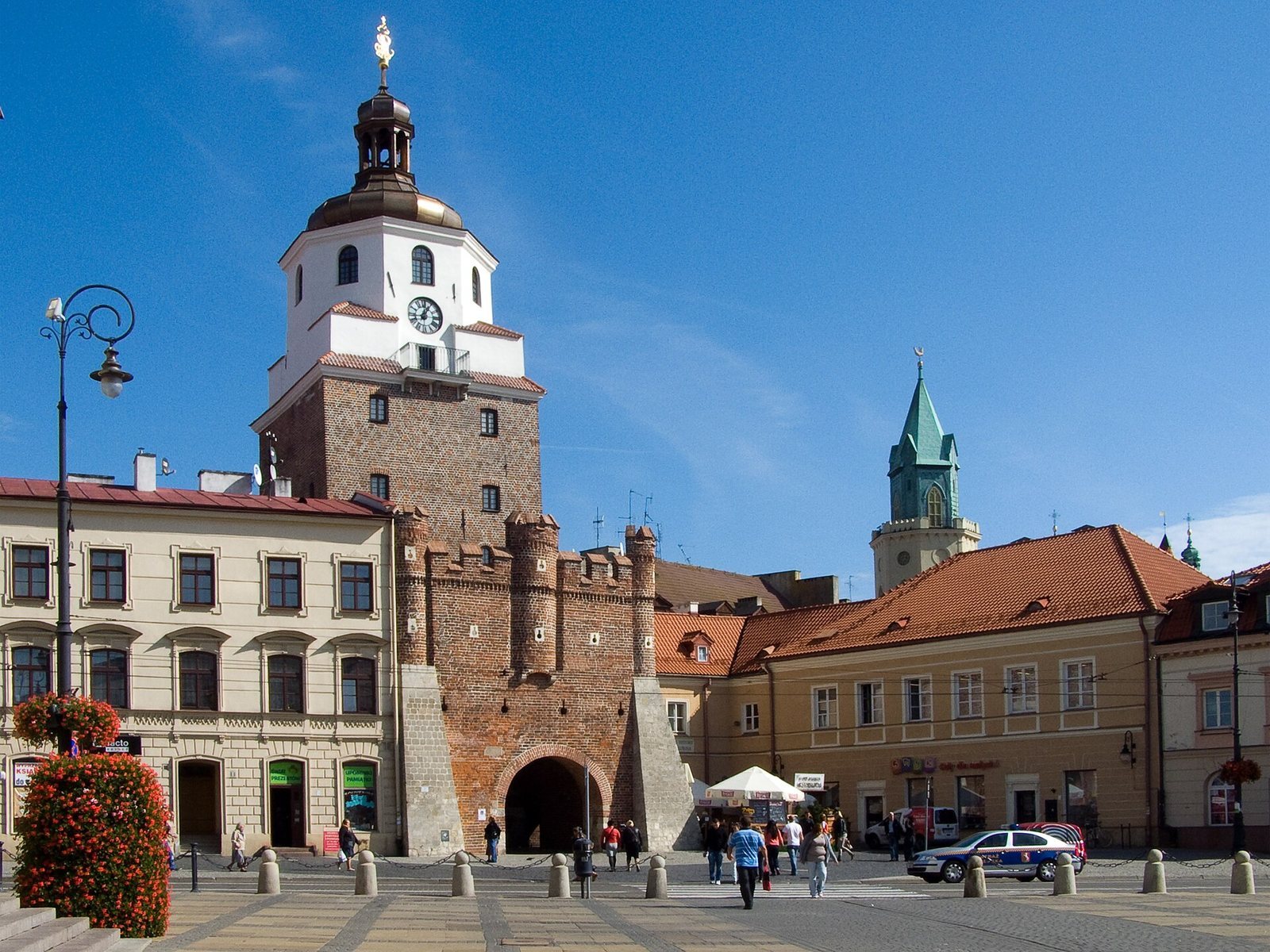
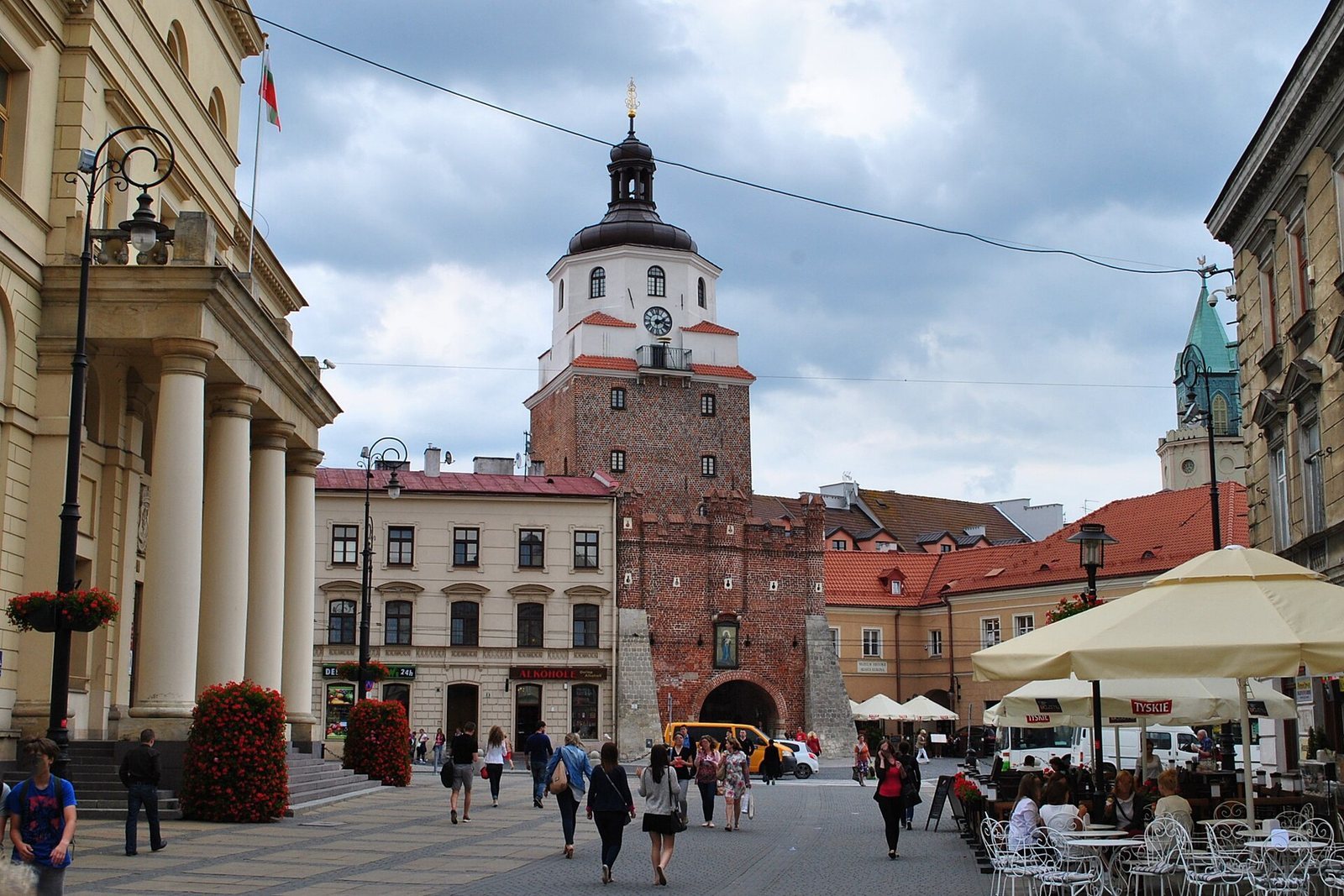
The Kraków Gate is a Gothic gateway with Baroque features at the southwestern entrance to Lublin’s Old Town in Poland. King Casimir III the Great ordered its construction in 1341, after a destructive Tatar raid, as part of the city’s medieval defenses. Built with the surrounding walls, it was among the first masonry elements of those fortifications. The gate and nearby Grodzka Gate stood on a historic route connecting Kraków with Lithuania and Ruthenia, a name for parts of eastern Europe associated with East Slavic peoples. The Kraków road also gave the gate its name. Historically it was called the Upper Gate, distinguishing it from the lower Grodzka Gate. Development along the road helped form today’s Krakowskie Przedmieście.
Medieval defenses and early growth
The gate was raised in the fifteenth century. Fires in the sixteenth century, including one in 1575, damaged it and led to rebuilding. During the first half of that century, Sebastian Włoch designed an outer gate in front of the main entrance. An octagonal upper section was probably added during the same century.
A tower clock was installed during the reign of Stephen Báthory, king of Poland from 1576 to 1586. In the sixteenth century, galleries at the gate served trumpeters and musicians, while guards were also stationed there. Shops began operating in and around the structure in the early seventeenth century, and the square outside developed into Lublin’s principal commercial center.
Decline and restoration
The deep moat was filled in during the seventeenth century. As the gate and city walls deteriorated, the gateway lost importance. In 1656, Lublin did not defend itself against the Cossacks; the poor state of its defenses was cited as one reason. The gate later housed residents, including a trumpeter, a gatekeeper, and the director responsible for the city clock.
Restoration work took place in 1673 and again from 1742 to 1745, repairing the vaulting, stairs, windows, and interior rooms. After further deterioration, the city ordered another reconstruction in 1778. The work was completed in 1782 under architect Domenico Merlini. Its completion date appears beneath the royal monogram of Stanislaus Augustus Poniatowski, Poland’s last king.
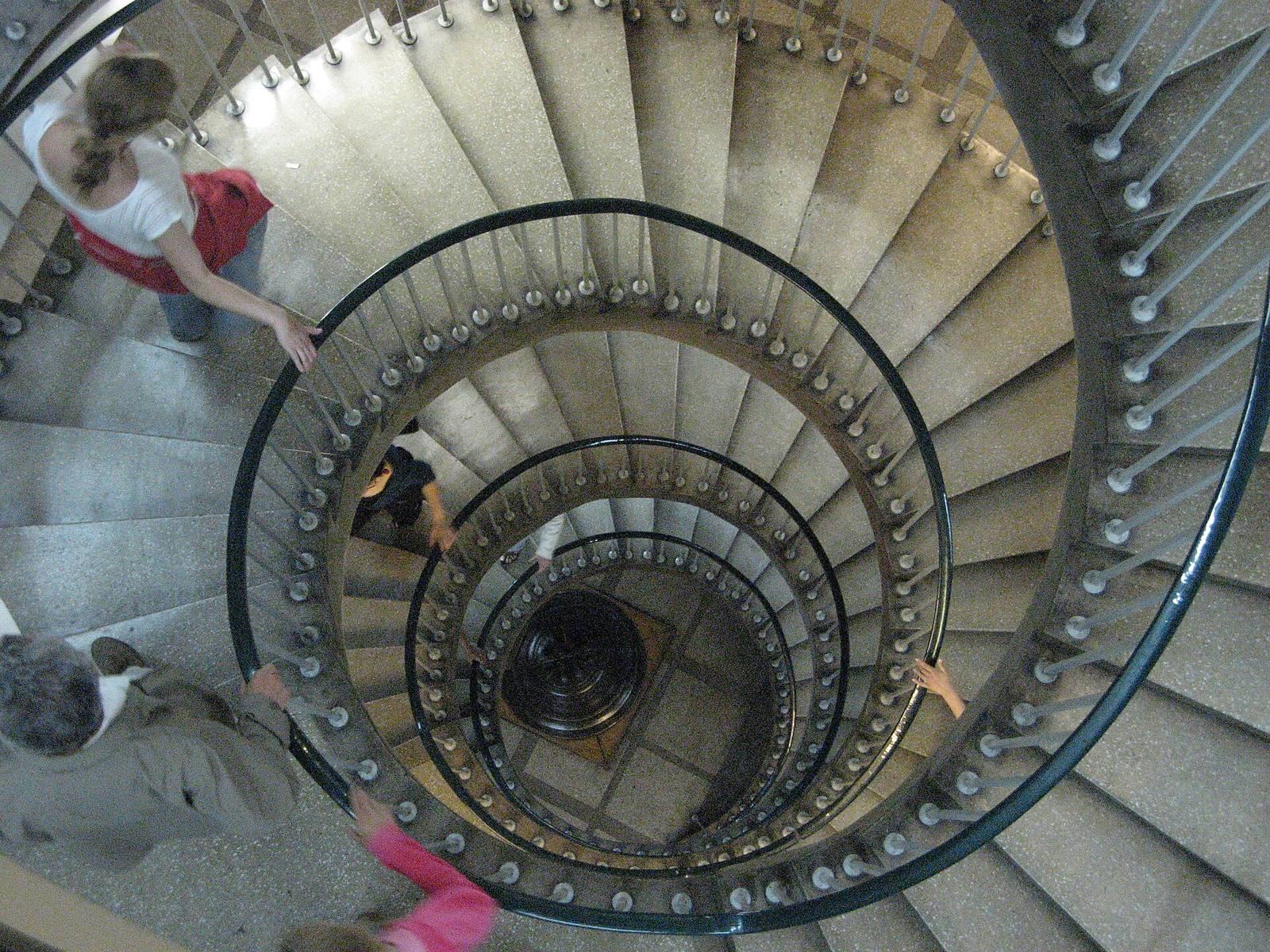
In the early nineteenth century, an image of the Immaculate Conception of the Virgin Mary was placed on the facade facing the Old Town. The municipal authorities built four shops beside the gate around 1820. During repairs supervised by Jakub Hempel in 1823, the old entrance from the Market Square was replaced. In 1839, a niche for an image of Saint Anthony and four window openings were added to the facade facing the city center. Iron galleries were installed around the tower in 1844 and 1845, and from 1845 the fire brigade used the structure as an observation point.
Modern restoration and use
A major restoration followed the Second World War, in 1954, under architect Wacław Podlewski. The Lublin City History Museum has occupied the gate since 1965, and a further reconstruction was completed in 2007. The gate is entered in Poland’s monument register and forms part of Lublin’s historic architectural and urban ensemble, designated a Historic Monument of Poland in 2007. Archaeological work nearby in 2018 suggested the presence of a medieval cemetery and uncovered an eleventh-century coin.
Remains
The brick gateway stands on the line of the walls that once enclosed the Old Town. It is among the last surviving parts of Lublin’s original city fortifications. The gate’s structure brings together its Gothic form and later Baroque features, while the surrounding defensive works and its present museum use reflect successive changes to the site.
Gate architecture
Gateway and outer gate
The original gateway had a lower section topped by crenellations, the alternating raised blocks and gaps along a defensive wall, and a tall pointed roof. Diagonal bands of patterned brickwork mark the fifteenth-century raising. The probable sixteenth-century additions included an octagonal upper section with a copper-covered roof. The outer gate in front of the main entrance had crenellations and small turrets.
Moat, bridge, and galleries
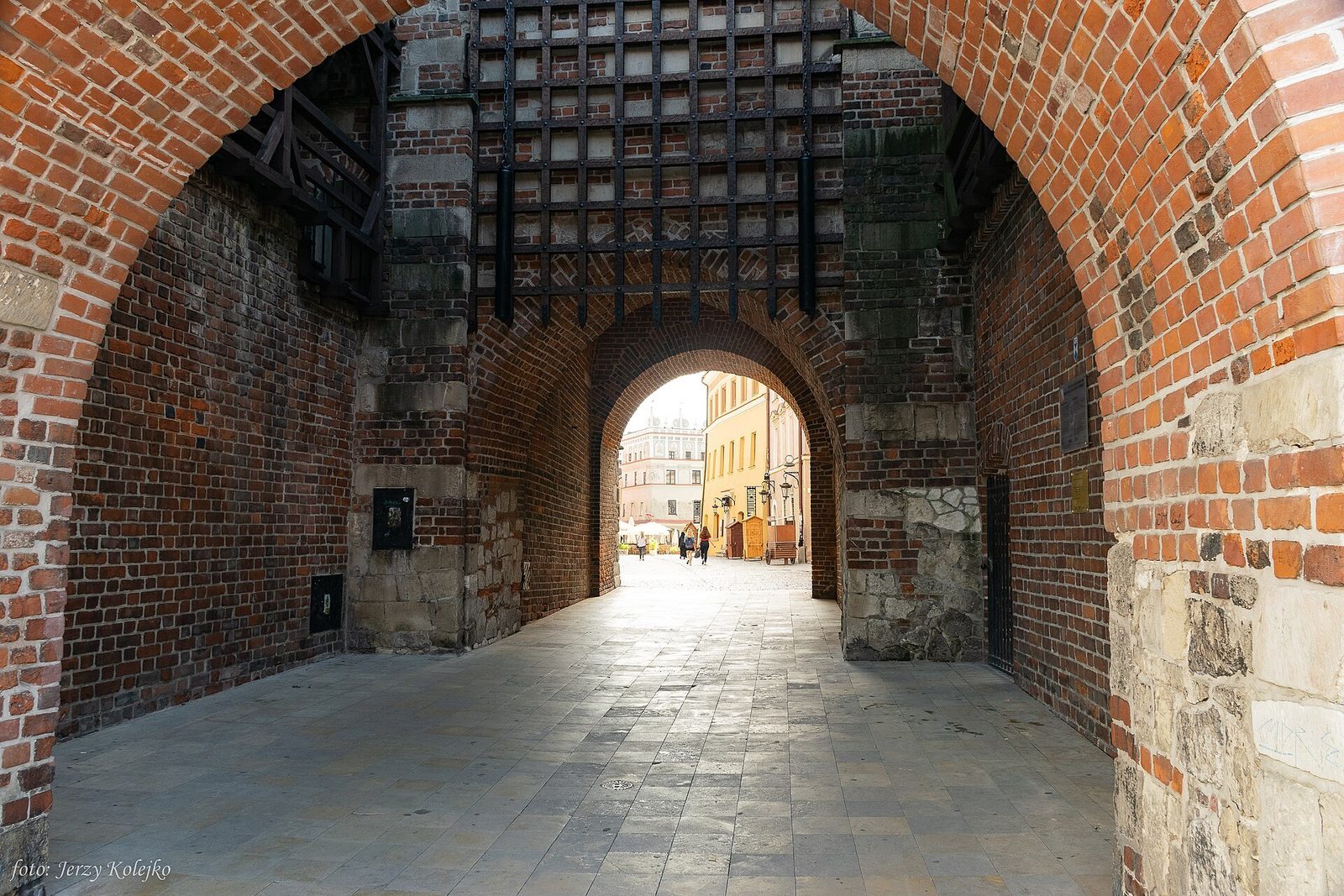
A deep moat once ran in front of the city wall. A wooden bridge crossed it, and a vertically lowered iron grating, or portcullis, could close the gateway. Balconies with railings served the city’s trumpeters and guards. The iron galleries added in the nineteenth century encircled the tower. They were removed during the 1954 restoration, when two balconies were restored and some plaster was stripped away, revealing parts of the earlier Gothic appearance.
Clock
The tower clock dates to the mid-sixteenth century. Seventeenth-century records describe a large clock face on the side toward the city. A face on the Old Town side was in place by the nineteenth century, and the clock faces that survive today date from that century. The mechanisms inside are twentieth-century. The clock’s mechanism changed from mechanical to electric and then electronic, while its size diminished from roughly that of a linen cupboard to a medicine cabinet and eventually to a device small enough to fit in a hand.
Museum collections
The museum’s collections cover Lublin’s history from the sixth century to the end of the Second World War. They include archival material, archaeological objects recovered in city excavations, and historical and artistic objects.
First and second floors
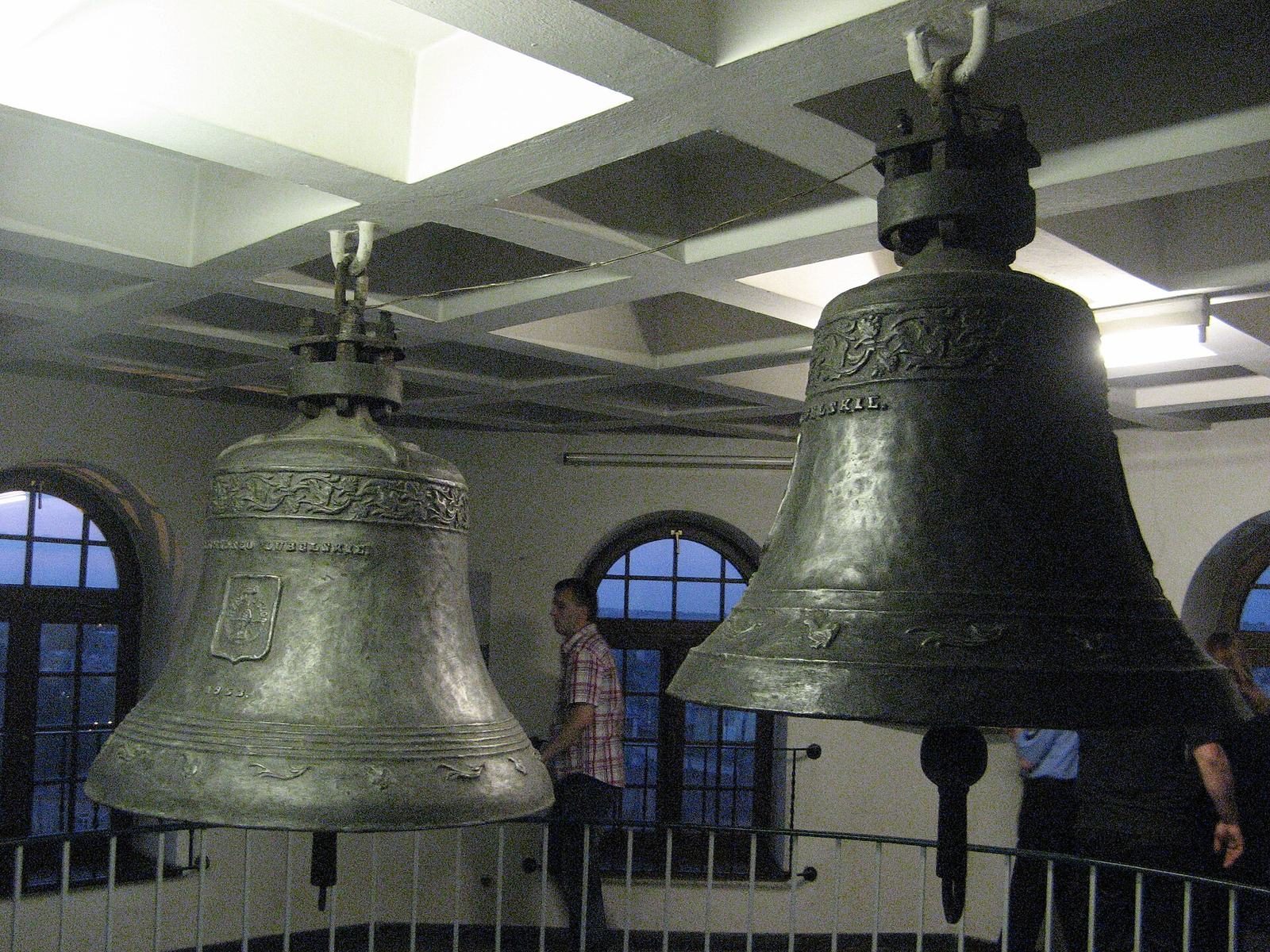
The first-floor archaeological displays cover Lublin’s early history and its setting across four hills: Old Town, Castle, Thursday, and Grodzisko, also called Kirkut, a term for a Jewish cemetery. Exhibits include a copy of Lublin’s town charter, dated 5 August 1317, a clock bell from 1585, and tiles dating from the fourteenth to the eighteenth century. The second floor presents the city’s history from its incorporation through the seventeenth century, with archival material, fragments of its oldest municipal water supply, Renaissance tiles, and a seventeenth-century Tribunal Cross.
Third and fourth floors
The third floor covers the seventeenth through nineteenth centuries. Its objects include a seventeenth-century wall painting of Saint Thecla, moved from an Old Town townhouse, eighteenth-century tiled clocks, symbolic keys to the city, and paintings of Lublin around the turn of the twentieth century. Memorabilia relate to the November Uprising of 1830–1831 and the January Uprising of 1863–1864, Polish revolts against Russian rule.
The fourth floor presents nineteenth- and twentieth-century history through portraits of notable residents, advertisements for local firms, a clock mechanism from 1903, photographs from the First World War, and exhibits on education. Its displays relating to the Second World War include clandestine prison notes, identity cards, and objects made by prisoners at Lublin Castle.
Fifth floor
The fifth floor includes photographic displays of prewar Lublin and a panorama of the city.