Assumption of Mary Monastery, Čajniče: A Serbian Orthodox Monastery
Site at a Glance
- Rating
- 4.9
- Popularity
- Medium
- Country
- Bosnia and Herzegovina
- Primary era
- Modern
- Eras represented
- Early Modern, Modern
- Civilizations
- Ottoman
- Site type
- Religious
- Remains
- Monastery
On this page13 sections
History
The Assumption of Mary Monastery, Čajniče, is a men’s Serbian Orthodox monastery in Bosnia and Herzegovina, traditionally dated to the 14th century and attributed to the Serbian king Milutin. Dedicated to the Dormition, the Eastern Christian observance of the Virgin Mary’s death and assumption into heaven, it belongs to the Dabrobosnian Metropolitanate, a major Serbian Orthodox church jurisdiction. Its celebrated icon has made the monastery a pilgrimage destination.
Foundation and early church
The monastery’s foundation is associated with Milutin, a ruler of the medieval Serbian Nemanjić dynasty. The precise date of its old church is uncertain, but a church at Čajniče is named in a church book called the Čajniče Prolog in 1492. The old church served as the parish church until a larger one was built. It was repaired in 1804, and a school for Serbian children began operating there in 1820. A church enclosure followed in 1837, and the church was renovated again in 1893.
Expansion in the 19th century
Construction of the monastery’s larger church began in 1857 and continued until 1863. The work followed the 1856 Treaty of Paris, the peace settlement that ended the Crimean War. Britain, France, and Russia had pressed the Ottoman Empire to allow greater religious freedom, and the treaty recognized equality between Muslims and Christians. These changes enabled churches to be built and repaired and schools to open. Metropolitan Ignjatije of Dabrobosnia consecrated the new church in 1863. A metropolitan leads a major church jurisdiction.
Wartime damage and restoration
An explosion damaged the old church between 11 and 12 April 1943. That year, Ustaše units, members of a Croatian fascist movement that ruled the Independent State of Croatia during the Second World War, plundered the church and took valuables from its treasury. Before the looting, local people moved its belongings and books to safety, including the Čajniče icon. The icon was sheltered in Milka Spremo’s home, carried by eight people to the church at Strečanja, and then kept in a guarded cave. It was later taken to the church at Slatina and transferred to Trpinje, where a priest continued to hold services and people gathered. After the war, the icon returned to the repaired old church.
Italian forces also planted explosives in the new church’s yard during the war, seriously damaging the building. Restoration began in the 1950s under the parish priest, hieromonk Vasilije Domanović, a monk who is also an ordained priest, and was completed in 1959. Serbian Patriarch German consecrated the restored church on the feast of the Nativity of the Virgin.
Devotional traditions and recognition
Tradition links the Čajniče icon to the Nemanjić court. Emperor Uroš, generally identified as Stefan Uroš V, is said to have given it to Banja Monastery after recovering from a prolonged illness there. Another tradition tells that the icon survived a fire during an Ottoman raid on Banja, when the monastery was burned and looted as the relics of Saint Sava were being taken from Mileševa.
In 2007 the monastery ensemble received Category I cultural and historical property status and was listed as a National Monument of Bosnia and Herzegovina. The designation included the monastery buildings and a collection described as comprising 68 manuscripts and old books and 25 icons.
Remains
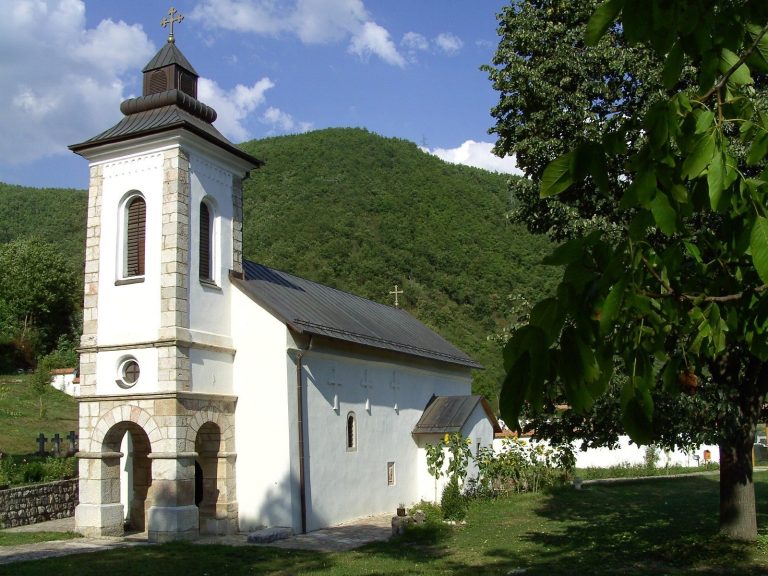
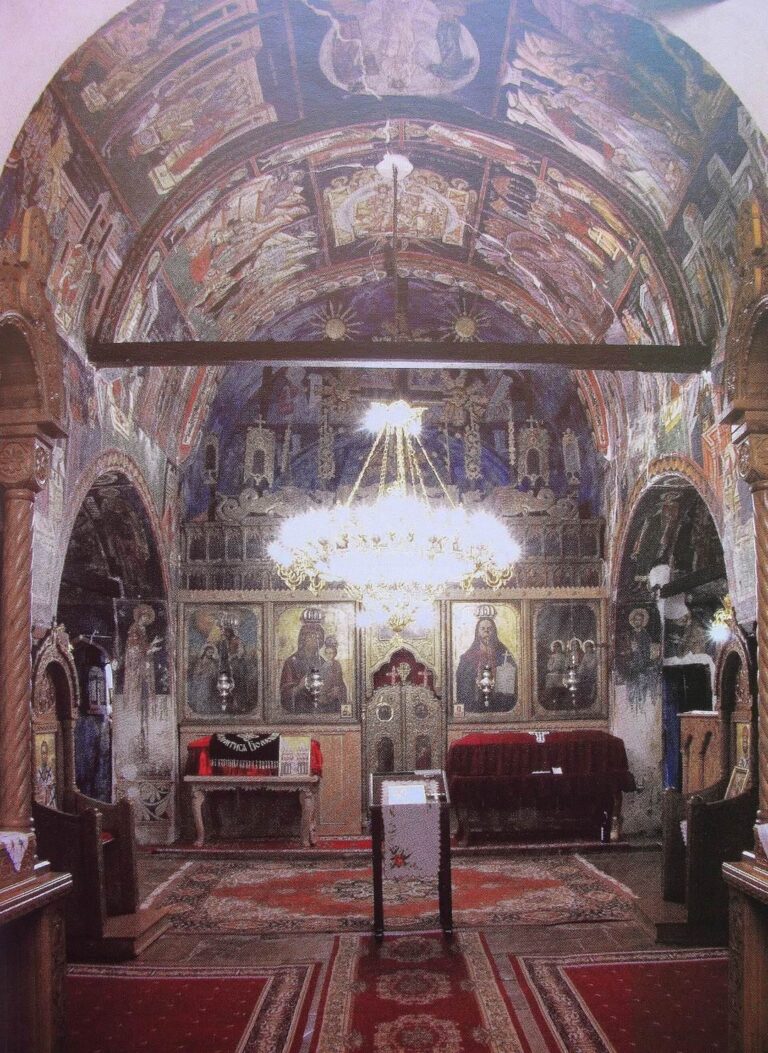
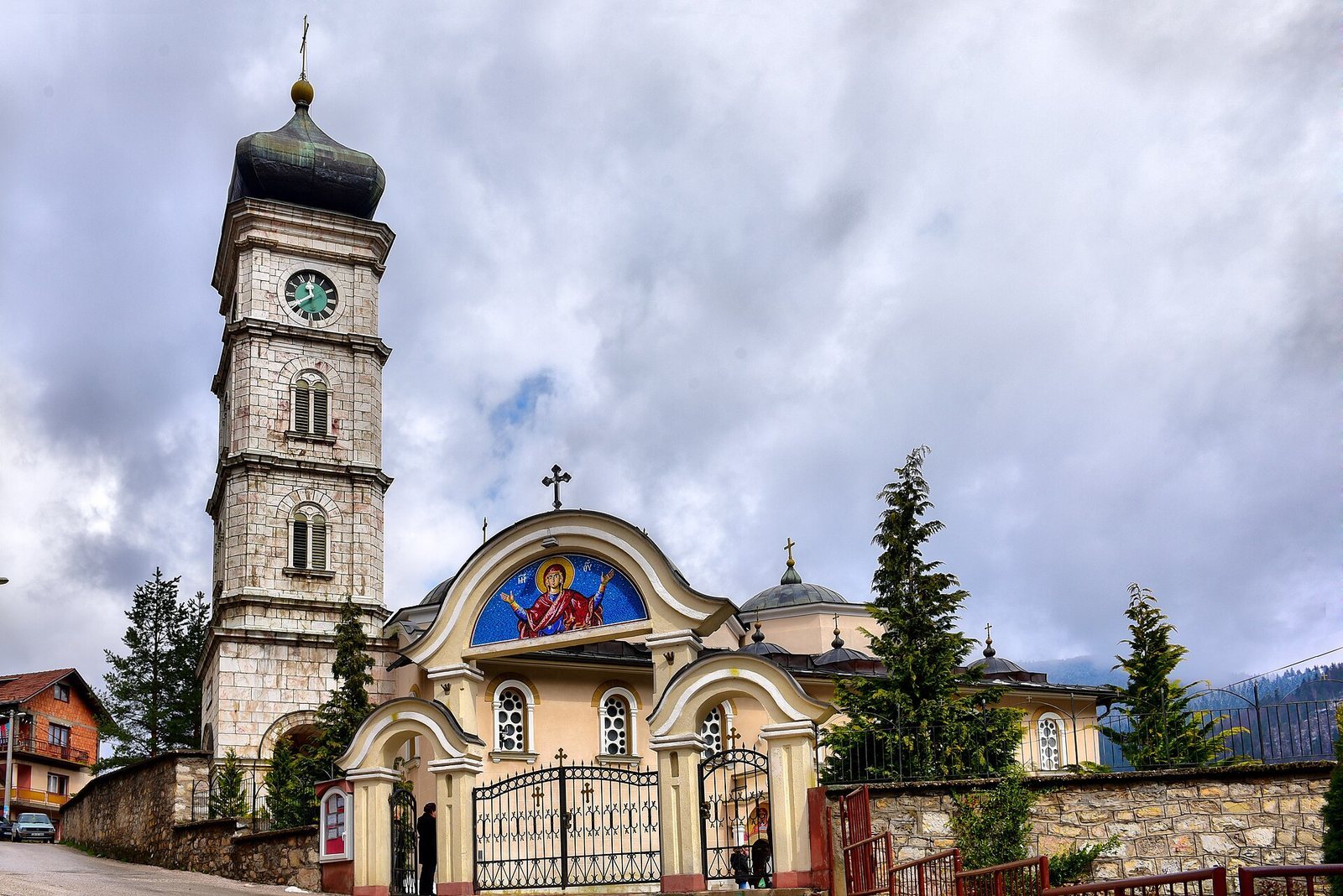
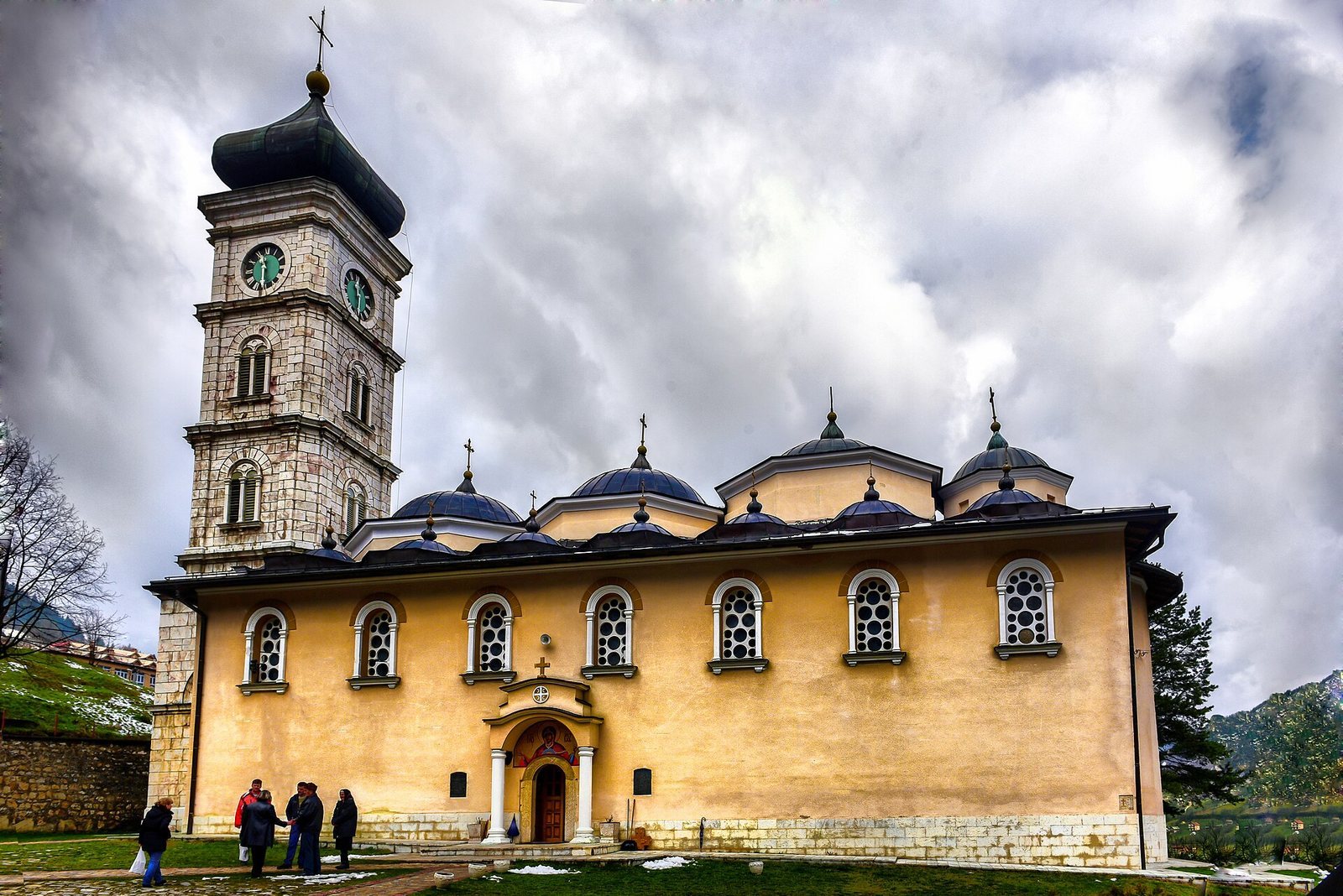
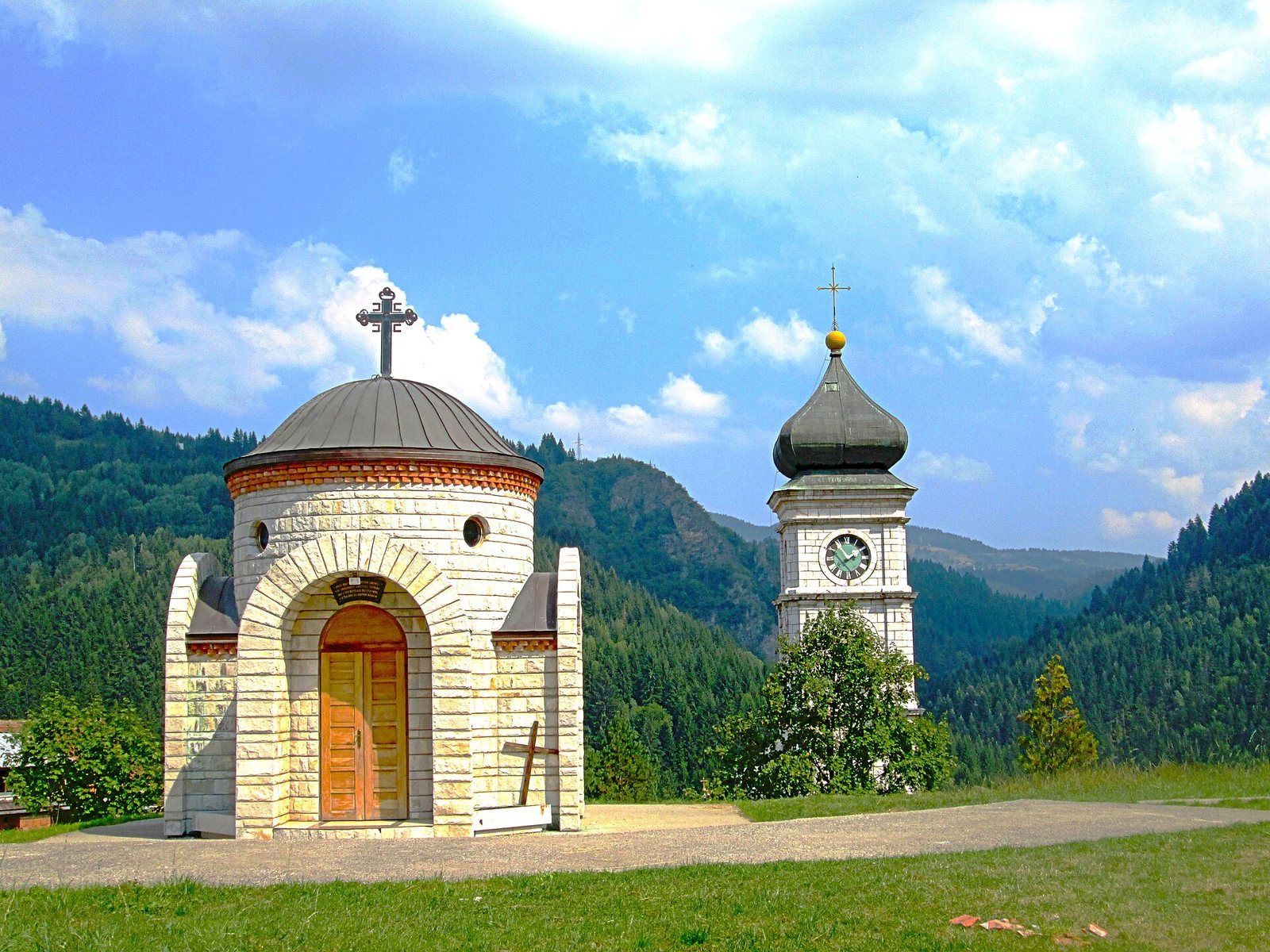
The monastery’s built core consists of two churches standing side by side: a modest old church and a larger new church. The old building has a simple structural arrangement and sits below the surrounding ground level. The later church has a separate bell tower, added after its construction.
Church buildings
Old church
The old church is also identified as the Church of the Ascension of Christ, while the 1492 reference names a church dedicated to the Dormition of the Virgin. An architectural assessment places the present building broadly in the late 16th or early 17th century. Its façade is modest, and its floor lies lower than the ground around it.
New church and bell tower
The larger church was built between 1857 and 1863. Its bell tower is a distinct, later addition, constructed between 1893 and 1897.
Painted and written works
The Čajniče icon
Kept in the old church, the Čajniče icon, also called the Čajniče Beauty, is a two-sided painting on a wooden panel. It is attributed to a Byzantine artist and dated to the first half of the 14th century, probably around 1329–1330. The Virgin Mary and Child appear on one side; Saint John the Baptist, blessing with his right hand, appears on the other. It is the only surviving example of pre-Ottoman icon painting in Bosnia.
The figures have darkened over time, probably in part because of fire. A finely worked silver-gilt cover, made by goldsmith Risto Andrić in 1868, shields the lower parts of the half-length figures, leaving their faces visible.
Other icons
The church also holds an icon of Saint George surrounded by 12 scenes from his life, painted by an anonymous artist in the second half of the 16th century. Another, depicting Saint Nicholas, is the work of the 17th-century painter Andrija Raičević. An unidentified painter from Vojvodina made the Holy Trinity icon, which was donated to the church in 1848.
The Čajniče Gospel and other manuscripts
The church museum holds the Čajniče Gospel, a manuscript probably made at the beginning of the 15th century. It is regarded as the oldest Gospel written in Bosnia and the only medieval Bosnian Gospel preserved in the country. It may once have belonged to the noble Radinović-Pavlović family. Its language and Ijekavian pronunciation and spelling pattern associate it with eastern Bosnia.
Five principal scribes wrote the Gospel in succession, using a rounded form of Bosnian Cyrillic, a historical Cyrillic script used in Bosnia. The manuscript now has 167 pages, with portions of Matthew and Mark and most of Luke surviving. It entered scholarly study in 1900 and is a National Monument of Bosnia and Herzegovina. The monastery’s manuscripts also include a four-Gospel book dated to the 14th century and a Gospel from Papraća Monastery bearing a note by the priest Oliver dated 1513.