High Bridge, Lincoln: The Medieval Bridge Carrying High Street
Site at a Glance
- Rating
- 4.7
- Popularity
- Low
- Country
- United Kingdom
- Primary era
- Medieval
- Eras represented
- Medieval, Early Modern
- Civilizations
- English
- Site type
- Infrastructure
- Remains
- Bridge
On this page9 sections
History
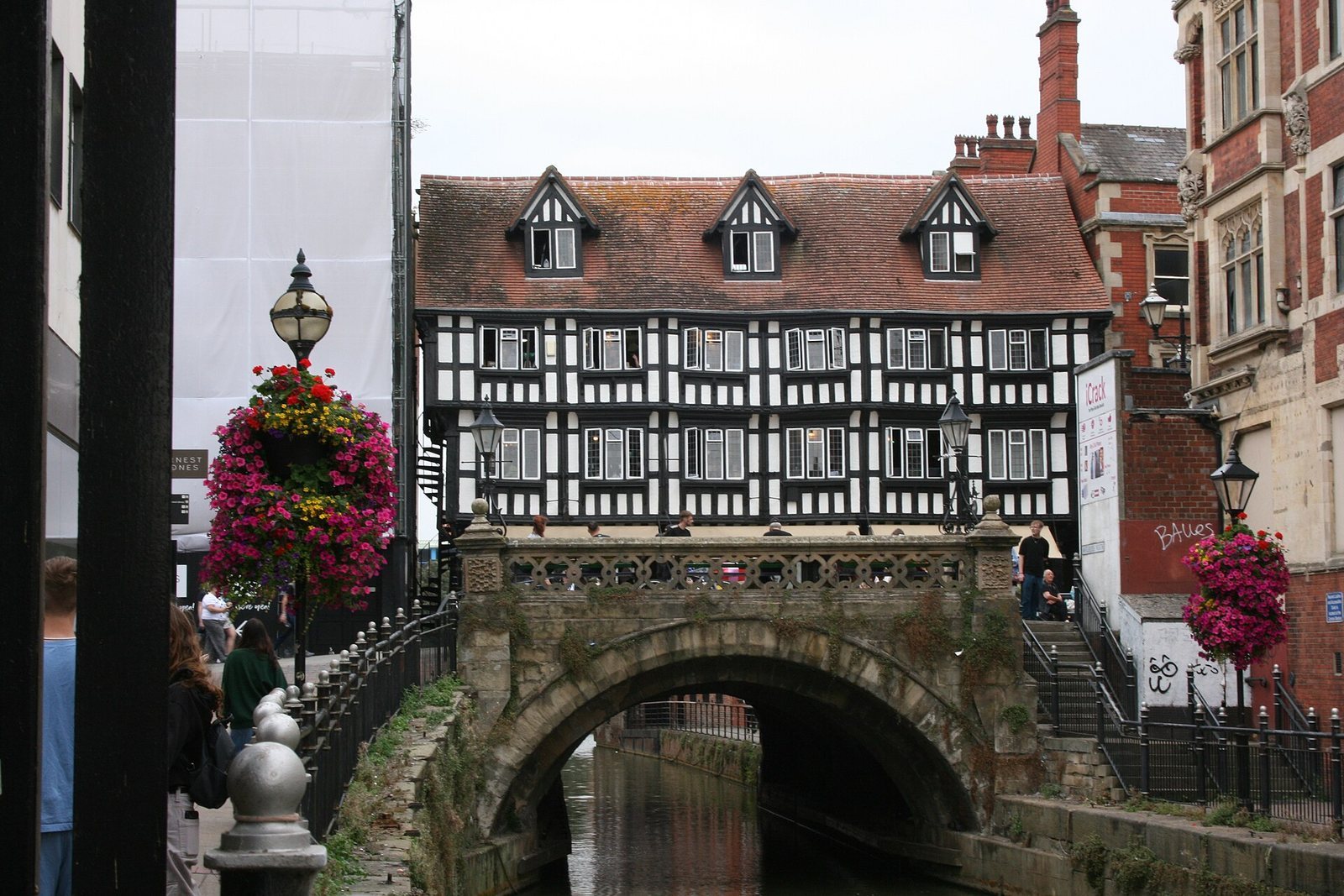
High Bridge carries High Street across the River Witham in Lincoln, United Kingdom. Built in stone around 1160, it may have replaced an earlier wooden bridge. Its surviving original ribs may make it the second-oldest masonry arch bridge in Britain, and it is described as the oldest British bridge still carrying intact buildings.
Medieval bridge and chapel
Churches and other religious buildings were common on or beside medieval bridges, but High Bridge is unusual for carrying secular buildings as well. Along with Pulteney Bridge in Bath, it is one of two British bridges retaining old buildings. Many comparable bridges were later demolished because they impeded river flow and navigation; Old London Bridge was a prominent example.
A chapel dedicated to St Thomas Becket was built at the bridge’s eastern end in 1235. Becket, the archbishop of Canterbury, was killed in 1170 and later venerated as a saint. The chapel fell out of use in 1549, following the English Reformation, the sixteenth-century break between the English church and papal authority.
Early modern changes
An upstream extension was added in the 1540s, and around 1550 a three-storey house containing shops was built on the bridge. The chapel was demolished in 1762. A stone obelisk was subsequently placed on its site to provide water, but it was removed in 1939 because it obstructed traffic.
Flooding and changing traffic
High Bridge has contributed to flooding in Lincoln since the fourteenth century. After heavy rain, high water can make boat passage beneath it almost impossible. In the nineteenth century, English civil engineer William Jessop proposed diverting the Witham through the south of the city, but the plan was not carried out.
For centuries, High Street was Lincoln’s main thoroughfare, and traffic crossing the city had to pass over the bridge. In 1901–02, the shop house was partly dismantled and re-erected under the supervision of Lincoln architect William Watkins. Stokes Tea & Coffee have been its custodians since 1937. A bypass opened in 1971, diverting traffic from the city centre, after which High Street and the bridge were pedestrianised. High Bridge is both a Grade I listed building, the highest grade in England’s listed-building system, and a scheduled monument protected for its national historic or archaeological importance.
Remains
The bridge arch and extensions
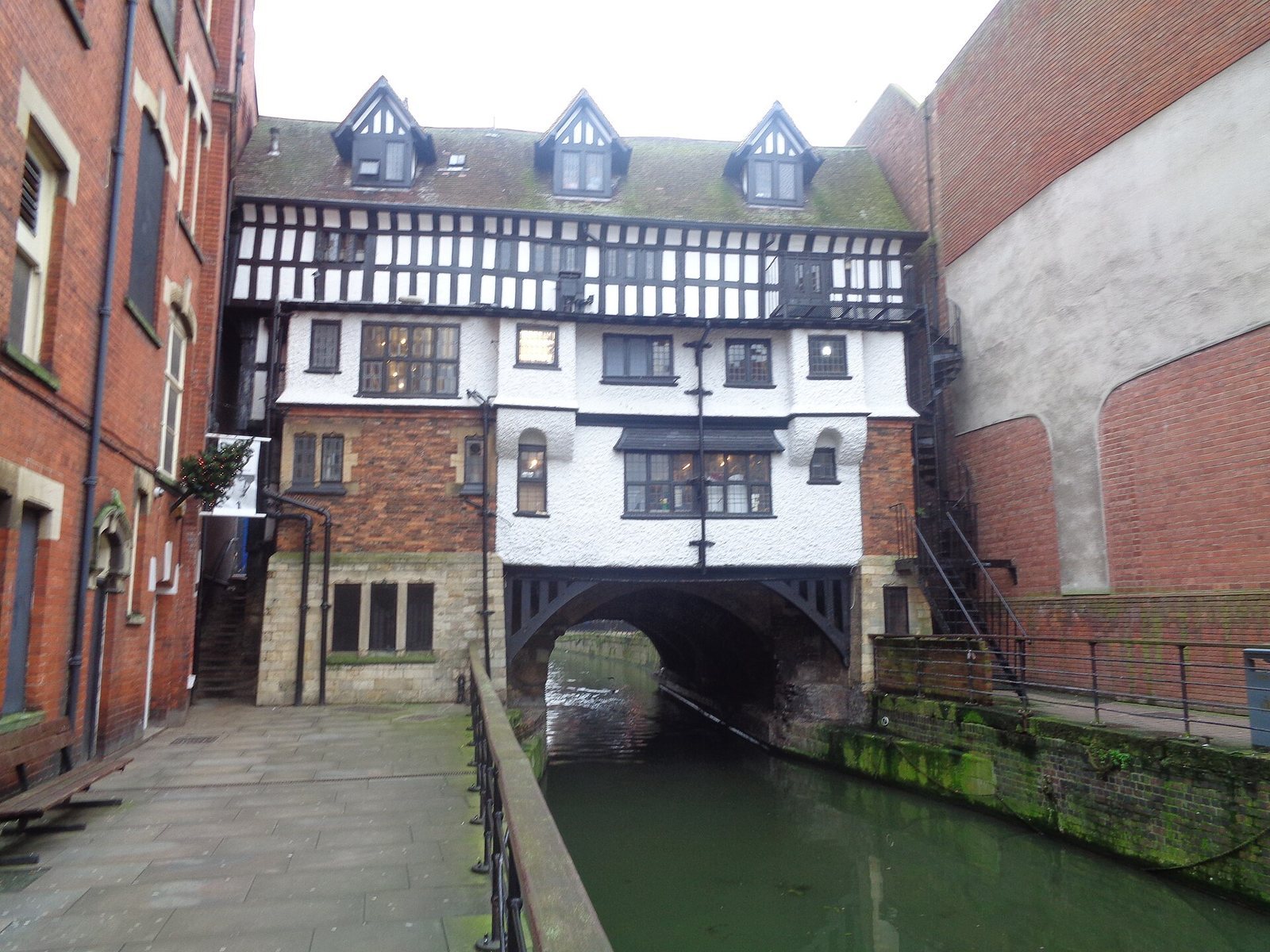
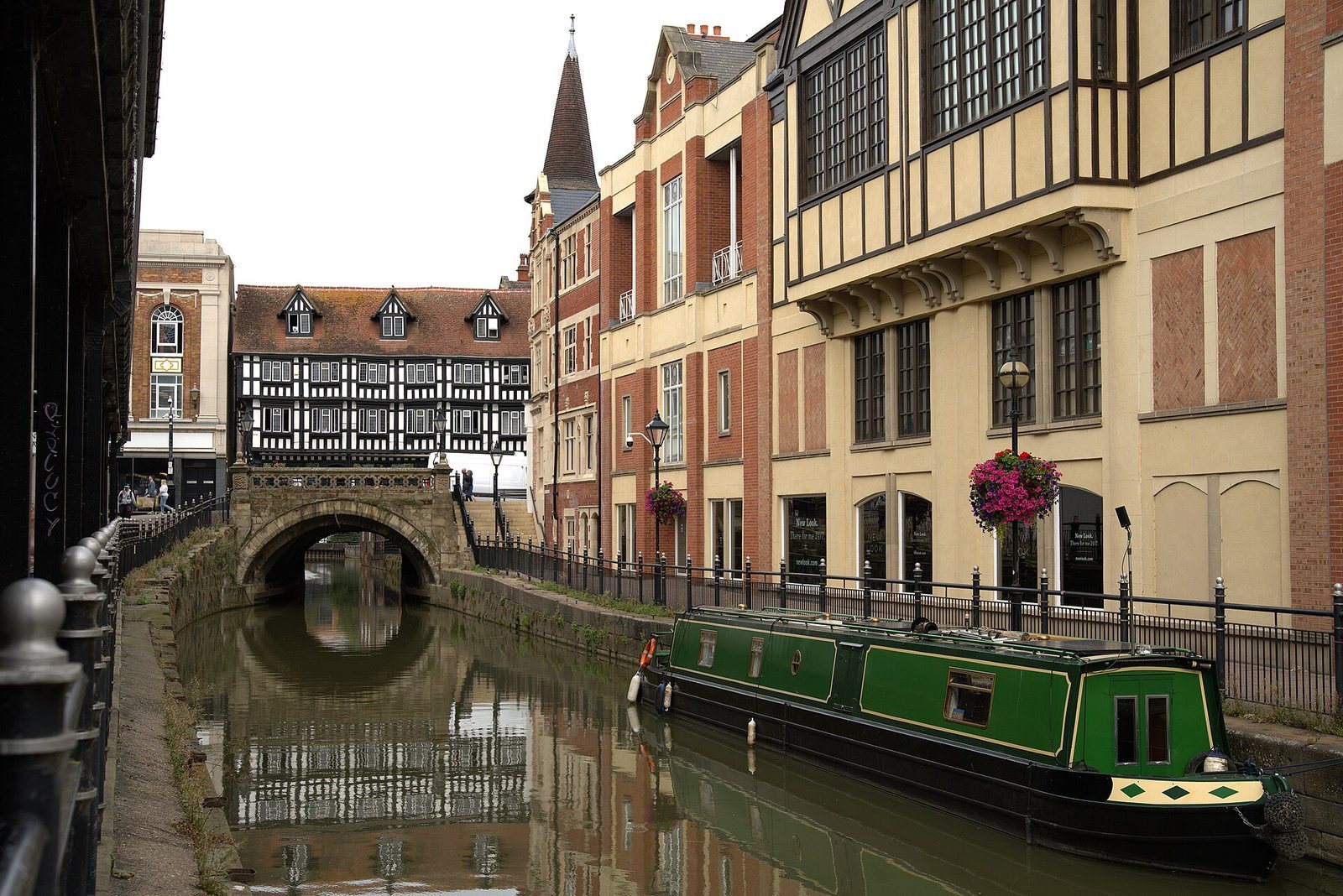
The crossing is a single ashlar arch, made of finely cut stone laid in regular blocks, with a span of about 22 feet (6.7 m). Its oldest central section was about 33 feet (10 m) long and had five barrel-vaulted ribs, forming a continuous tunnel-like structure. The three inner ribs are 3 feet (0.91 m) wide, while the two outer ribs are 4 feet (1.2 m) wide. A 28-foot (8.5 m) downstream extension, built to accommodate the chapel, was supported by vaulting divided into four sections. Later, two middle ribs beneath the original bridge and some of the vaulting joining it to the extension were replaced with brickwork, apparently to make the arch shallower at road level. The 20-foot (6.1 m) upstream extension forms a flatter, unvaulted arch designed to support timber-framed buildings. A further small extension downstream brought the bridge’s total length to 87 feet (27 m).
The timber-framed house
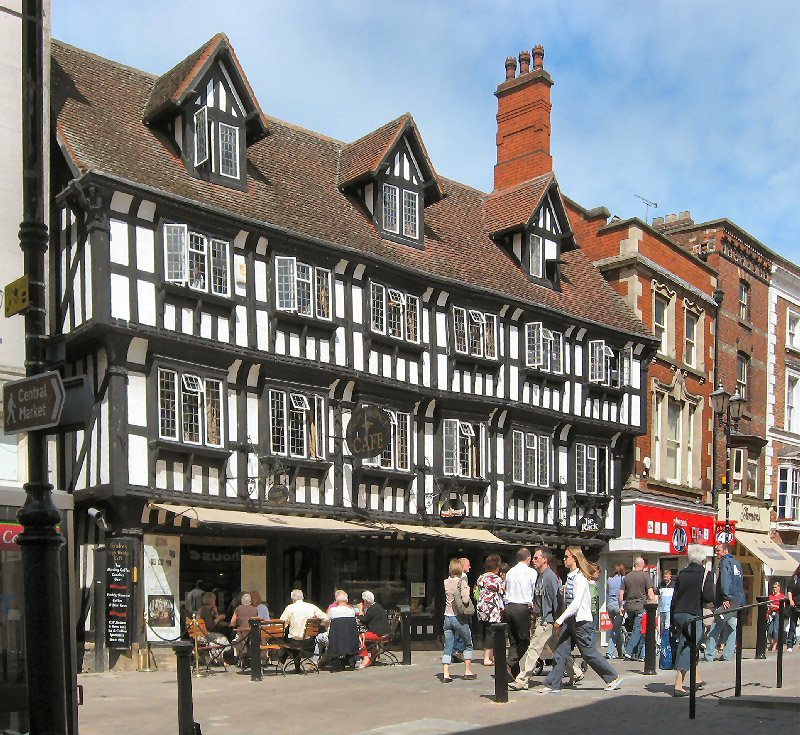
The house stands on the bridge’s west side. Its two upper storeys project beyond the lower storey, and carved angels decorate its corners. A café occupies the ground-floor shop space.
Chapel site and obelisk
The bridge’s eastern extension provided space for the chapel. After the chapel was demolished, a stone obelisk serving as a conduit stood on the former chapel site until its removal.
River passage and walkways
The bridge’s narrow, crooked arch limits the size of boats travelling along the Witham between Brayford Pool, at the start of Foss Dyke, and Boston and the sea. Generations of boaters have called the bridge the “Glory Hole,” a name also used for the pedestrian walkways leading to it. Some of those walkways rest on original wooden structures.