Greyfriars, Lincoln: A Franciscan Friary and Its Infirmary
Site at a Glance
- Popularity
- Medium
- Country
- United Kingdom
- Primary era
- Medieval
- Eras represented
- Medieval, Modern
- Civilizations
- British, English
- Site type
- Religious
- Remains
- Monastery
On this page6 sections
History
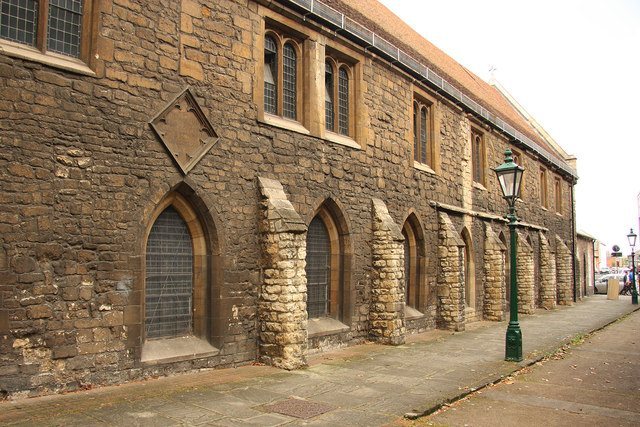
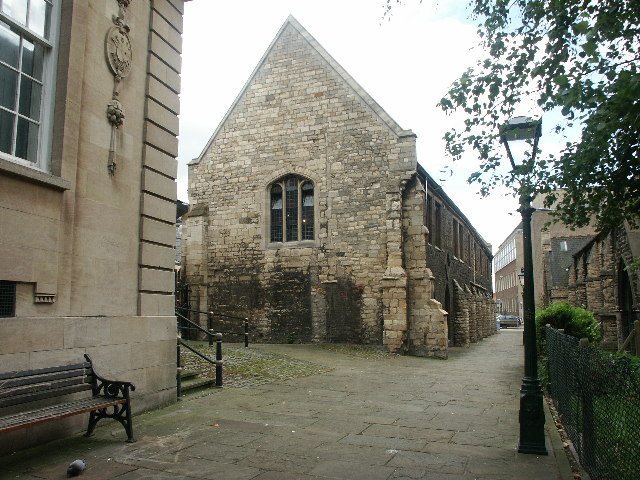
Greyfriars is the surviving infirmary of a Franciscan friary in Lincoln, United Kingdom. The friary was founded around 1230, and its buildings were constructed in the Early English period of English Gothic architecture. The Franciscans were members of a religious order founded by Francis of Assisi.
Franciscan friary and dissolution
Construction on land donated to the Franciscans began in 1237 and was completed by the 1280s. Lady Alice de Roos, daughter of William de Ros of Helmsley and wife of the Scottish nobleman John Comyn I of Badenoch, was buried at the friary.
The community was expelled in 1538 during the Dissolution of the Monasteries, when religious houses in England were closed under Henry VIII. The building was subsequently let to William Monson. His son Richard opened a school there in 1568.
School and educational uses
From 1574, Lincoln City Council operated the Corporation Grammar School on the upper floor, a use that continued until 1900. The lower level served as a spinning school, later called the Jersey School, until 1831. A Mechanics’ Institute, which provided classes and lectures in practical and technical subjects, occupied it from 1833 to 1862. The lower level then became part of the Grammar School until 1899. The mathematician and logician George Boole took part in the institute.
Museum and later uses
After its school use ended in 1900, the building was restored in 1906 under Lincoln architect William Watkins. It opened as the City and County Museum on 22 May 1907, administered by the City of Lincoln. The first curator, Arthur Smith, retired in 1934 and was succeeded by F. T. (Tom) Baker. Lincolnshire County Council took control of the museum in 1974.
From September 1993, Greyfriars hosted changing exhibitions while the museum’s main collections underwent conservation and research before moving to a new home. The Collection opened on Danesgate in 2005, beside the Usher Gallery, and the institutions were jointly managed as a cultural centre for art and archaeology. Greyfriars later housed the Central Library for a time. Since 2008, it has been vacant apart from occasional contemporary art exhibitions and installations. The building is Grade I listed and appears on Historic England’s Heritage at Risk Register.
Remains
The surviving infirmary
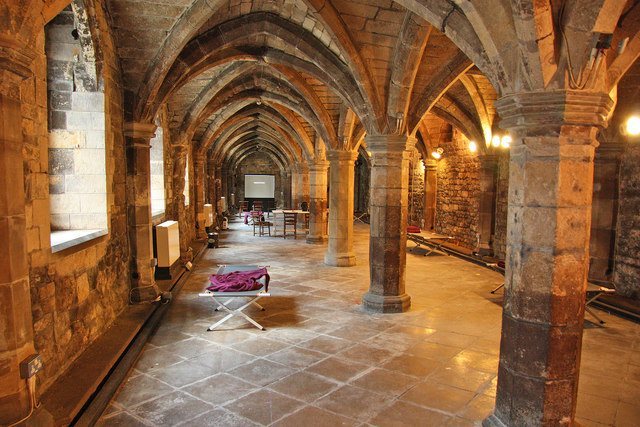
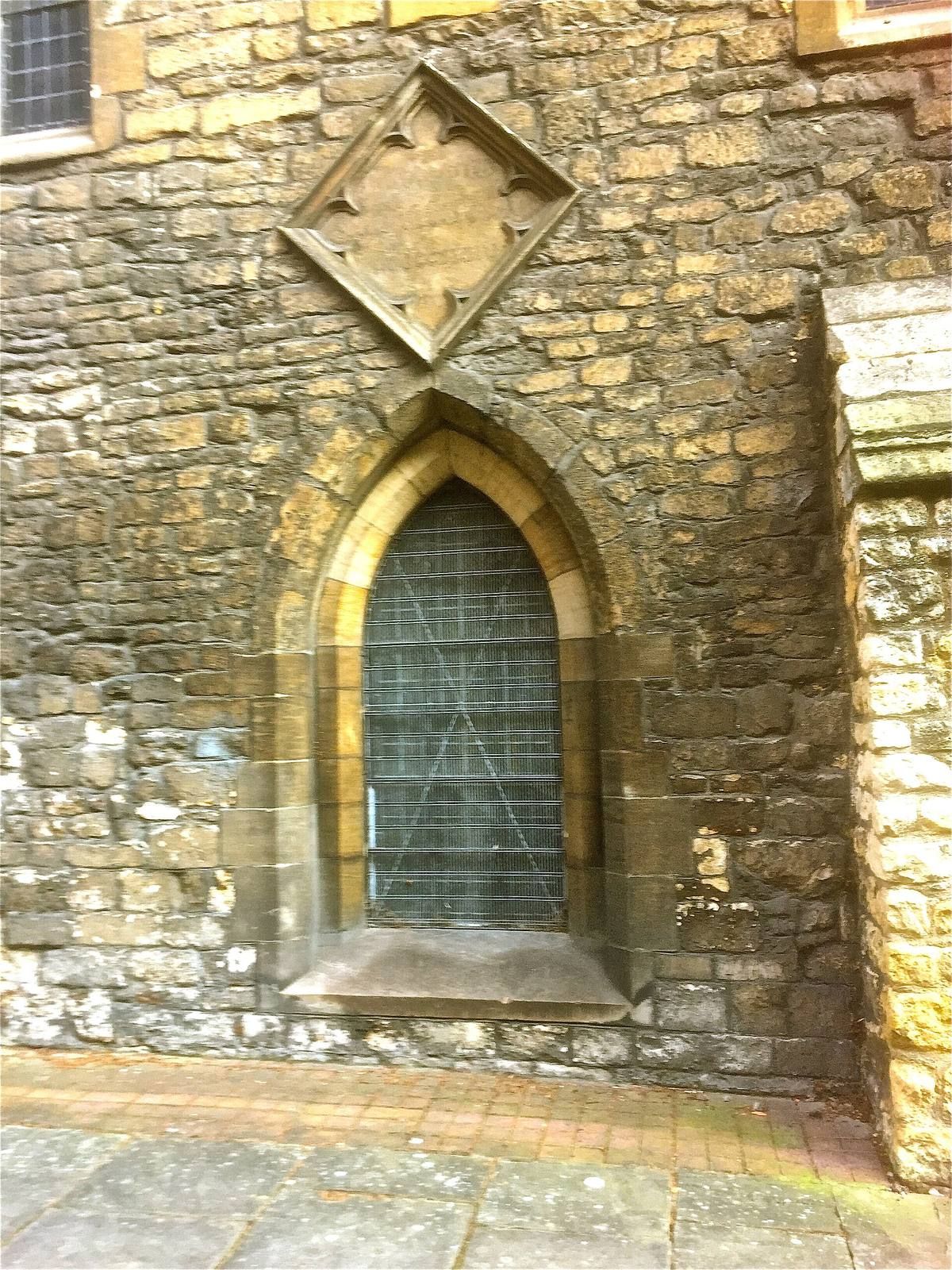
The surviving building is the friary infirmary, dated to around 1230. Its Early English style belongs to an early phase of English Gothic architecture associated with pointed arches and narrow lancet windows. The building is constructed of dressed stone and brick and has an upper floor above a lower level. Mid-nineteenth-century additions form part of the structure.
The main building has a clay-tile roof, which is in poor condition. The nineteenth-century extension has a Welsh-slate roof that has been repaired.