Sanctuary of Puig de Maria: A Medieval Religious Complex near Pollença, Spain
Site at a Glance
- Rating
- 4.6
- Popularity
- Medium
- Country
- Spain
- Primary era
- Medieval
- Eras represented
- Medieval, Early Modern, Modern
- Civilizations
- Crown of Aragon, Spanish
- Site type
- Religious
- Remains
- Fortified Monastery
On this page9 sections
History
The Sanctuary of Puig de Maria is a religious complex on the summit of Puig de Maria near Pollença, Spain. Its foundation was authorized in 1348, and its church was consecrated in 1355. The sanctuary later housed a community of women religious and sheltered residents during an attack on Pollença.
Foundation and monastic community
Bishop Berenguer Batle of Palma approved the foundation, and Pollença’s municipal officers commissioned a religious building on the mountain. Its establishment may have been prompted by the Black Death, the devastating pandemic that spread through Europe in the mid-fourteenth century.
Between 1362 and 1365, women hermits from the religious community at Puig de Can Sales arrived. They included Flor Ricomana, who founded the community, and her companions Simona Alzina, her daughter, and Dolça Blanc. The community became a monastery in 1371, with Flor as its first prior. Its members followed a monastic rule traditionally attributed to Saint Peter.
The community eventually numbered twenty women. It maintained a school and library, managed its finances, and cared for older and sick people. After disagreements with Pollença’s prior, a member of the medieval religious and military Order of the Hospital of Saint John, the women gained the protection of the bishop of Mallorca and the king. In 1388, Clement VII, a rival claimant to the papacy during the Western Schism, confirmed the house as a priory of Augustinian canonesses, women religious associated with the Rule of Saint Augustine.
Refuge and municipal stewardship
On 30 and 31 May 1550, Pollença residents took refuge at the sanctuary during an attack on the town by 1,500 corsairs, armed maritime raiders or privateers. The complex’s fortified character offered protection.
In 1564, following reforms from the Council of Trent, a major Catholic council that set rules for religious communities, the nuns chose to leave rather than accept stricter enclosure. They moved to Palma but retained possession of Puig de Maria, and later founded the Convent of the Conception there in 1576. The sanctuary fell into disuse before returning to Pollença’s municipal officers in 1638. They arranged renovations from 1682 to 1692, and the church roof was renewed in 1743.
Devotion and Easter pilgrimage
Local devotion centers on Our Lady of Puig, a title for the Virgin Mary associated with the mountain. Although Our Lady of the Angels is Pollença’s patroness, residents have also sought Our Lady of Puig’s intercession. A local tradition says women from Can Sales saw a sign on the mountain and found a statue there. When they could not move it to Pollença’s church, they took this as a sign to build a chapel on the spot. The foundation is more plausibly linked to the Black Death than to this legend. People also made vows to climb the mountain in gratitude for favors received, a practice continued until recent times.
The Easter pilgrimage festival grew after the sanctuary passed to the town in the seventeenth century. For centuries, celebrations could last up to three days, with dances and meals paid for by the municipal council. After members of the Republican Party, including some town councilors, profaned the church in 1869, violating its sacred use, the festival was limited to religious observances for the rest of the century. The custom returned in a changed form during the twentieth century. In 1987, the procession moved from the Tuesday after Easter to Easter Monday, when residents continue to walk to the sanctuary.
Later care and religious use
A lay caretaker and a church maintenance officer managed the sanctuary with the municipal council and parish. At the initiative of the Mallorcan poet and theologian Miquel Costa i Llobera, the church was renovated in the late nineteenth century. Hermits of Saint Paul and Saint Anthony settled there in 1917. The Missionaries of the Sacred Hearts took charge in 1968 and left in 1988, after which a lay group assumed responsibility. The complex also serves as a hostel, operated on behalf of the Church after the last religious residents departed. Refurbishment began in 2022. The sanctuary became a Cultural Interest Property on 30 November 1993.
Remains
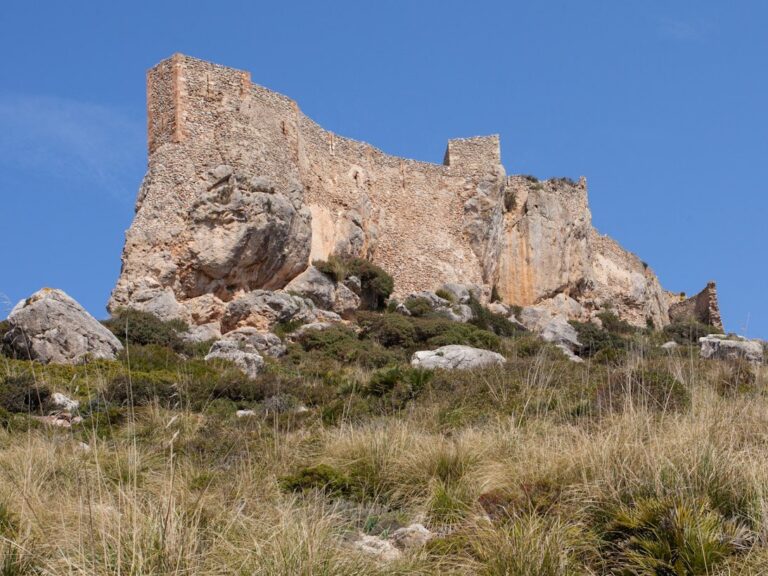
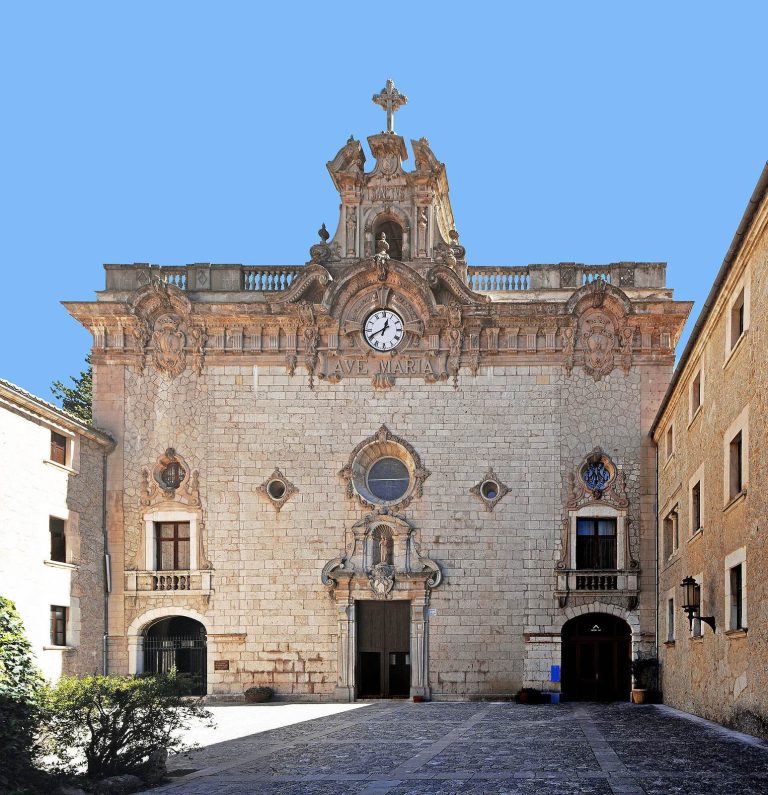
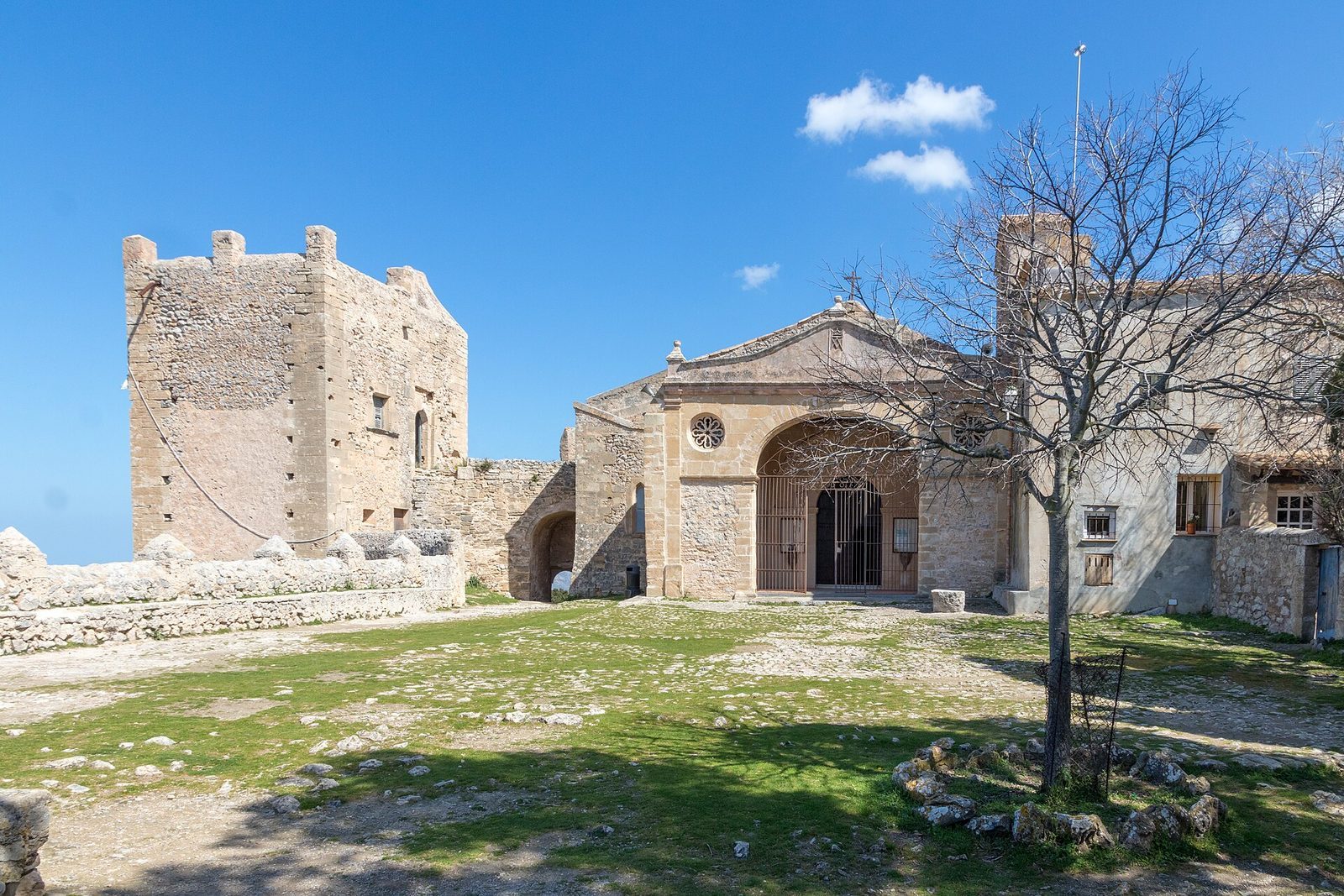
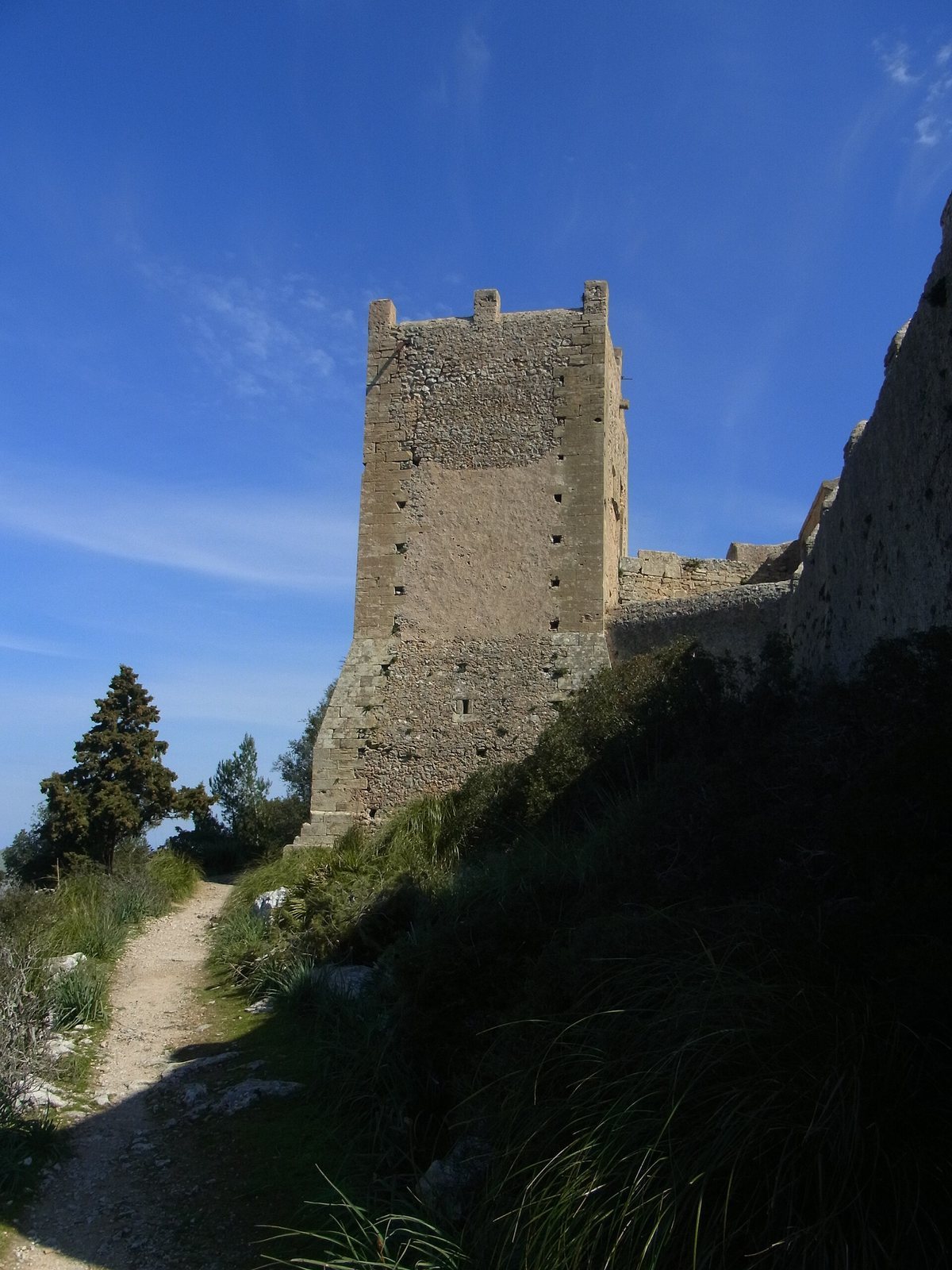
The complex occupies the summit of Puig de Maria, about 330 metres above sea level and southeast of Pollença. Its principal components include a church facing a courtyard, a defensive tower, and service buildings. A watchtower and fortress-like walls formed part of its defenses.
Church and courtyard
The church is described as dating to the fifteenth century and has a single nave, the main body of the building. Its façade dates to 1858. A Gothic carving of the Virgin and Child, the sanctuary’s venerated image, is displayed in a shrine chamber.
Monastic and defensive buildings
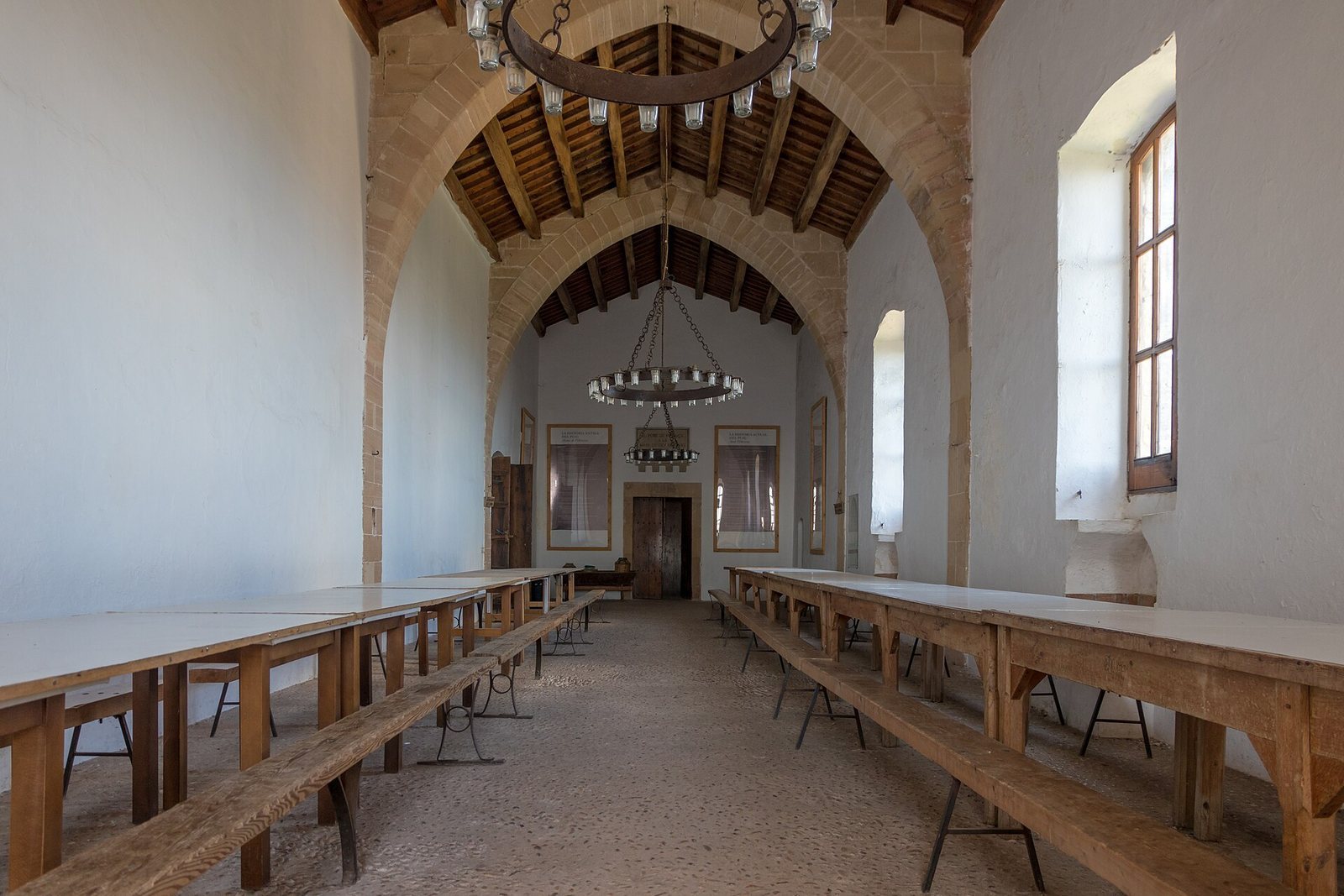
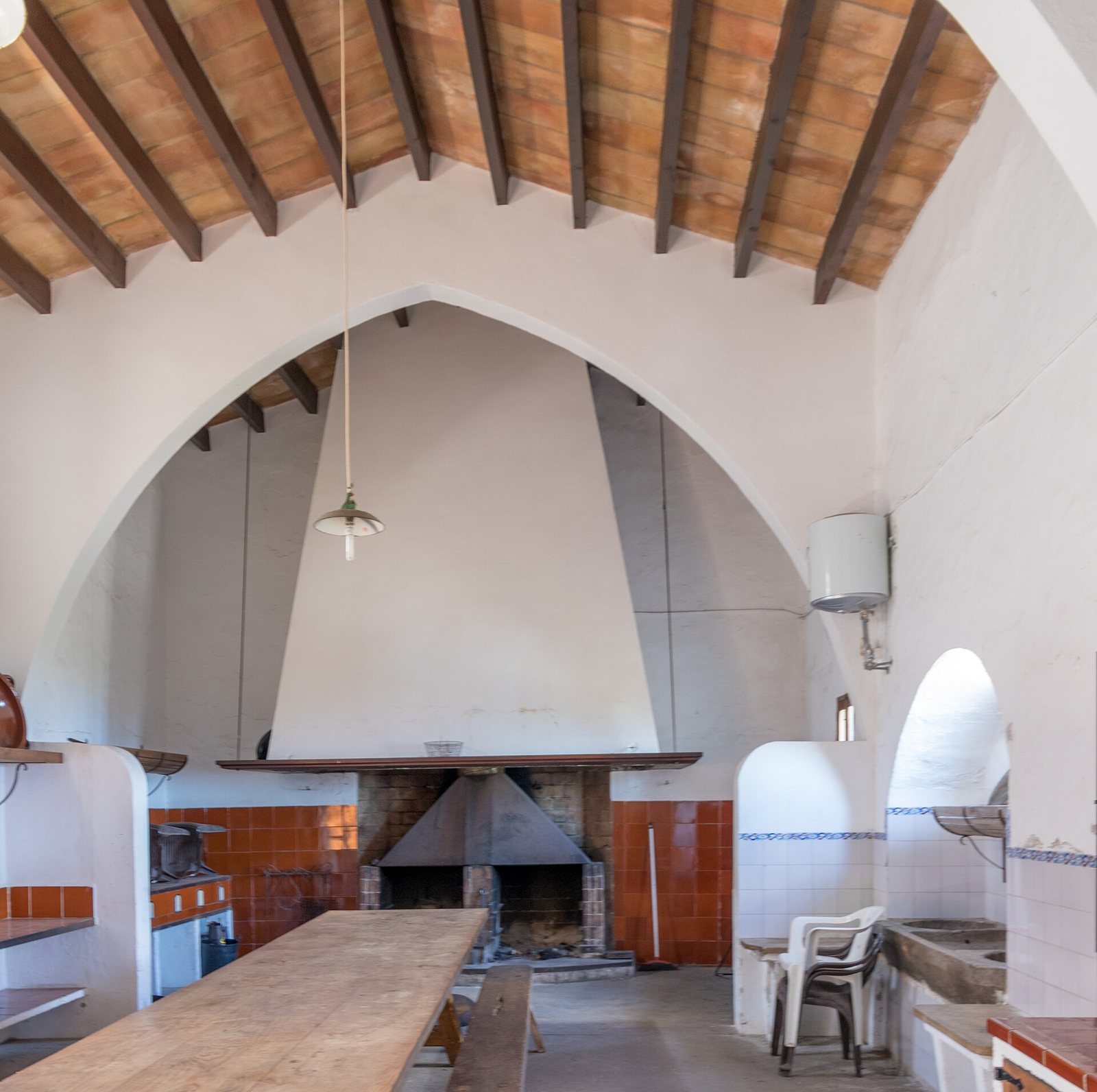
Between 1414 and 1564, the complex was enlarged with a chapter house, dormitory, refectory, and kitchen. The refectory, the community’s dining room, is particularly well preserved. The defensive tower dates to the late fourteenth century, while fortress-like walls and a watchtower formed part of the complex’s defenses.
Devotional and displayed objects
A room in the sanctuary holds votive offerings, objects given in devotion or gratitude. Coins, household objects, and tools are displayed in the hostel’s stairwell.