The Roman Necropolis at Šempeter: A Cemetery and Archaeological Park
Site at a Glance
- Popularity
- Medium
- Country
- Slovenia
- Primary era
- Classical
- Eras represented
- Iron Age, Classical
- Civilizations
- Hallstatt culture, Roman
- Site type
- Burial
- Remains
- Necropolis
On this page6 sections
History
The Roman Necropolis at Šempeter is a Roman cemetery on the eastern edge of Šempeter, Slovenia, used from the mid-first century to the third century CE.
Roman use and the river flood
The cemetery served a settlement in the fertile Savinja Valley. A flood of the Savinja River damaged the burial ground, and part of it collapsed into the river channel. A new cemetery was established to the north afterward.
Excavation and protection
Archaeologists Josip Klemenc and Vera Kolšek excavated the site from 1947 to 1967. The decision to display preserved monuments led to the creation of an archaeological park. On 25 November 2003, the necropolis was declared a monument of national importance under the Slovenian name Antična nekropola.
Remains
The burial ground extended for more than a kilometre along a former Roman road linking the cities of Emona and Celeia. Its graves ranged from simple pits to elaborate built tombs, and the site’s listed area is 2,500 square metres.
Burials and tomb sculpture
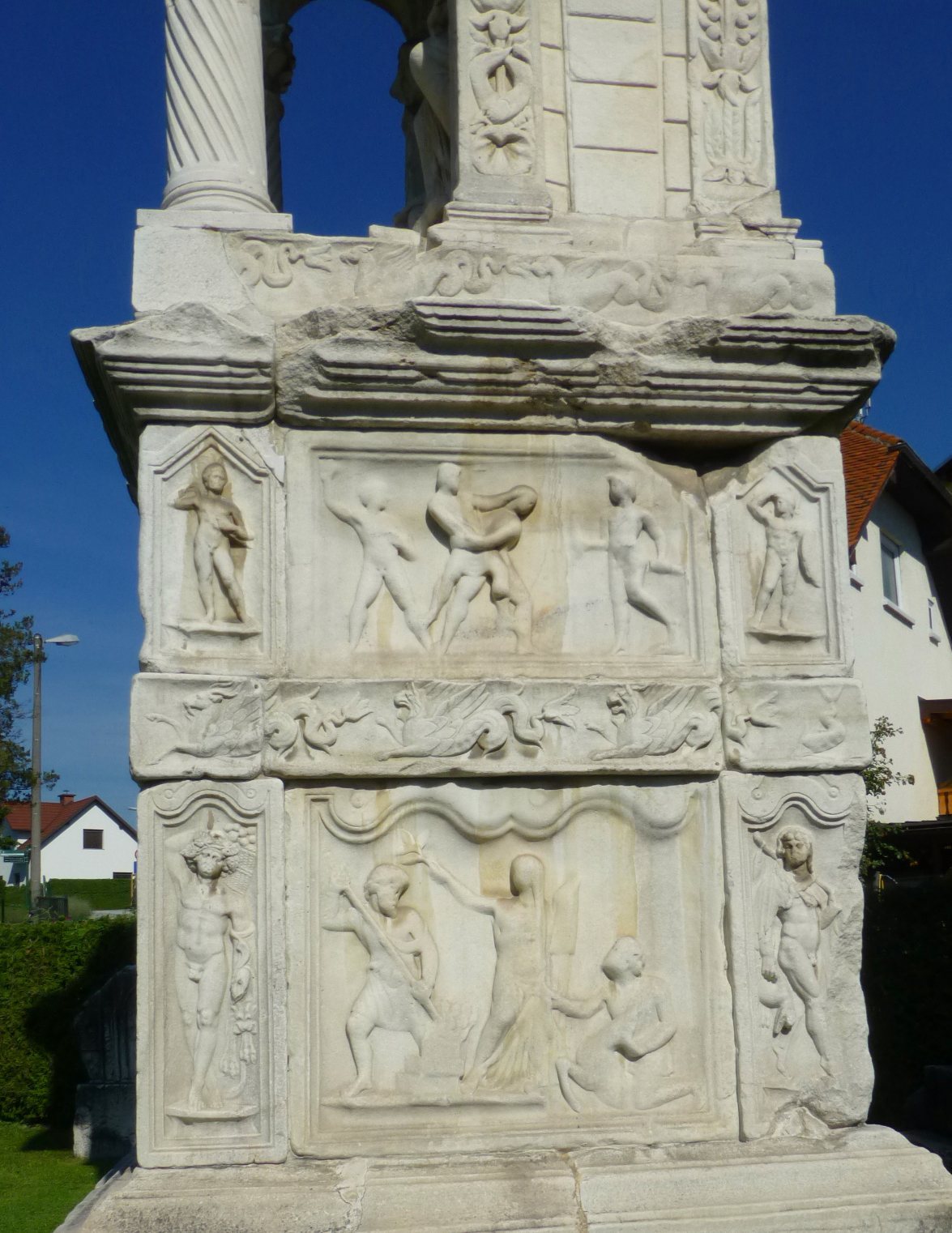
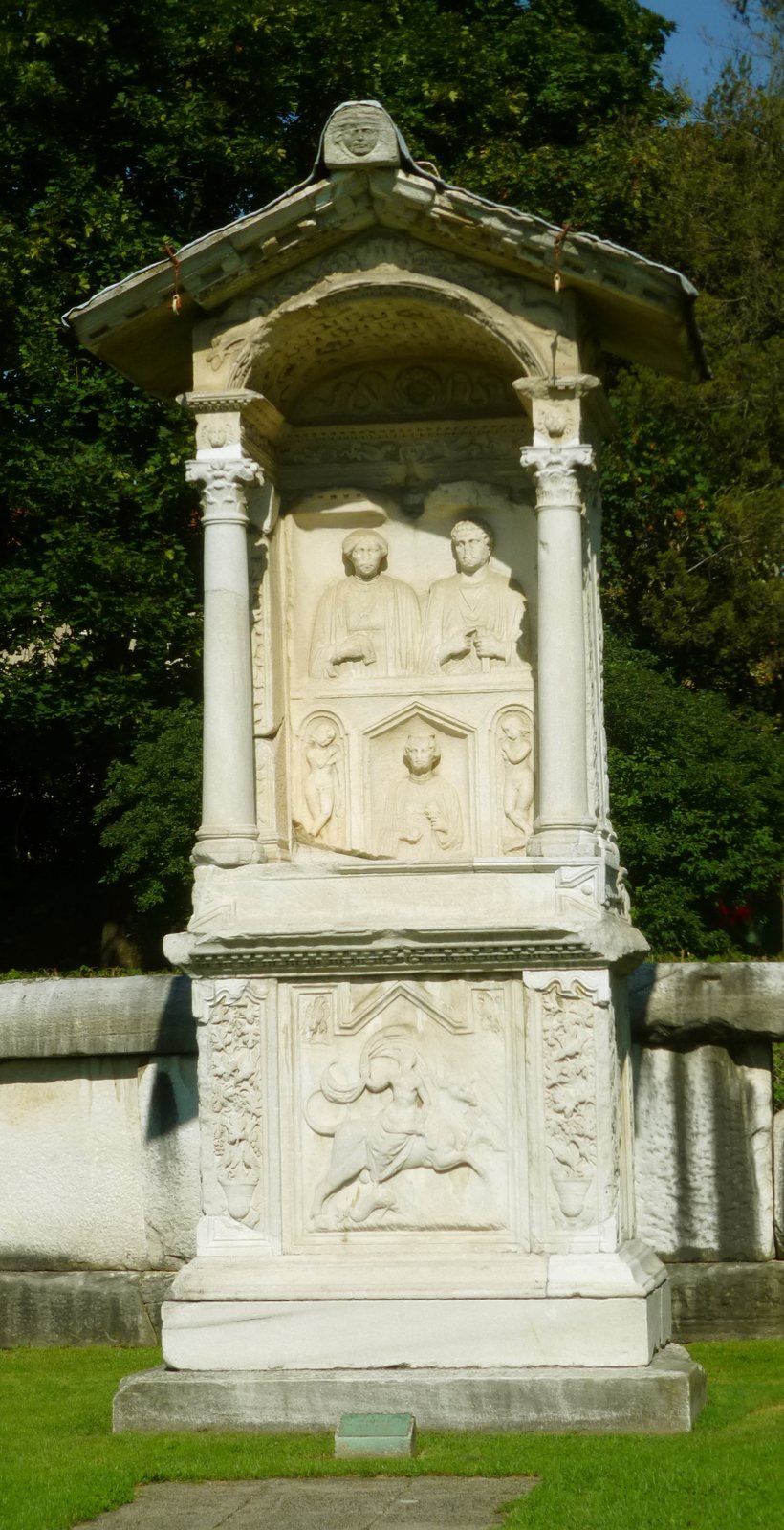
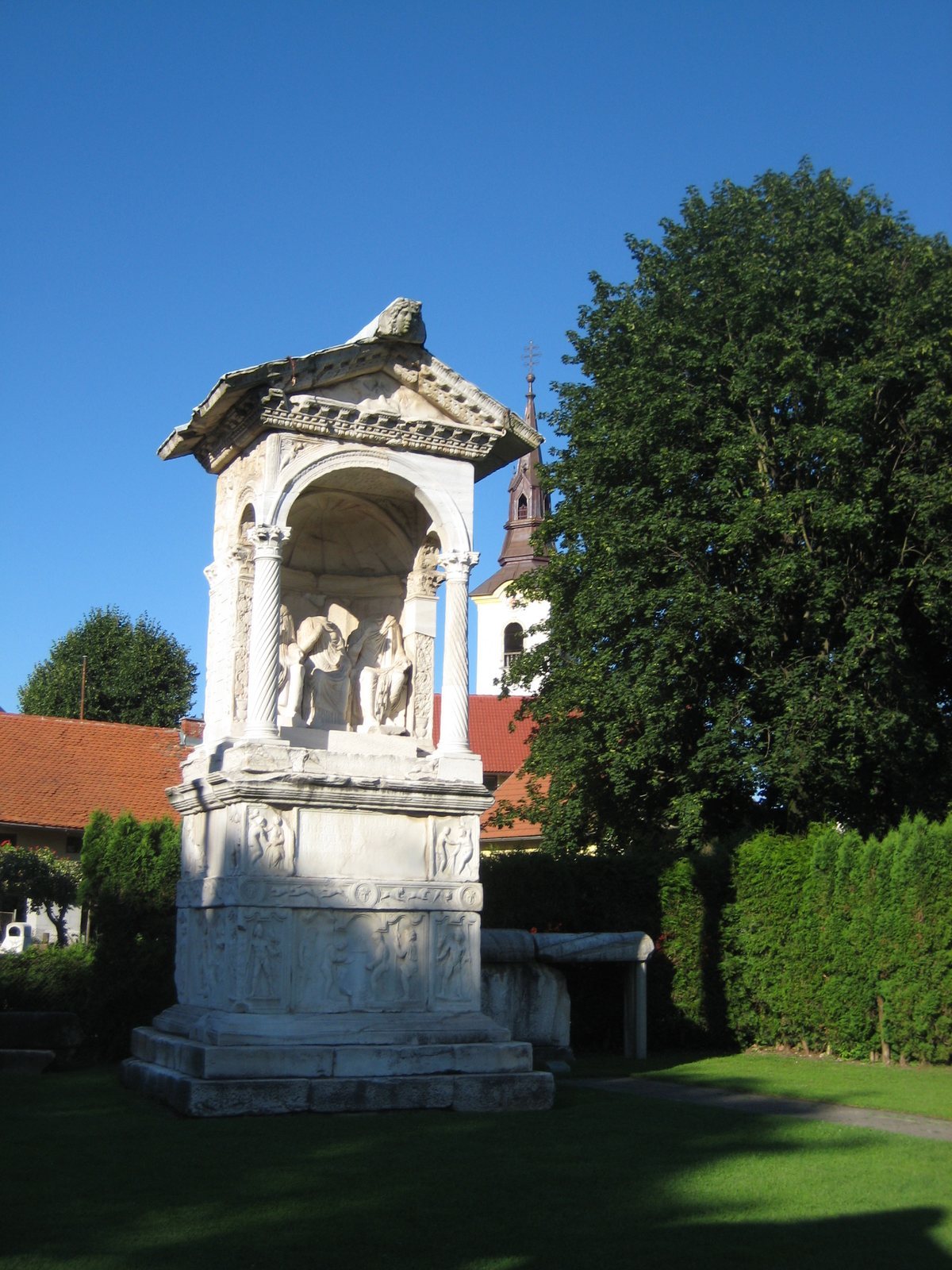
Elaborate tombs had masonry-built foundations and marble sculptures in the Noric-Pannonian style, regional Roman art associated with Noricum and Pannonia. The sculptures depict tomb owners and mythological scenes. Hallstatt-period graves, belonging to a prehistoric Central European culture, lay in a layer immediately beneath the Roman burials.
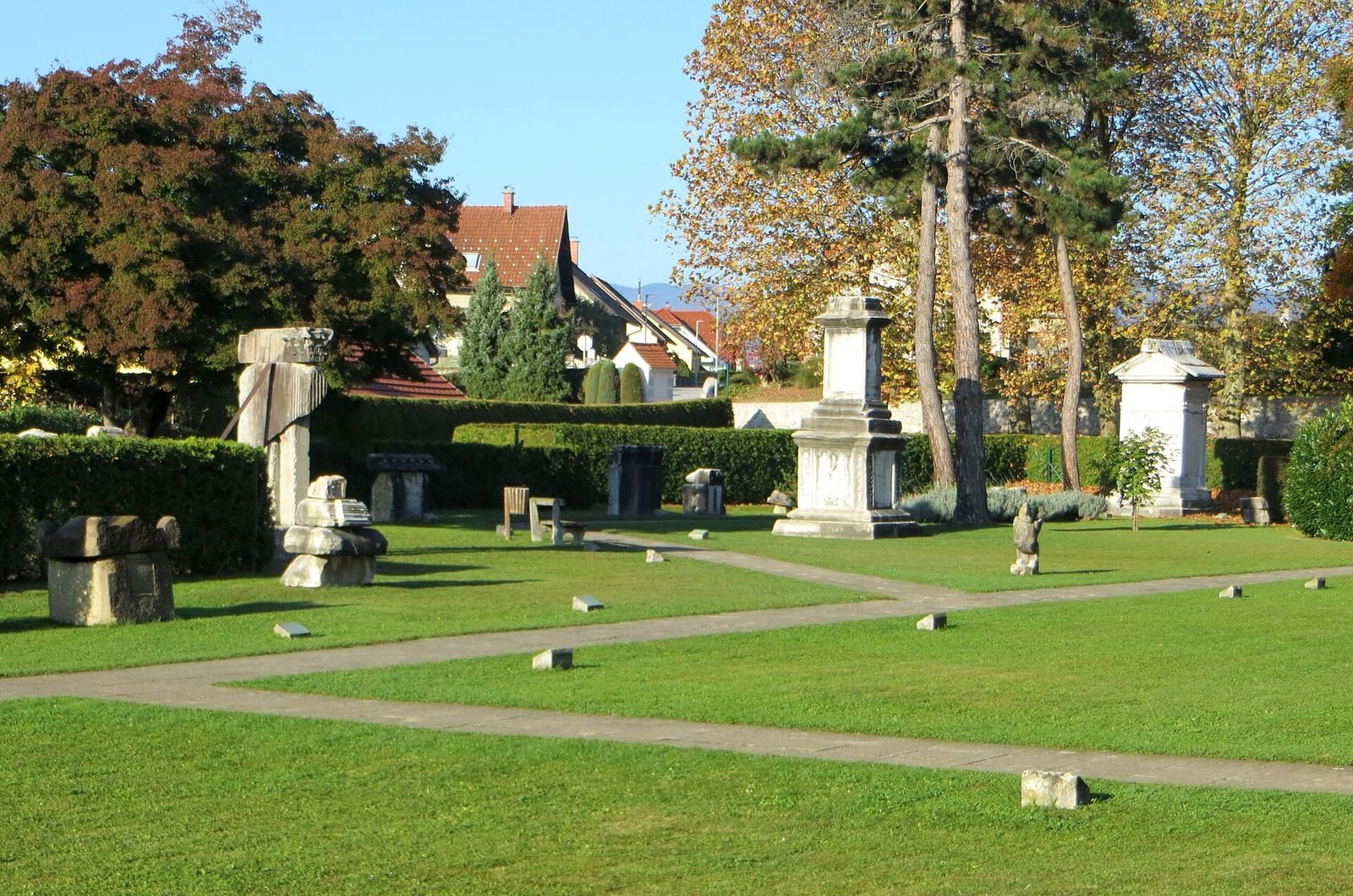
The archaeological park
The open-air park lies southwest of St Peter’s Church in eastern Šempeter and is enclosed by a hedge. It presents four reconstructed marble tombs, fragments from other graves, architectural pieces, reconstructed ground plans for some graves, and 300 metres of Roman-road remains. Many well-preserved monuments had stood near the former river channel, where gravel concealed them. The tomb of Spectatius, commemorating a Roman individual of that name, is displayed at its original location.