Henley Bridge: An 18th-Century Road Crossing over the Thames
Site at a Glance
- Rating
- 4.7
- Popularity
- Medium
- Country
- United Kingdom
- Primary era
- Early Modern
- Eras represented
- Medieval, Early Modern
- Civilizations
- British, English
- Site type
- Infrastructure
- Remains
- Bridge
On this page7 sections
History
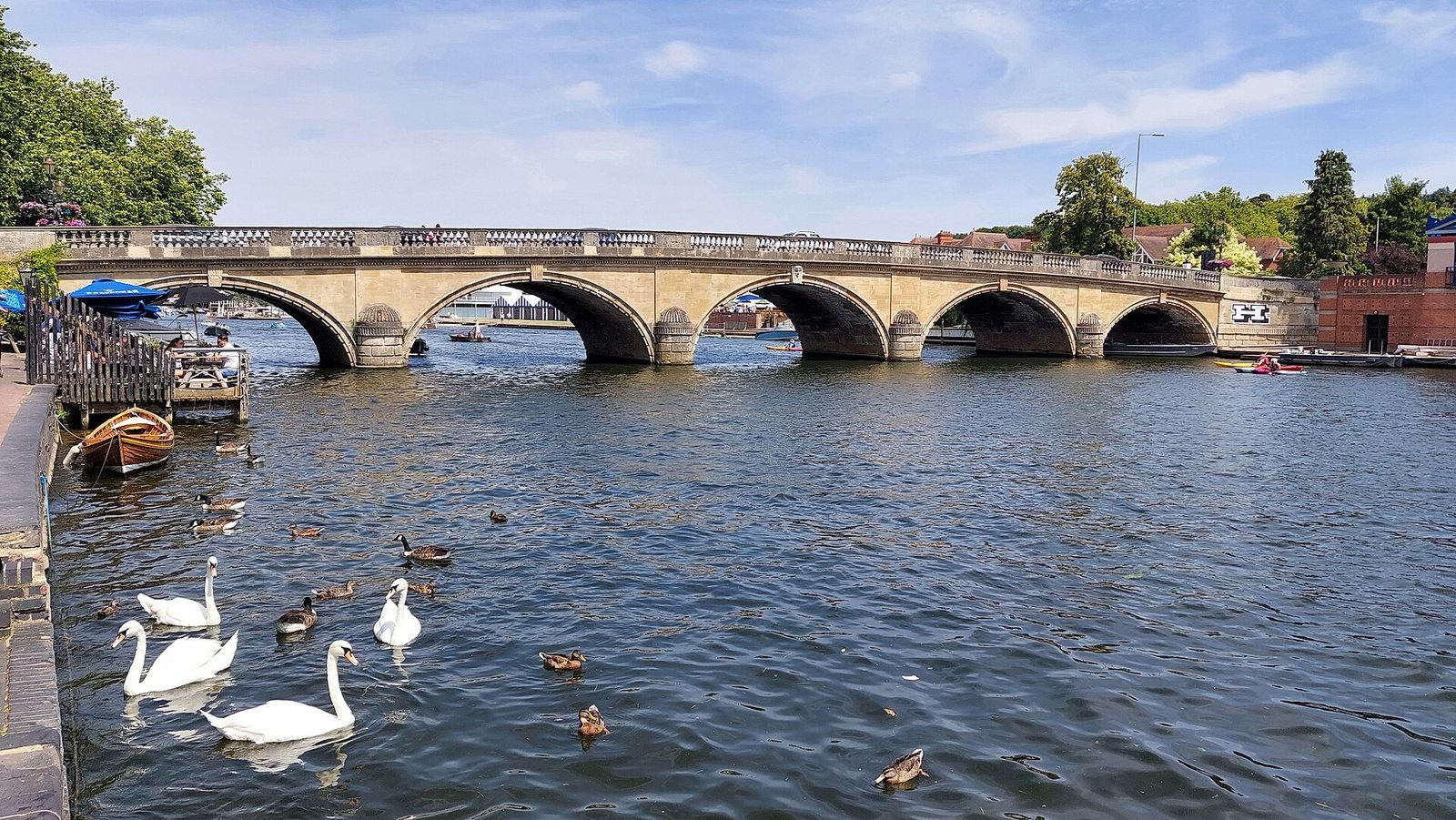
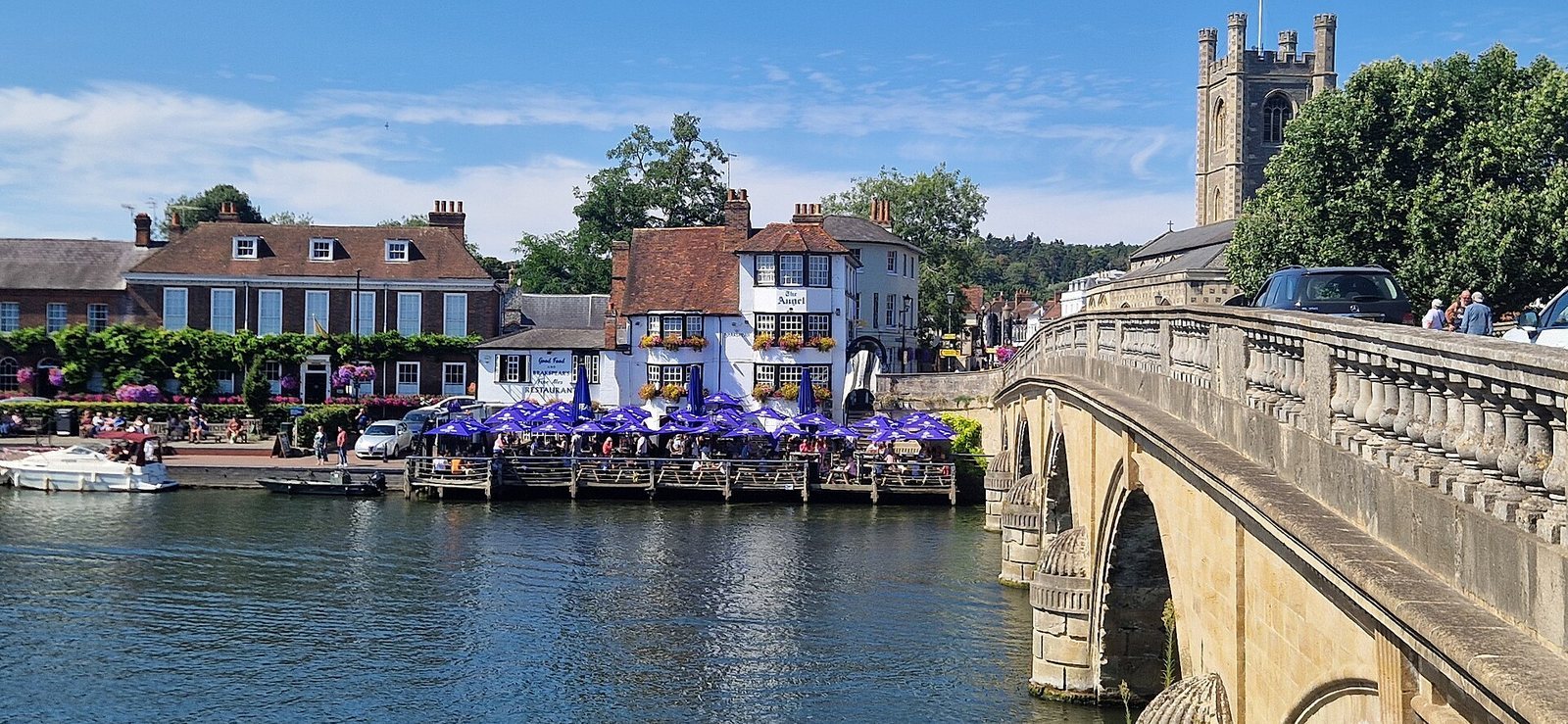
Henley Bridge is a stone road bridge over the Thames between Henley-on-Thames in Oxfordshire and Remenham in Berkshire, United Kingdom. Designed in 1781 and opened in 1786, it replaced an earlier timber crossing and became a lasting part of the river route between the two settlements.
Early crossings
The Thames has been crossed here since ancient times. The earliest recorded bridge appears in the Patent Rolls in 1232. These were English Chancery records of royal grants and letters. Some writers have linked an earlier stone bridge at this location to the crossing used by Roman forces pursuing the Britons in AD 43, an episode described by Dion Cassius, a Greek-speaking Roman historian whose work includes accounts of Britain. Many reject that identification.
By 1354, two granaries on the bridge were leased, and several chapels were recorded there. A later timber bridge, supported on stone piers, was swept away in the great flood of 1774.
Construction and later history
The Henley Bridge Act received royal assent on 18 May 1781, with a commencement date of 31 October 1780. It authorized a bridge and its approaches, alongside changes to parts of High Street and the Market Place, street lighting and watch, footway regulation, and the removal of obstructions. Acts in 1808 and 1836 amended and enlarged its powers.
William Hayward of Shrewsbury designed the present bridge in 1781, but died in 1782 before building began. Oxford mason John Townesend constructed it for about £10,000, and it opened in 1786.
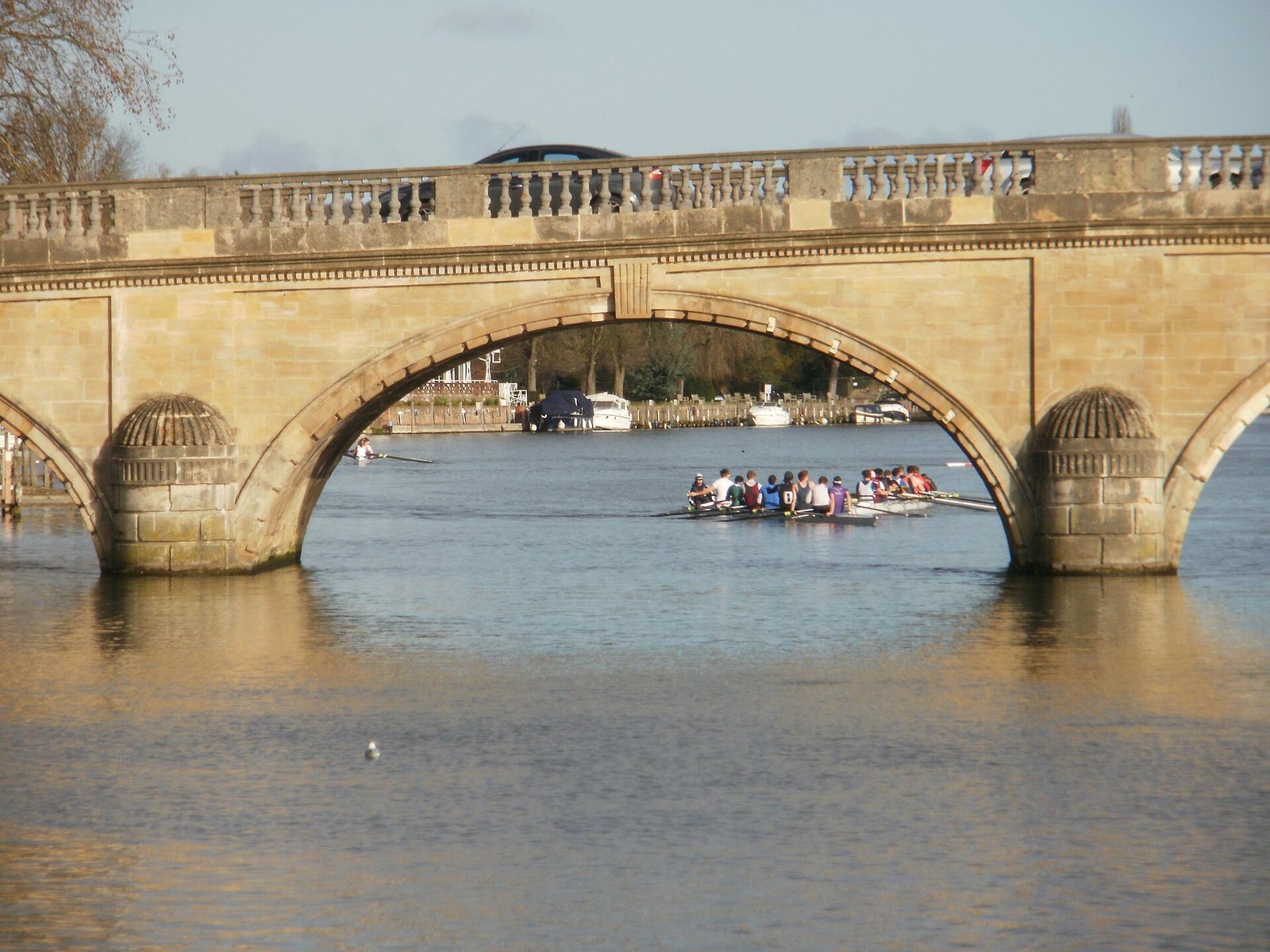
In June 1829, the bridge was the finish line of the first Oxford and Cambridge University Boat Race. The course began 2.25 miles (3.62 km) downstream at Hambleden Lock. Oxford won, and an estimated 20,000 spectators watched the race.
In August 2010, the boat Crazy Love damaged the bridge, and a repair programme began the following year. Henley Bridge is a Grade I listed structure, a designation in England for buildings of exceptional architectural or historic interest.
Remains
The stone bridge connects Hart Street with White Hill, part of the A4130, and crosses the Thames reach between Hambleden Lock and Marsh Lock. It also carries the Thames Path. Five oval-shaped elliptical arches form five spans above four supports in the river; the bridge’s stated height is 14 feet 3 inches (4.34 m).
Sculpture and earlier bridge fabric
Figures on the central arch
Sculptures of Isis and Tamesis by British sculptor Anne Seymour Damer occupy the central stone at the crown of the middle arch on both sides of the bridge. Tamesis faces north, downstream, and uses an ancient Latin name for the river. Isis faces south, upstream, and is a traditional name for the upper Thames. Damer’s original models are displayed in the Henley Gallery at the nearby River and Rowing Museum.
Remains of earlier crossings
Foundations of the timber bridge that was swept away in 1774 can be seen in the basement of the Henley Royal Regatta headquarters on the Berkshire bank. Two stone arches on both sides of the river point to an older stone bridge that preceded the timber crossing. The eastern end support of the present bridge incorporates the intact easternmost span of a 12th-century bridge.