Greys Court: A Tudor-Style Country House and Medieval Castle Site

Site at a Glance
- Rating
- 4.6
- Popularity
- Medium
- Country
- United Kingdom
- Primary era
- Early Modern
- External website
- Open
- Eras represented
- Medieval, Early Modern
- Civilizations
- English
- Site type
- Domestic
- Remains
- Manor House
On this page7 sections
History
Greys Court is a historic country house in the United Kingdom, located at Rotherfield Greys near Henley-on-Thames in Oxfordshire. Its history reaches back to the Norman period, while the present house is associated with 1642 and is principally Tudor-style. The estate developed from the principal manor of six held in 1086 by Anchetil de Greye, a Norman knight and ancestor of the Grey family.
Medieval manor and castle
Rotherfield Greys was earlier known as Redrefield. In 1346, John de Grey, 1st Baron Grey de Rotherfield, received a royal license to crenellate, meaning permission to fortify his residence with defensive features such as battlements. He greatly enlarged the existing group of buildings and added a castle around 1347. John de Grey was also among the original founder knights of the Order of the Garter, England’s highest order of chivalry.
Crown and Knollys ownership
The estate passed to the Crown in 1485. In 1514, it was granted to Robert Knollys in return for an annual rent of one red rose. The property remained with the Knollys family until 1642, a period during which the present house and associated buildings were constructed. The architectural work has also been associated with John Grey, Francis Knollys, and Baron Lovel, although the architect is unknown.
Later owners and preservation
Sir William Paul purchased Greys Court in 1686. In 1724, the house passed through the dowry of his son William’s daughter to Sir William Stapleton, 4th Baronet. Evelyn Fleming, the mother of author Ian Fleming, occupied the house from 1935 to 1937.
Sir Felix Brunner and his wife, Lady Brunner, née Elizabeth Irving, bought Greys Court from the Stapleton family in 1937. The Brunner family donated the property to the National Trust in 1969. The National Trust is a British charitable organization that preserves historic buildings, landscapes, and cultural sites for public benefit. Lady Brunner continued to live at Greys Court until her death in 2003. The house is a Grade I listed building, while its park and garden are entered on the national register of historic parks and gardens at Grade II level.
Remains
Greys Court is arranged as a country house with a courtyard, and is also described as a quadrangular castle and a house-museum. The buildings and gardens occupy approximately 280 acres, or about 110 hectares, in gently hilly countryside. Surviving elements combine the medieval fortified site with the later domestic house, landscaped grounds, and walled gardens.
Medieval and Tudor features
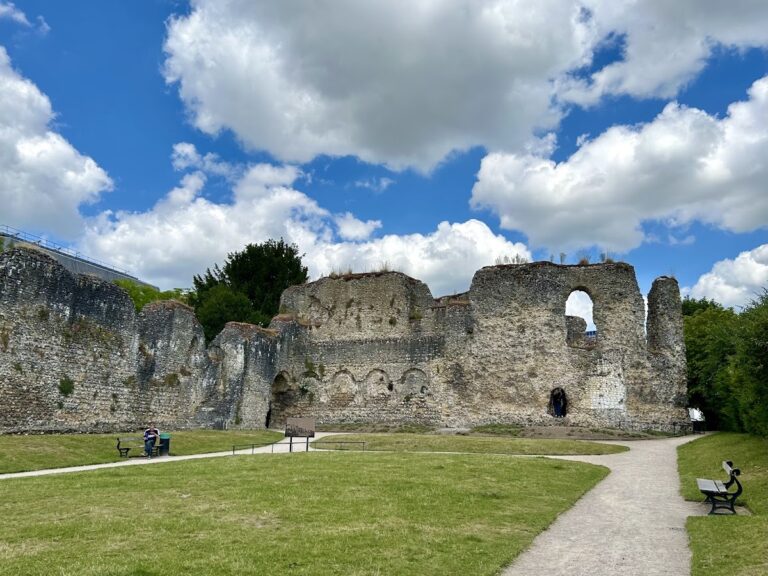
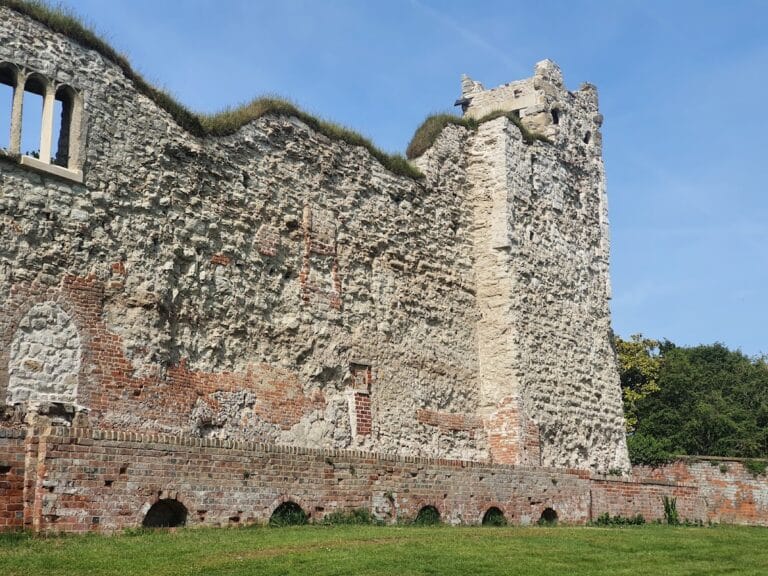
A fortified tower built around 1347 survives within the grounds as the only remaining part of the medieval castle. It overlooks the gardens and the surrounding countryside. The grounds also contain a Tudor wheelhouse, while the house retains notable eighteenth-century plasterwork interiors and remains furnished as a family home.
Walled gardens and grounds
The walled gardens contain old-fashioned roses, wisteria, an ornamental vegetable garden, and a grass-laid maze with brick paths. An ice house is also preserved within the gardens. Archbishop Robert Runcie dedicated the maze on 12 October 1981. Together, these features form part of the surviving domestic and horticultural setting of the house.