Farndon Bridge: A Medieval Crossing of the River Dee
Site at a Glance
- Popularity
- Medium
- Country
- United Kingdom
- Primary era
- Medieval
- Eras represented
- Medieval
- Civilizations
- English
- Site type
- Infrastructure
- Remains
- Bridge
On this page7 sections
History
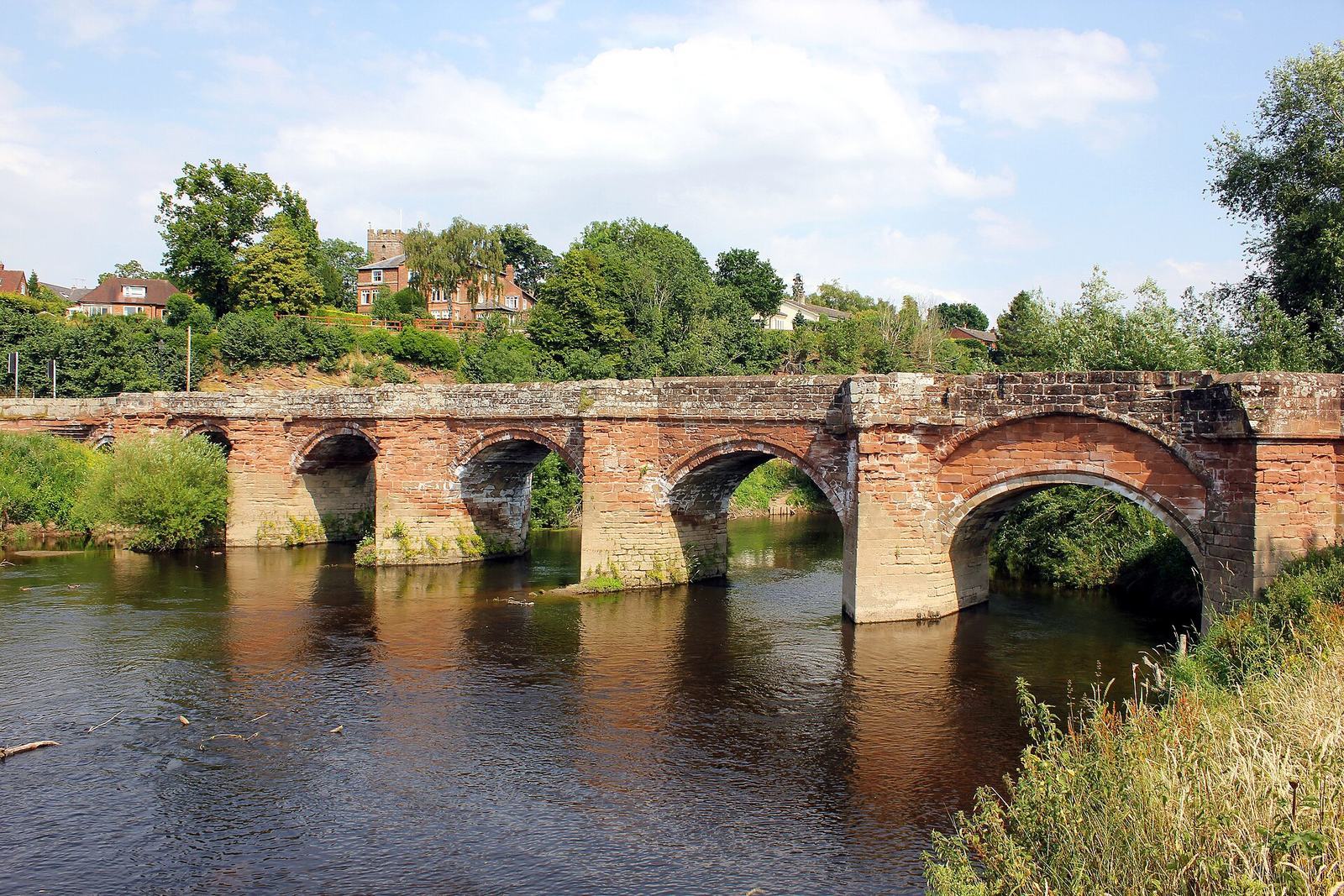
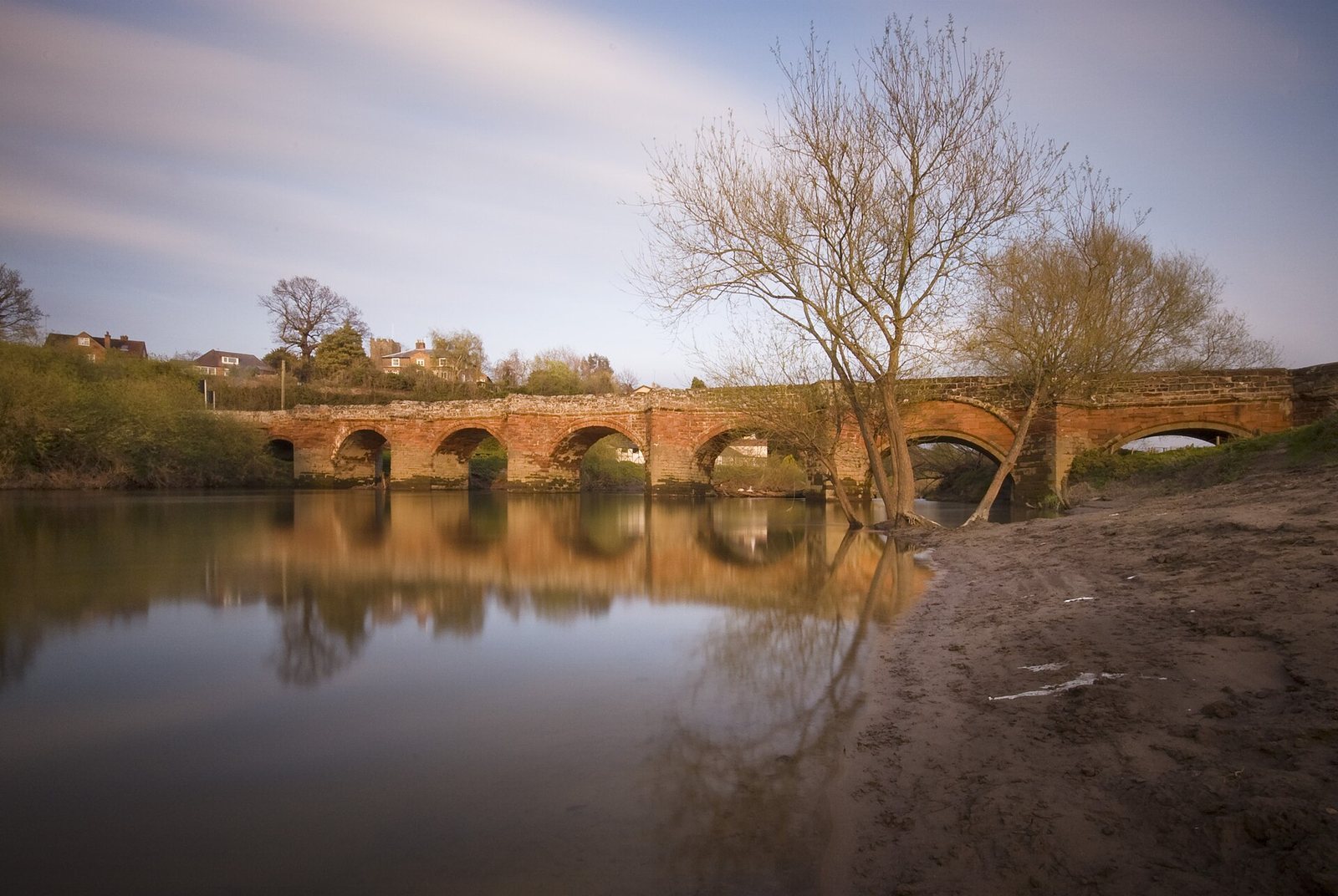
Farndon Bridge is a medieval bridge over the River Dee between Farndon, Cheshire, England, and Holt, Wrexham, Wales, in the United Kingdom. Monks of St Werburgh’s Abbey, a medieval monastery in Chester, built it in 1339.
Medieval origins and local traditions
The bridge is also known as Holt Bridge. Its Welsh names include Pont Rhedynfre and Pont Holt. Local tradition links the crossing to two sons of the Welsh prince Madog ap Gruffudd. According to the tale, after Madog’s death the boys were placed in the care of John de Warenne, 6th Earl of Surrey, and Roger Mortimer de Chirk, a lord of the England-Wales borderlands. Their guardians allegedly planned to seize the boys’ wealth and threw them into the river during a freezing journey from Chester to Llangollen. Some people believe the princes’ spirits remain at the bridge and that their cries can still be heard.
Conflict, tolls and preservation
In 1643, during the English Civil War, the conflict between Royalist and Parliamentarian forces in England, a brief skirmish took place near the bridge. Parliamentarian troops were advancing towards Royalists holding Holt, on the river’s western side. Local tradition remembers the encounter as a bloody battle.
The bridge’s toll ended in 1866. Major refurbishment followed in 1870 and 1871, amid debate over whether the old crossing should be replaced. The respected builder George Clark defended its preservation, describing it as a rare link between past and present and estimating its age at about six centuries. The tollhouse and gate on the Welsh side were removed in 1879. Their bricks and other materials, the gateposts, and adjoining land were sold at auction, with removal required within 14 days.
Restoration and renovation took place in the early 1990s, alongside an archaeological survey. The bridge was closed in the summer of 2018 for major structural repairs. It is a Grade I listed building, the highest listed-building category in England, and a scheduled monument recognized by Cadw, the Welsh Government’s historic environment service.
Remains
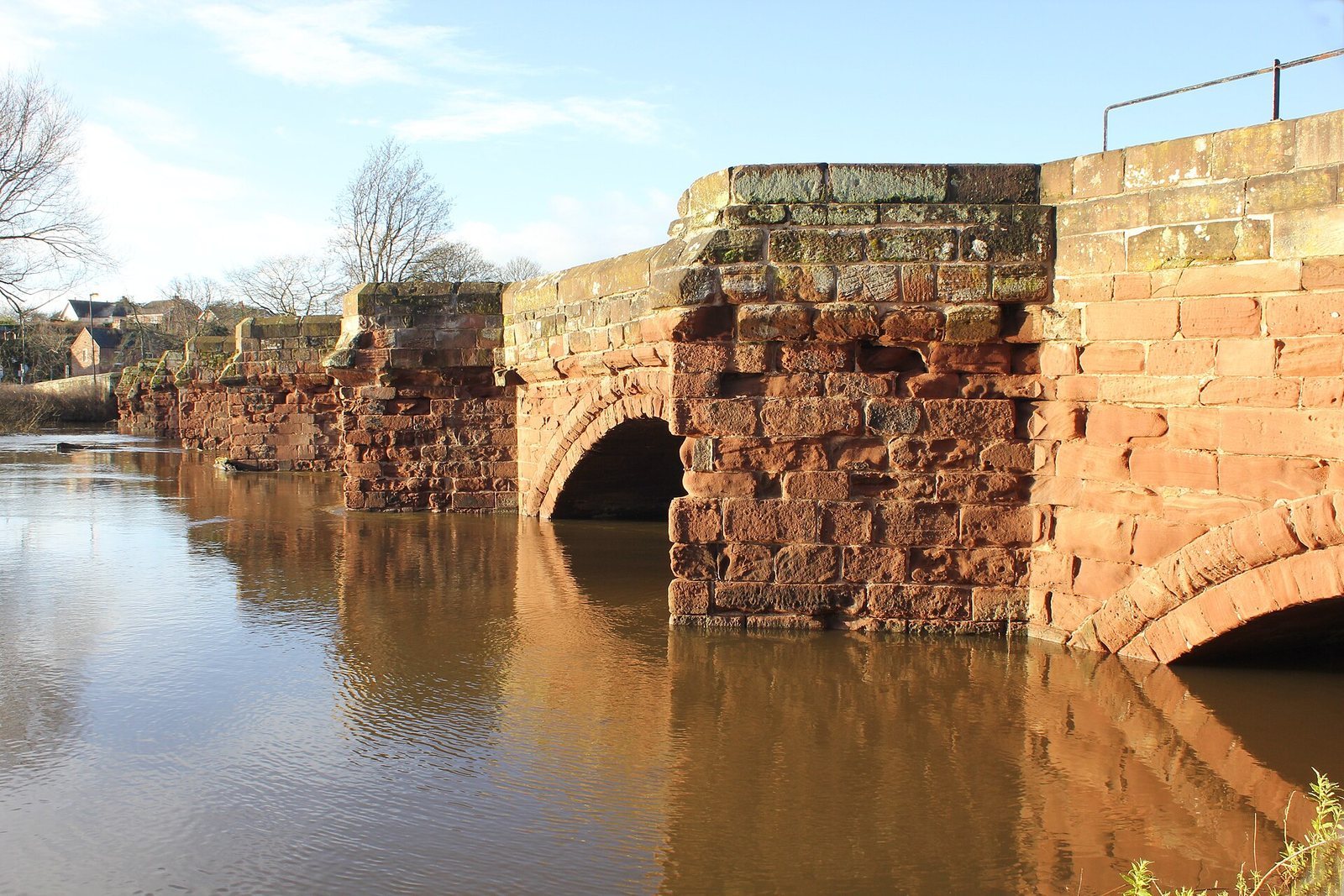
Built of locally quarried red sandstone, Farndon Bridge crosses the river and the England-Wales border. It originally had ten arches; two on the Welsh side were later lost, leaving eight. Five span the main river channel, while the remaining openings include one flood arch on the Farndon side and two on the Holt side. A flood arch lets water pass beyond the main channel.
Structural features and repairs
Arches and former gate tower
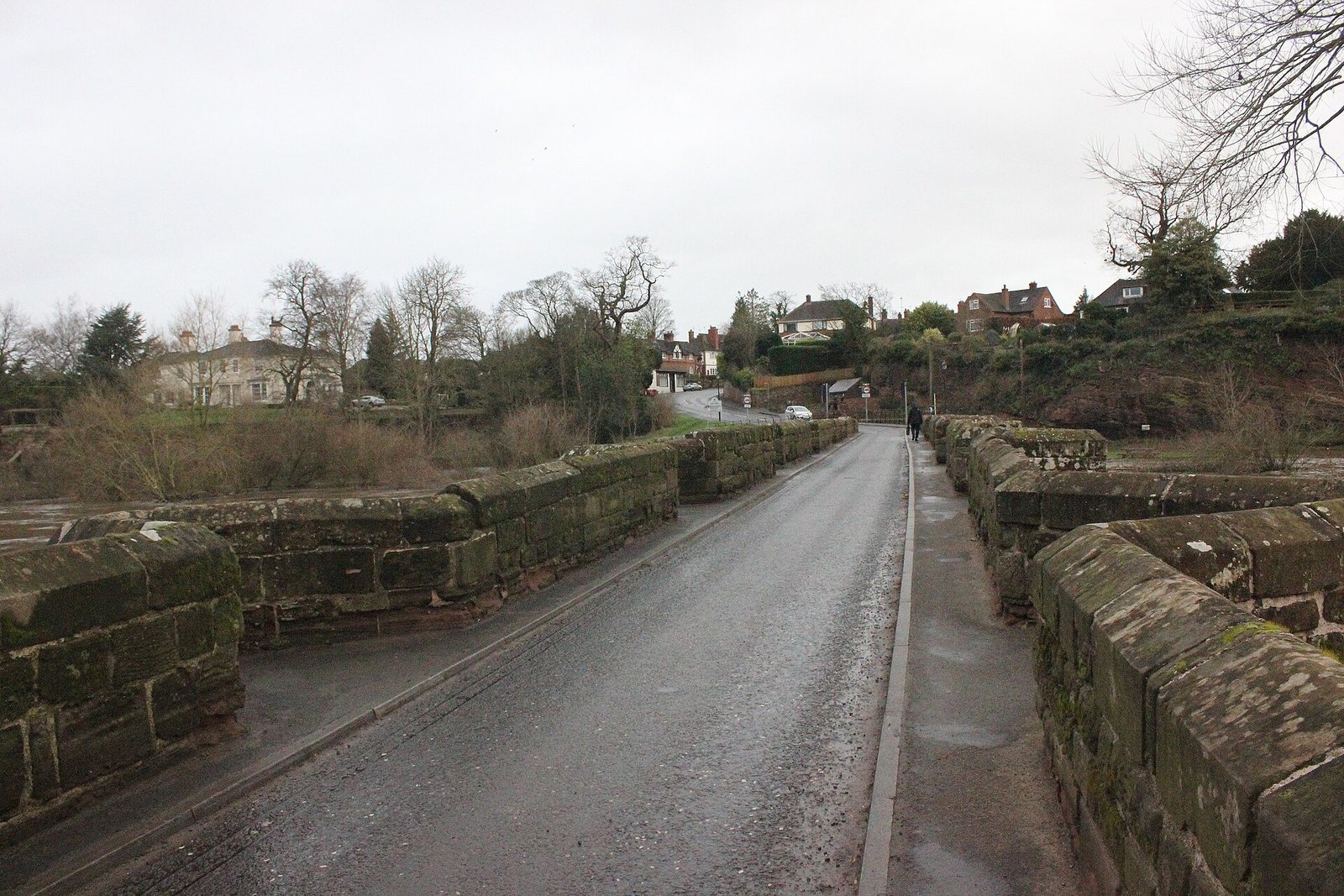
A large defensive gate tower stood above the fifth arch from the English end. In 1770 it was reduced to road level. During the refurbishment of 1870 and 1871, two pillars were made safe, and the lower curved masonry rings of two arches were replaced with Minera stone, a building stone associated with Minera in Wales, set in cement. Workers also repaired the parapets, the low protective walls along the bridge.
Roadway and approach
The bridge carries a single-lane road, with traffic lights controlling vehicle passage, and has narrow pedestrian paths on both sides. Plans for the 1870–71 works included widening the Holt-side approach and paving the road across the bridge; similar improvements for the Farndon side were announced in June 1871.