Franciscan Monastery of Široki Brijeg: A Religious Complex in Bosnia and Herzegovina
Site at a Glance
- Rating
- 4.9
- Popularity
- High
- Country
- Bosnia and Herzegovina
- Primary era
- Modern
- Eras represented
- Modern
- Civilizations
- Austria-Hungary, Habsburg, Ottoman
- Site type
- Religious
- Remains
- Monastery
On this page10 sections
History
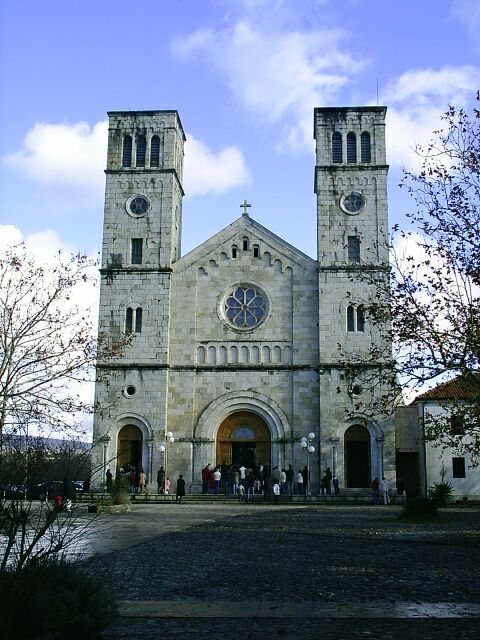
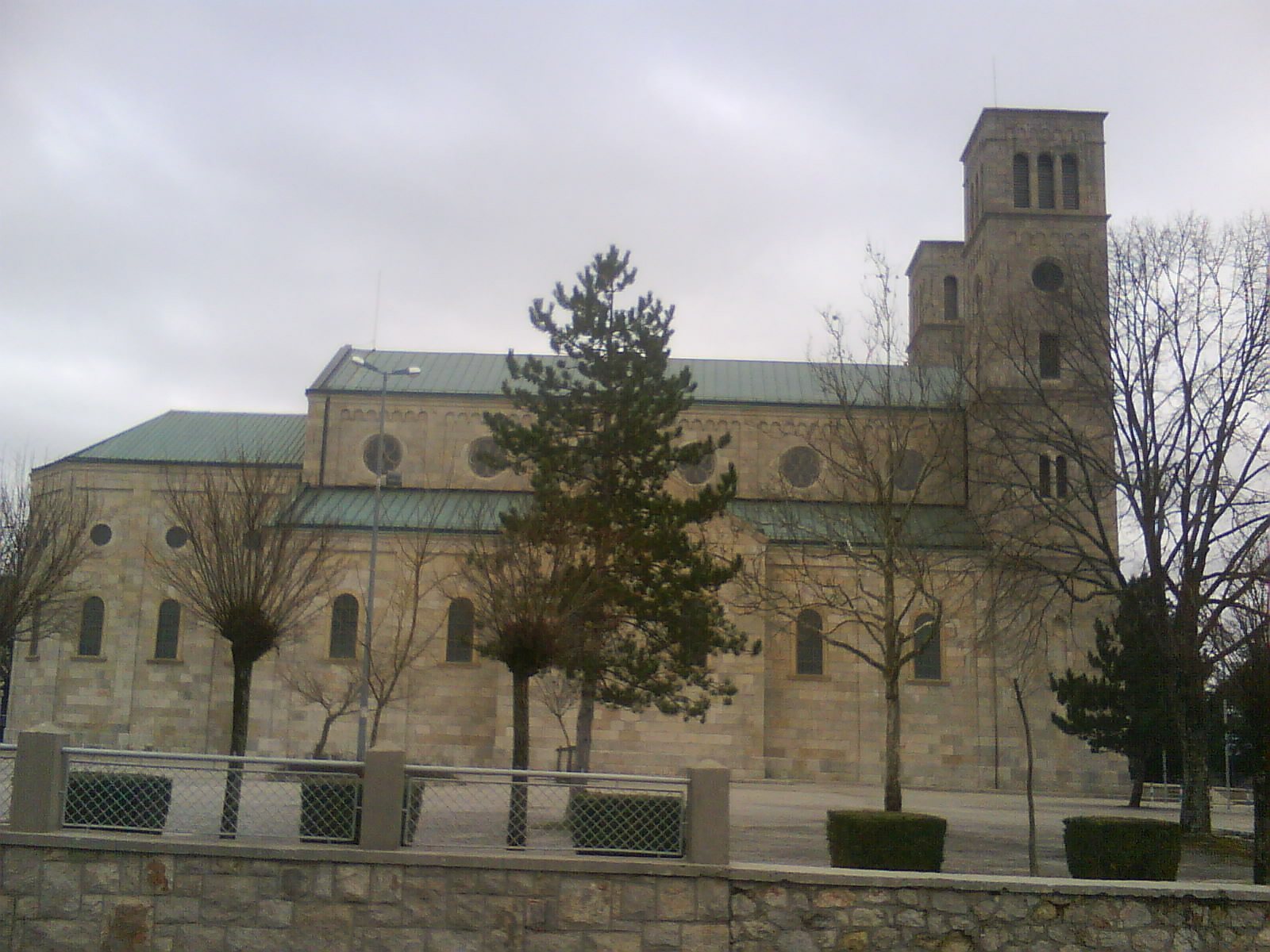
The Franciscan Monastery of Široki Brijeg is a friary and church complex in Široki Brijeg, Bosnia and Herzegovina, where construction began in 1846; its present church is in a late Romanesque style. It was the first monastery founded in Herzegovina under Ottoman rule, after the destruction of the region’s monasteries in the sixteenth century.
Parish and foundation
The parish was first recorded in 1599 under the name Blato. Its seat moved to Čerigaj in the late eighteenth century. In 1840, Herzegovinian Franciscans began pursuing a friary of their own, with Nikola Kordić, Anđeo Kraljević, and Ilija Vidošević leading the effort. They saw a separate Apostolic Vicariate, a Catholic jurisdiction administered by a vicar apostolic, as important to the project. They also sought a separate Franciscan Custody, a regional division within the religious order.
The initiative unfolded amid tensions between Rafael Barišić, Bosnia’s Apostolic Vicar, and the Bosnian Franciscans. The friars sought support from Ali Pasha Rizvanbegović, who became Ottoman vizier of Herzegovina in 1833. That year, the sultan granted him a separate eyalet, or Ottoman province, formed from southern Bosnia, in recognition of his loyalty during the Bosnian uprising, an early nineteenth-century revolt against Ottoman rule. Rizvanbegović supported the monastery and supplied food, farming tools, and money. Sultan Abdul Mejid approved the foundation, and Rizvanbegović and the qadi of Mostar, an Ottoman judge who applied Islamic law, issued further permissions in January 1846.
The Holy See authorized the foundation on 6 February 1844, and the site was purchased in 1845. Work began in 1846, when Barišić consecrated the cornerstone on 23 July. The undertaking was expensive, prompting the Franciscans to seek donations abroad. While construction was underway, the friars stayed at the parish residence in Čerigaj, while Kraljević supervised the work near the new site. In 1847, Barišić renamed the parish Široki Brijeg and placed it under the friary’s pastoral care. The Franciscans moved from Čerigaj by 1849.
Church and institutional development
A small church was built beside the friary in 1847. A plan for a replacement was drawn up in 1863, but a shortage of funds and skilled craftspeople brought the project to a halt. A bell tower was erected in 1871. The small church was demolished in 1905, and the cornerstone for a new church was laid on 20 June that year. Construction proceeded in a late Romanesque style under the direction of Didak Buntić. The roof was raised in 1911, a north bell tower followed in 1927, and the central nave’s vaulted ceiling was completed in 1938 using revised plans.
War, repairs, and later role
During the Second World War, the communist-led Yugoslav Partisans, a resistance movement, captured Široki Brijeg. About 21 Franciscans were killed at the monastery and in nearby places between 7 and 15 February 1945. After the town fell on 7 February, Franciscans were killed and burned in the monastery garden. The monastery and church were damaged, and the church was struck by 304 cannonballs. The school and monastery suffered heavy damage, and their contents were looted or burned publicly. Partisans also destroyed the plaque above the entrance, which commemorated the monastery’s foundation.
Several Ustaše officials, including Andrija Artuković, had been educated at the friary. The Ustaše were a Croatian fascist movement that governed the Independent State of Croatia during much of the war. Separately, British journalist Richard West characterized Bosnia and Herzegovina’s Franciscans as playing a leading role in wartime atrocities against Serbs and identified the Široki Brijeg monastery as their operational center.
Repairs to the church began in 1958 and continued through the 1960s and 1970s. The monastery belongs to the Franciscan Province of Herzegovina, a regional division of the Order of Friars Minor, and is listed within the Diocese of Mostar-Duvno, a Catholic church district. The complex remains a religious center of western Herzegovina, with annual Roman Catholic pilgrimages, particularly from Italy. The church has appeared in Široki Brijeg’s coat of arms since 1998, and the complex was declared a national monument in 2007.
Remains
The site comprises the friary’s three wings and its church. The monastery buildings form west, south, and east wings, with a kitchen extension at the east end. The west wing was occupied in 1848 and completed by 1849; the south and east wings were finished by 1860, and the kitchen was added in 1861. A further section built in 1901 served a gymnasium, a type of secondary school, and a seminary for training clergy.
Church
Earlier design
A surviving architectural plan for the unrealized replacement proposed in 1863 depicts a three-aisled basilica in the Italian Baroque style, with two towers and a dome above the altar.
Structure
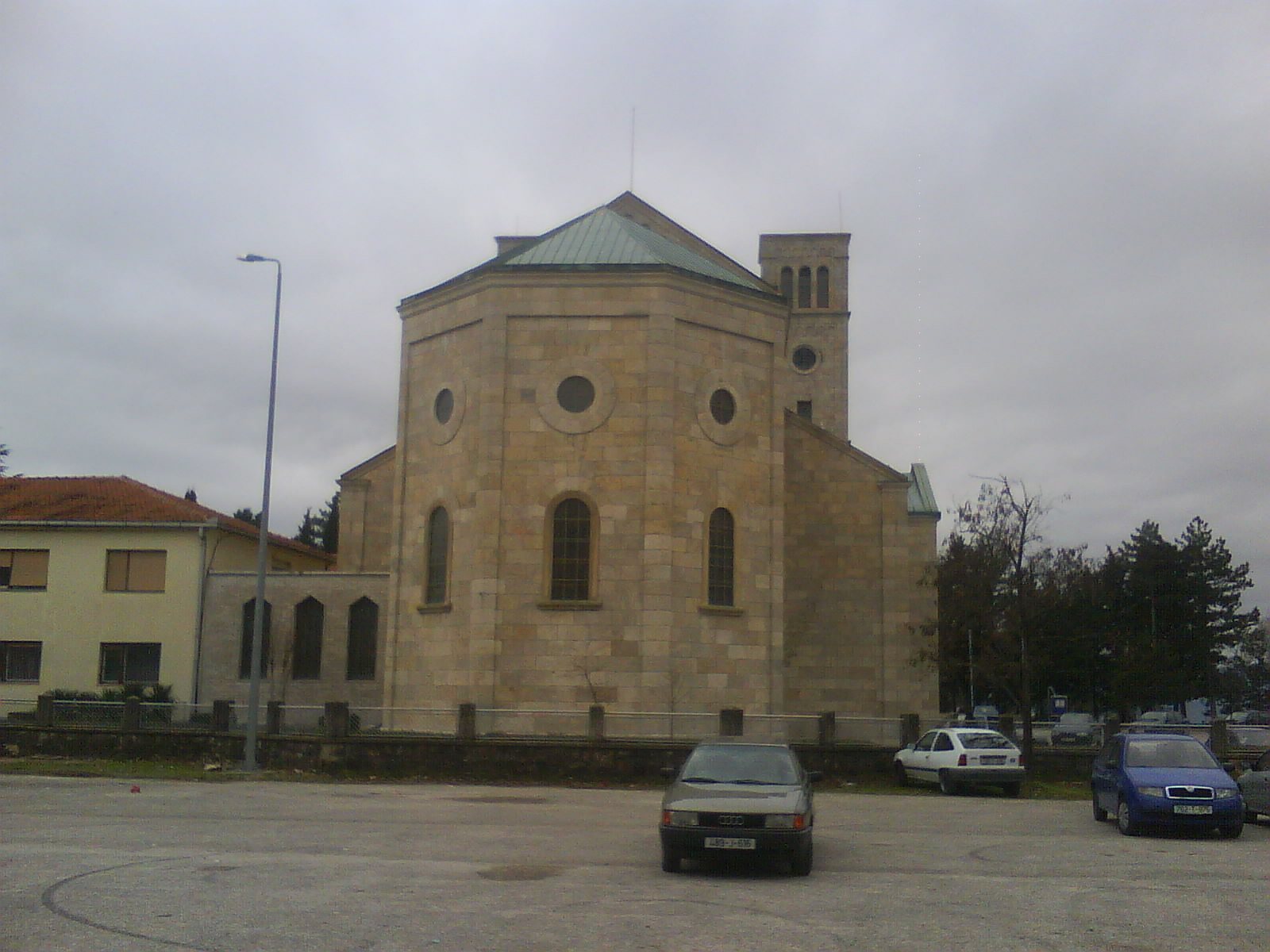
The present church is 50 metres long and 26 metres wide, and its bell tower rises 32 metres. Substantial stone pillars divide the nave, the central space of the church, from the side aisles.
Altar and artworks
Installed in 1978, the altar carries motifs inspired by stećak, medieval tombstones found in parts of the western Balkans. Sculptor Ante Starčević made the altar, tabernacle, and pulpit. The tabernacle is carved from Herzegovinian granite and has bronze doors with figures projecting strongly from their surface. Symbols of the four Evangelists, the traditional authors of the Gospels, appear on the pulpit. The church also contains a statue of the Virgin Mary made by Italian artisans in the mid-nineteenth century. Its stained glass was produced in Zagreb in 1912 by the Dedić, Koch, and Marinković workshop, while painter Rudolf Labaš created the Stations of the Cross in 1983.
Tombs
The left side aisle contains the tombs of Didak Buntić and Rafael Barišić. A tomb in the right aisle holds the remains of Franciscans killed and burned in the monastery garden, together with those of other Franciscans who died in 1945. After the Croatian War of Independence, the 1991–1995 conflict in which Croatia became independent from Yugoslavia, remains recovered at Zagvozd and Vrgorac were placed in this tomb.