Plumpungan Inscription: An Eighth-Century Land-Grant Record
Site at a Glance
- Rating
- 4.5
- Popularity
- High
- Country
- Indonesia
- Primary era
- Medieval
- Eras represented
- Medieval
- Civilizations
- Unclassified
- Site type
- Civic
- Remains
- Monument
On this page4 sections
History
The grant of 750
The Plumpungan Inscription is an eighth-century land-grant record at Plumpungan Park near Salatiga, Indonesia, and is associated with the city’s origins. It is dated to Saka year 672, a year in a historical calendar era, corresponding to 24 July 750 CE. The date is specified as a Friday at midday.
The inscription identifies Bhanu, a regional leader, as the grantor of land to Hampra, in territory associated with Trigramyama and identified with present-day Salatiga. The grant covered Salatiga and its surroundings, described as Bhanu’s territory. It made the land a perdikan, a territory exempt from taxes or tribute. Such grants were rare and reserved for villages that had rendered notable service to the king.
The grant is presented as an act of religious devotion intended to benefit its recipients. Its opening blessing wishes happiness and safety for all people, and the text refers to the approval of Siddhdewi, whose name is rendered as “perfect goddess.” Its closing lines mention a sacred building or temple and eternal life. A scribe wrote the inscription with assistance from priests or sages.
Interpretation and commemoration
The land grant is regarded as marking Hampra’s formal establishment as a tax-exempt territory, and its date is linked to Salatiga’s founding. Another origin tradition connects the city with Ki Ageng Pamanahan, a Javanese noble associated with the beginnings of the Mataram Sultanate. J. G. de Casparis produced a full translation, later supplemented by R. Ng. Poerbatjaraka.
Salatiga commemorates 24 July each year as its founding anniversary. The inscription was registered as an Indonesian cultural-heritage site in 2014, followed by a city cultural-department decree in 2019.
Remains
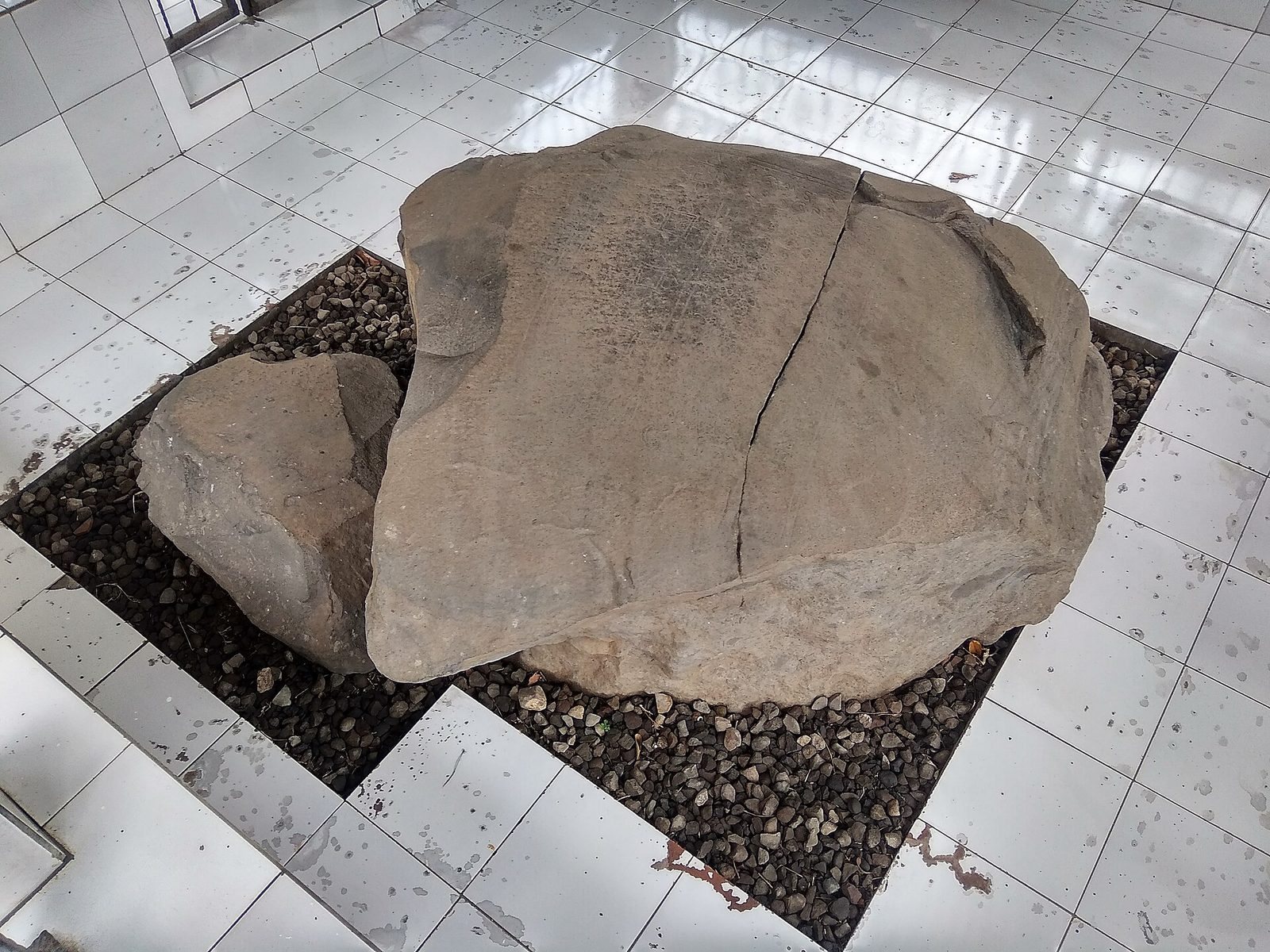
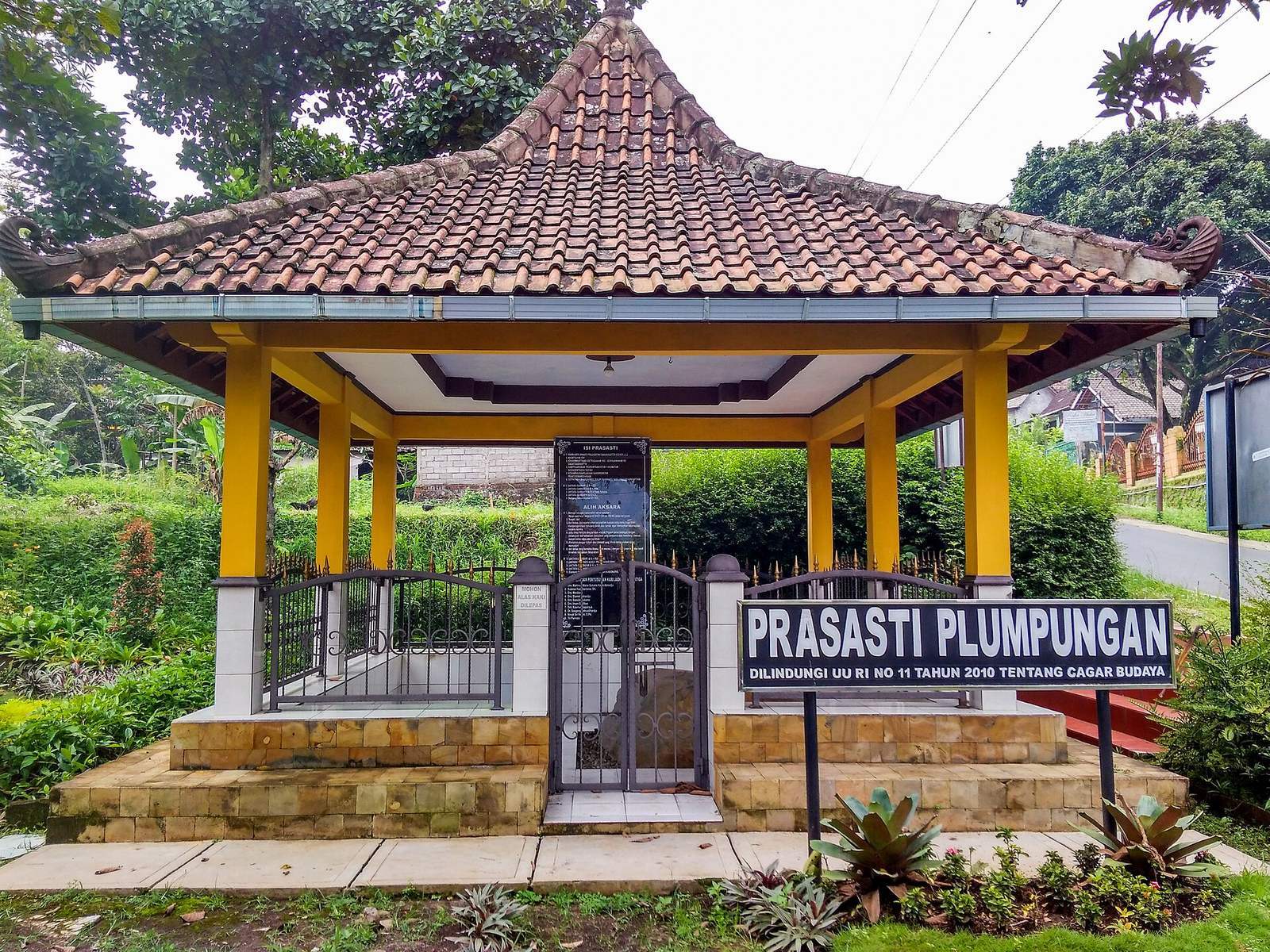
The inscription is carved on a large andesite monolith, a block of volcanic rock, in the Plumpungan Park complex at Dukuh Plumpungan. The stone is about four kilometres from Salatiga in the direction of Beringin village. It measures 170 cm long and 160 cm wide, with a circumference of five metres.
The text is laid out in a rectangular panel framed by two lines, which project both inward and outward at each corner. It is written in Sanskrit and Old Javanese using Kawi, an Old Javanese script also used to write Sanskrit. The inscription describes the writing as made with the tip of a plant.