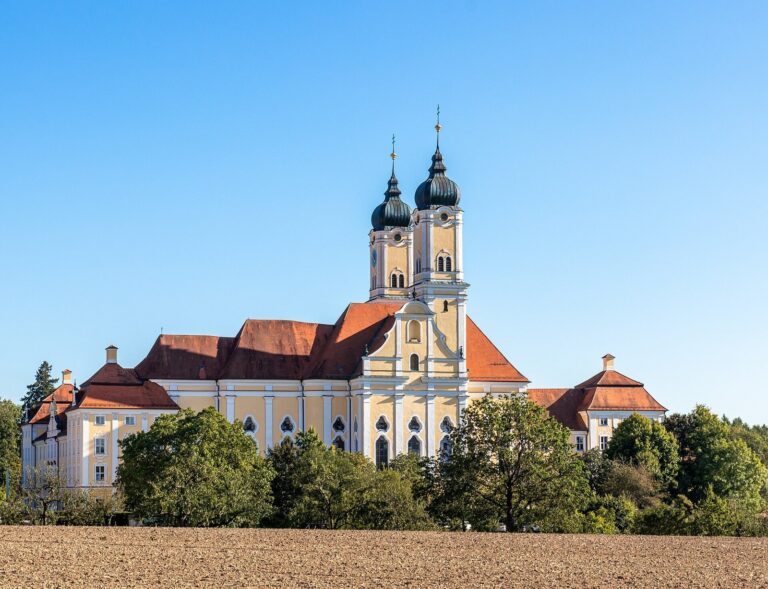
Edelstetten Abbey: A Swabian Baroque Foundation for Canonesses
Site at a Glance
- Rating
- 4.9
- Popularity
- Very Low
- Country
- Germany
- Primary era
- Early Modern
- Eras represented
- Early Modern
- Civilizations
- Habsburg, Habsburg Austria, Holy Roman Empire
- Site type
- Religious
- Remains
- Monastery
On this page10 sections
History
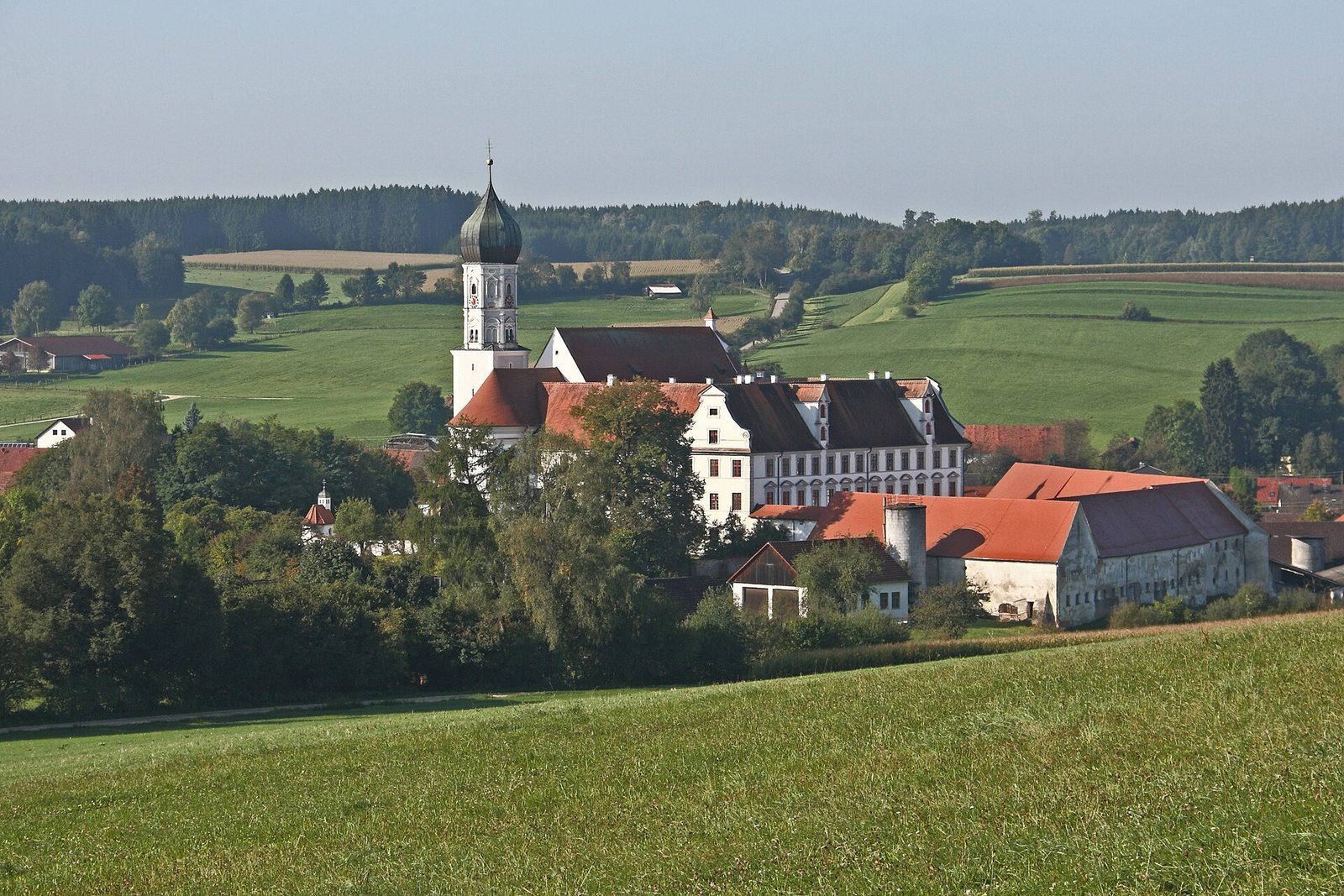
Edelstetten Abbey, founded in 1126 at Edelstetten in Germany, began as a community of Augustinian canonesses in the Diocese of Augsburg. These were women who followed the Rule of Saint Augustine. The abbey was dedicated to John the Baptist, John the Evangelist, and Paul of Tarsus. Tradition identifies Gisela von Schwabegg-Balzhausen as its founder and first abbess. The surviving complex is a major example of Swabian Baroque, the regional Baroque architecture and art of southwestern Germany.
From religious community to collegiate foundation
In 1153, the Bishop of Augsburg appointed Mechthild of Dießen as abbess to reform the community and enforce the Augustinian Rule. Her effort did not succeed, and after six years she returned to Dießen. In 1283, the bishop set a limit of thirteen noble canonesses. By about 1500, Edelstetten had become a secular collegiate foundation, a religious institution whose members followed statutes but did not take monastic vows. It generally housed seven canonesses. The abbess was elected for life, while the other members could leave and marry. The foundation provided support in part for daughters of the lesser Swabian nobility. Alongside this change in status, the settlement’s name shifted from Oetlinstetten to Edelstetten.
The Margraviate of Burgau held protective jurisdiction over the abbey until 1460, when Edelstetten acquired those rights as a pledge.
Destruction and Baroque rebuilding
The abbey was destroyed three times: during the fourteenth century, in 1525 amid the German Peasants’ War, a series of uprisings in 1524–1525, and in 1632, when Swedish forces destroyed it during the Thirty Years’ War, a major European conflict lasting from 1618 to 1648.
Edelstetten’s greatest prosperity lasted approximately from 1680 to 1725. During this period, the convent buildings and church were extensively rebuilt. The church served both the collegiate foundation and the parish, as its predecessor had, and work on its furnishings continued into the second half of the eighteenth century.
Imperial status and secularization
In 1783, Edelstetten became an Imperial Abbey, with a direct relationship to the emperor rather than an intermediate territorial ruler. It received representation at the Imperial Diet, the assembly of the Empire’s estates, on the bench of the Swabian Circle, one of the Empire’s regional administrative groupings.
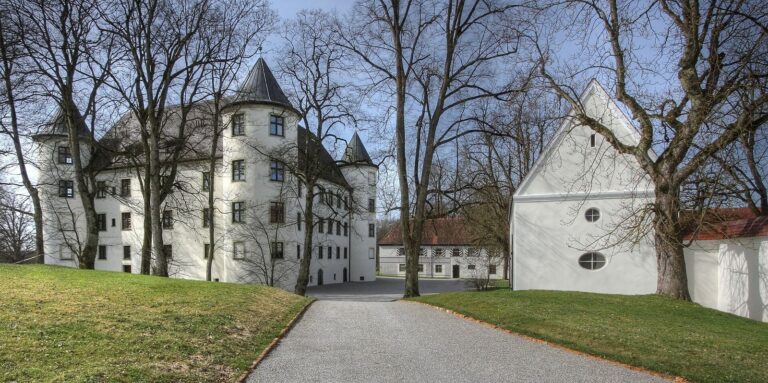
The abbey was secularized in 1803, and its lordship was granted to Charles-Joseph, seventh Prince of Ligne, as compensation for his loss of Fagnolle in Hainaut. In 1804, he sold the lordship, including its right to a seat at the Imperial Diet, to Nikolaus II Esterházy de Galantha. Nikolaus soon converted the former abbey into Edelstetten Castle.
Bavarian rule and later use
Following the 1805 Treaty of Pressburg, which redrew political boundaries in central Europe, the area between the Iller and Lech rivers, including Edelstetten, became part of Bavaria in 1806. A lordship court, a judicial and administrative jurisdiction, was established at Edelstetten in 1816. It covered Edelstetten, parts of Balzhausen, three hamlets, and two isolated farms. The court first belonged to the Illerkreis and, from 1817, to the Oberdonaukreis. Bavaria abolished its lordship courts in 1848.
The estate passed as a gift from Melinda Esterházy to Paul Anton Esterházy and remains in the Esterházy family. The former abbey church continues to serve as Edelstetten’s parish church. Since March 2009, the castle has been the seat of an association devoted to Swabian literature and language, which holds readings and award ceremonies there. Edelstetten is among the Baroque buildings associated with the district’s name, the Swabian Baroque Corner, and its nativity scene contributes to the description of the district as a Swabian Nativity Paradise.
Remains
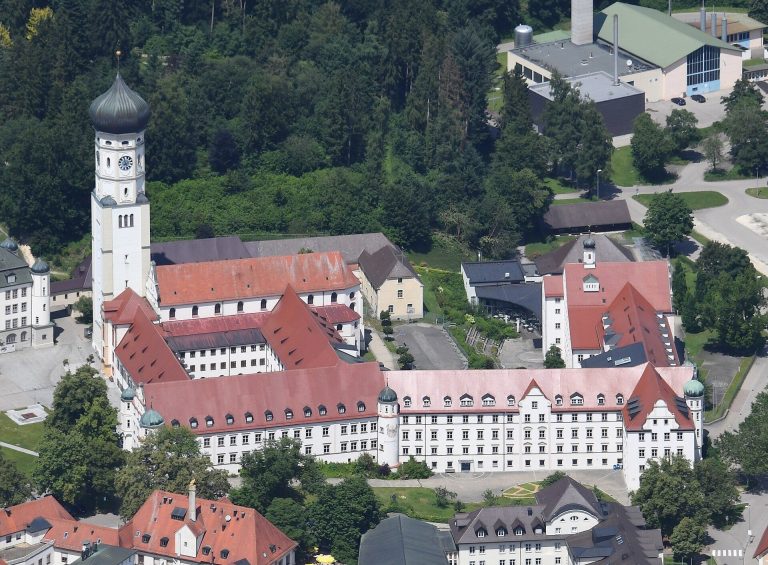
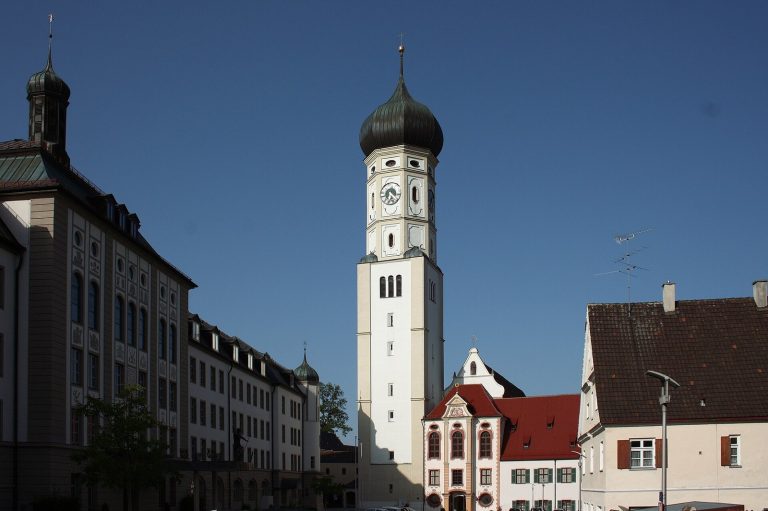
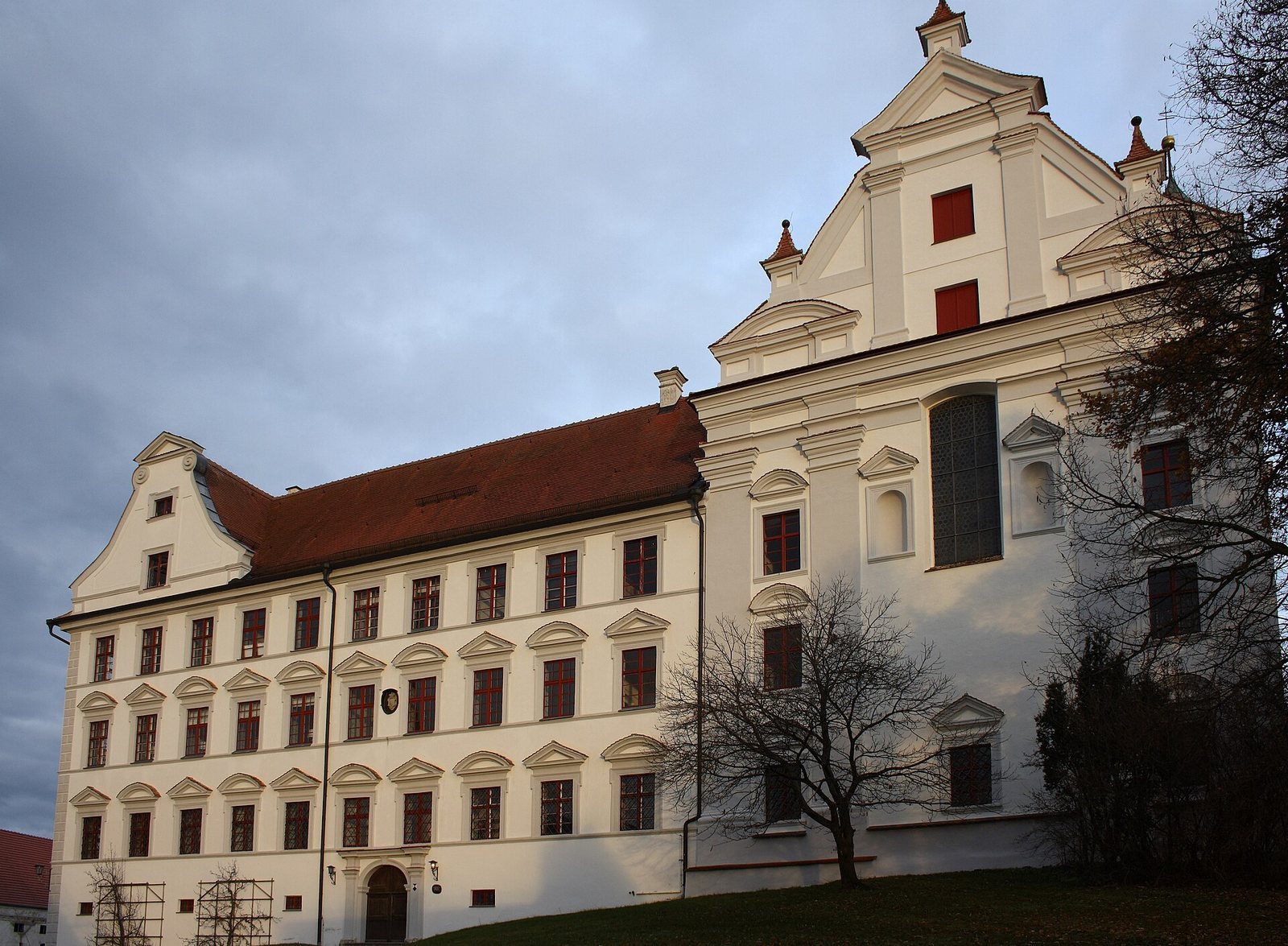
The former abbey lies in the Haselbach valley. Its surviving convent buildings and church form a Swabian Baroque complex, with the church occupying the south wing.
Convent and church
Convent buildings
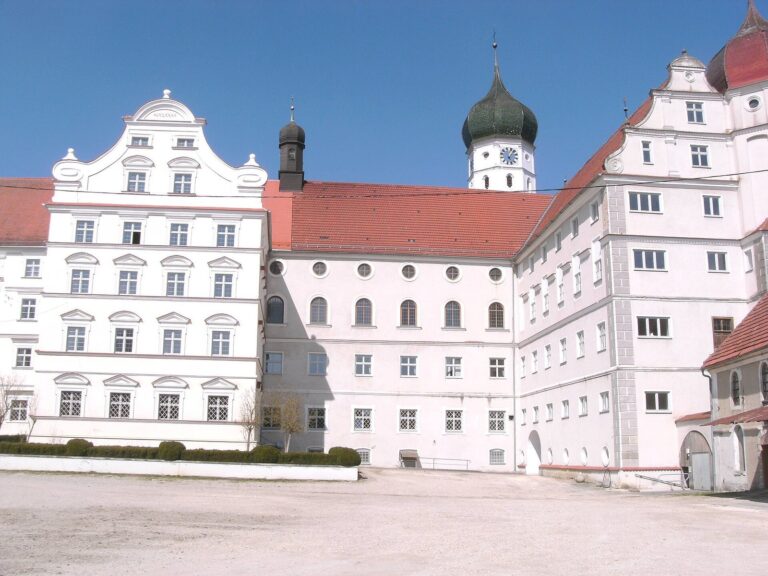
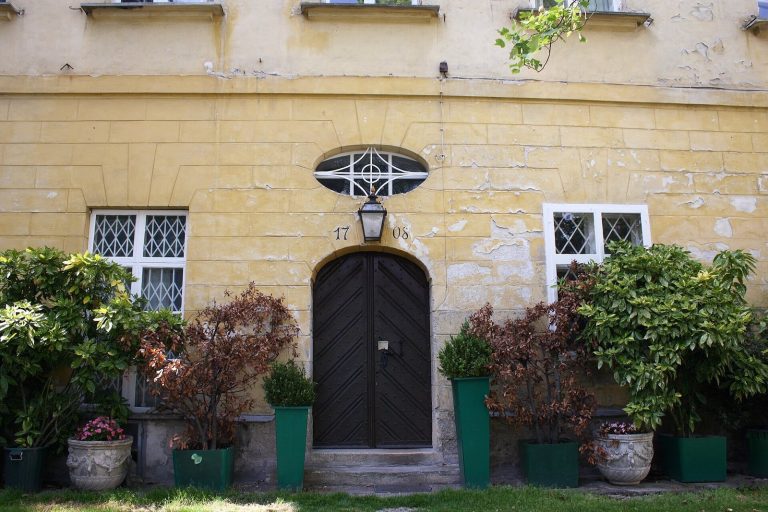
The convent buildings were constructed between 1682 and 1705 to plans by Michael Thumb, a master builder from Vorarlberg. Eighteenth-century rooms retain their stucco decoration. The Chinese Hall is one of the complex’s decorated representative interiors.
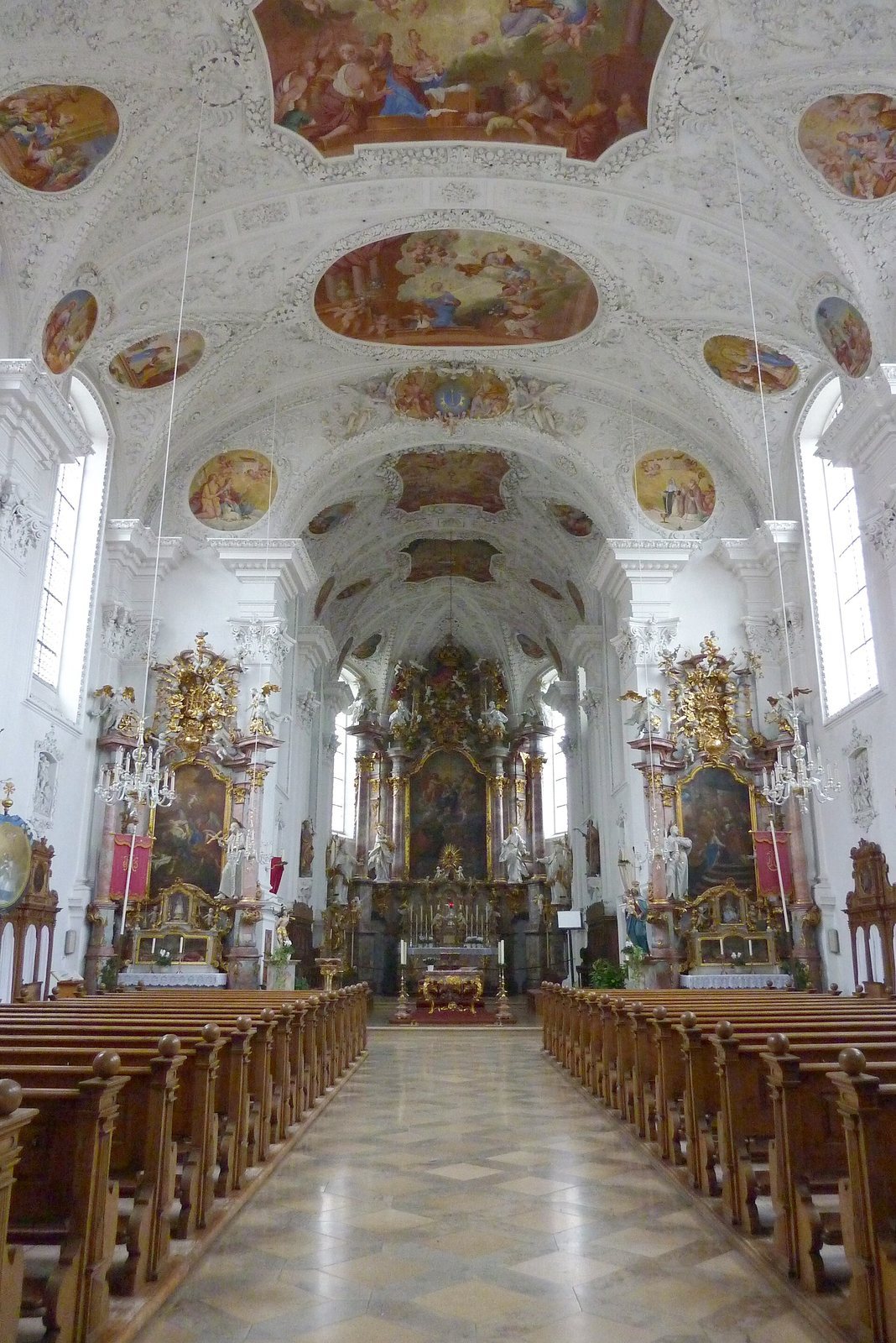
Abbey church
The south wing and church were built between 1709 and 1712 to plans by Christoph Vogt, a Benedictine monk associated with Ottobeuren Abbey. Simpert Kraemer carried out the construction, which was his first major commission. Gisela von Schwabegg-Balzhausen’s coat of arms, later adopted by the abbey, remains displayed at the church entrance.
Baroque nativity scene
Dating to about 1750–1760, the nativity scene comprises 120 figures, some life-size, along with surviving original garments and extensive accessories. Its seven scenes depict the Adoration of the Shepherds, the Adoration of the Magi, the Presentation in the Temple, the Massacre of the Innocents, the House in Nazareth, Jesus at twelve in the Temple, and the Wedding at Cana. Fresco paintings of biblical scenes form part of the ensemble. The display is presented at Christmas in rooms of the castle, including the former chapter house. Restoration began in 1982.