Poundbury Hill: An Iron Age Hillfort and Archaeological Site
Site at a Glance
- Rating
- 4.2
- Popularity
- Low
- Country
- United Kingdom
- Primary era
- Iron Age
- Eras represented
- Iron Age, Classical, Medieval
- Civilizations
- Roman
- Site type
- Military
- Remains
- Fort
On this page10 sections
History
Prehistoric occupation and fortification
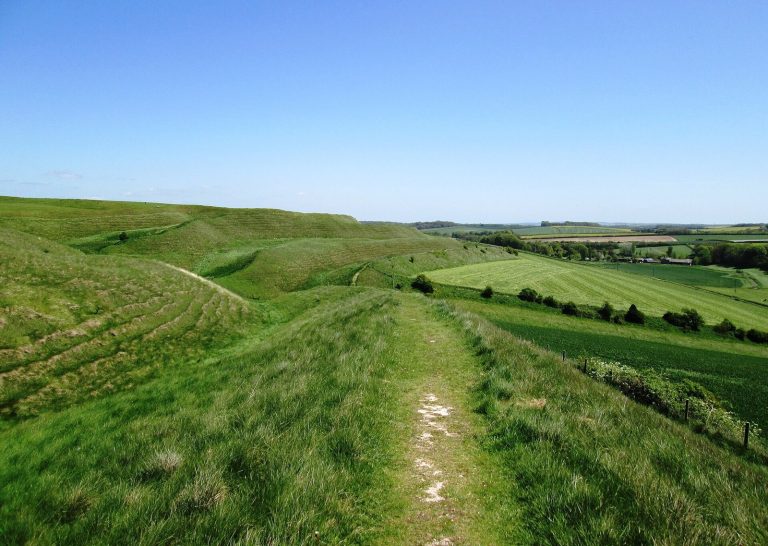
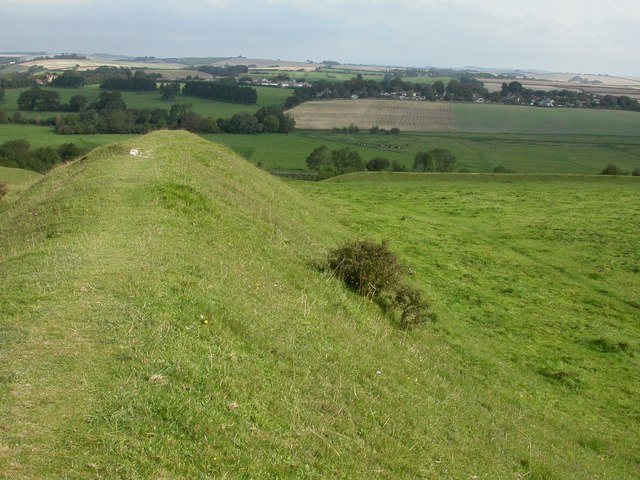
Poundbury Hill is an Iron Age hillfort in the United Kingdom, an enclosed stronghold within a landscape occupied from the Neolithic, the later part of the Stone Age, onward. The site also contains evidence of substantial Bronze Age occupation, late Iron Age burials, and later activity.
Roman-period activity
In the Roman period, a Romano-British farmstead, meaning a farmstead associated with Roman Britain, occupied part of the hill. A large cemetery, possibly Christian, was associated with Durnovaria, the Roman-era name for Dorchester. Its use extended from the Neolithic into the Middle Ages, although most of its burials date to the fourth century AD.
The Roman aqueduct damaged the hillfort’s northern and eastern outer defences. It carried fresh water to Durnovaria from a reservoir about 4.5 km away, supplied by a dam and lake near what is now Littlewood Farm in Frampton. The water later served Dorchester and its public baths. The aqueduct was abandoned around AD 160, after the reservoir dam collapsed.
Post-Roman buildings
Between the fifth and eighth centuries, buildings and enclosures were established over the Roman cemetery. They were probably arranged to provide views north across the River Frome and its valley.
Excavation and railway construction
Excavations began in 1938 and revealed successive stages in the hillfort’s development. The cemetery was excavated during the 1970s. In a later railway project, local opposition to Isambard Kingdom Brunel’s proposed cutting through the site led to a more costly tunnel being chosen. The protest also prompted the formation of the Dorset Archaeological Society. Poundbury Hill is a scheduled monument, a site protected under national heritage law in England.
Remains
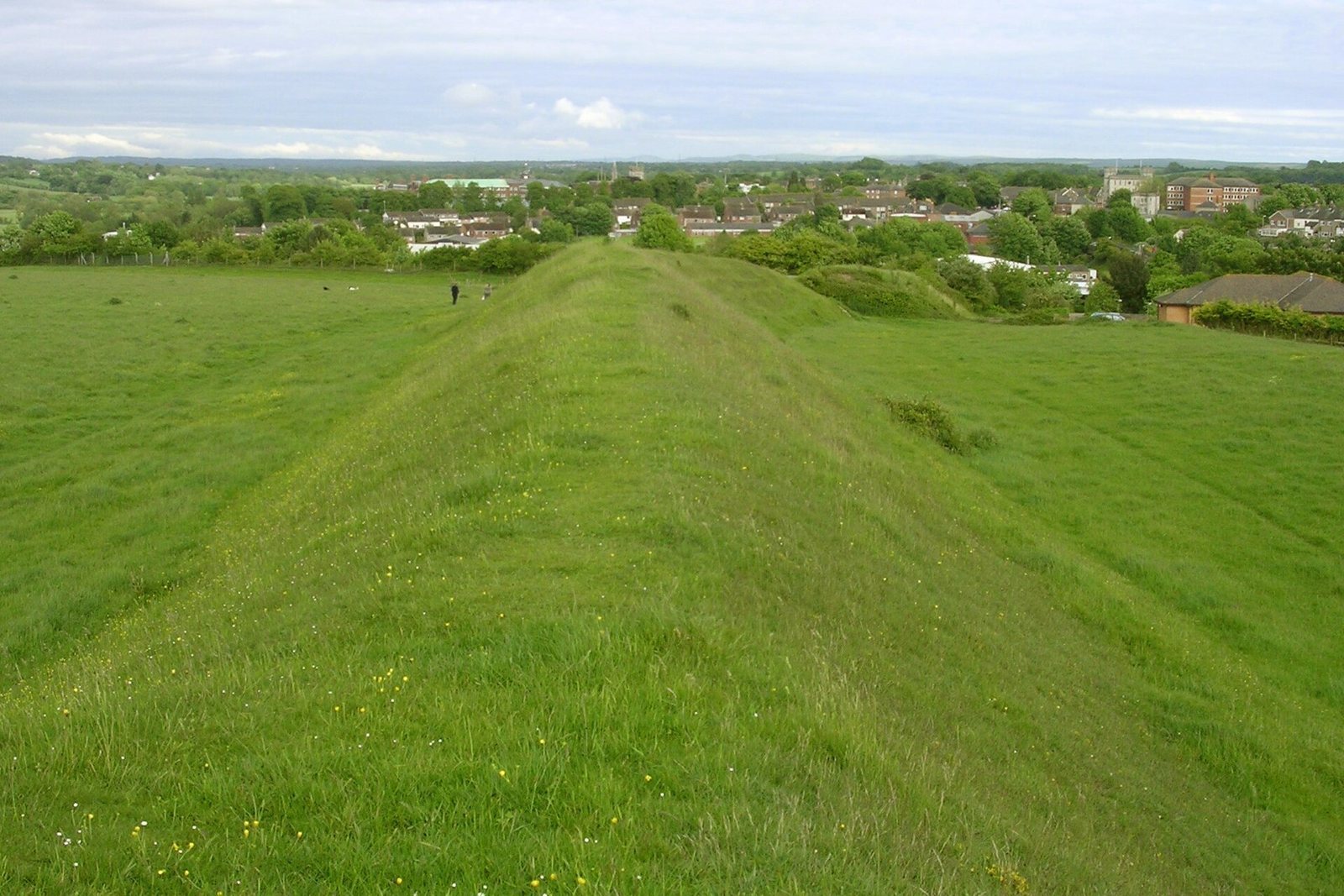
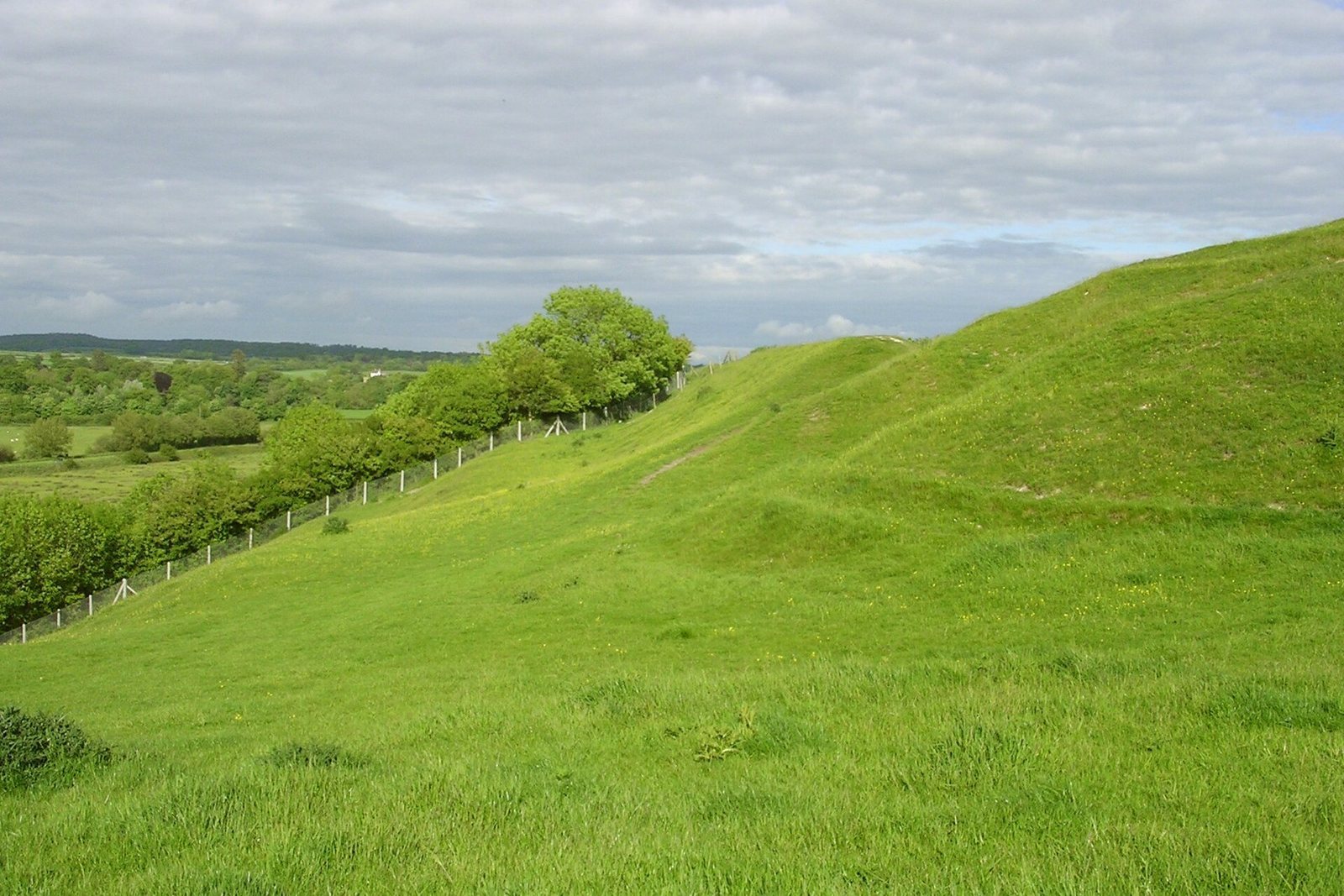
The remains include the hillfort’s earthworks, a cemetery and settlement features, an aqueduct route, and a railway tunnel beneath the hillfort. The fort’s main entrance is at the eastern end, facing Dorchester, while its outer defences extend along the north and east sides.
Hillfort earthworks
In the fourth century BC, timber facing was added to the hillfort’s banks and a deep, V-shaped ditch was dug. Around 50 BC, the banks were enlarged and strengthened with a limestone facing that supported the earthwork.
Cemetery and settlement remains
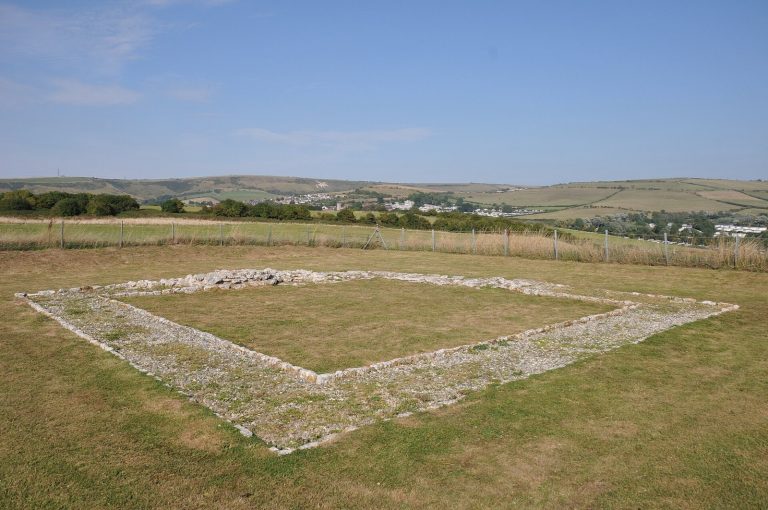
The large Romano-British cemetery lay just outside the fort on its northeastern side, while an earlier farmstead occupied the eastern side. A roughly rectangular group of later buildings and enclosures overlies the cemetery.
Aqueduct
The aqueduct terrace runs along the northeast-facing slope of the Frome valley. Its winding route extended for almost 9 km, maintaining an average gradient of about 1:1,750. The channel was approximately 80 cm wide and 30 cm deep, with a clay bottom, wooden sides, and a wooden cover protected by soil and grass.
Railway tunnel
The railway passes through a tunnel beneath the hillfort, limiting damage to its ramparts.