Amphitheatre of Italica: A Roman Arena in Spain
Site at a Glance
- Rating
- 4.7
- Popularity
- Very High
- Country
- Spain
- Primary era
- Classical
- Eras represented
- Classical
- Civilizations
- Roman
- Site type
- Entertainment
- Remains
- Amphitheatre
On this page8 sections
History
Italica and Hadrianic construction
The Amphitheatre of Italica is a Roman arena in present-day Santiponce, Spain, built during Emperor Hadrian’s reign, from AD 117 to 138. Italica was founded in 206 BC as a Roman colony in Hispania Baetica, the Roman province in the south of the Iberian Peninsula, and was the first Roman city in Hispania.
The amphitheatre took shape amid Roman urban development in southern Iberia in the early second century. Hadrian, who was born at Italica, ruled during its construction. The arena hosted gladiatorial contests and spectacles with wild animals, including combats between people and animals.
Abandonment and rediscovery
Italica was largely abandoned by the Romans in the third century. The amphitheatre was rediscovered in the seventeenth century, and efforts to uncover it began in the late nineteenth century.
Remains
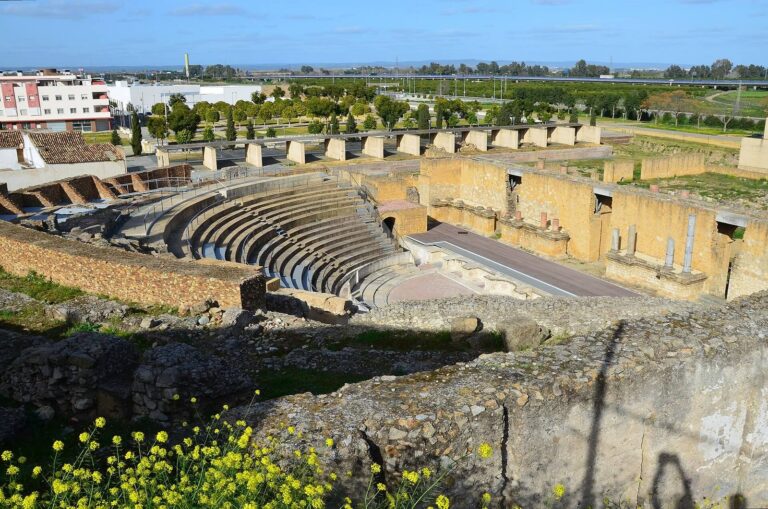
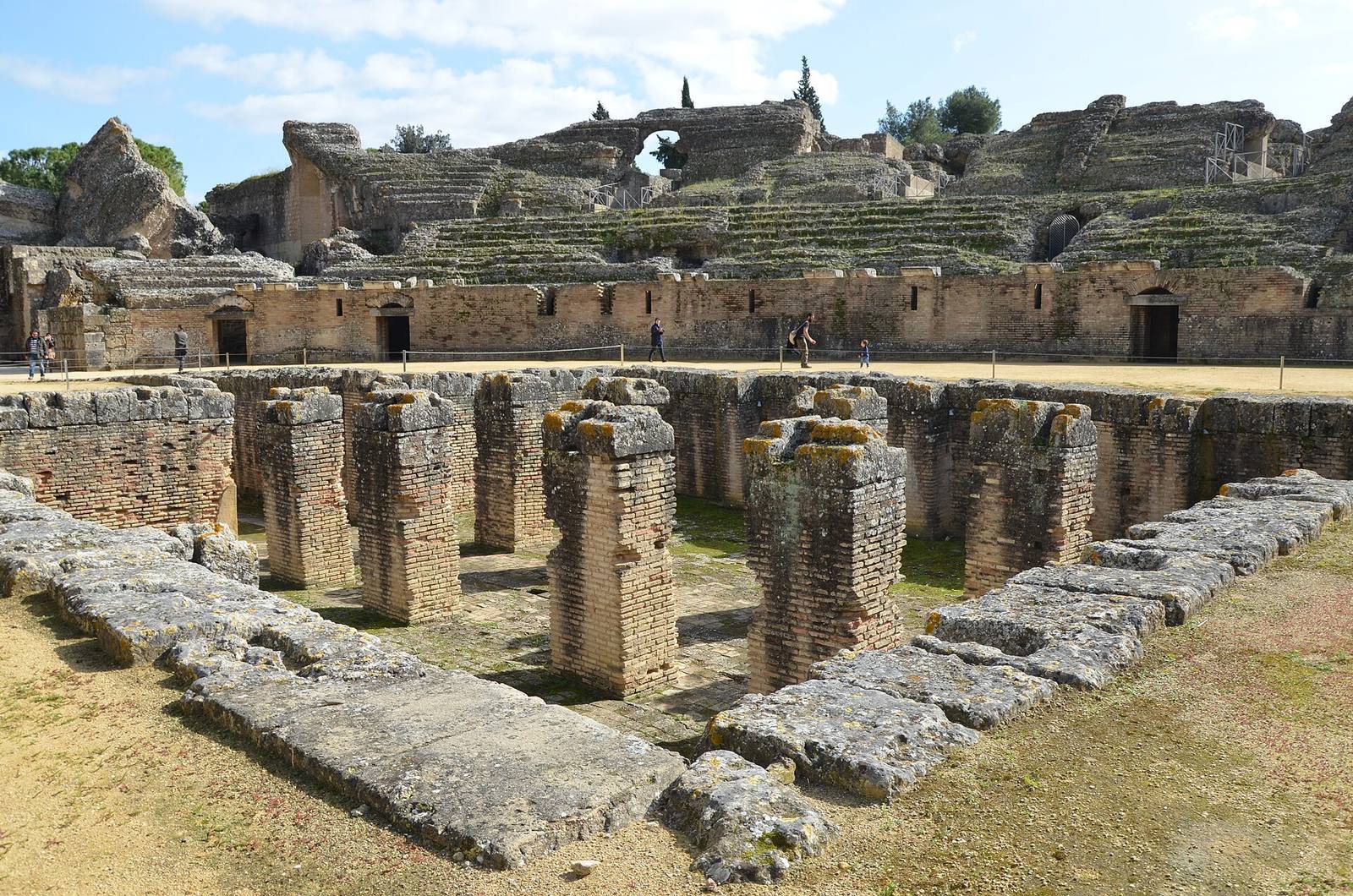
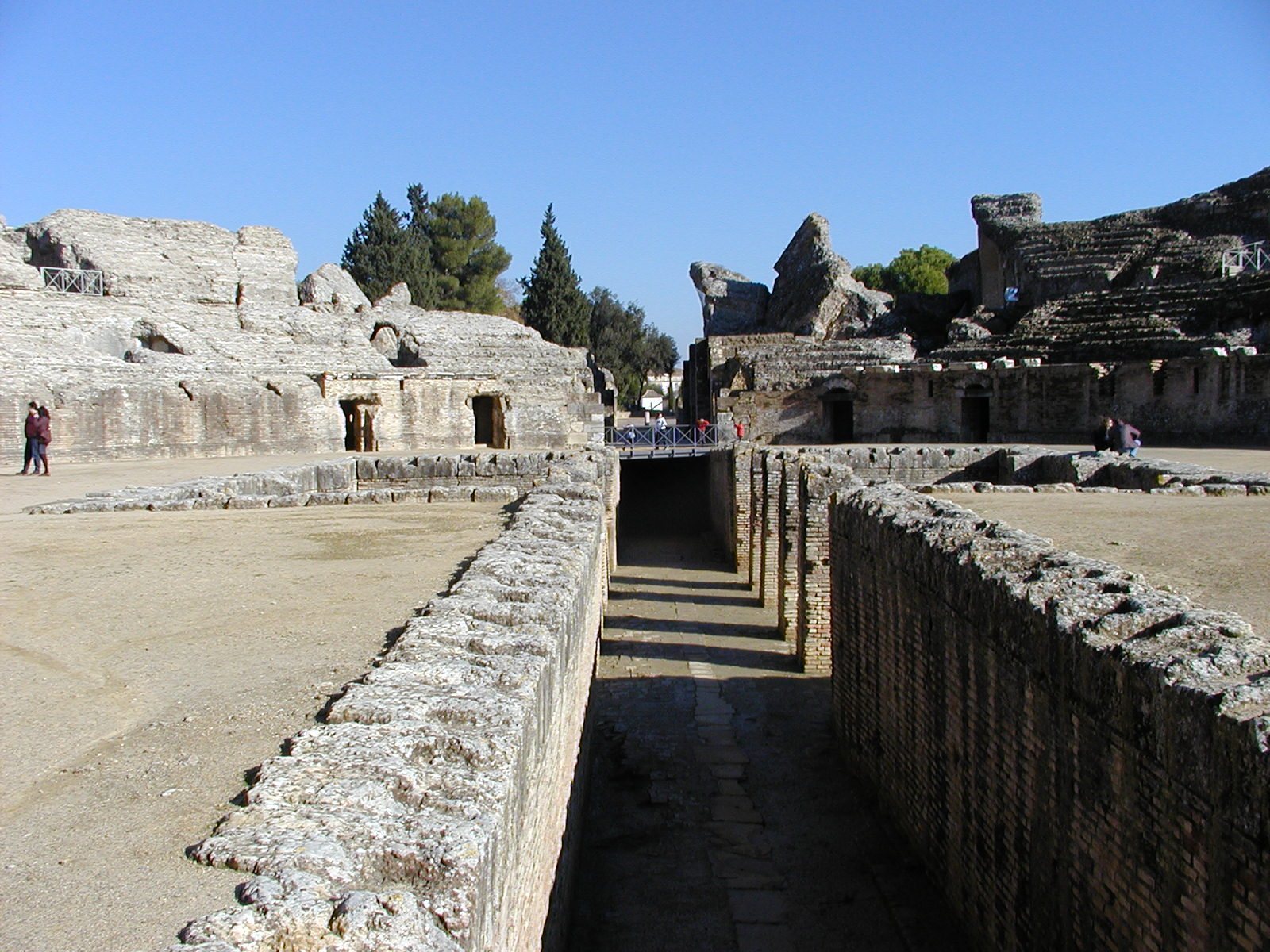
The amphitheatre has an elliptical plan, with its long axis measuring about 160 metres and its shorter axis about 137 metres. Its estimated capacity was approximately 25,000 people, making it one of the largest amphitheatres in the Roman Empire. Stone, brick, marble, and silica-rich and limestone pebbles were used in its construction; pebbles were employed because natural stone was scarce in the region. Less costly structural materials were concealed behind carefully worked marble facing.
Seating and arena
Audience seating
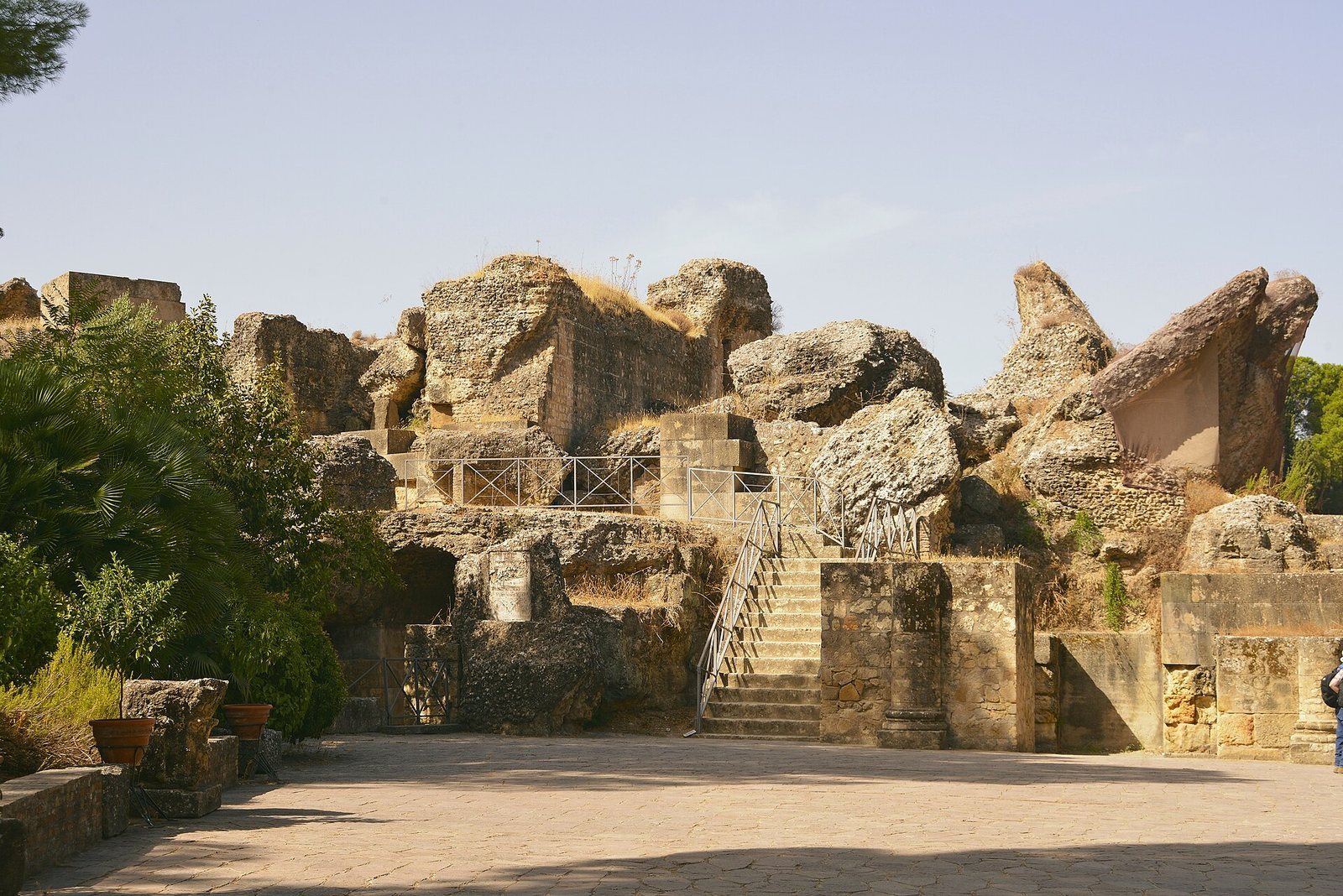
Three seating levels were separated by circular passageways. The lowest had six rows and eight entrances and was reserved for local rulers and wealthy inhabitants. The middle level had twelve rows and fourteen entrances, serving male residents, including those of more modest status. An awning covered the upper level, which was set aside for women and children. The lowest seating level remains intact, the middle survives in part, and most of the upper level is ruined.
Service pit
Beneath the arena’s former wooden floor was a service pit containing cross-shaped rooms for wild animals and workers. The space served the contests and animal hunts held in the amphitheatre.
Cult and service spaces
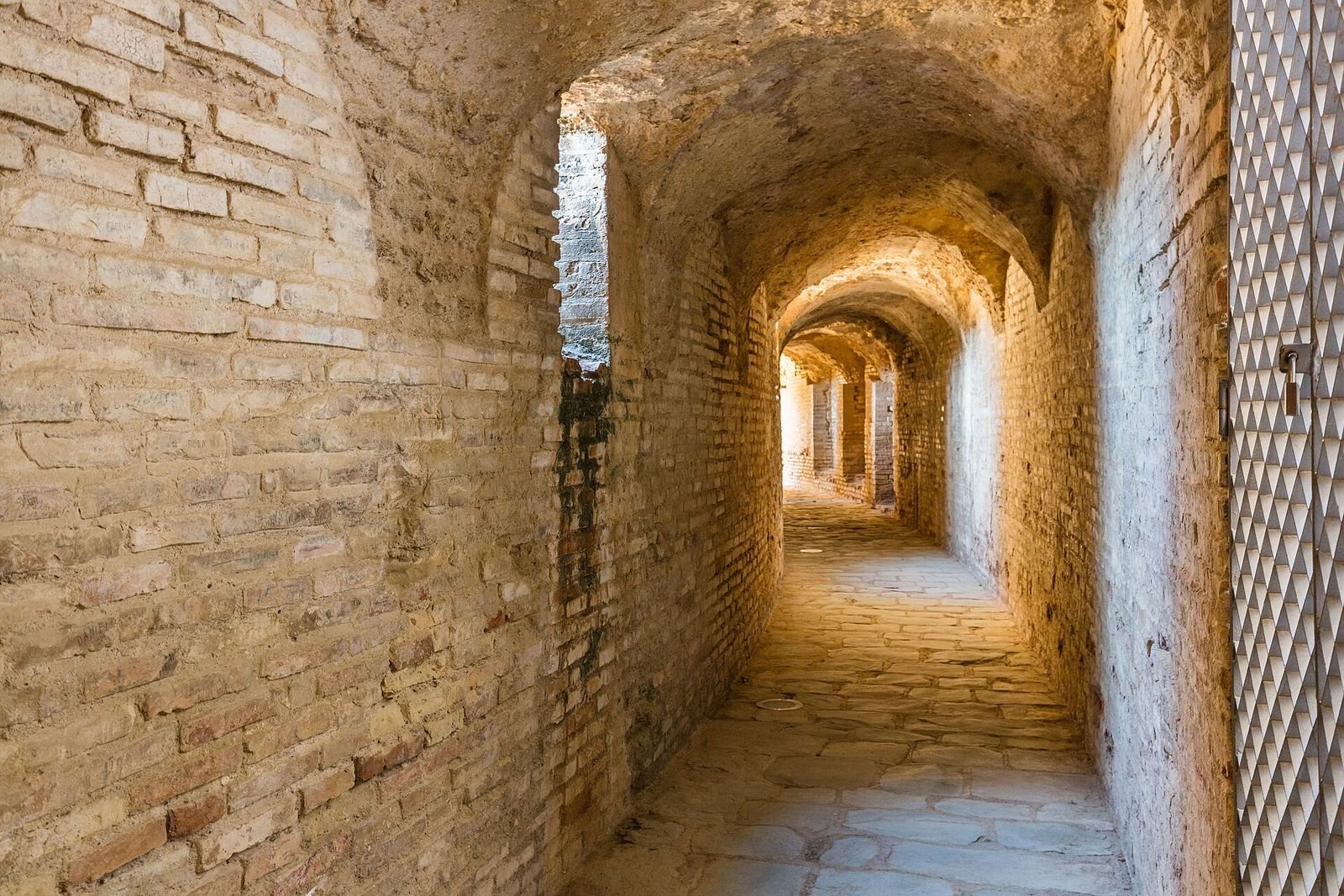
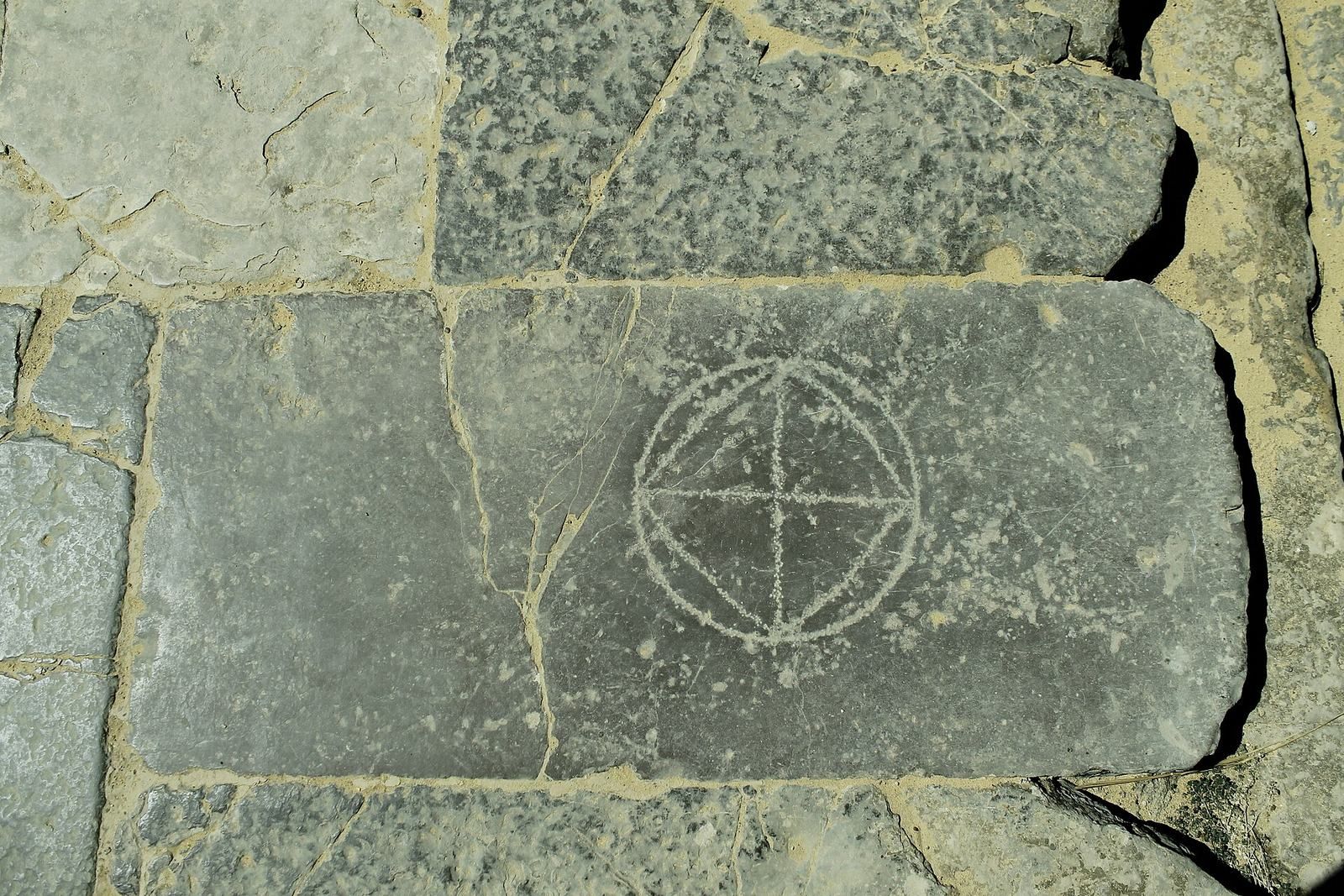
Rooms within the building were associated with religious cults, including that of Nemesis, a goddess linked with retribution. The amphitheatre also included galleries at arena level and rooms beside them, along with an entrance to a drainage system. A votive plaque was located at an entrance.