Miraflores and La Albarrana Archaeological Site: A Rural Landscape near Seville
Site at a Glance
- Popularity
- Medium
- Country
- Spain
- Primary era
- Early Modern
- Eras represented
- Classical, Medieval, Early Modern
- Civilizations
- Almohad, Crown of Castile, Roman, Spanish
- Site type
- Domestic
- Remains
- Manor House
On this page13 sections
History
The Miraflores and La Albarrana Archaeological Site is a rural archaeological landscape in Pino Montano, north-northeast of Seville, Spain. Its history reaches back to Roman times, when continuous rural settlement here probably supplied agricultural produce to the nearby city. The Roman villa remains were the first such find near the urban center of ancient Hispalis, the Roman name for Seville.
Roman and Almohad settlement
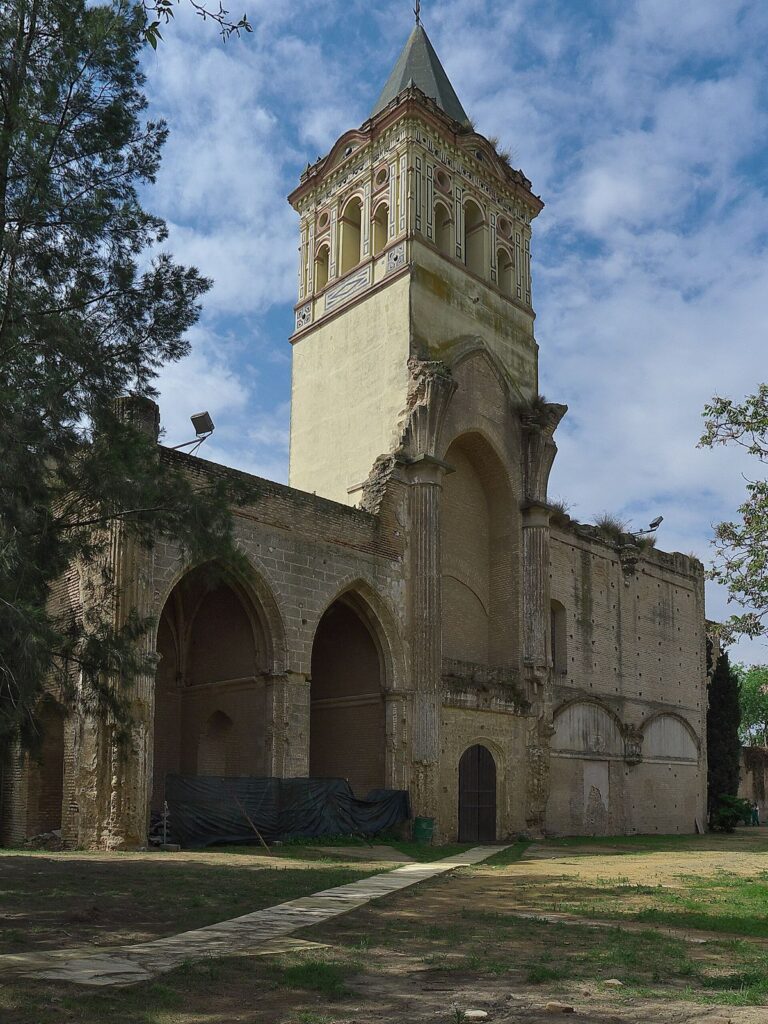
The site’s later history includes a rural community under Almohad rule. The Almohads were a Berber Muslim dynasty that controlled parts of Iberia during the twelfth and thirteenth centuries. Their mosque’s minaret points to a settlement with a religious building and offers evidence for rural life under Muslim rule. It is a uniquely surviving example in western Andalusia.
Huerta and Cortijo
The Huerta de la Albarrana, a cultivated and irrigated estate, is first mentioned in 1285. That year, land on the plain of Fuente Albarrana was granted to the Convent of Santa Clara, a Poor Clare convent of contemplative Franciscan nuns. At an unknown later date, the estate passed to the Hospital de las Cinco Llagas, a historic hospital in Seville.
The Cortijo de Miraflores, a rural farm complex, remained active until the late nineteenth or early twentieth century and belonged to the House of Alba, a Spanish aristocratic family.
Heritage protection
The Cortijo and nearby land received Spain’s Asset of Cultural Interest designation, a formal heritage-protection status, under the 1985 heritage law and its 1986 implementing decree. A process to change the category and extend the protected area began in 1988. In 1996, the whole site was designated an archaeological zone and added to the Andalusian Historic Heritage inventory. It is also protected under Andalusia’s 2007 historic-heritage law.
Remains
The archaeological zone lies between Miraflores Park and the industrial area to its east. Its northwest edge follows the former course of the Tagarete stream; an irrigation channel running from Miraflores Road to the old stream course marks the northeast edge, while the southeast edge follows the former boundary of the Huerta de la Albarrana. The remains include structures from Roman, Almohad, medieval, and later agricultural periods.
Miraflores and its built remains
Roman villa
Remains of a Roman rural villa extend around the Cortijo de Miraflores. A villa was an agricultural estate, rather than simply a modern country house. This one dates to the first century BC, and ceramic fragments were found there in 2002.
Mosque minaret
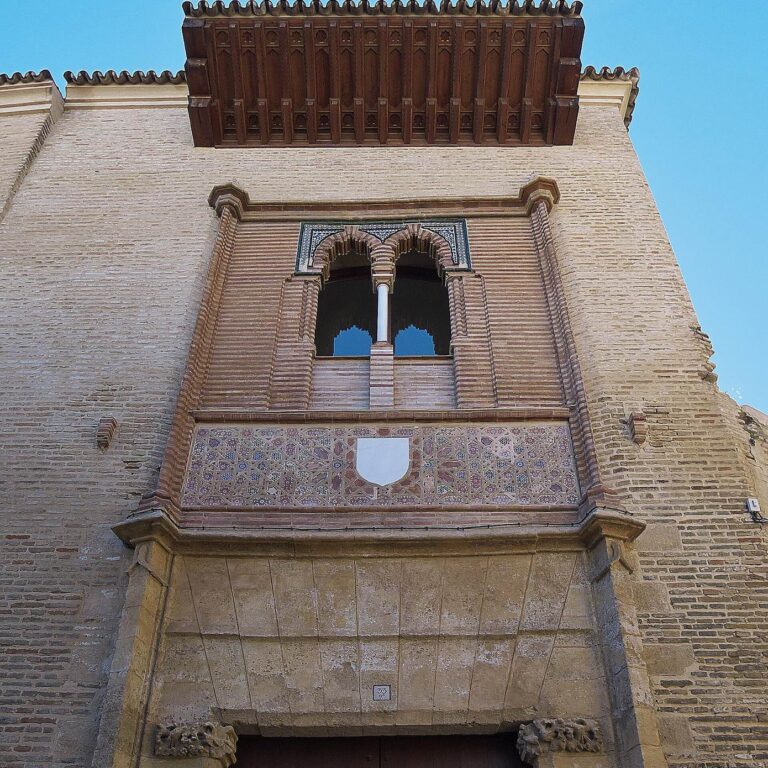
The minaret, a tower associated with a mosque, stands at the Cortijo. Dating to the late twelfth or early thirteenth century, it survives in excellent condition.
Later farm buildings and oil mill
Visible structures at the Cortijo date to the fifteenth and sixteenth centuries. The site also contains an oil mill from the eighteenth century.
Huerta de la Albarrana
Wells and water collection
The Huerta contains three wells fitted with norias (devices for raising water), as well as a vaulted water-collection chamber linked to galleries. Some of these water installations may have been built after the estate passed to the Hospital de las Cinco Llagas.
Worked stone
A gravel pit in the southern part of the Huerta has yielded worked-stone remains that may date to the Middle Paleolithic, a subdivision of the Old Stone Age.
Bridge over the Tagarete
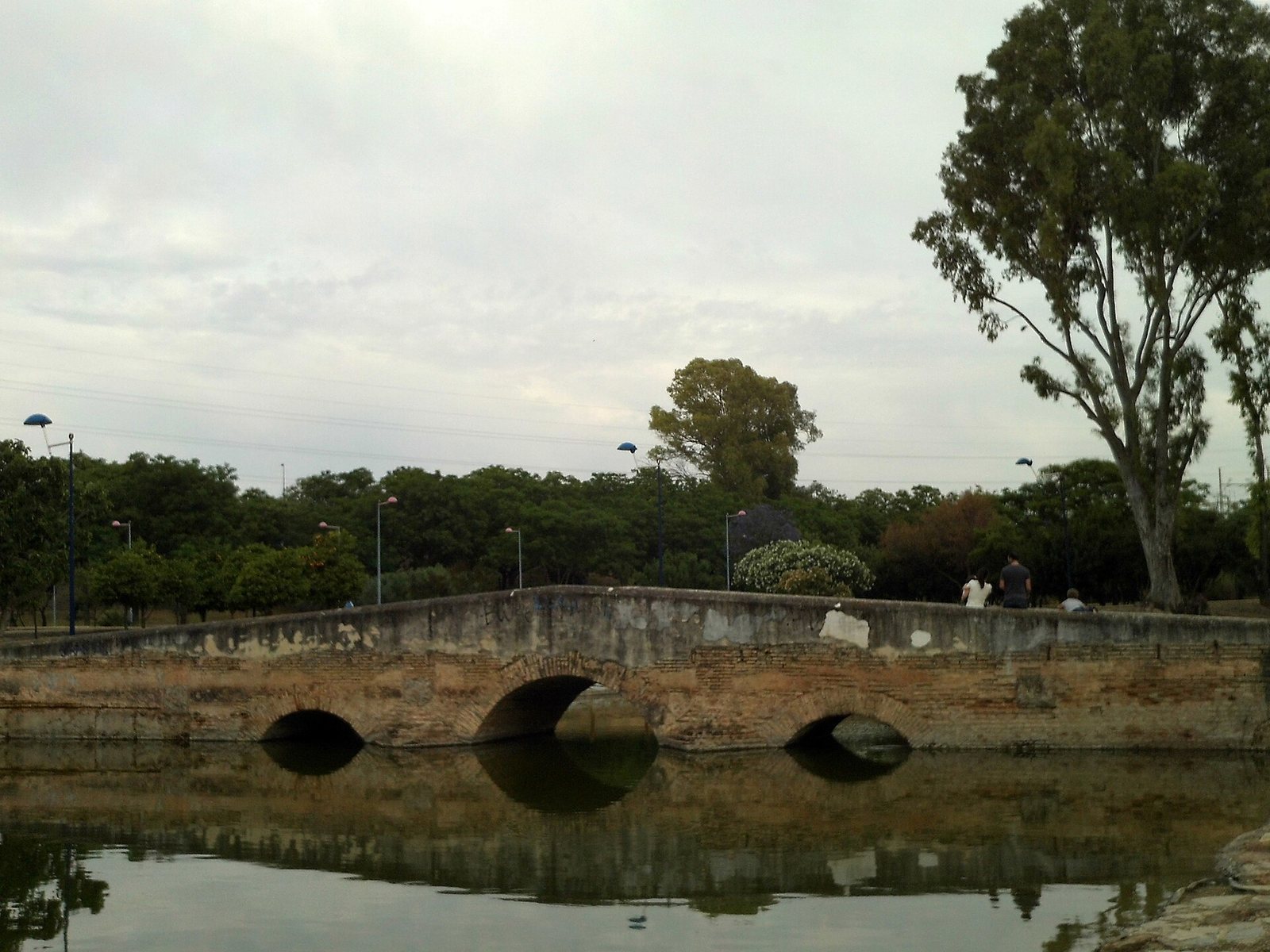
A bridge crossing the archaeological zone spans the Tagarete. It has three semicircular arches and dates to a period between the fifteenth century and the first quarter of the seventeenth century.