Mustafa Paşa Mosque: An Ottoman Mosque in Skopje
Site at a Glance
- Rating
- 4.7
- Popularity
- High
- Country
- North Macedonia
- Primary era
- Medieval
- Eras represented
- Medieval, Modern
- Civilizations
- Ottoman
- Site type
- Religious
- Remains
- Mosque
On this page6 sections
History
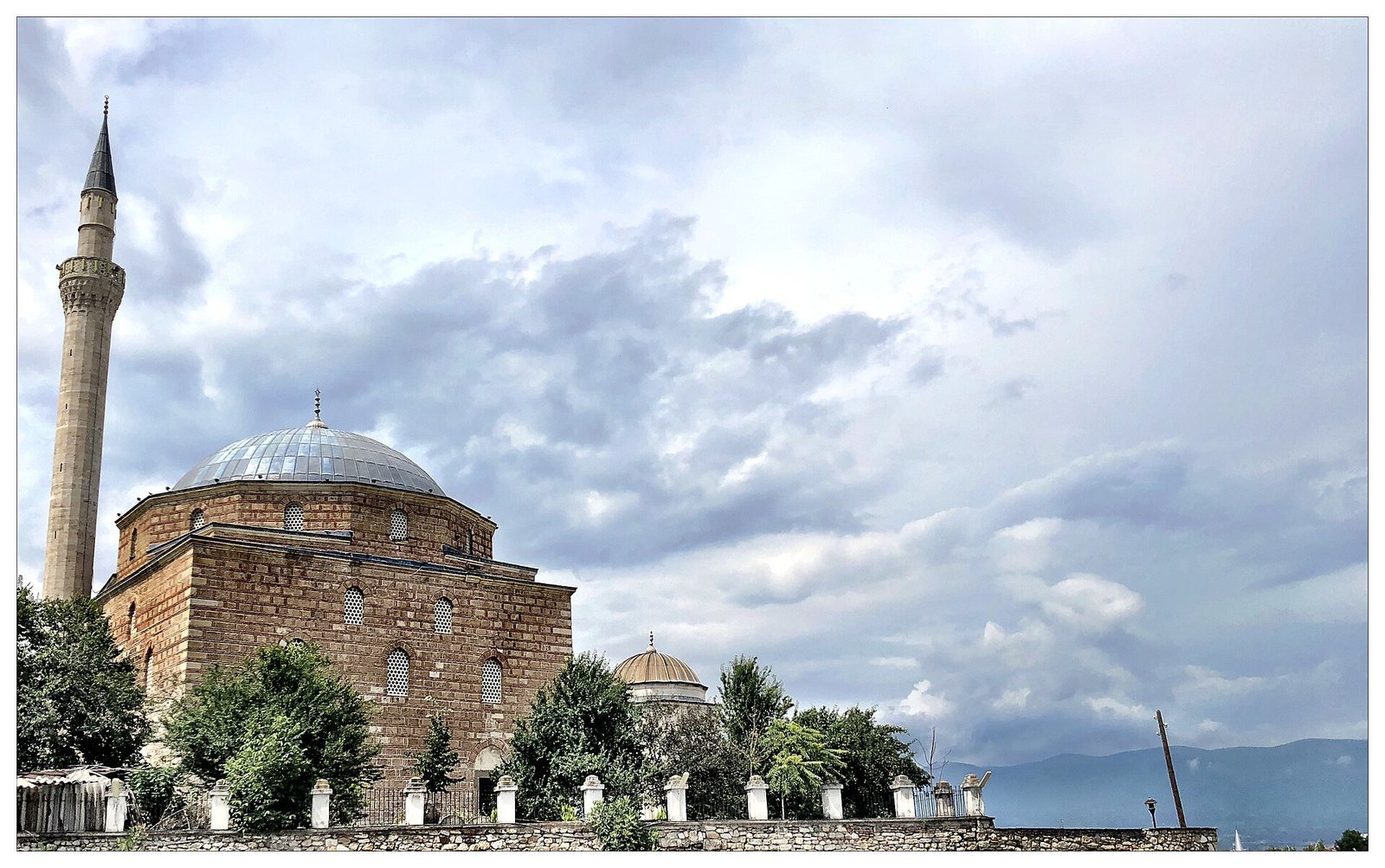
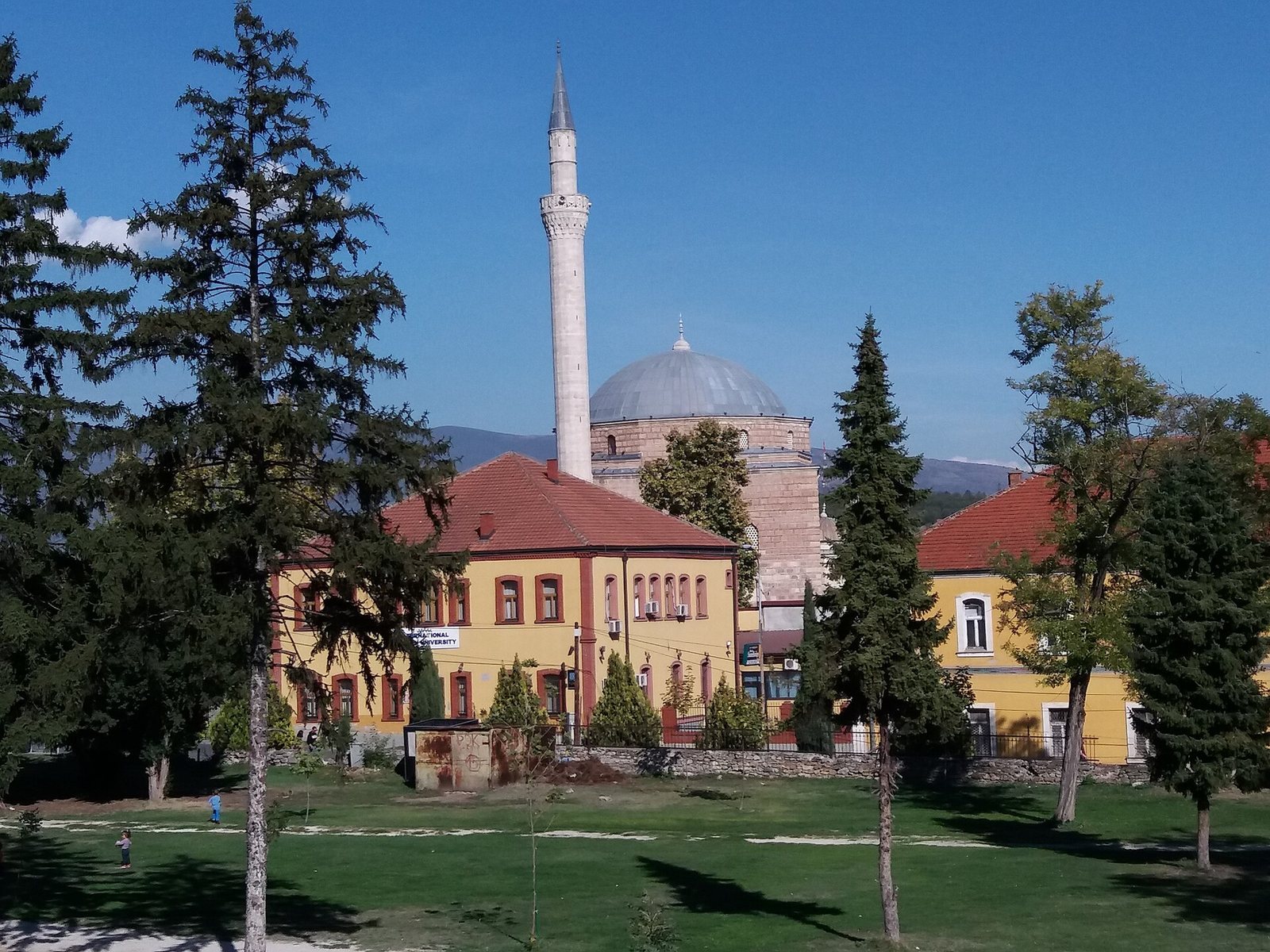
Mustafa Paşa Mosque is an Ottoman mosque in Skopje, North Macedonia, built in 1492 in the classical Ottoman tradition, with architectural features associated with Constantinople, the empire’s capital, now Istanbul. An inscription above its entrance names Mustafa Pasha, a Skopje feudal lord and vizier, or senior minister, under the Ottoman sultans Bayezid II and Selim I. It identifies his father as Abdullah, also given as Abdulkerim. The mosque formed part of Pasha’s religious and charitable endowment, which included a small prayer room and an imaret, an institution that distributed food. A religious school, housing for religious personnel, and initially a caravanserai, an inn for travelers and merchants, also belonged to the complex. The endowment deed was ratified in 1514–1515.
Ottoman use and later history
Mustafa Pasha died in 1519 and was buried in the complex. In the 17th century, Ottoman traveler and writer Evliya Çelebi noted the mosque and its religious school in Skopje. A local tradition recorded by Bulgarian geographer Vasil Kanchov places the mosque on the site of a medieval Christian church known as the Church of the Holy Savior.
The 1963 earthquake damaged the mosque, after which reconstruction work took place. A comprehensive refurbishment followed between 2006 and 2011. The mosque remains in active use for Sunni Muslim worship and is affiliated with the Skopje Muftiate, a regional Muslim religious-administrative jurisdiction.
Remains
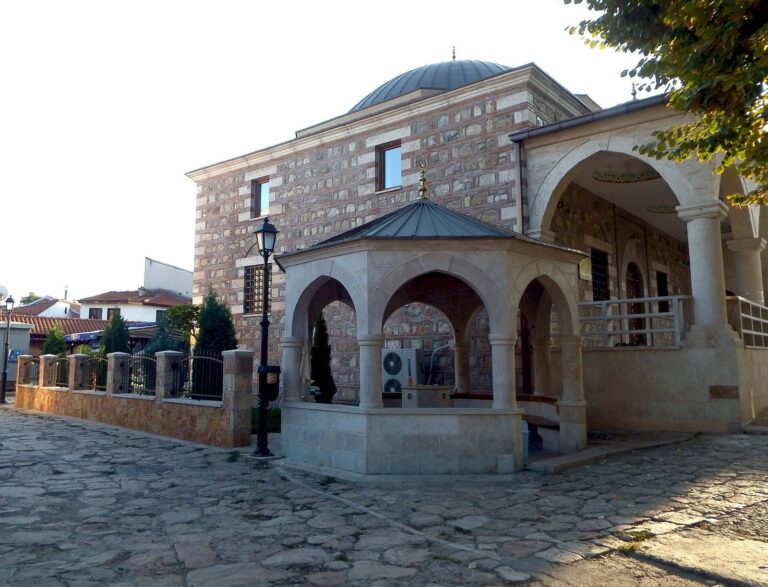
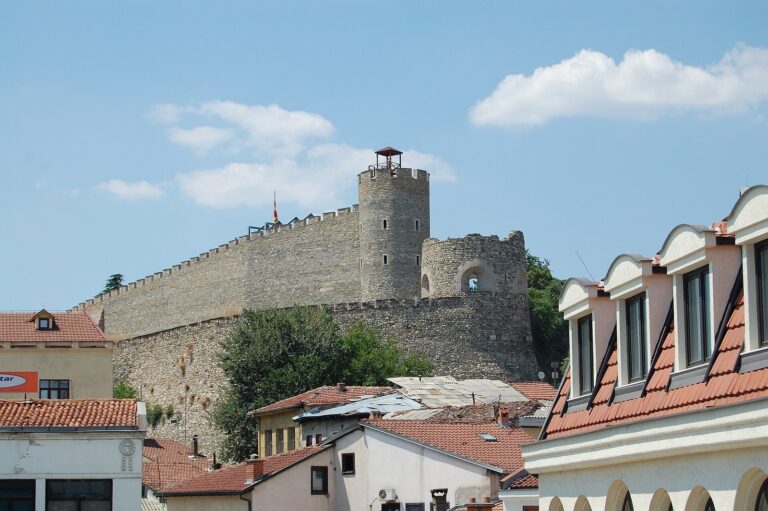
The mosque stands between Kurshumli Han, the Church of the Holy Savior, and Skopje Fortress, also known as Kale. Its square main building, single dome, and courtyard features form the core of the complex. The walls use alternating brick and stone in a decorative pattern.
Exterior and entrance
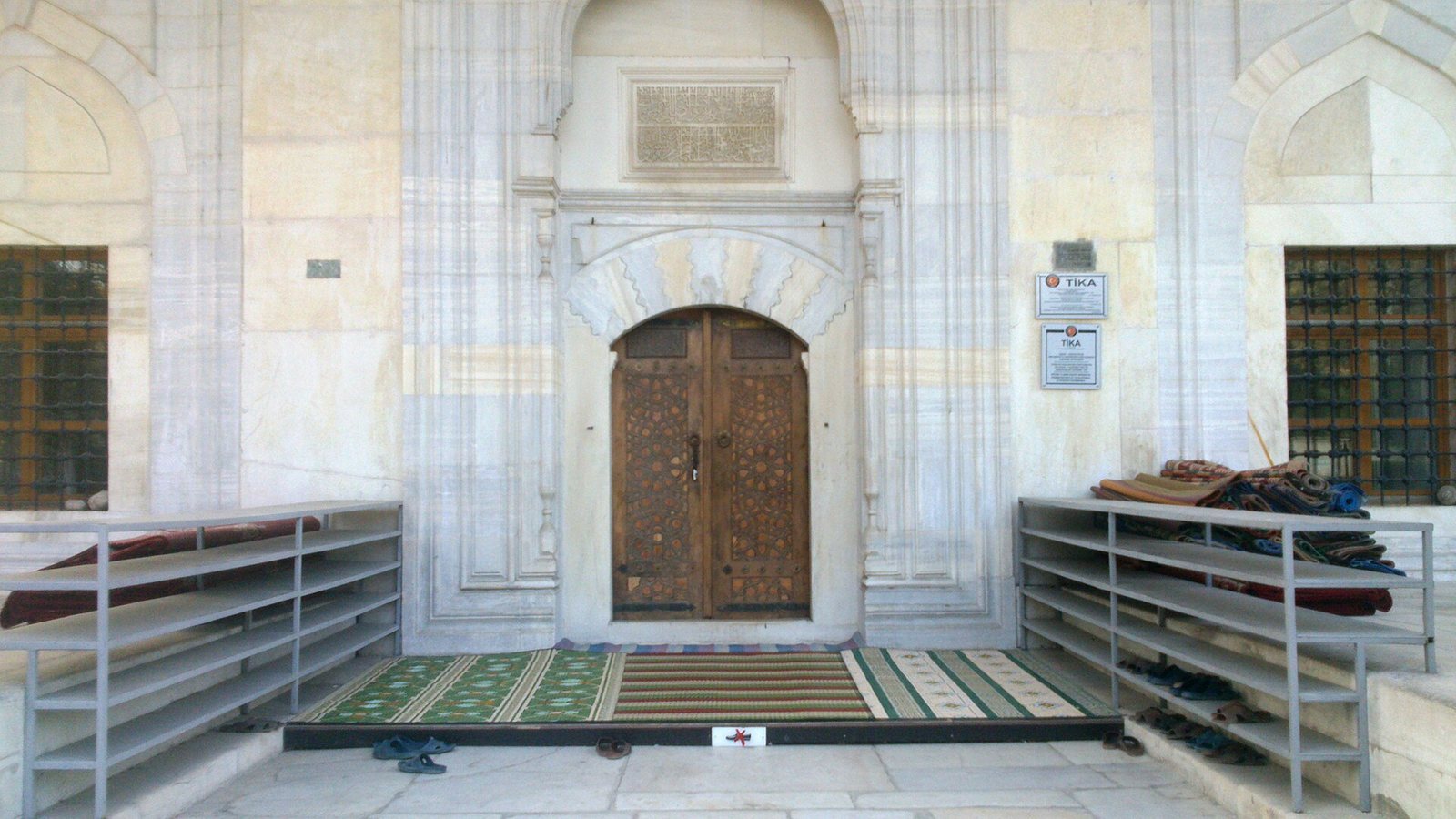
The dome measures 16.3 metres across and rests on decorated corner supports that carry it over the square interior. Painted designs on one side are attributed to the original building phase, while those opposite are later. Most decoration on the curved supports beneath the dome dates to the 1930s. Stylized vegetal ornaments, known as rumi motifs, represent four different periods. A porch spans the north side, where four marble columns carry three pointed arches beneath three small domes. The 47-metre minaret, built of dressed limestone, also stands on the north side. Entry is through a monumental marble portal with a profiled rectangular frame and a three-lobed ornament at its top. Its wooden doors have three panels on each leaf: raised Quranic verses appear above interlaced geometric designs assembled from fitted pieces.
Prayer hall
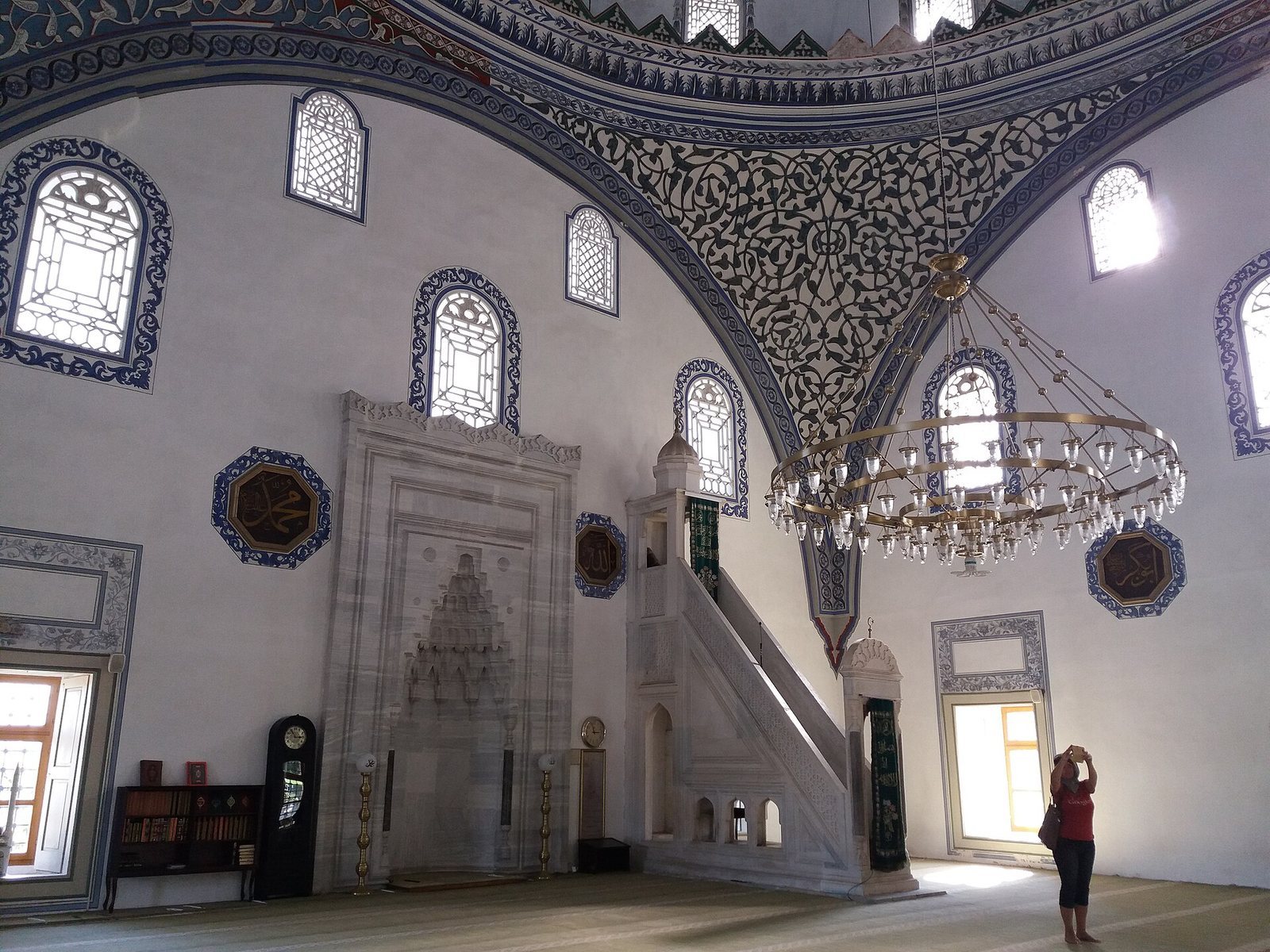
The prayer hall has a spacious interior with subtly defined architectural divisions. On its southeast side, a mihrab, the niche marking the direction of prayer, stands beside the minbar, a pulpit. Tiered marble ornament decorates the area beneath the minaret balcony and surrounds the mihrab, minbar, and other interior features. Frescoes are mainly vegetal in design, alongside calligraphic verses from the Quran, Islam’s sacred text. The names of Muhammad and Allah, the Arabic name for God, also appear. In a circular decorated area, their names occupy the east and west sides; the north and south carry the names of Abu Bakr, Umar, Uthman, and Ali, the four caliphs honored in Sunni tradition. A gallery sits above the entrance, while a carved wooden mahfil, an elevated mosque gallery, extends along the northwest wall.
Courtyard and associated remains
The courtyard contains Mustafa Pasha’s tomb, the sarcophagus of his daughter Umi, and a fountain in front of the mosque entrance. Grave markers and remains of the former imaret and religious school also survive. A sacrificial stone from a sanctuary of Silvan, a Roman deity associated with the countryside and wooded places, was found in the mosque by English archaeologist Arthur Evans.