The Three Brothers: Riga’s Oldest Surviving Dwelling-House Complex
Site at a Glance
- Rating
- 4.4
- Popularity
- Very High
- Country
- Latvia
- Primary era
- Early Modern
- Eras represented
- Medieval, Early Modern, Modern
- Civilizations
- Crusader, Livonian Order, Russian, Swedish
- Site type
- Domestic
- Remains
- House
On this page13 sections
History
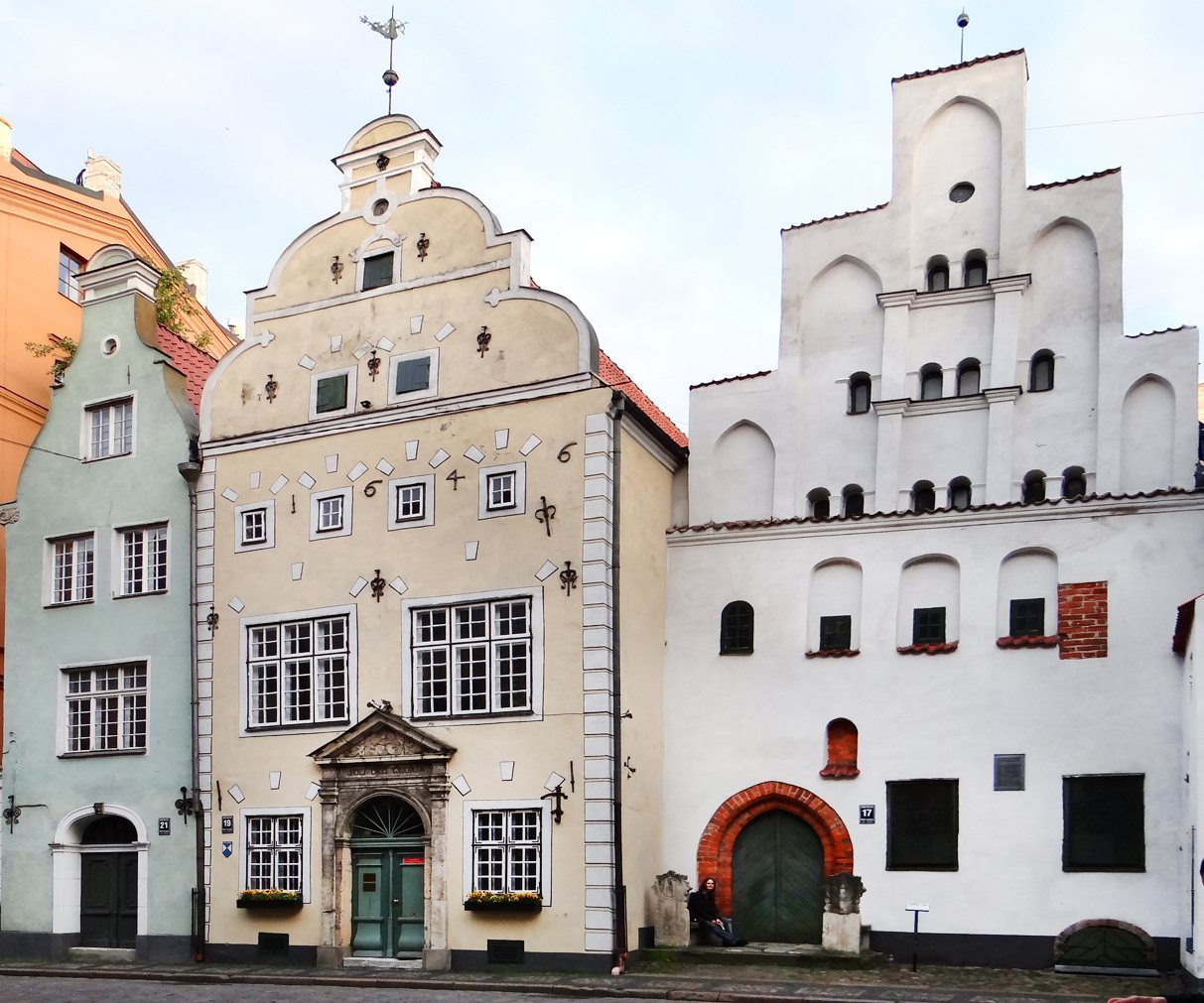
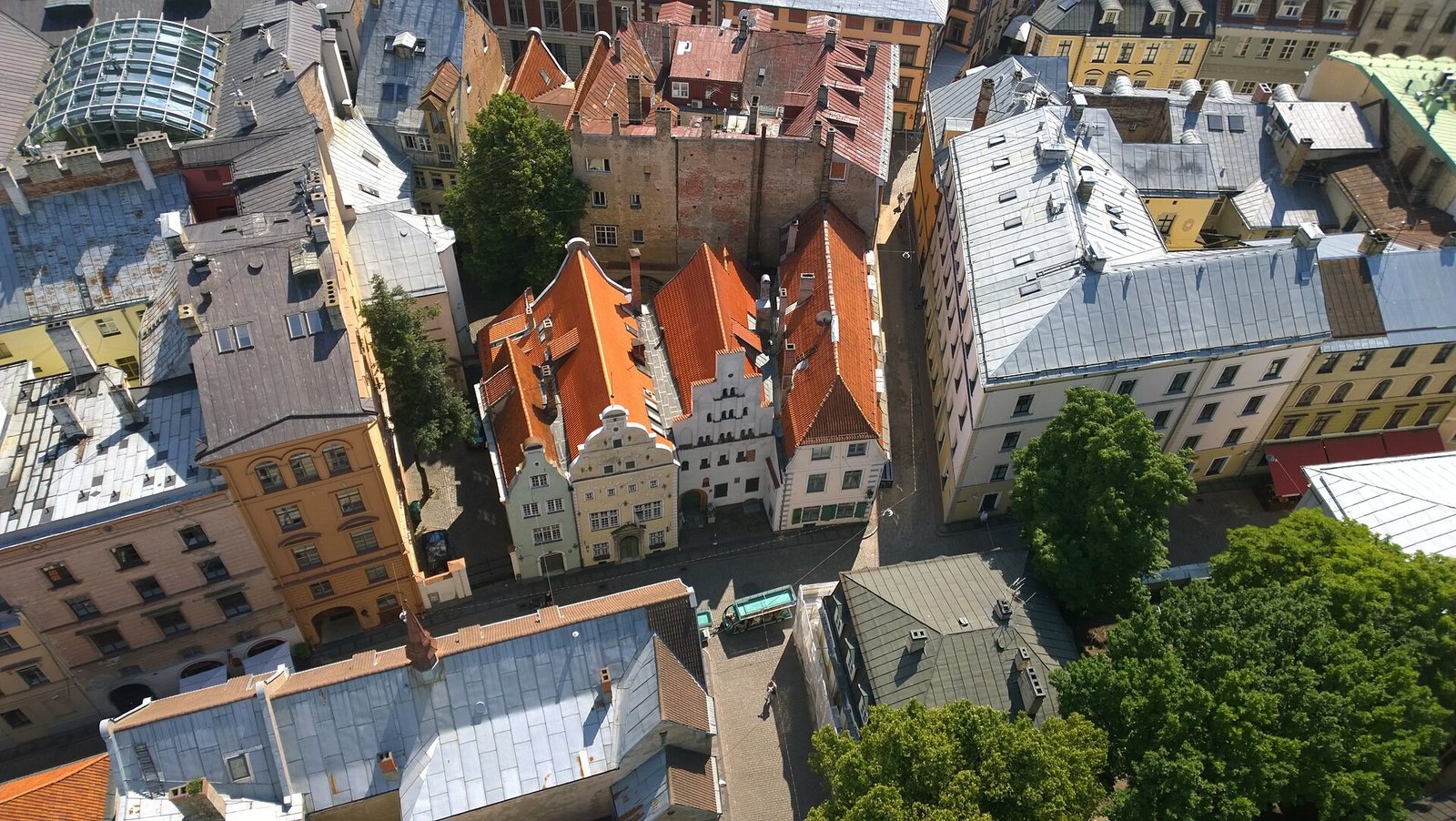
The Three Brothers are a group of three residential buildings in Riga’s Old Town, Latvia, forming the city’s oldest surviving complex of dwelling houses. The White Brother, the oldest, dates to about 1490; the houses at Mazā Pils iela 19 and 21 date to 1646 and around the turn of the eighteenth century, respectively. Together, they represent successive phases in the development of residential architecture in Riga.
Construction and early development
The White Brother is identified as Riga’s oldest surviving stone dwelling and may have been built by a baker. The house at number 19 was built in 1646. The Green Brother, at number 21, dates to around the turn of the eighteenth century, though its present appearance probably took shape in the late seventeenth century. The earliest written evidence of development on its plot dates to 1718. Each of the three plots had been occupied by between three and five generations of earlier buildings.
Changing occupants and uses
In 1697, the White Brother housed a bakery. In the eighteenth century, it was home to Johans Sārnavs, an elder, or senior office-holder, of Riga’s Small Guild, an association of the city’s artisans. During the nineteenth century, a stonecutter surnamed Schrader lived and worked there, and the building later housed Riga’s first confectionery.
The Green Brother’s first owner was Vendlings Šteidings, a pastor at St James Church. Artisans also used the building: workshops occupied its first two floors, while the third served as living space. When the house was built, property tax depended heavily on the length of a building’s street frontage. In the nineteenth century, the Green Brother became a rental property divided into small apartments. Most known owners of the house at number 19 were artisans.
Restoration and identity
A reconstruction in the late nineteenth century changed the Green Brother’s appearance. From 1955 to 1957, the complex was restored under Latvian architect Pēteris Saulītis, with assistance. This work established the ensemble’s present appearance, including the restoration of the Green Brother’s curved Baroque gable.
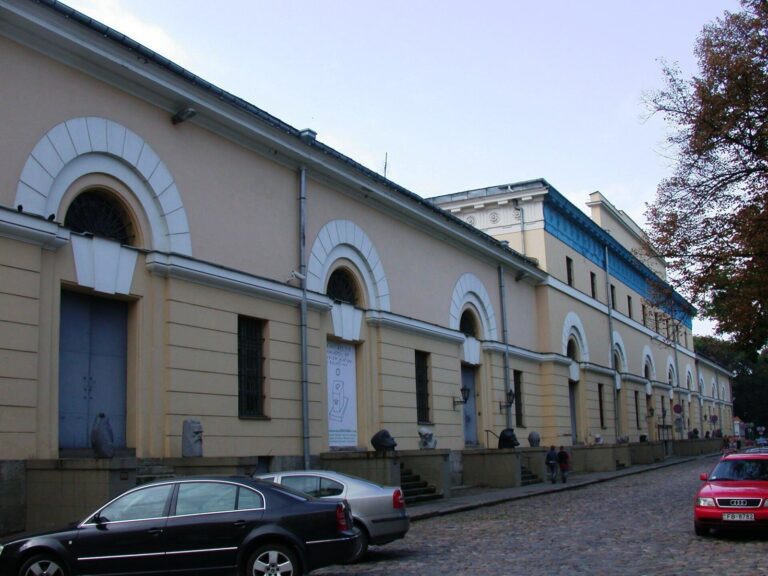
The name Three Brothers may recall Tallinn’s Three Sisters, a group of historic houses in the city’s Old Town, or a tradition that members of one family built the Riga houses. The name had earlier been used in Riga for a brick warehouse at Arsenal Street 5, which featured a relief of three men. The complex is protected as a State Monument of Architecture and received the European Heritage Label in 2020, an EU designation for sites recognized for European significance. It houses Latvia’s heritage-protection authority and the Latvian Museum of Architecture, as well as the Latvian Architects’ Union and the editorial office of Latvijas Architektūra.
Remains
Street-facing arrangement
The three houses stand at Mazā Pils iela 17, 19, and 21, opposite the former Karl Lyceum, a historic Riga school. Their gable ends face the street, following a residential building form found in Hanseatic towns around the Baltic Sea. The Hanseatic League was a network of trading cities and merchant communities around the Baltic and North Seas. The houses are tightly grouped, so that each appears to continue the next. A small forecourt, porch, and stone steps stand before the White Brother.
The three houses
The White Brother
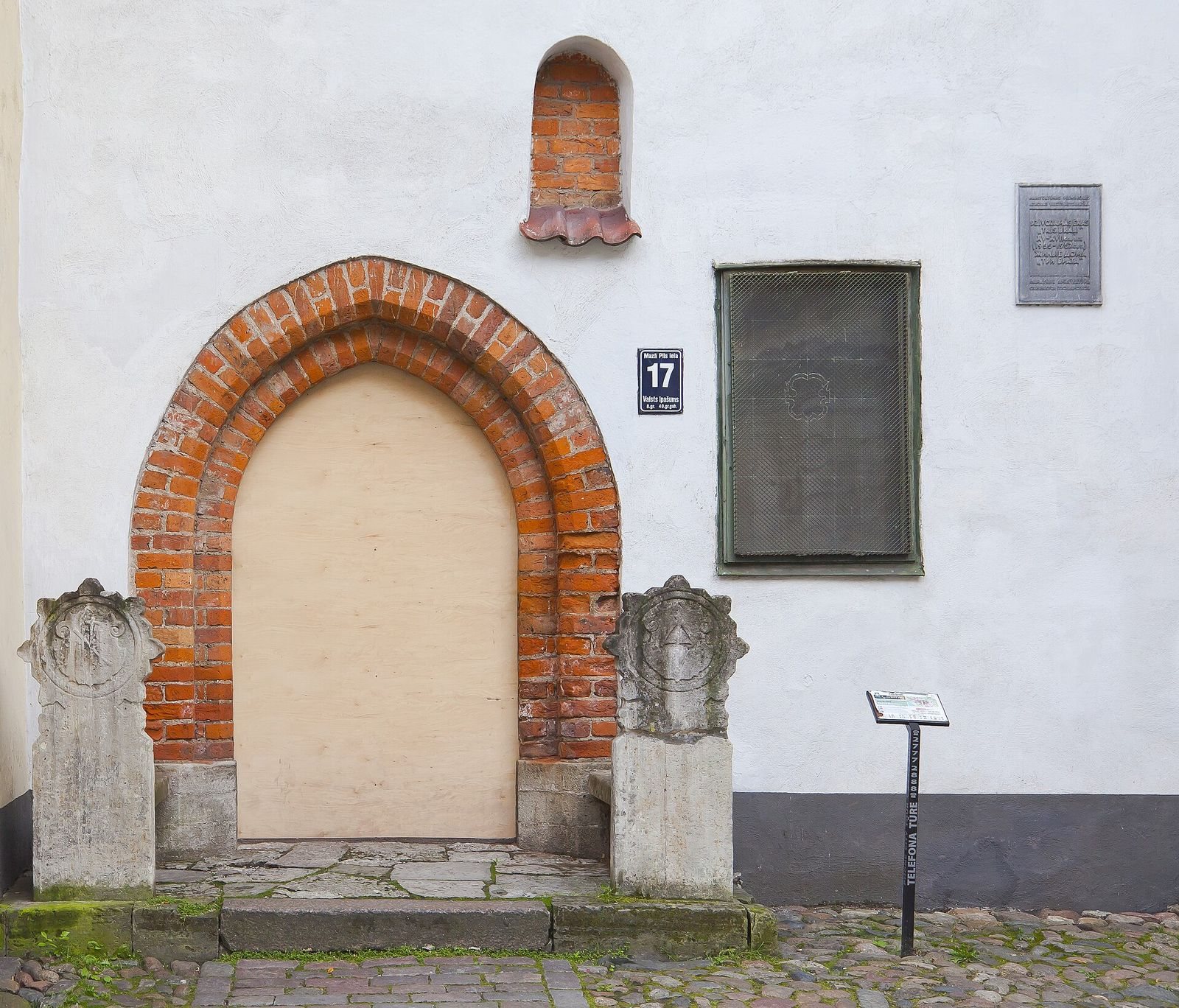
The White Brother’s façade combines a crow-stepped gable, whose sloping edges rise in steps, Gothic niches, and Renaissance details. Stone benches flank the entrance. A stone address marker with wrought-iron ornament stands at the doorway. The house is set back from the street, a position interpreted as suggesting that the street may once have been wider.
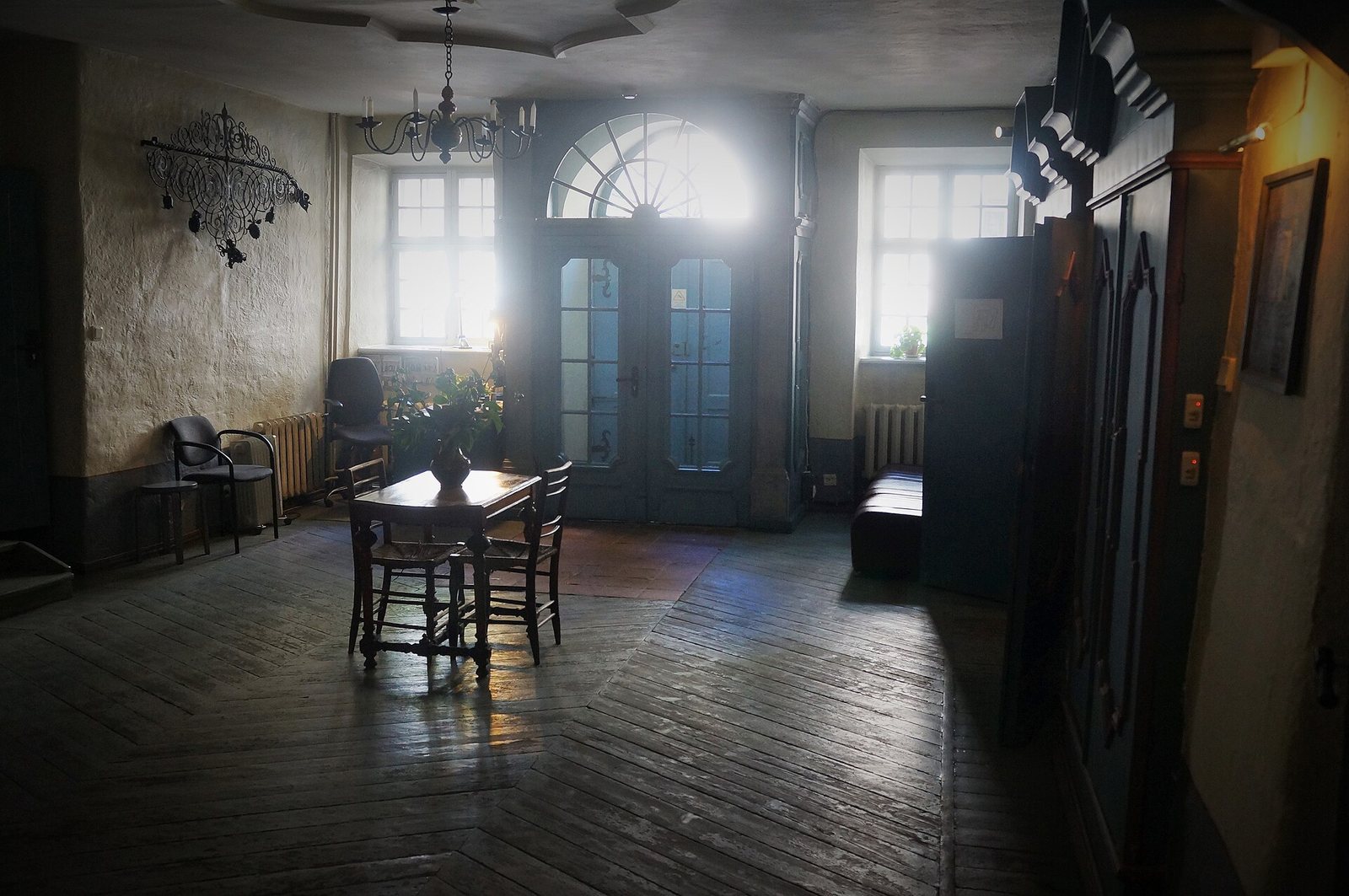
Its ground floor was a large combined living and working space extending across the building’s full footprint. A corner hearth beneath a large chimney hood provided heat and was used for cooking. Openings through the ceilings continued into the attic levels, where goods were stored. Additions that had extended the building toward both the yard and the street, reaching the newer street level, were removed during the 1950s restoration.
The house at number 19
Also known as the Middle Brother or Yellow Brother, the house at number 19 has an ornate Dutch Mannerist façade. Metal anchors on the exterior mark its 1646 date. The façade was restored with reference to a 1785 drawing by Johann Christoph Brotze, a Baltic German educator and documentary artist.
The portal now set in this façade was made in 1746 for the White Brother and moved to number 19 during the 1950s restoration. Its inscription, Soli Deo Gloria, means “Glory to God alone,” a Christian devotional phrase. Inside, the ground floor contained a large room with a hooded fireplace, and the second floor included a guest room. Living quarters were arranged on the yard side.
The Green Brother
The Green Brother is a narrow Baroque building. A mask on its façade was understood to ward off evil spirits. Within the courtyard, the building’s width is comparable to that of its neighbors, and its façade is crowned by a curved gable.
Courtyard features
Reused architectural fragments
The courtyard’s firewalls, masonry walls that help limit the spread of fire between buildings, incorporate fragments from structures destroyed during the Second World War. These include a stone portal from the House of the Blackheads, a historic Riga building associated with a merchant association, and part of a portal from another Old Town dwelling. One firewall also contains mascarons, decorative carved faces.
Coat-of-arms relief
A stone relief of Riga’s coat of arms, bearing the date 1554, is preserved in the courtyard. Originally colored, it was set in the gable of the Blue Guard warehouse in the market square. The warehouse burned in June 1941, but the relief survived.