Church of St. Andrew, Alfriston: A 14th-Century Parish Church
Site at a Glance
- Rating
- 4.6
- Popularity
- Medium
- Country
- United Kingdom
- Primary era
- Medieval
- Eras represented
- Medieval, Modern
- Civilizations
- British, English
- Site type
- Religious
- Remains
- Church
On this page6 sections
History
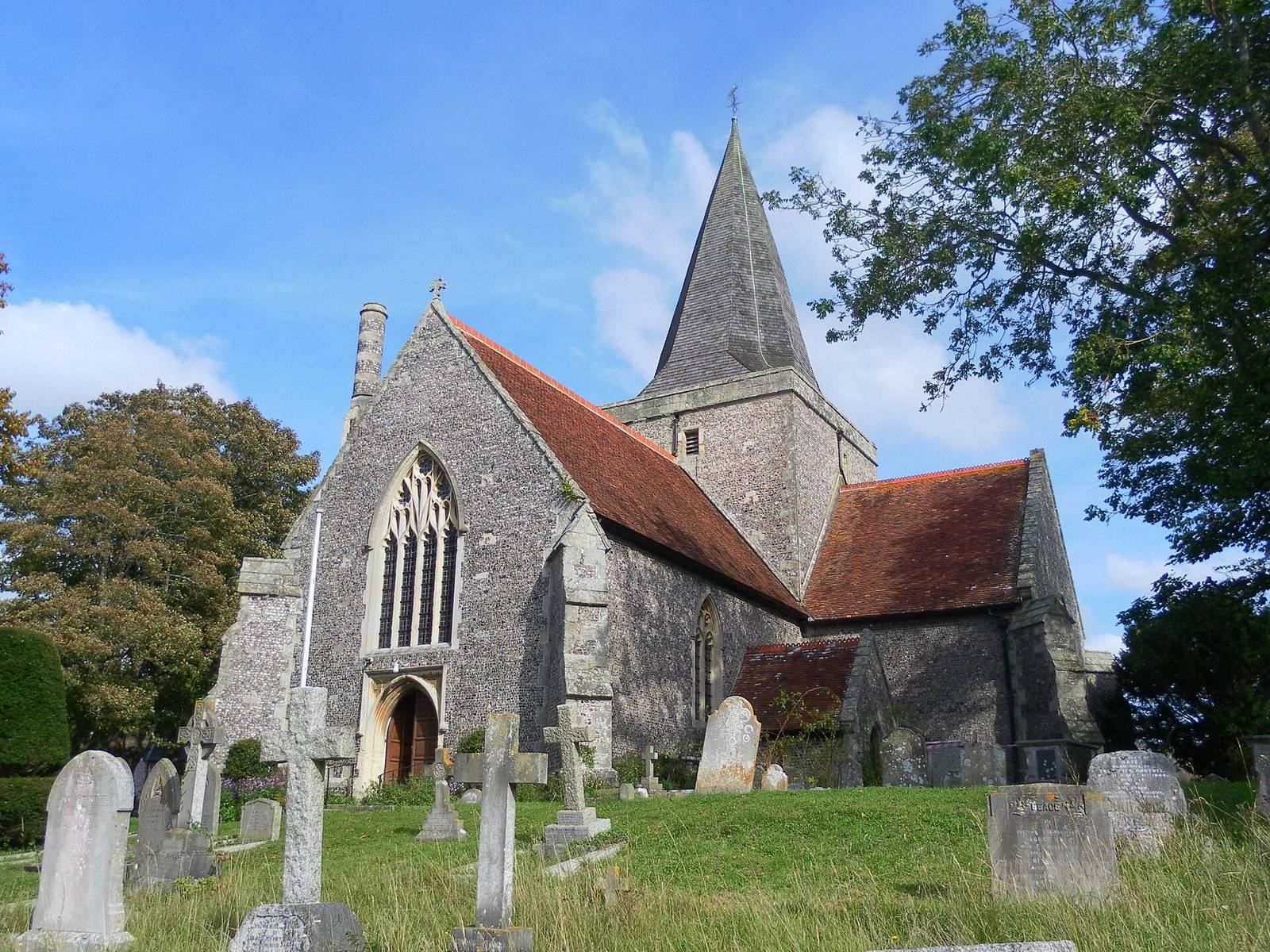
The Church of St. Andrew, Alfriston, is the village’s parish church in the United Kingdom. Its foundation is dated to 1366, while construction took place in the 1370s. Dedicated to St Andrew, one of Jesus’s apostles, the church’s design marks the transition from Decorated to Perpendicular, successive styles of English Gothic architecture.
Formerly Roman Catholic, the church is now an active Church of England church, part of the Anglican tradition in England. Its position on a mound has prompted the suggestion that the site may have been used for worship before Christianity. An individual or family may have sponsored the building, but this remains conjectural. Alfriston had no lord of the manor, a landholder with rights over a manor, at the time.
The church received Grade I listing in 1966. Grade I is the highest category for buildings of exceptional architectural or historic interest.
Remains
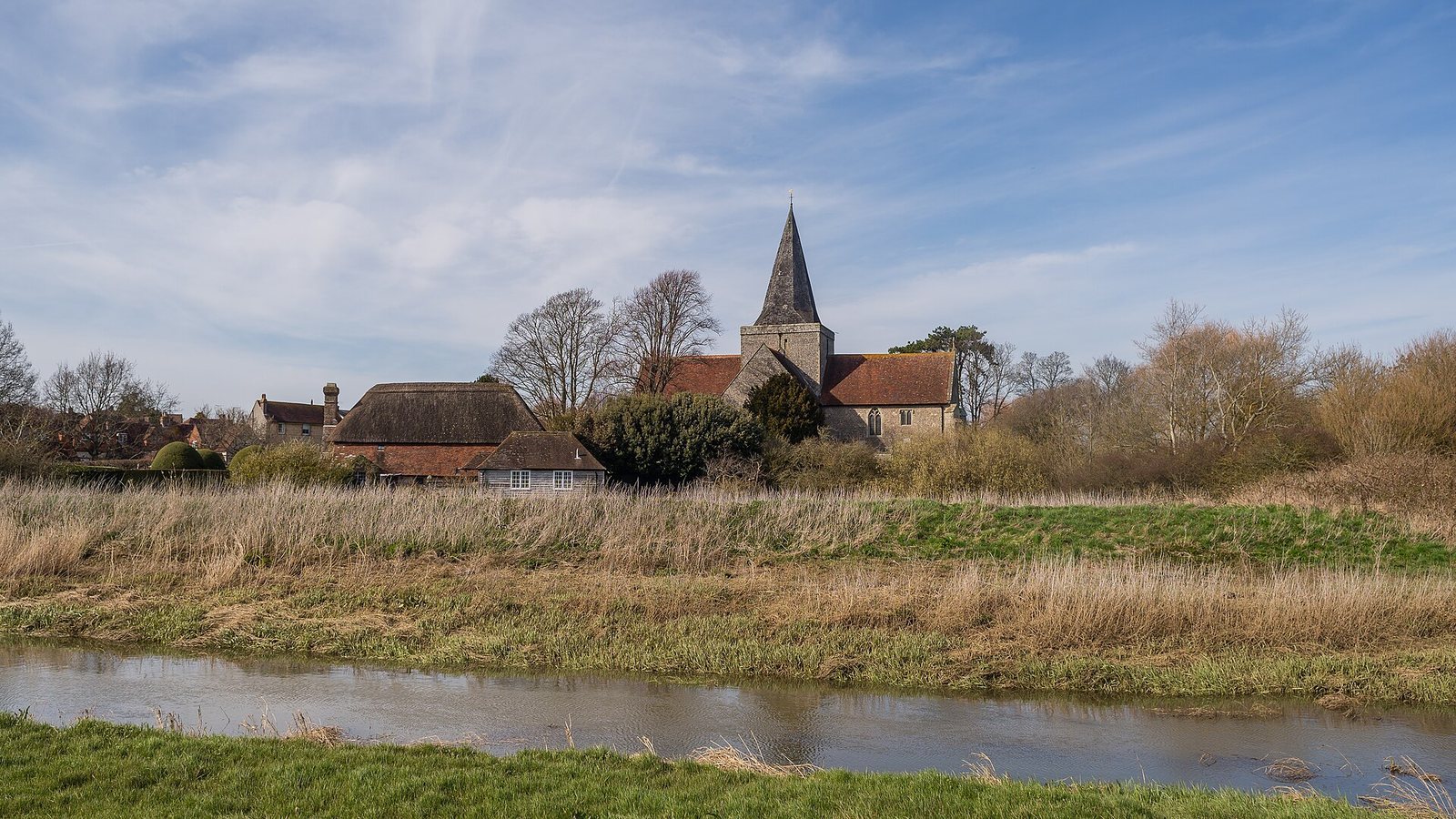
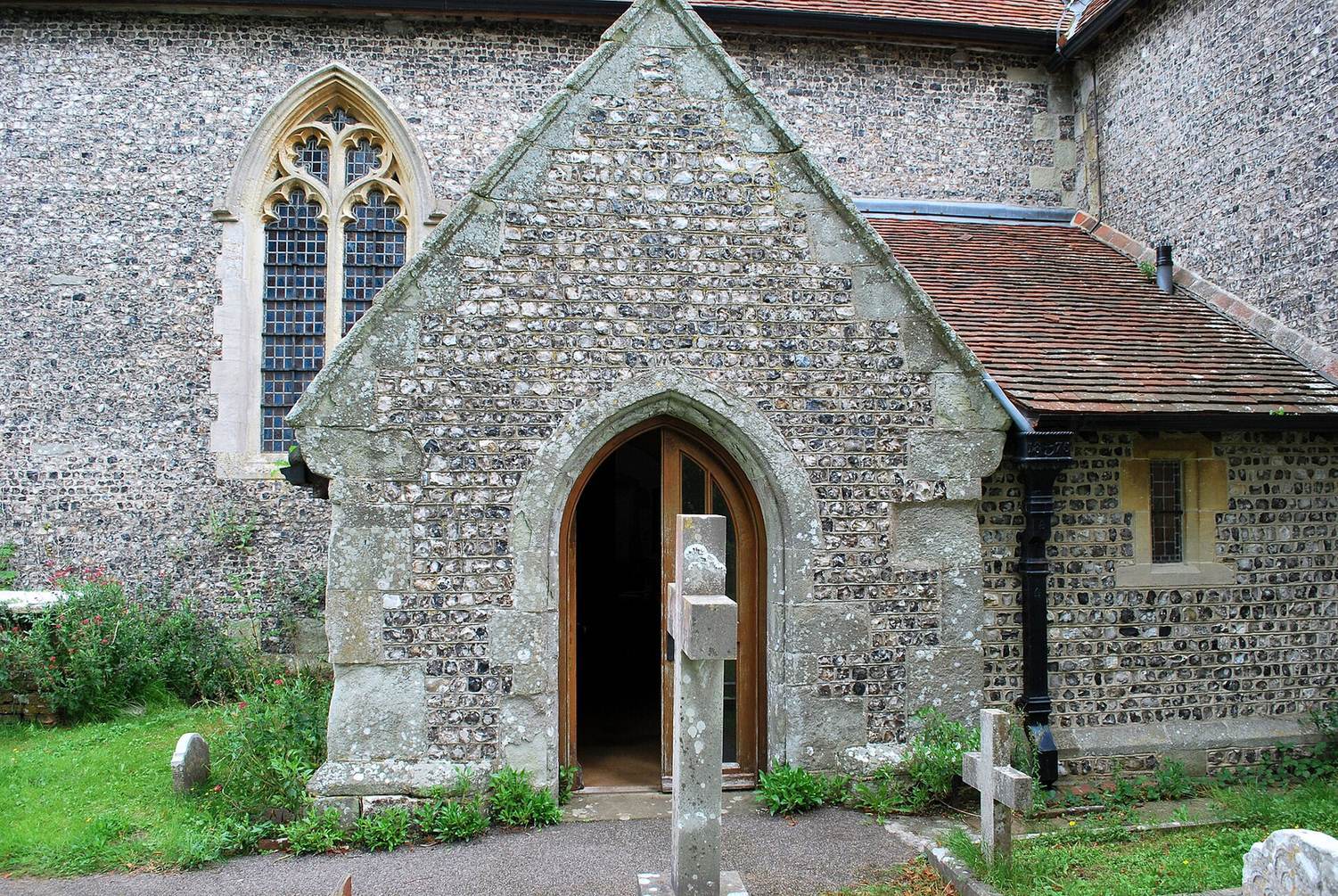
The church is 115 feet (35 metres) long and follows a Greek-cross plan, with four arms of similar length extending from a central point. Its consistent design has been taken to indicate that it was built in a single campaign. The building stands on a small mound enclosed by flint walls, in the middle of Alfriston’s village green, overlooking the River Cuckmere. A flower-planted graveyard surrounds it.
Carved features and bells
Canonical sundial
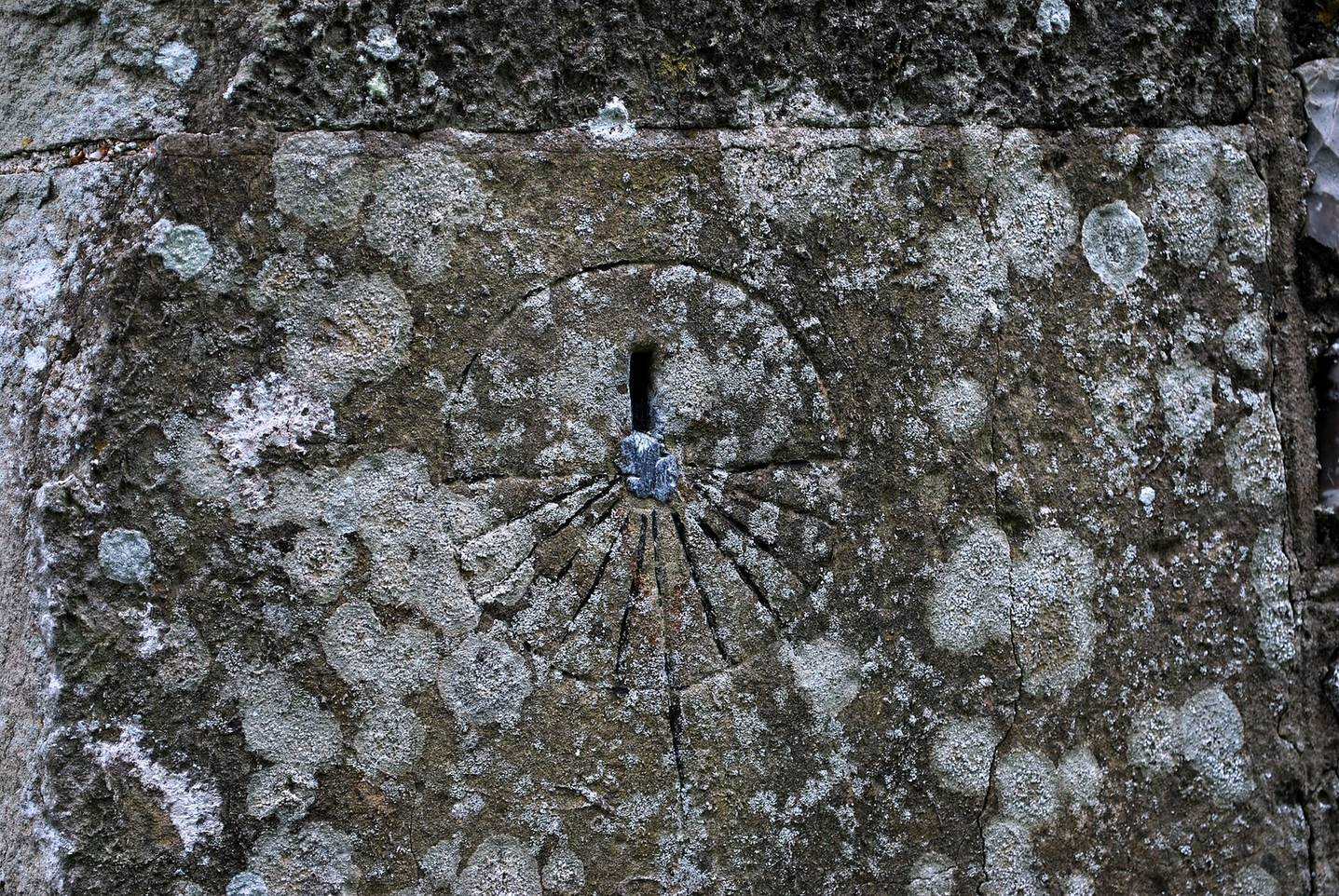
A 14th-century canonical sundial, used to mark times for religious observances, is carved into a stone on the left side of the south porch. The stone was originally set in the south wall and was moved when the porch was built.
Altar carvings
Carvings near the altar include a figure identified as Saint Lewinna, an early medieval saint associated with Sussex. Another depicts a beaver biting off its own testicles.
Bell ring
The central tower holds six bells, rung from the chancel floor. The chancel is the area around the altar traditionally used by the clergy and choir. The oldest bell dates to about 1400; two date to 1698, one to 1811, and another to 1819. The two 1698 bells and the 1811 bell were recast in 1928, when a sixth bell was added. The 1819 bell was recast in 1955.