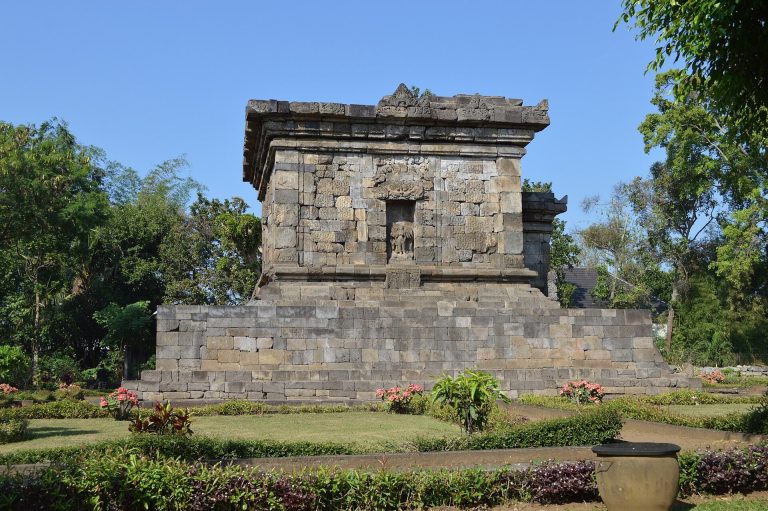
Situs Biting: The Fortified Capital of Lamajang Tigang Juru
Site at a Glance
- Popularity
- Medium
- Country
- Indonesia
- Primary era
- Medieval
- Eras represented
- Medieval
- Civilizations
- Unclassified
- Site type
- Military
- Remains
- Wall
On this page9 sections
History
Situs Biting is an archaeological site in Kutorenon village, East Java, Indonesia, regarded as the remains of the former capital of Lamajang Tigang Juru, an eastern Javanese realm ruled by Arya Wiraraja from 1293 to 1316.
Lamajang Tigang Juru
The Javanese literary work Kidung Harsawijaya dates Raden Wijaya’s accession as the first king of Majapahit, a Javanese kingdom, to 10 November 1293. Arya Wiraraja governed Lamajang during this period, and local tradition remembers him as Prabu Menak Koncar I. Lamajang Tigang Juru’s territory included Madura, Lamajang, Patukangan, also called Panarukan, and Blambangan.
The Sumenep Agreement divided Java into two equal parts. The division of the former Singhasari realm, a kingdom that preceded Majapahit in East Java, is associated with later cultural differences: Mataraman traditions in the former Majapahit lands and Pendalungan, a Javanese-Madurese mixture, in the former Lamajang region.
Majapahit campaigns and resistance
In 1316, Majapahit attacked Mpu Nambi, Arya Wiraraja’s successor in Lamajang and a minister in Majapahit, and Lamajang fell. The Babad Pararaton and Nagarakertagama place the fall in that year. Resistance by port settlements, including Sadeng and Patukangan, followed and culminated in the 1331 conflict known as Pasadeng, or the Sadeng and Ketha War.
The Nagarakertagama calls the former capital Arnon. During King Hayam Wuruk’s journey through Lamajang in 1359, he did not dare stop there. Resistance flared again during the Paregreg conflict of 1401 to 1406, when Majapahit was divided between western and eastern factions.
Later political histories
The Babad Tanah Jawi relates that Sultan Agung, ruler of the Mataram Sultanate, captured the fort of Renong around 1617 through Tumenggung Sura Tani, a Javanese official. Renong is identified with Arnon and Kutorenon. Later, after the sons of the Javanese military leader Untung Suropati were driven from Pasuruan, the Arnon or Renong area again became a base for resistance.
Kutorenon is the village’s present name. Local tradition connects it with Ketonon, meaning “burnt.” The fort is also identified as Bayu Fort or Bandayuda. The site is Hindu-affiliated.
Archaeological research and damage
Research by the Yogyakarta Archaeological Center from 1982 to 1991 documented the site’s area and its six constituent blocks. Construction of the Biting public housing development damaged about 15 hectares of the archaeological area in 1995.
Remains
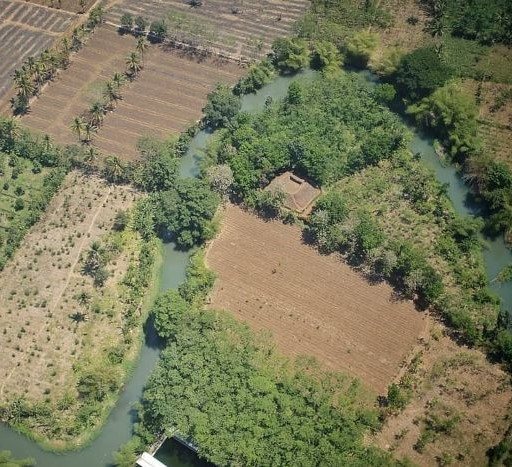
The archaeological site covers approximately 135 hectares and is divided into six named blocks. Its most prominent surviving feature is the defensive wall that surrounded the former capital. The name Biting comes from a Madurese word meaning “fort.”
Defensive wall
The wall around the former capital is described as about 10 kilometres long, 6 metres thick, and 10 metres high. These dimensions convey the scale of the fortification; the site’s recorded remains are centered on this defensive boundary.
Archaeological blocks
The palace block covers 76.5 hectares. The other five are Jeding, at 5 hectares; Biting, at 10.5 hectares; Randu, at 14.2 hectares; Salak, at 16 hectares; and Duren, at 12.8 hectares.
Grave and historical identification
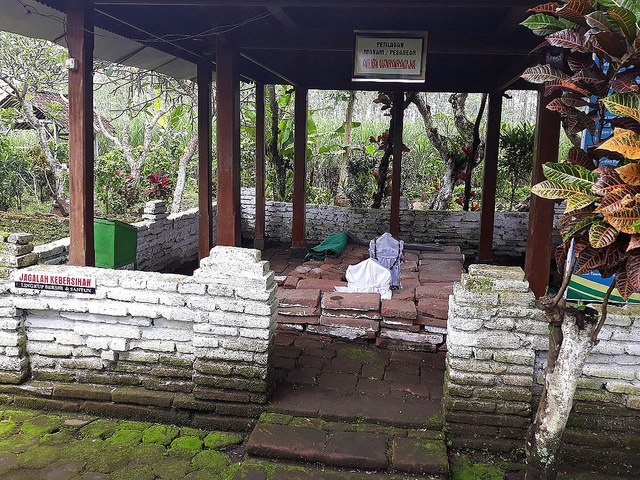
A grave within the site is attributed by a Lumajang Regency study to Pecat Tondo, ruler of Terung. The study tentatively identifies him as Tumenggung Kertoyudo, described as Lumajang’s last regent and also known as Pangeran Mas Jagapati. Kertoyudo was the sixth son of Surabaya’s ruler Jayengrono and served as a demang, a local administrative official, in Sidoarjo-Pasuruan, also called Panayungan. He succeeded Kartonegoro after Kartonegoro’s death in 1767. Kertoyudo is said to have died defending Blambangan during the VOC campaign there from 1767 to 1773. The VOC was the Dutch East India Company, which conducted military and commercial operations in the Indonesian archipelago.