Buzovgrad Megalith: A Prehistoric Sanctuary in Bulgaria
Site at a Glance
- Rating
- 4.8
- Popularity
- High
- Country
- Bulgaria
- Primary era
- Bronze Age
- Eras represented
- Stone Age, Bronze Age
- Civilizations
- Unclassified
- Site type
- Religious
- Remains
- Sanctuary
On this page9 sections
History
Early sanctuary and Thracian use
Buzovgrad Megalith is a prehistoric sanctuary near Buzovgrad in Bulgaria. Its construction is tentatively dated to 1800–1600 BCE, spanning the Late Eneolithic, or Copper Age, and the beginning of the Bronze Age. Communities that lived in the region before the Thracians built it, and the Thracians later inherited the site.
The sanctuary may have served several purposes. In Thracian belief, sunrise represented birth, while sunset was associated with death and the afterlife. The opening may therefore have been understood as a passage to the world of the dead. The site is also thought to have hosted rituals and burials for Thracian aristocrats and priests, and to have helped people observe the calendar, astronomical year, and changing seasons.
Interpretations and commemoration
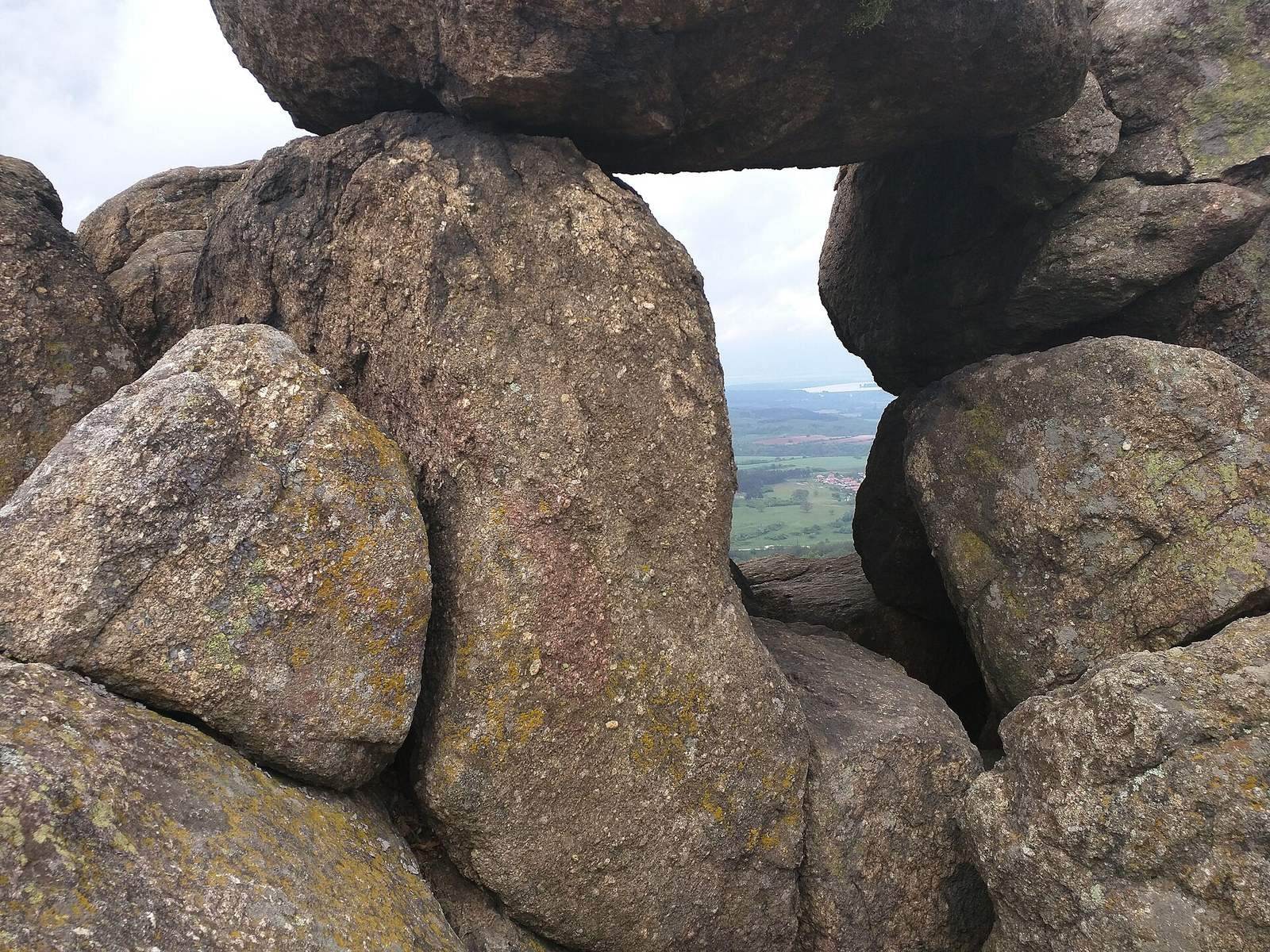
Alexander Fol, a modern scholar of Thracian history and culture, proposed that comparable structures stood on the opposite Balkan hills visible through the opening. He suggested that such places might have combined religious use with military observation and communication. In clear weather, bronze mirrors could have reflected sunlight between sites; at night, fires may have carried signals.
Part of Fol’s ashes, after his death in 2006, was scattered near the Mother Goddess Gate. A stone plaque honoring him was installed at the site on the summer solstice in 2009. On 28 May 2013, the 0.53-hectare site was declared a natural landmark.
Remains
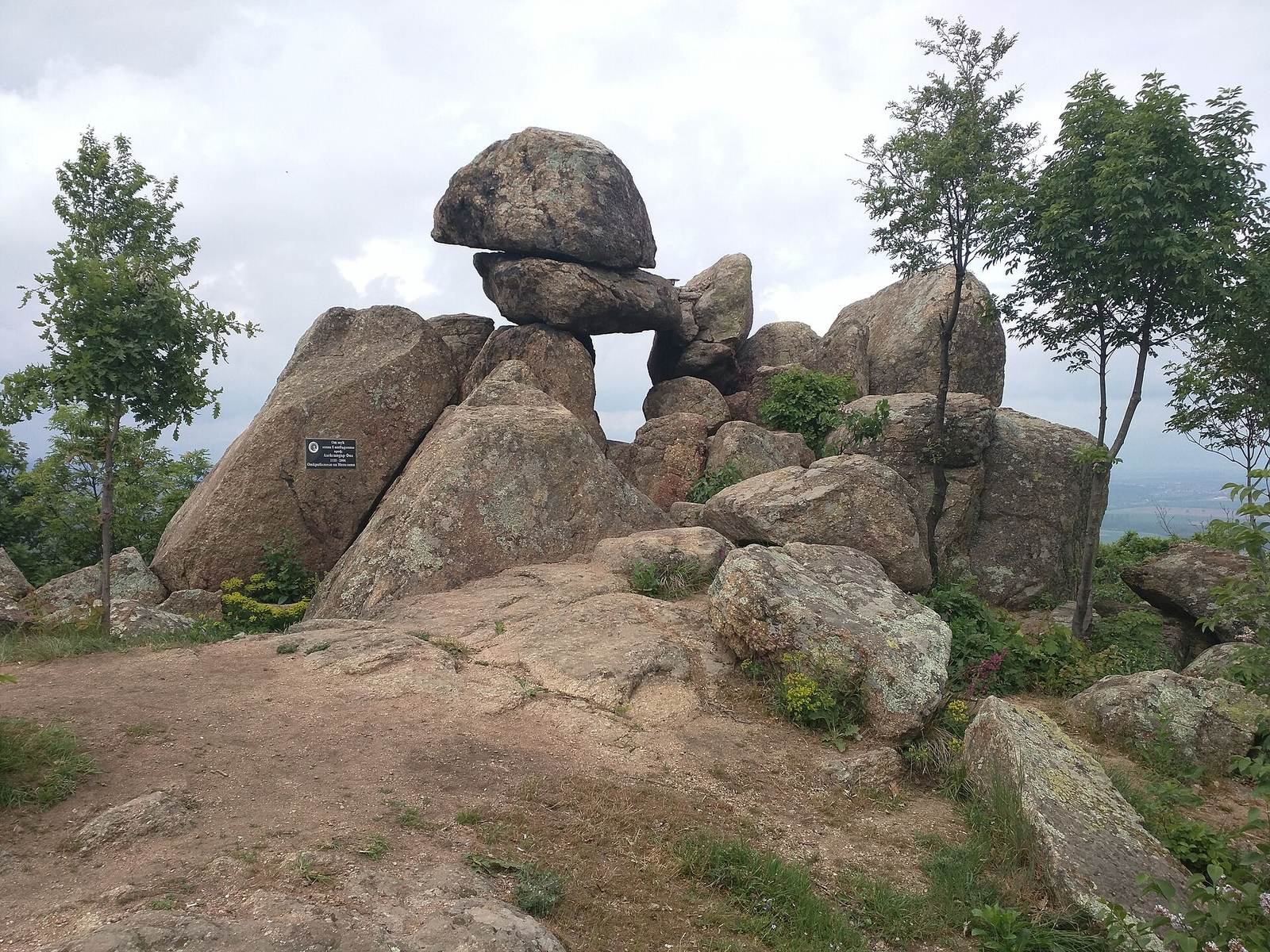
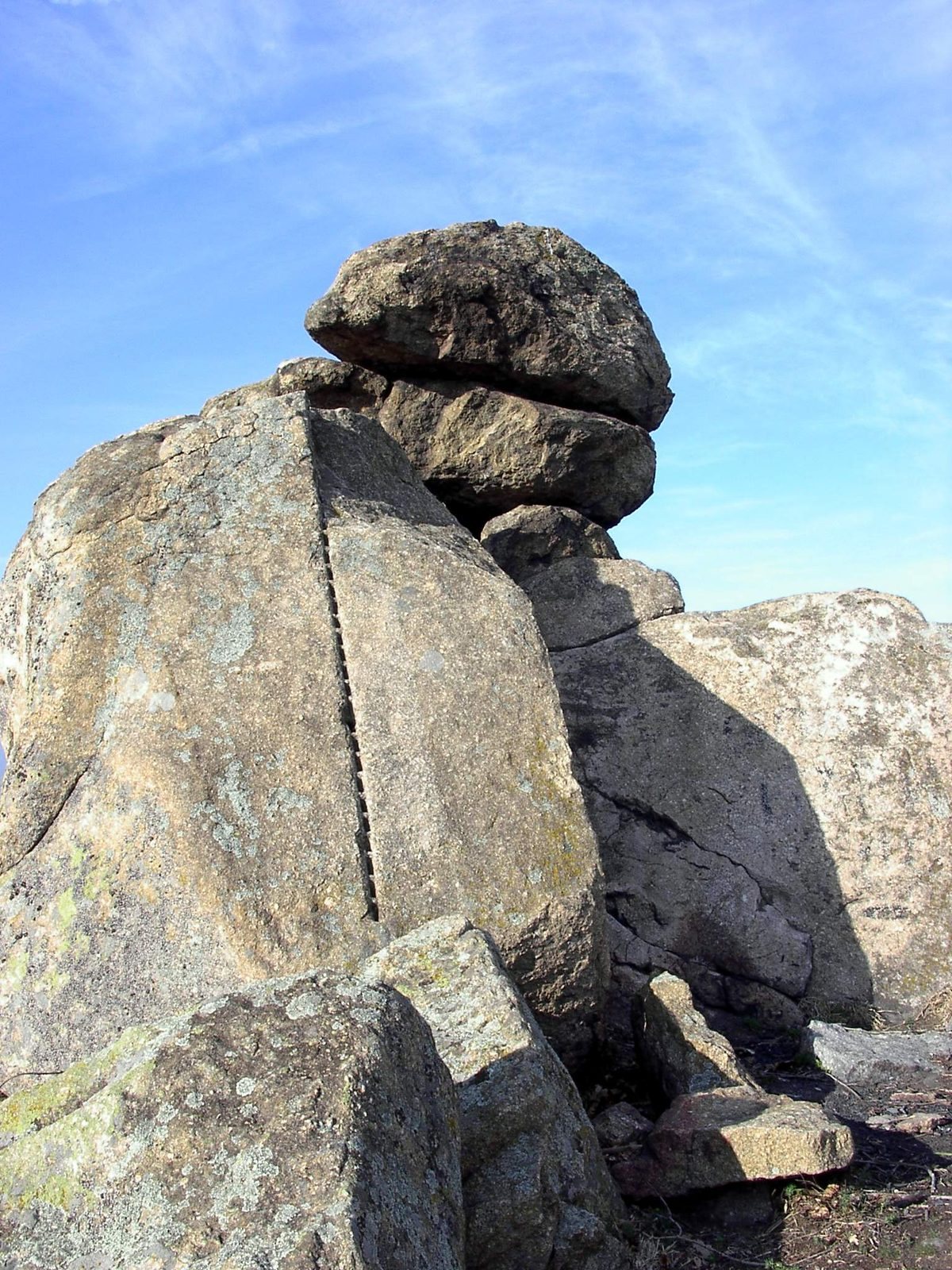
The site occupies the northern slopes of Sarnena Sredna Gora and consists of rock formations arranged around an opening. The Roman fortress of Buzovo Kale lies nearby to the east, and a ravine extends beyond the opening.
Rock formations and alignment
The Mother Goddess Gate
The main feature is an opening about 1.80 metres high, formed by two horizontal stone blocks resting on supporting blocks that are part of the bedrock. This arrangement is a trilith, meaning two supports carrying a horizontal stone. At sunset, sunlight enters through the opening. On the summer solstice, 21 June, rays pass through it and fall on a rock opposite.
The Throne and wider alignments
The Throne, a carved rock formation, lies about 5.80 metres east of the opening. The rock on which it is carved stands along a line from the opening toward Triglav, a peak in the Balkan range. The megalith also forms one point of a triangular arrangement whose other points are Seuthopolis, the capital of the Odrysians, a Thracian people, and the Golyama Kosmatka burial mound.
Father’s Stone
A nearby natural rock formation called Father’s Stone is thought to resemble a penis and testicles; its name refers to that likeness.
Fol memorial
The memorial plaque to Alexander Fol is fixed to one of the large stones at the site.