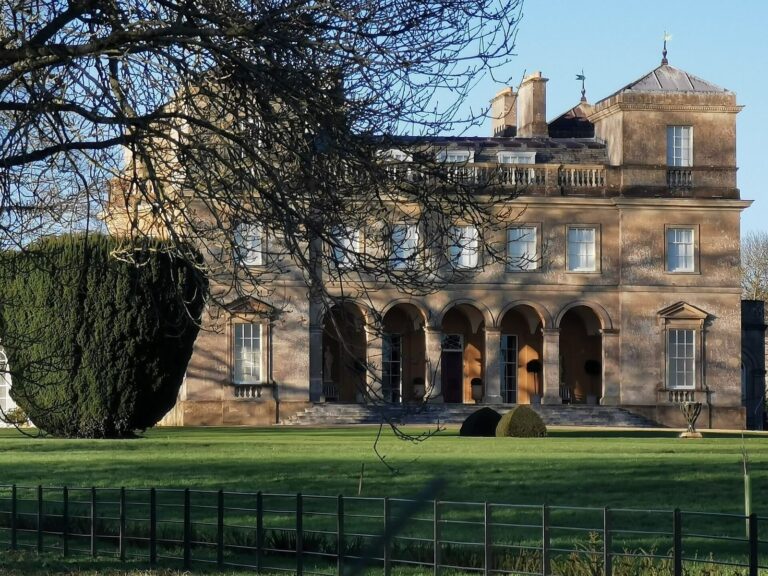
Earnshill House: A Georgian Palladian Manor in Somerset
Site at a Glance
- Rating
- 5
- Popularity
- Low
- Country
- United Kingdom
- Primary era
- Early Modern
- Eras represented
- Early Modern
- Civilizations
- British
- Site type
- Domestic
- Remains
- Manor House
On this page10 sections
History
Earnshill House is a Georgian manor house in Hambridge, near Curry Rivel, Somerset, United Kingdom. It belongs to Britain’s Georgian period, usually dated from 1714 to 1830, and is designed in the Palladian style, which draws on classical forms and emphasizes symmetry and proportion. Its history is closely connected with the Combe family and the development of lawn tennis.
From monastic manor to country villa
The manor of Earnshill belonged to Muchelney Abbey, a Benedictine monastery in Somerset, until the Dissolution of the Monasteries, when monasteries in England were closed and suppressed during the Reformation. The estate then passed to the Jennings family.
Earnshill House is dated to 1725, although the sequence of its construction is uncertain. Francis Eyles bought the estate in 1728 and began building the present central part as a country villa. Colen Campbell, a Scottish architect associated with Palladian architecture, is credited with its design. After Eyles died in 1750, his brother Edward inherited the estate and house.
The Combe family and the house’s expansion
Richard Combe, an elected member of the British Parliament, purchased the estate in 1758. Soon afterwards, he enlarged the house and estate with east and west wings, a walled garden, and Earnshill Farm, which included a barn. The estate remained with seven generations of the Combe family and is now owned by Nicholas Combe.
Wingfield, croquet and lawn tennis
Major Walter Clopton Wingfield, a first cousin of the Combe family, spent much of his time at Earnshill. He developed and tested lawn tennis on the oval croquet lawn by the house, and in 1874 received a lawn-tennis patent from Queen Victoria.
Olive Combe became a three-time North of England women’s singles croquet champion. In 1898 she won the women’s singles croquet championship at the All England Lawn Tennis and Croquet Club. When Wingfield died in 1912, he left his estate, including his patent and possessions, to his first cousin Constance Combe. She lived at Earnshill throughout her life and never married. The patent, signed by Queen Victoria, is now displayed at the International Tennis Hall of Fame in Rhode Island.
Wartime use and later status
During the Second World War, Earnshill House accommodated children evacuated from Durlston Court School, then based in Dorset. In 1959, the house was designated a Grade I listed building, England’s highest level of listed-building protection, reserved for buildings of exceptional interest.
Remains
The house
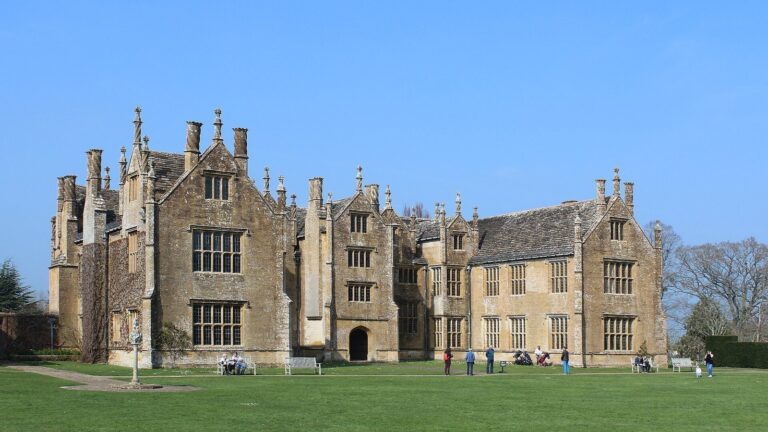
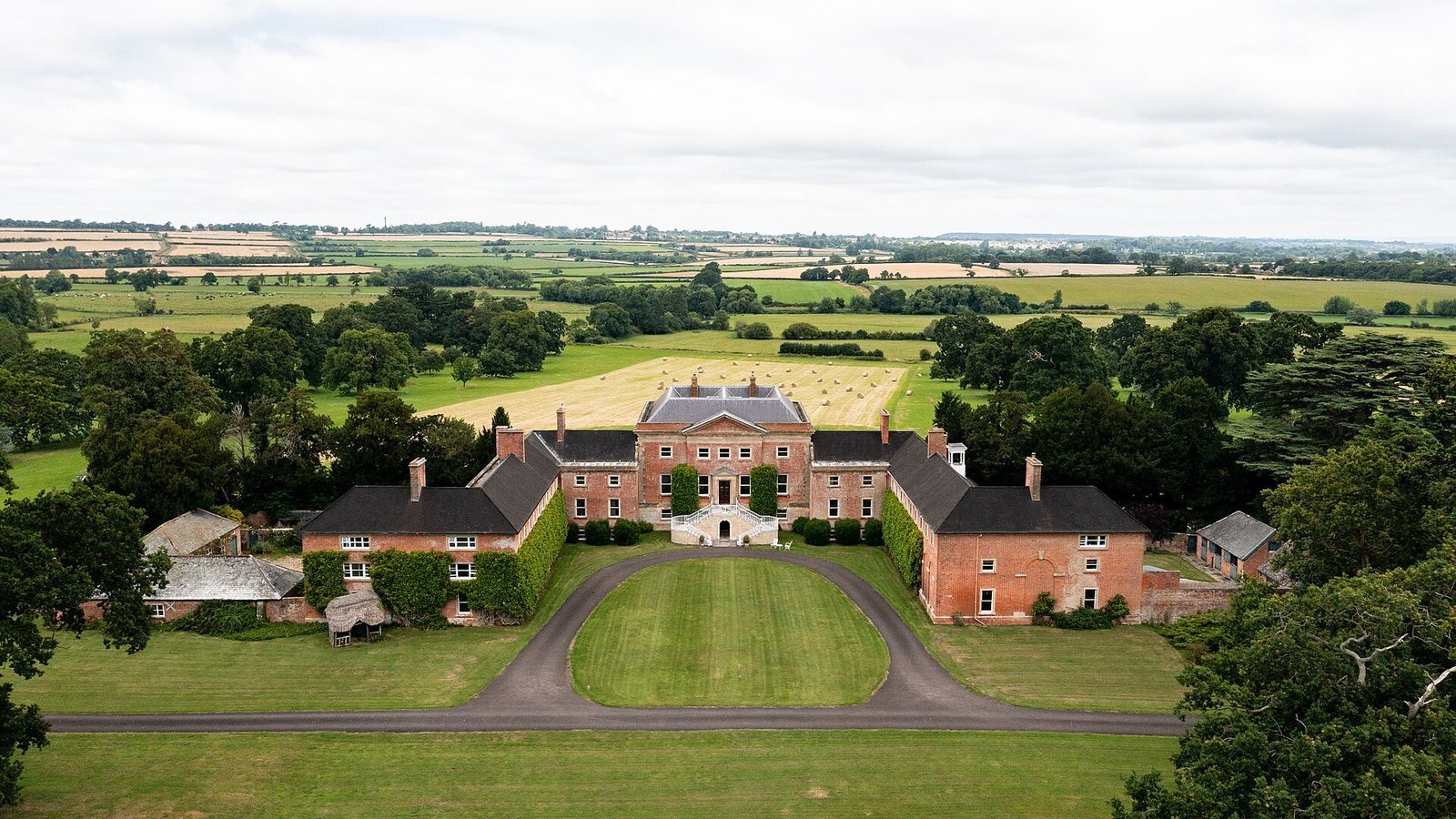
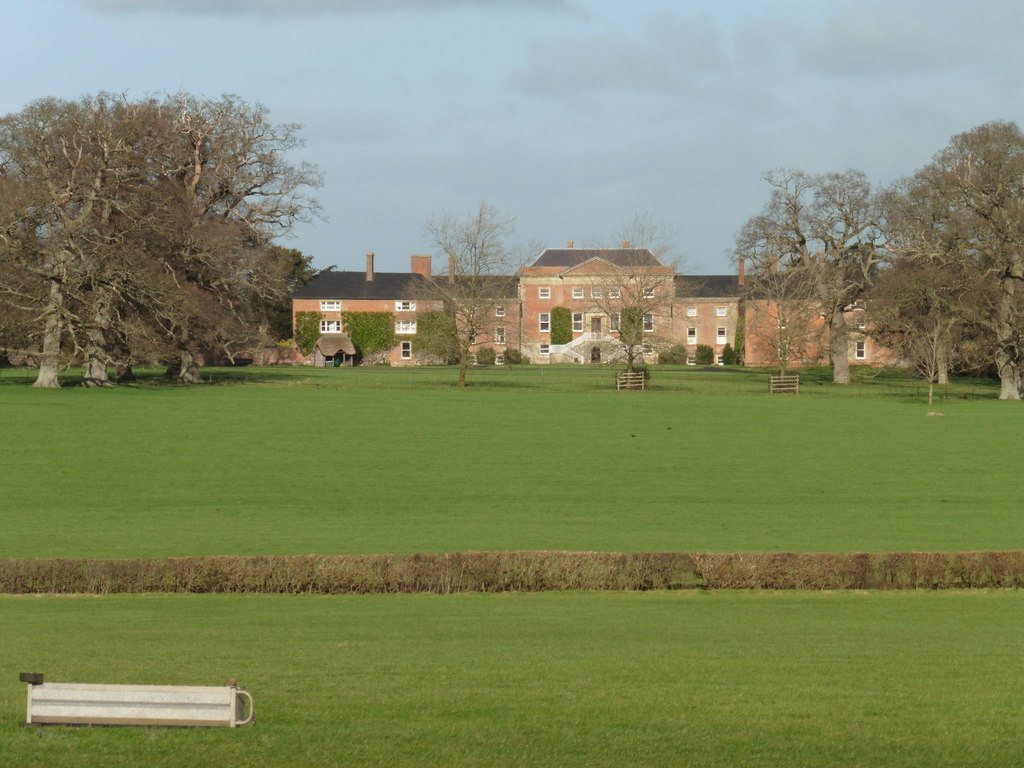
The house has a brick exterior with Hamstone dressings, finished stonework used to frame or form parts of a building. Its entrance front is arranged in five bays, or vertical sections, with projecting wings on either side. The substantial east and west wings extend the house’s plan. Inside, an ornate fireplace has Walter Wingfield’s portrait hanging above it, and Olive Combe’s Wimbledon trophy is also kept at the house.
Grounds and estate buildings
Garden and parkland
The walled garden lies within a wider area of parkland, and substantial gate piers mark the entrance to the drive. An oval croquet lawn is situated at the house entrance. Woodland in the surrounding grounds contains a four-pipe duck decoy, an installation designed to lure wild ducks, with nine shooting positions.
Earnshill Farm
Earnshill Farm is attached to the house and includes a brick barn, forming part of the estate’s agricultural buildings.