Klepsydra Spring: An Ancient Water Source on the Athenian Acropolis
Site at a Glance
- Popularity
- Medium
- Country
- Greece
- Primary era
- Classical
- Eras represented
- Classical, Medieval, Modern
- Civilizations
- Ancient Greek, Crusader, Roman
- Site type
- Infrastructure
- Remains
- Well
On this page12 sections
History
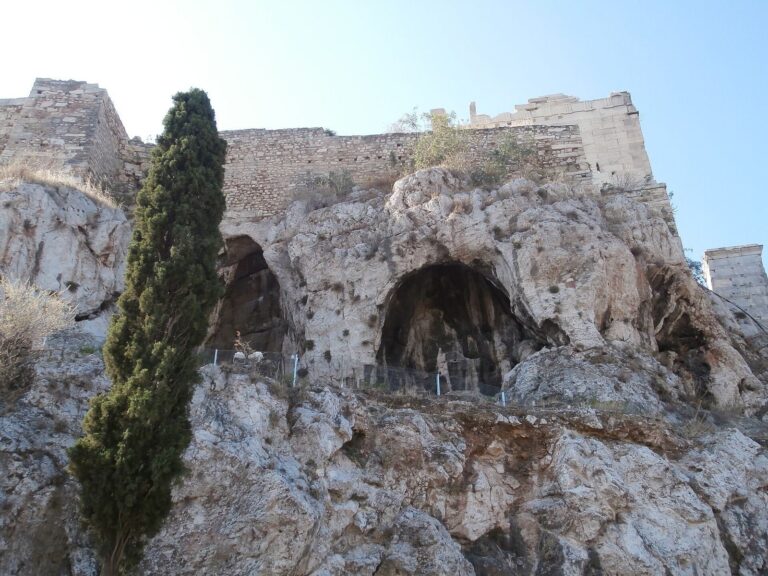
The Klepsydra spring is an ancient water source on the northwest slope of the Acropolis, Athens’ fortified citadel, in Greece. It supplied water from prehistoric times, and a fountain and paved court were developed in the fifth century BCE. Pottery places the original fountain and adjoining court around 475–470 BCE.
The spring in antiquity
The court’s purpose is uncertain. It may have formed part of a sanctuary, perhaps the Pythion, a sanctuary of Apollo, or it may have been used to collect rainwater. In the earliest period, the spring was within the Acropolis walls; during the Classical period, it stood outside the defensive circuit.
Hesychius, an ancient Greek lexicographer, used a term meaning “flowing underground” for the spring, whose water sometimes ran below ground, and said it had formerly been called Empedo. One interpretation distinguishes Empedo, the spring’s name, from Klepsydra, the water supplied by the fountain house. It also proposes that Empedo may have been a protective divinity, an Attic nymph, or female nature spirit associated with the region around Athens.
The historian Istros described the water rising and overflowing when seasonal winds blew, then disappearing when they stopped, as was said of the Nile and a spring on Delos. This explanation was probably an erudite invention, since the spring’s flow is otherwise remarkably regular. It was also thought to be bottomless, and its water was believed to be brackish.
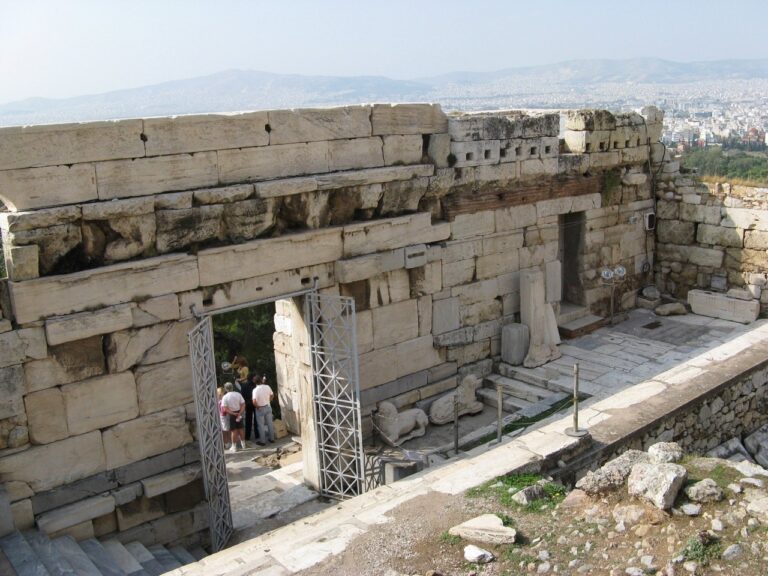
Pausanias, a travel writer of the Roman period, placed the spring below the Propylaea, the monumental entrance to the Acropolis, and mentioned a nearby cave sanctuary of Apollo. The playwright Aristophanes refers to Klepsydra in The Birds and Lysistrata; the biographer and essayist Plutarch also mentions it.
Collapse and later use
A collapse in the mid-first century BCE partly destroyed the original fountain. Another collapse in the mid-first century CE made it entirely inaccessible, and the natural cave collapsed in antiquity. A shaft was then opened from the Acropolis into the well, with a new well house constructed above it during the Roman imperial period. The Roman well house was later converted into a chapel in the Byzantine period, the medieval eastern Roman Empire.
During Frankish rule, the Latin Christian governance established in parts of Greece after the Fourth Crusade, the spring was heavily fortified. It later fell into disuse during the long period of Ottoman rule. The resulting lack of water contributed to the Ottoman garrison’s surrender on the Acropolis during the 1822 siege.
Sieges, rediscovery, and excavation
In September 1822, Odysséas Androútsos, a Greek commander in the Greek War of Independence against Ottoman rule, built a bastion around the spring to protect the water supply in case of siege. During the Ottoman siege of 1826–1827, attempts to undermine the bastion and spring failed. In 1826, Greek defenders under siege drew about 1,600 okas of water each day; an oka was a traditional unit of weight used in the Ottoman Empire.
British architects and antiquarians James Stuart and Nicholas Revett first identified the hillside stream with the Klepsydra named by ancient writers. Kyriákos Pittákis rediscovered the spring in 1822 and wrote the first account of the site in 1835. Archaeological investigation began in earnest with Émile Burnouf in 1874; Panayiótis Kavvadías uncovered the paved court in 1897. Excavations by the American School of Classical Studies at Athens from 1936 to 1940 exposed the court, fountain house, and water-drawing basin, clarifying the complex’s development.
Remains
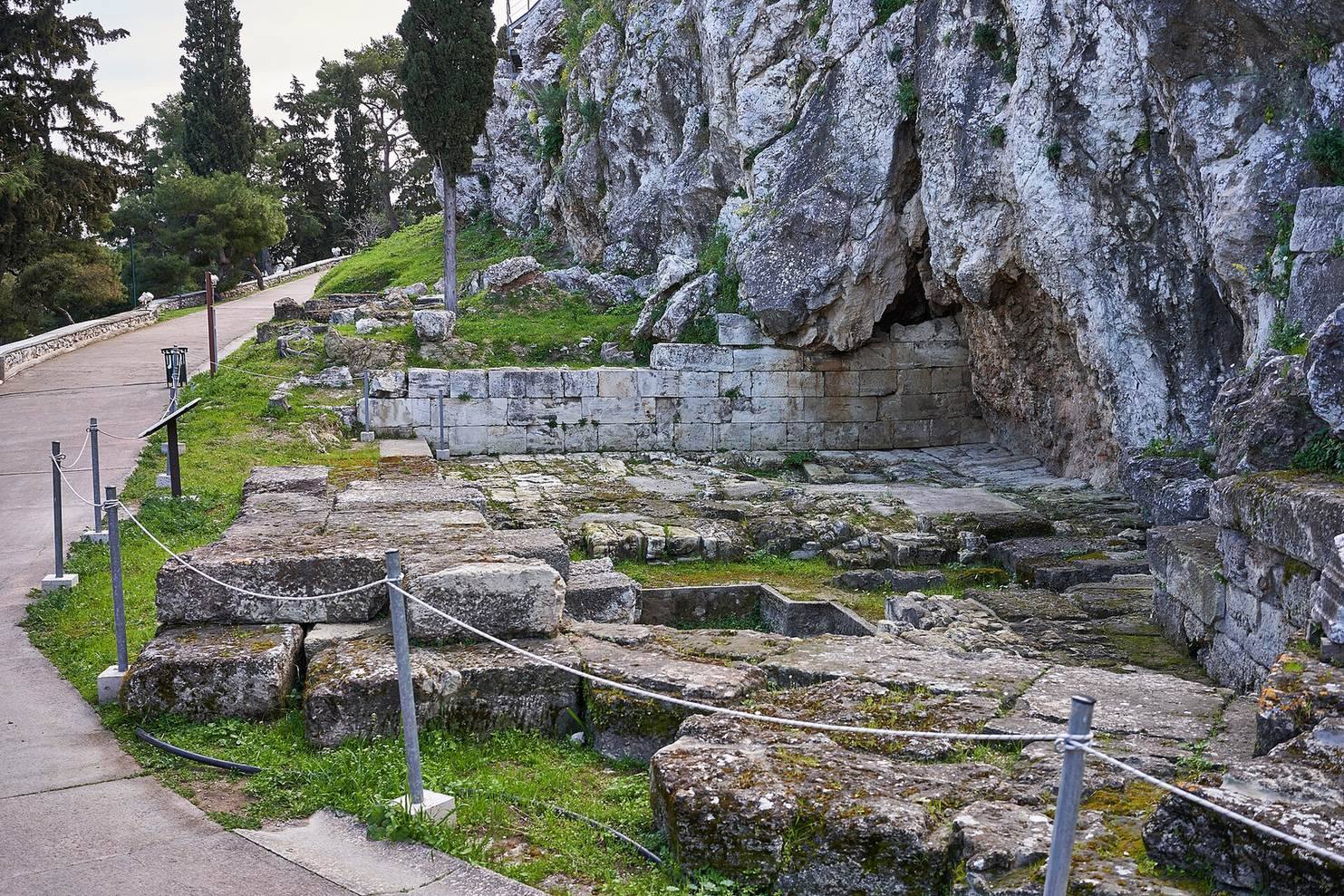
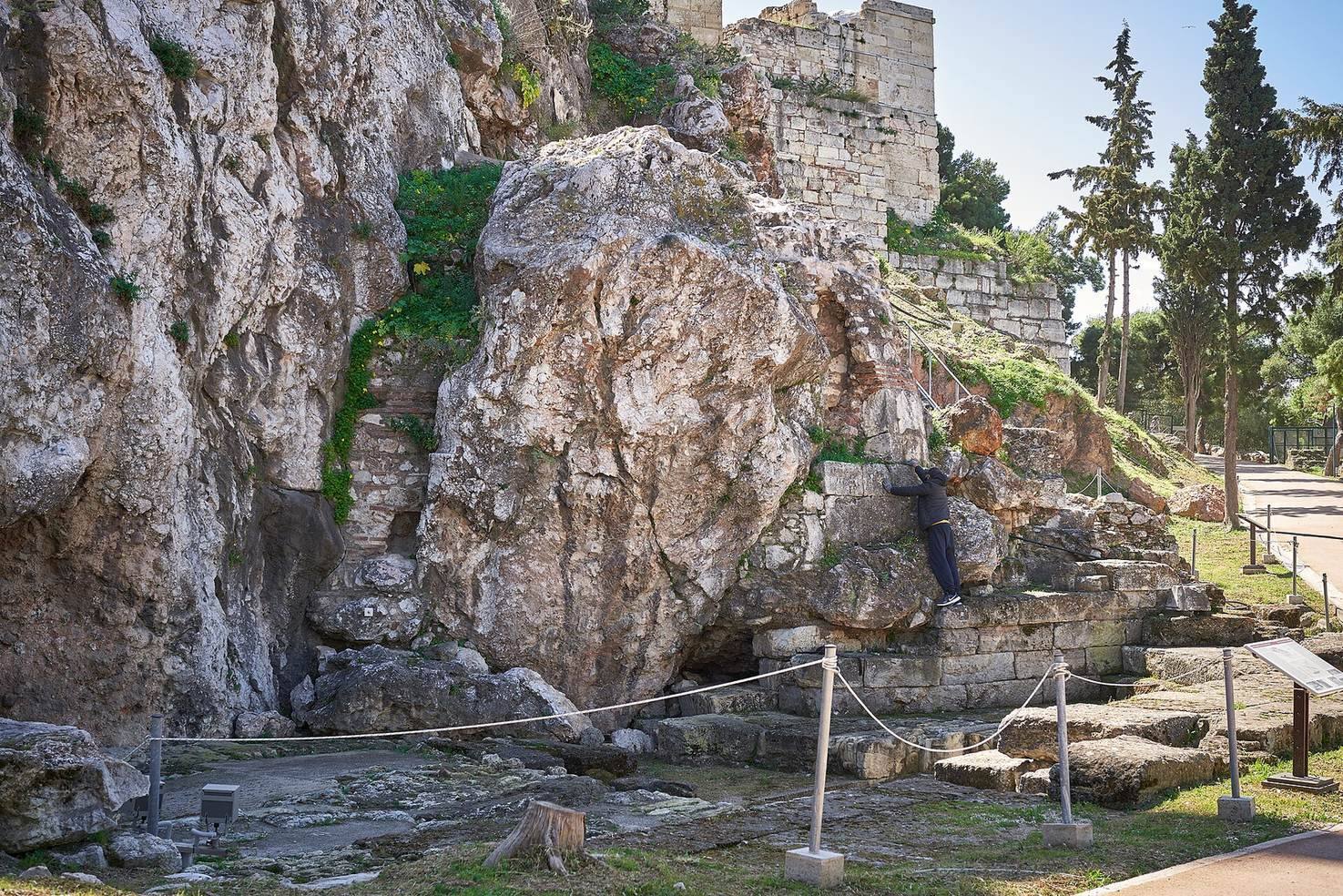
The Klepsydra complex is arranged around an underground spring on the Acropolis’s northwest slope, near the meeting of the Peripatos, an ancient path around the citadel, and the Panathenaic Way, a processional route associated with the Panathenaic festival. The spring lies behind the Monument of Agrippa. Its remains include a natural cave, a fountain, a well and well house, a paved court, and features for drawing water.
Ancient waterworks and court
Cave fountain and well
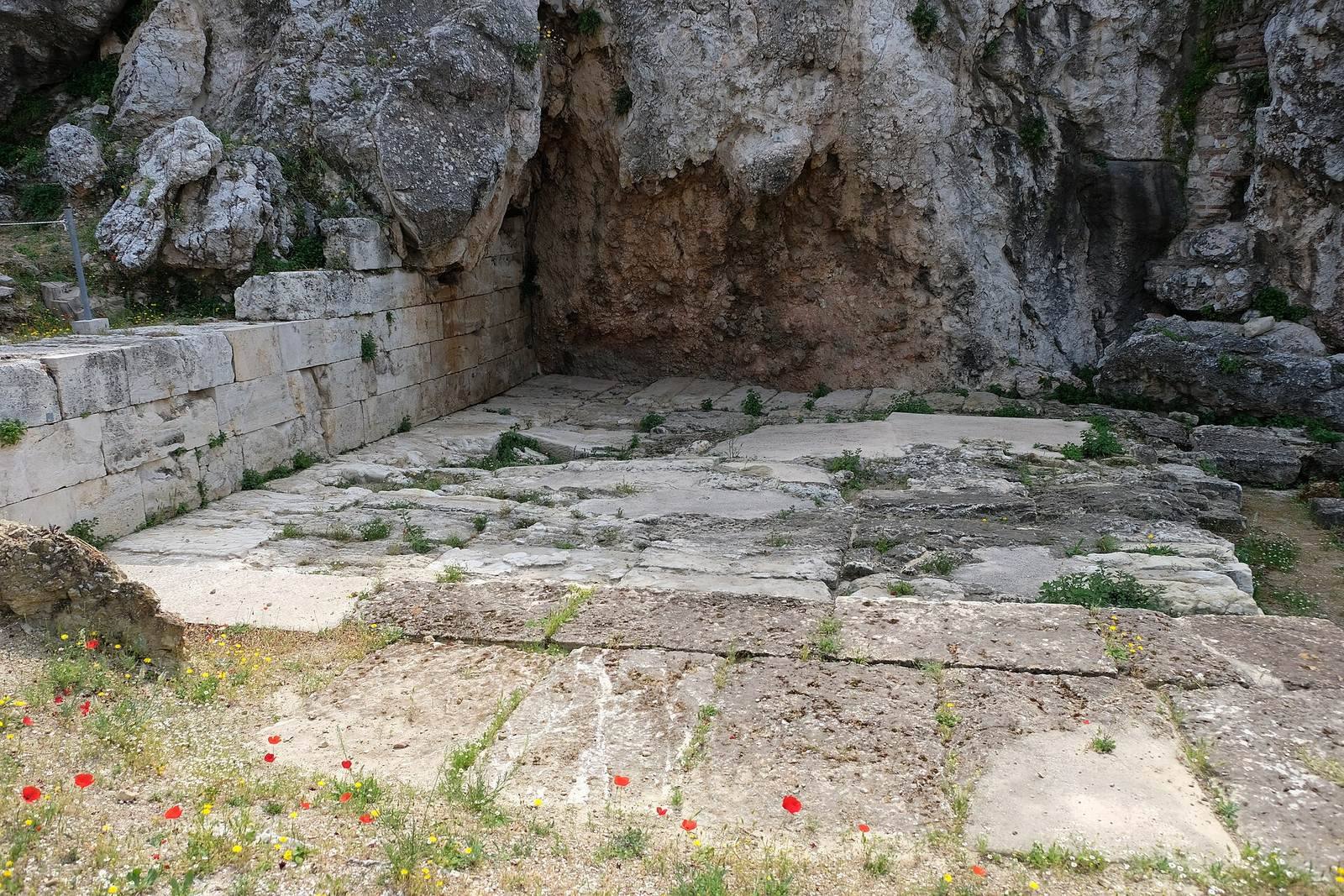
The ancient fountain was set into a natural cave, with masonry flanking a block of rock. The complex also included a well and a covered well house. The spring remains active; its flow may diminish in summer but does not cease.
Paved court and water-drawing basin
A paved court adjoined the original fountain. The excavated complex also includes a basin used for drawing water, linking the court and water source within the ancient arrangement.
Later structures and access
Roman well house and chapel
The well house built above the shaft in the Roman period had an apsidal form, meaning one end was curved or semicircular. It was subsequently used as a Byzantine chapel.
1822 bastion
The bastion built in 1822 incorporated masonry from the Roman fountain. Its entrance from the Acropolis was vaulted.
Stone steps and underground well
A flight of steps cut into the rock led up toward the Propylaea, and two former access points from the Acropolis to the spring are identified. A present underground staircase of 69 steps leads to the Church of the Holy Apostles, where a well has a marble wellhead. The shaft continues a further 10 metres to the water.