Magura Cave: A Prehistoric Art and Archaeological Site in Bulgaria
Site at a Glance
- Rating
- 4.6
- Popularity
- Very High
- Country
- Bulgaria
- Primary era
- Stone Age
- Eras represented
- Stone Age, Bronze Age, Iron Age
- Civilizations
- Unclassified
- Site type
- Religious
- Remains
- Sanctuary
On this page20 sections
History
Magura Cave is a limestone cave near the village of Rabisha in northwestern Bulgaria. Its earliest known evidence of human activity dates to about 12,000 years ago, and its prehistoric paintings are regarded as major works of European art created after the Paleolithic. The images have also been interpreted as evidence that the cave served as a sanctuary from the Neolithic into the Iron Age.
Prehistoric occupation
Archaeological layers indicate repeated settlement, including occupation during the Stone Age and Bronze Age. The paintings have been assigned to several periods, and their subjects include ceremonies, dancers, hunters, animals and symbolic figures. Together, these traces point to a long history of human use, though the precise dates of some painted layers remain debated.
Roman-period interpretations
During the first through fourth centuries AD, when the cave lay within the Roman Empire, it may have provided accommodation for enslaved people. A decapitated woman’s skeleton found with two gold bracelets shaped as snakes biting their tails has prompted a theory that human sacrifices took place there.
Exploration and modern protection
Marinov provided the first description of the cave in 1887. Archaeological study began in 1927 under the initial direction of Lazar Filkov and Barni Bončev, with Vasil Mikov conducting the first excavations that year. Rafail Popov announced in 1928 that more than 700 paintings had been identified, and archaeological work continued until 1996. A systematic cave survey followed in 1948. The largest hall was studied from 1971 to 1976 under the Bulgarian Academy of Sciences’ Institute of Archaeology, while research on the paintings was especially active from 1988 to 1993.
In 1943, fighters in a partisan platoon named after Georgi Benkovski, a leading figure in the Bulgarian April Uprising of 1876, practised shooting at a candle flame placed on a stalagmite in the lower southern part of Landslide Hall. The cave was called Rabisha Cave from 1942 until 24 October 1972. It became a natural monument in 1960 and entered Bulgaria’s UNESCO Tentative List in 1984, a preliminary list of sites that may be considered for World Heritage nomination. Management passed from Bulgaria’s Council of Ministers to Belogradchik Municipality in 2012. Before 1993, the cave was freely accessible without protective measures, and some paintings were damaged. The painted area was later enclosed to help preserve it.
Remains
Magura is a predominantly horizontal cave formed in limestone more than 15 million years ago by water dissolving and eroding the rock. Water entered through three cracks in the hill, flowed downward to an impermeable layer, then travelled horizontally to form the galleries. The Archar and Vidbol rivers may also have contributed to the cave’s formation.
Setting and layout
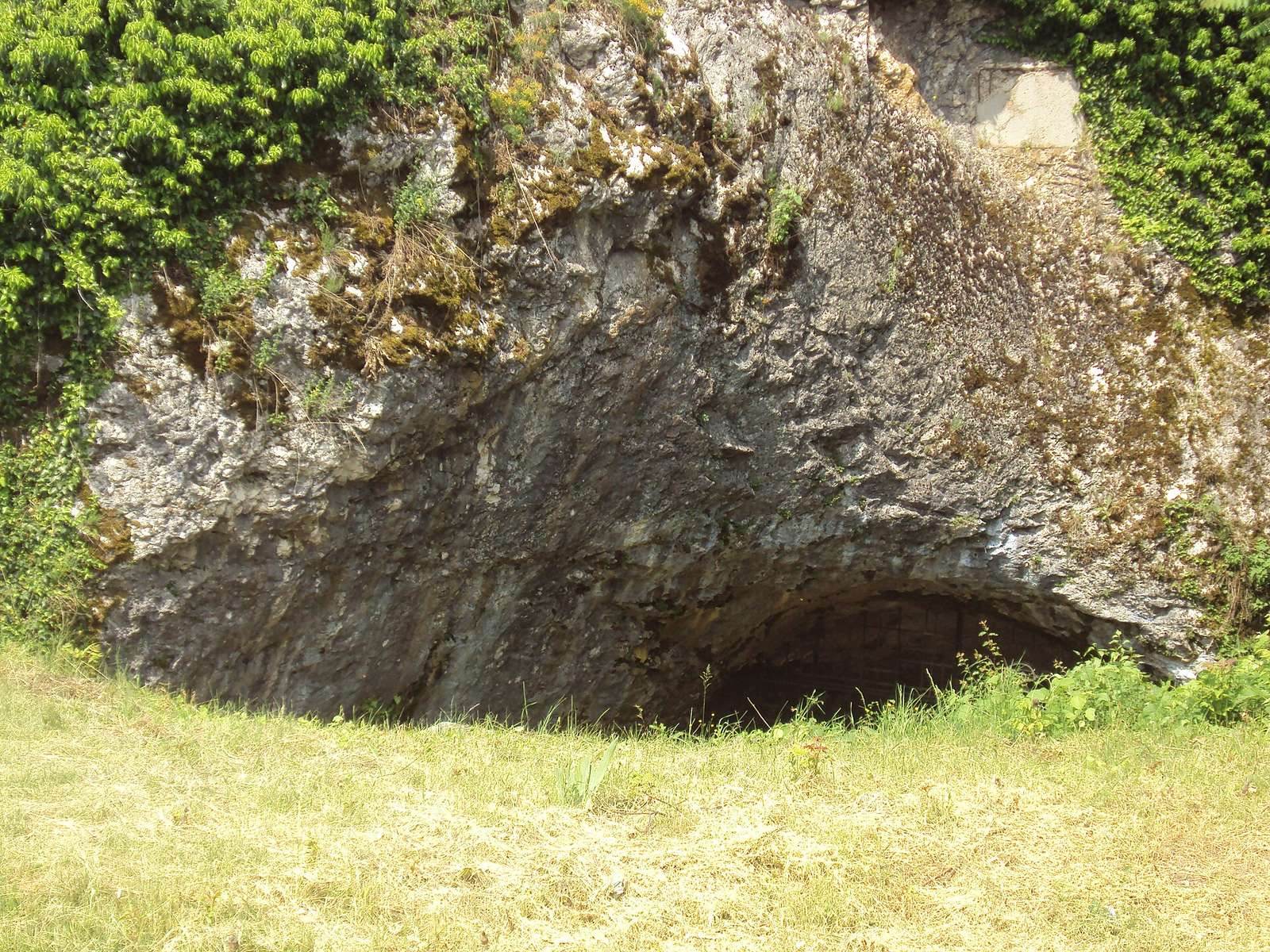
Rabisha Hill rises to 461 m, and the southeast entrance is 371 m above sea level. This opening is 2.8 m high and 6 m wide; the exit lies to the northwest, overlooking Lake Rabisha, described as Bulgaria’s largest inland tectonic lake. The cave extends for about 2.5 km, with a main gallery containing six chambers and three lateral galleries extending west and southwest. Its estimated area is 28,600 m², and its vertical displacement is given as 56 m. The average temperature is about 12°C, with humidity reaching 80 percent in some conditions.
Prehistoric settlement traces
Traces of dwellings occur in a hall and an adjoining gallery and are attributed to the early Stone Age and Bronze Age. Finds include stone, bone, deer-antler and flint tools and bracelets, as well as pottery made from clay mixed with sand. House foundations, rectangular ovens and hearth bases survive. The foundations indicate houses supported by wooden posts set about 25 cm apart, with woven rods between them secured with clay. More than 40 fossil cave-bear skulls have also been found.
Painted chambers
Painted gallery and imagery
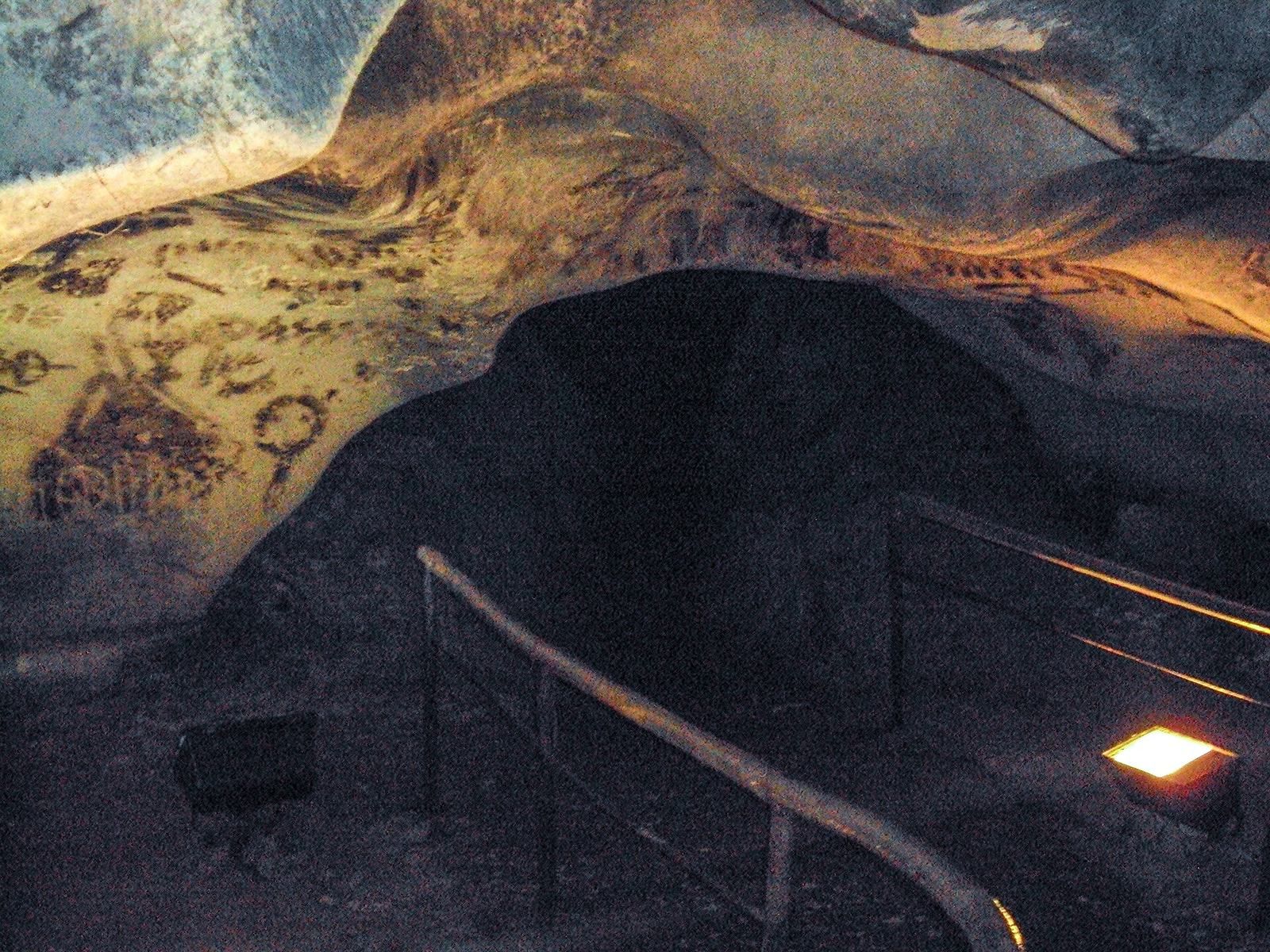
More than 750 images have been identified in the decorated gallery. Made with bat guano, or bat droppings, they include human figures, animals, geometric designs and symbols. Human subjects include archers, dancers, figures with raised arms and mating scenes; animals include goat-like and cattle-like forms, dogs, large birds and other four-legged creatures. Patterns include zigzags, parallel lines, tree-like forms, grids, diamond shapes, networks and crossed circles. Some paintings lie over earlier images, and the sequence of layers remains debated. Latin inscriptions, later paintings made by treasure-hunters and scratches also appear on the cave walls.
Sun Hall
A composition in Sun Hall is assigned to the late Copper Age, a period between the Neolithic and Bronze Age. Later additions on a separate layer are attributed to the Early Bronze Age. Its black-and-white squares have been interpreted as a way of counting calendar days. The paintings also provide information about regional calendars, customs, festivals and rituals.
Cult Hall
A large scene of dancing and hunting in Cult Hall is arranged in two main rows. Depictions of deities have been described as unique on the Balkan Peninsula.
Cave chambers and formations
Arc Hall
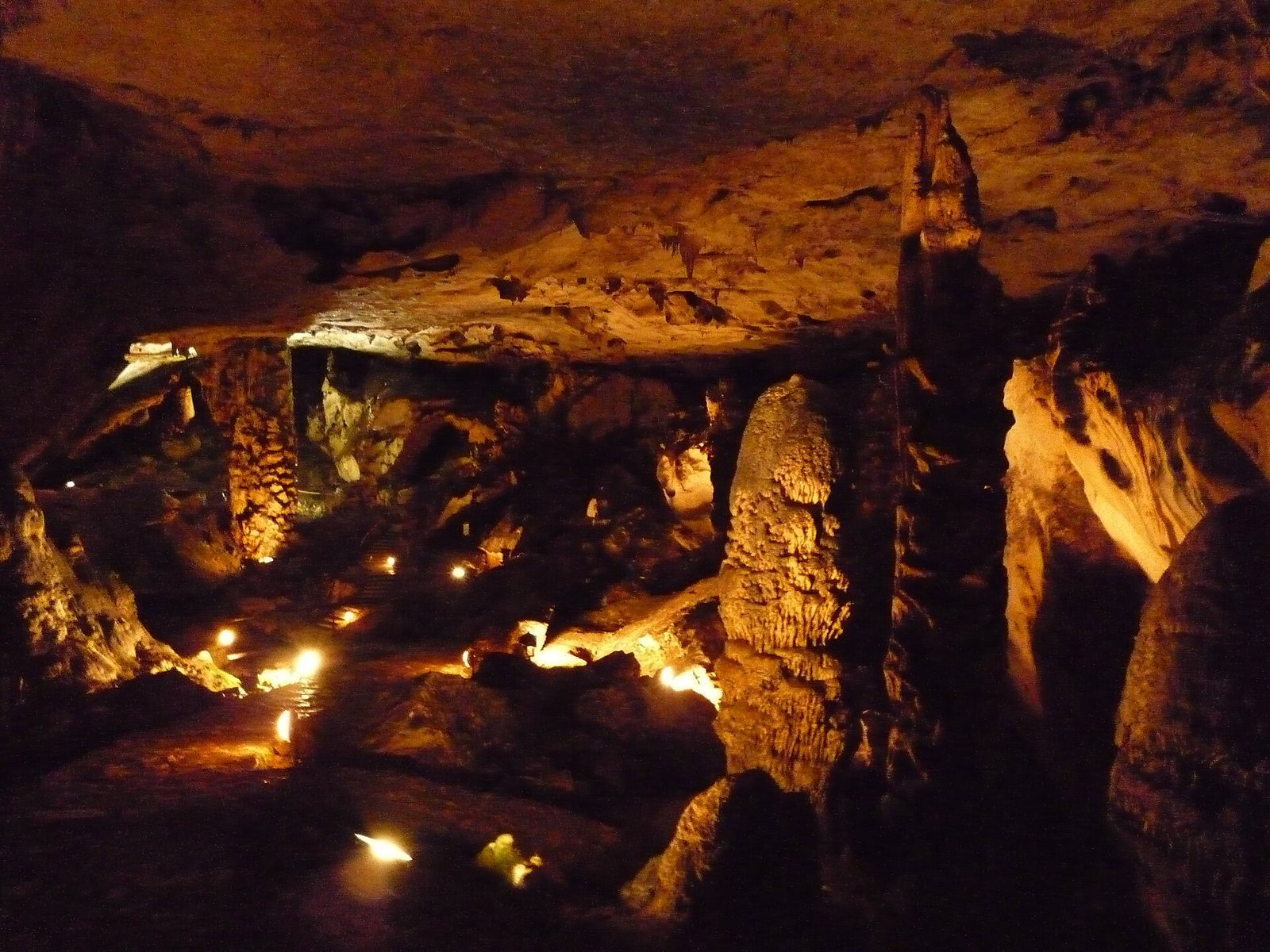
The largest chamber, Arc Hall, measures 128 m long, 58 m wide and 21 m high, with an area of about 5,720 m². Natural vaulted ceilings and numerous mineral formations mark the chamber. A large cone of sediment occupies its southern part, where steps have been cut into the slope to reach the hall floor.
Landslide Hall
Landslide Hall covers about 2,800 m² and measures 85 m long, 68 m wide and up to 27 m high. Blocks and fragments that have fallen from the walls and ceiling cover the floor. Its lower southern section is known as the Shooting Range. A lateral gallery connected to the hall’s western side ends in three smaller chambers: Sun Hall, Clay Pots Hall and Dark Hall.
Wine-storage gallery
Another lateral gallery, covering about 2,800 m², is separated from Triumph Hall by a constructed wall intended to keep its temperature more stable. Bottles of wine have been stored there for ageing.
Stalactones chamber
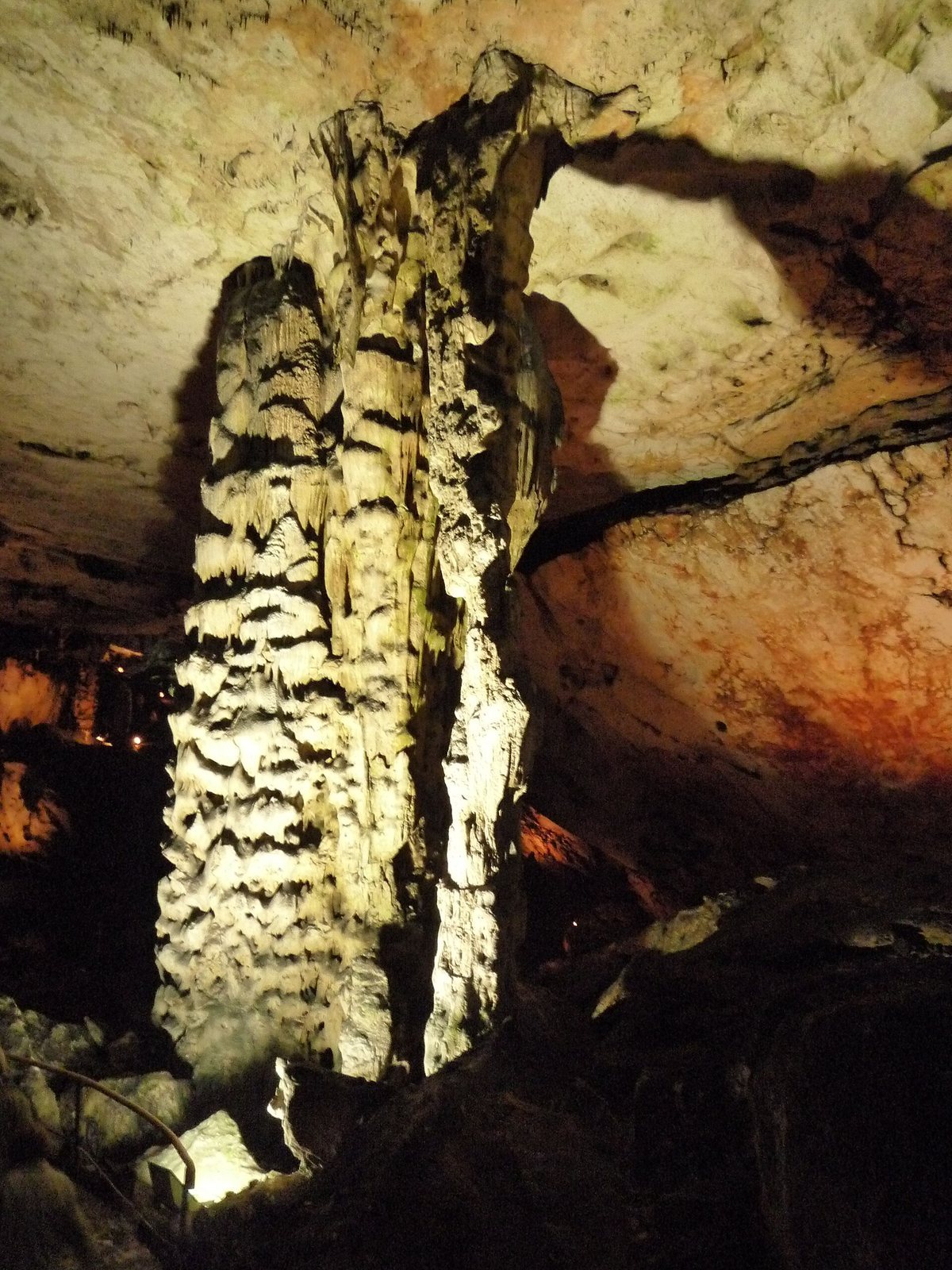
A hall measuring about 92 m long, 52 m wide and up to 16 m high covers roughly 3,640 m². It contains the Large and Small Stalactones. The larger formation rises 20 m and measures 12 m across. A massive rectangular block that fell from the wall cuts across the hall’s eastern side.
Fallen Pine chamber
The formation called the Fallen Pine is more than 11 m long and 6 m across at its base. The cave’s lowest point lies in the northern part of this hall.
Poplar-like stalagmite hall
Another hall covers about 3,390 m², measures 121 m long and 35 m wide, and reaches 21 m in height. Its name derives from a slender, poplar-like stalagmite that rises 6.2 m from the floor.
Other formations and chamber use
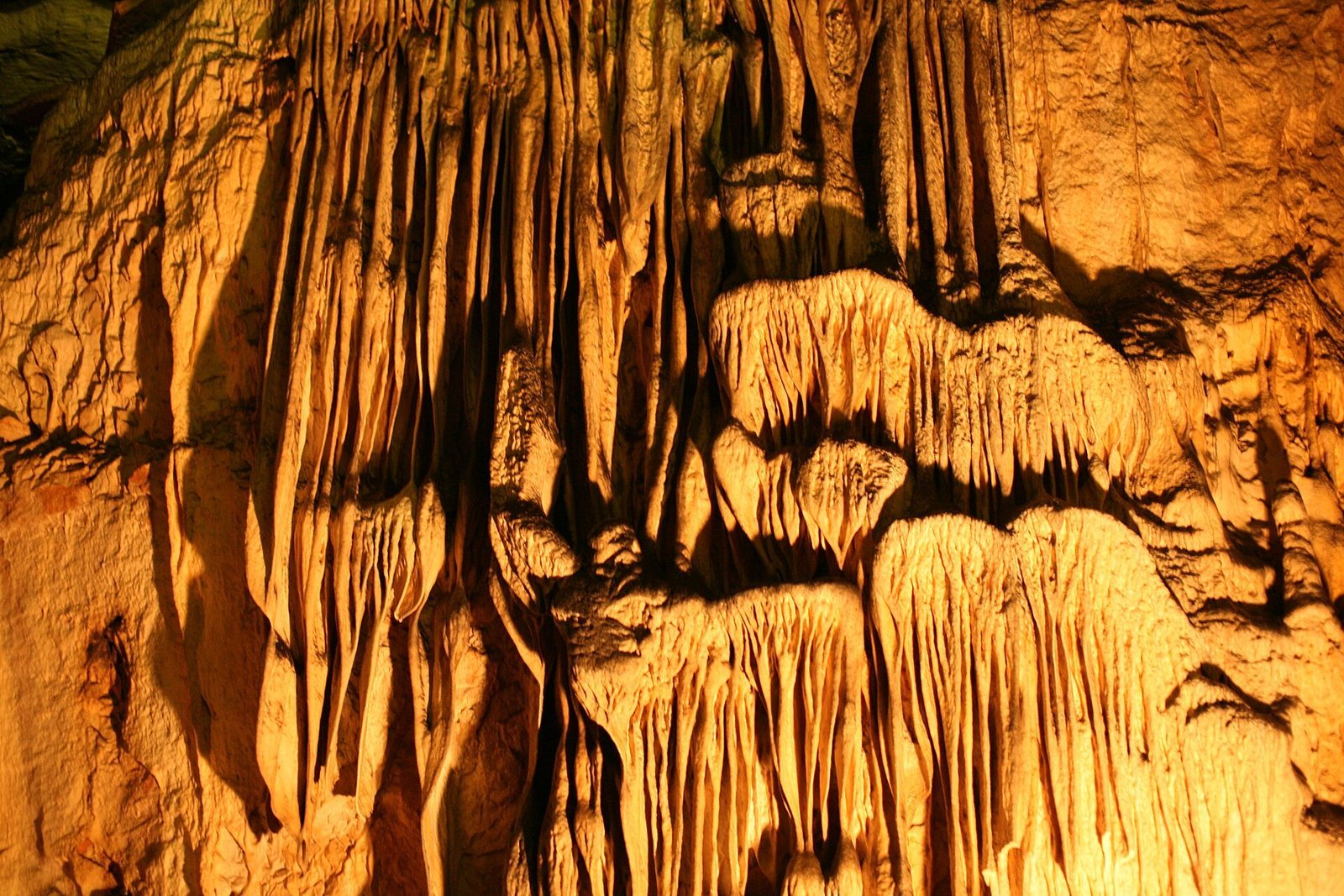
One chamber contains limestone formations known as the Throne, the Medusa and the Petrified Waterfall. Another was used as a sanatorium: in 1974 and 1975, it held 30 beds for a summer experiment treating people with bronchial asthma.
Animal remains and present fauna
Fossil remains from the cave include those of cave bears, cave hyenas, foxes, wolves, wild cats and otters. Springtails and bats are among the animals living in the cave today.