Vujan Monastery: A Serbian Orthodox Monastic Center in Serbia
Site at a Glance
- Rating
- 4.9
- Popularity
- High
- Country
- Serbia
- Primary era
- Modern
- Eras represented
- Medieval, Modern
- Civilizations
- Ottoman, Serbian
- Site type
- Religious
- Remains
- Monastery
On this page12 sections
History
Vujan Monastery is a Serbian Orthodox monastery near Prislonica in Serbia. Its foundation date is unknown, though it is described as dating from the 13th century; the present church, dedicated to Saint Michael the Archangel, was built in 1805. The monastery belongs to the Diocese of Žiča, part of the Serbian Orthodox Church.
Obrovin and medieval beginnings
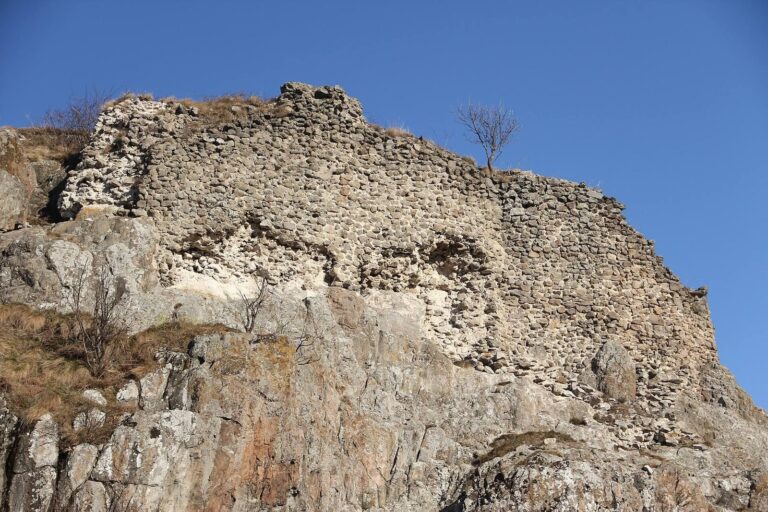
During the reign of King Milutin, a medieval Serbian ruler, monks from Mount Athos, a major Orthodox monastic center in Greece, fled Catholic Catalan mercenaries and established monastic life in the Ovčar-Kablar Gorge. They founded Obrovin in the early 14th century, about 1.5 kilometres from the present monastery. Obrovin also hosted public assemblies and meetings.
In 1597, Obrovin was abandoned after Ottoman forces led by Sinan Pasha carried out violence against the Serbian population. Villages including Prislonica, Brđani, and Lunjevica had provided dues to the monastery.
Rebuilding and nineteenth-century life
The abandoned monastery was rebuilt in 1805 with the involvement of Milan Obrenović and Nikola Milićević Lunjevica, who supported the new church. An inscription placed above the west entrance records that priest Radisav Milošević of Prislonica led the restoration effort. After Radisav’s death, his relative Josif Milošević became a monk at the monastery in 1807 and joined other patrons in supporting it.
In 1815, the body of insurgent commander Lazar Mutap was buried in the church. Nikola Milićević Lunjevica died in 1842. In 1902, his granddaughter Queen Draga arranged his burial at the monastery, fulfilling his wish. Other members of the family were buried there, including Draga’s brothers Nikodije and Nikola, who were killed during the May Coup, the 1903 Serbian coup in which King Alexander Obrenović and Queen Draga were killed. Draga herself was buried elsewhere with her husband.
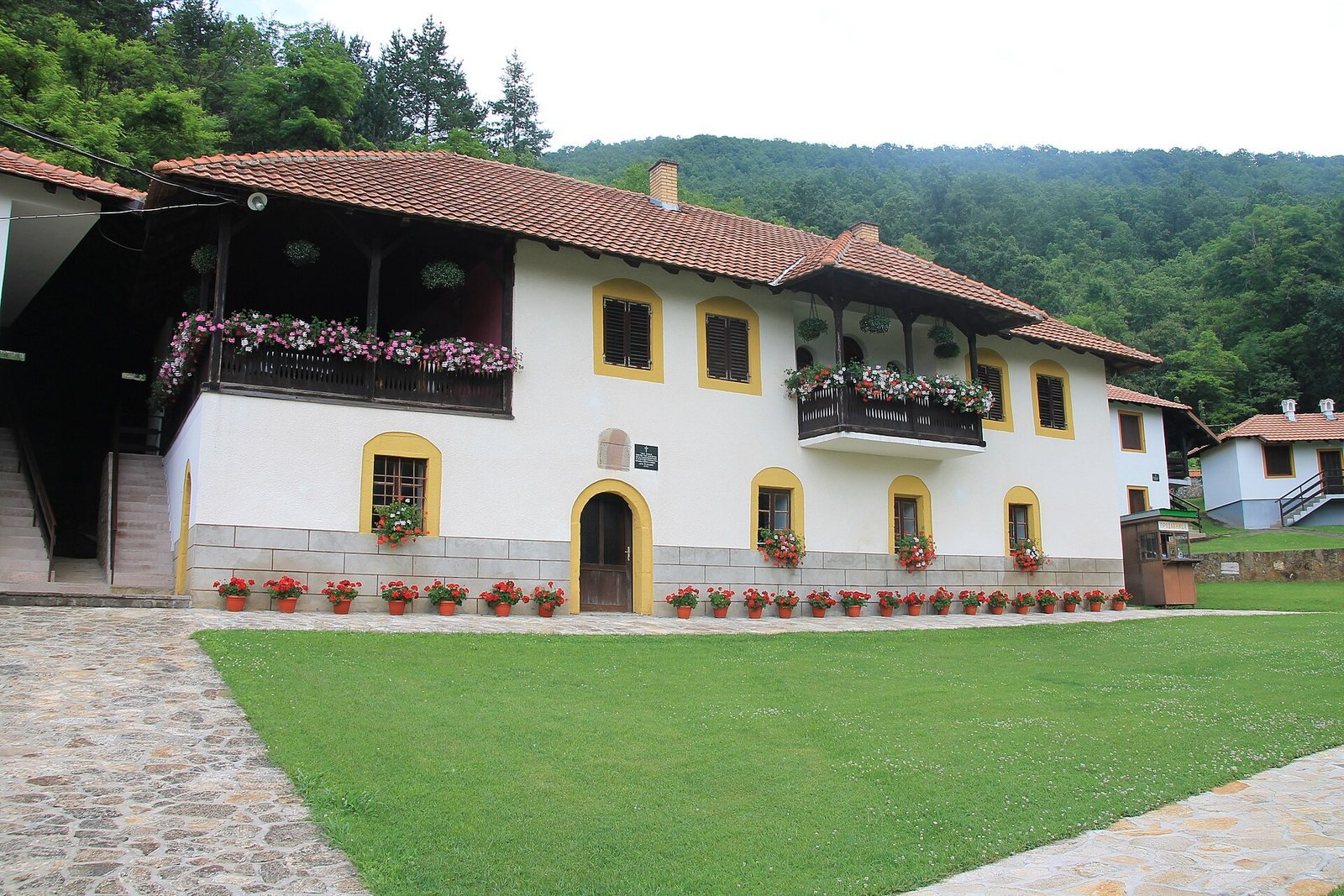
A monastic residence was built in 1853 at the request of Prince Alexander Karađorđević. In 1858, Nikola’s widow, Đurđija Lunjevica, and their son Panta renovated the monastery. During the 19th century, its parish included Prislonica, Konjevići, Sokolići, Brđani, Lunjevica, and Semedraž, with a reported total of 395 households. The monastery held 12,688 groschen, a historical currency unit, in 1864; three monks formed its brotherhood in 1870. Its 1889 estate included 44 hectares of arable land and 149 hectares of forest.
Twentieth-century changes
Before the Second World War, the 1853 residence was described as close to collapse. In 1937, the 21-year-old abbot, hieromonk Nikolaj Lazović, a monk who was also a priest, oversaw construction of a new residence with help from villagers. The monastery had three monks and five novices in 1938. Its prewar estate covered 180 hectares, mostly forest, and included the spa at Gornja Trepča.
Before the war, many sick people, particularly those with mental illnesses, came to the grave of a monk regarded as the monastery’s founder. The annual patronal feast, a celebration associated with a sacred figure, is the Synaxis of the Holy Archangel Gabriel, a Christian feast honoring the archangel. The monastery’s abbots included Julijan Knežević from 1940 to 1945, Sofronije Raketić from 1945 to 1950, Miron Ignjatović from 1950 to 1976, and Jovan Nikitović from 1976 to 2020. Jelena Nikitović served as abbess from 2020 to 2021. Vujan Monastery is protected as a cultural monument of great importance in Serbia.
The name Vujan, shared by the mountain and monastery, is linked to old Serbian words for rushing or howling sounds, associated with wind descending through the mountain’s dense, old forest.
Remains
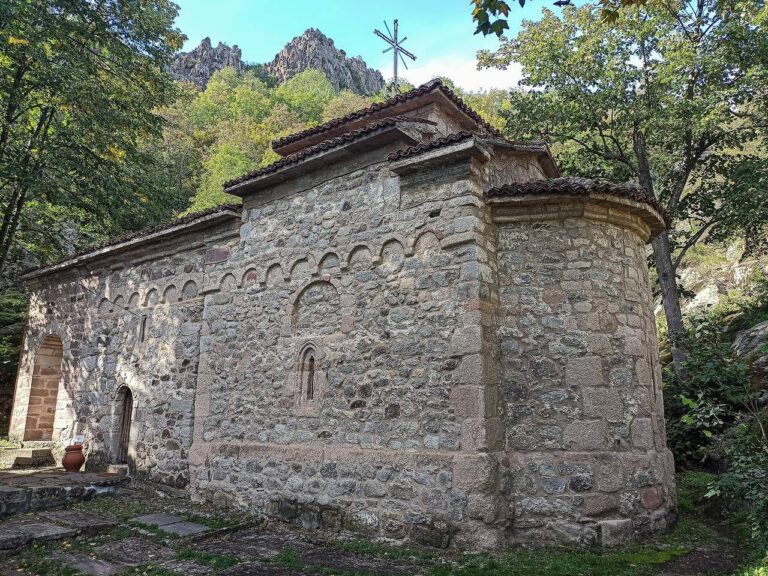
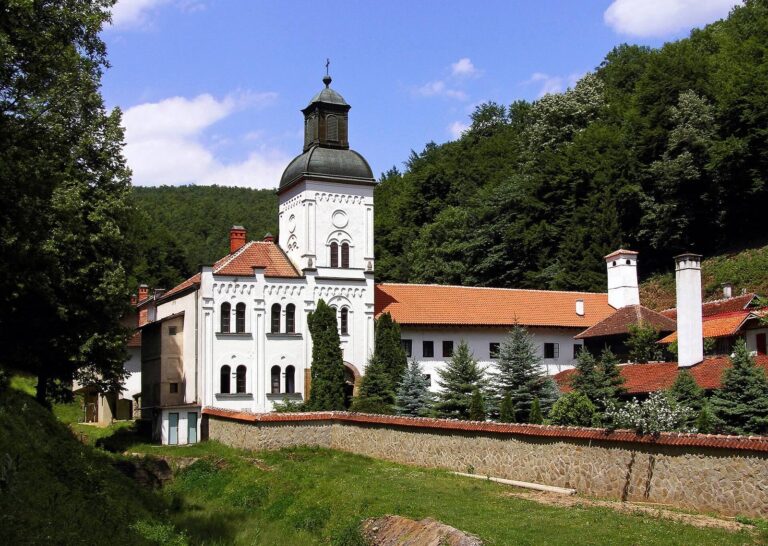
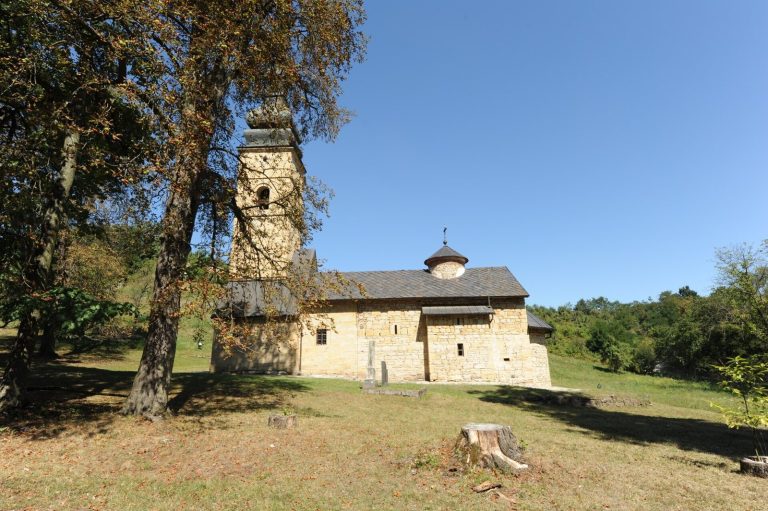
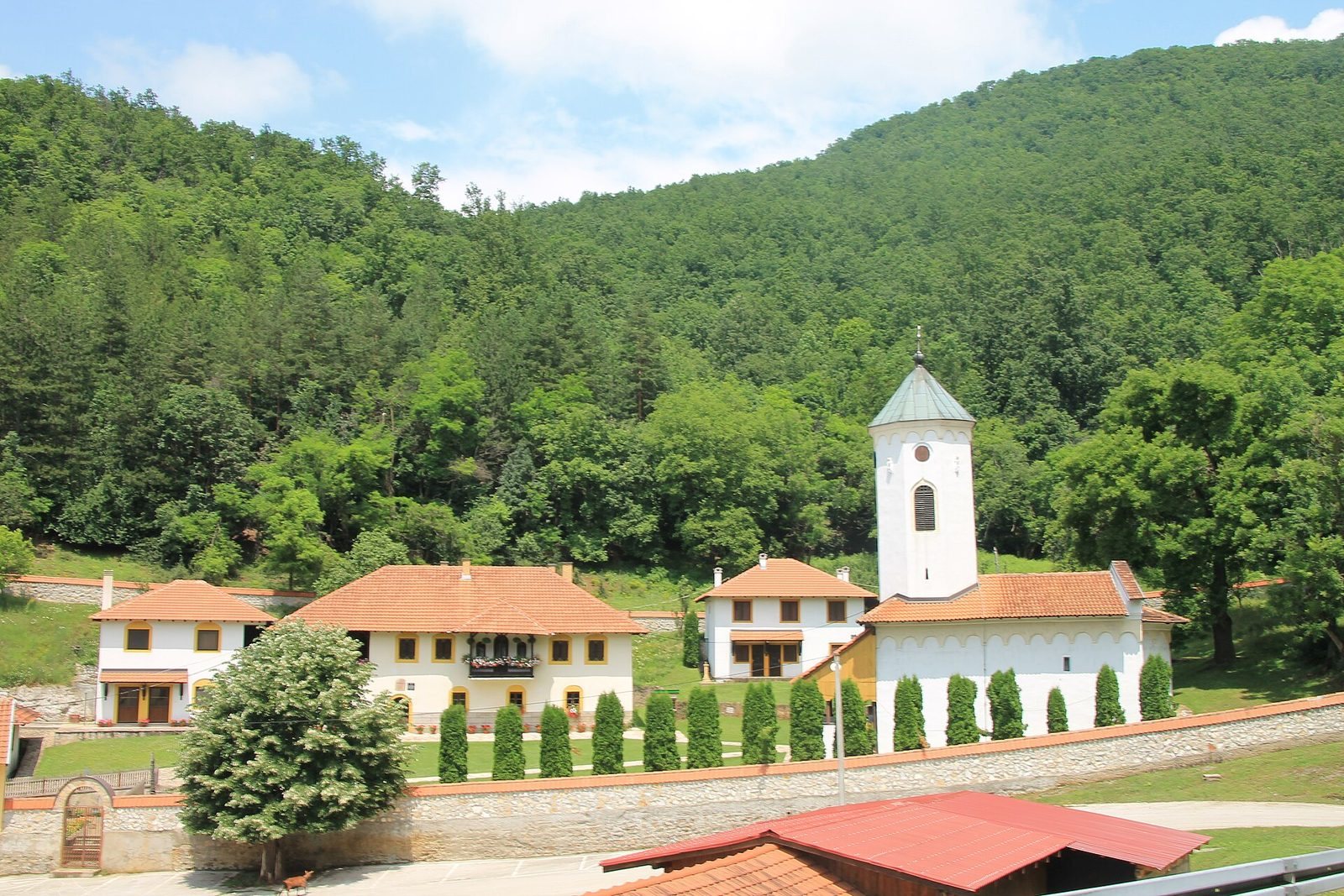
The monastery stands on a wooded slope below the summit of Mount Vujan, near Prislonica and about midway between Gornji Milanovac and Čačak. Its principal building is a single-nave church, with an entrance vestibule at the west end and a semicircular apse, a recess at the opposite end.
Church architecture and decoration
Plan and exterior
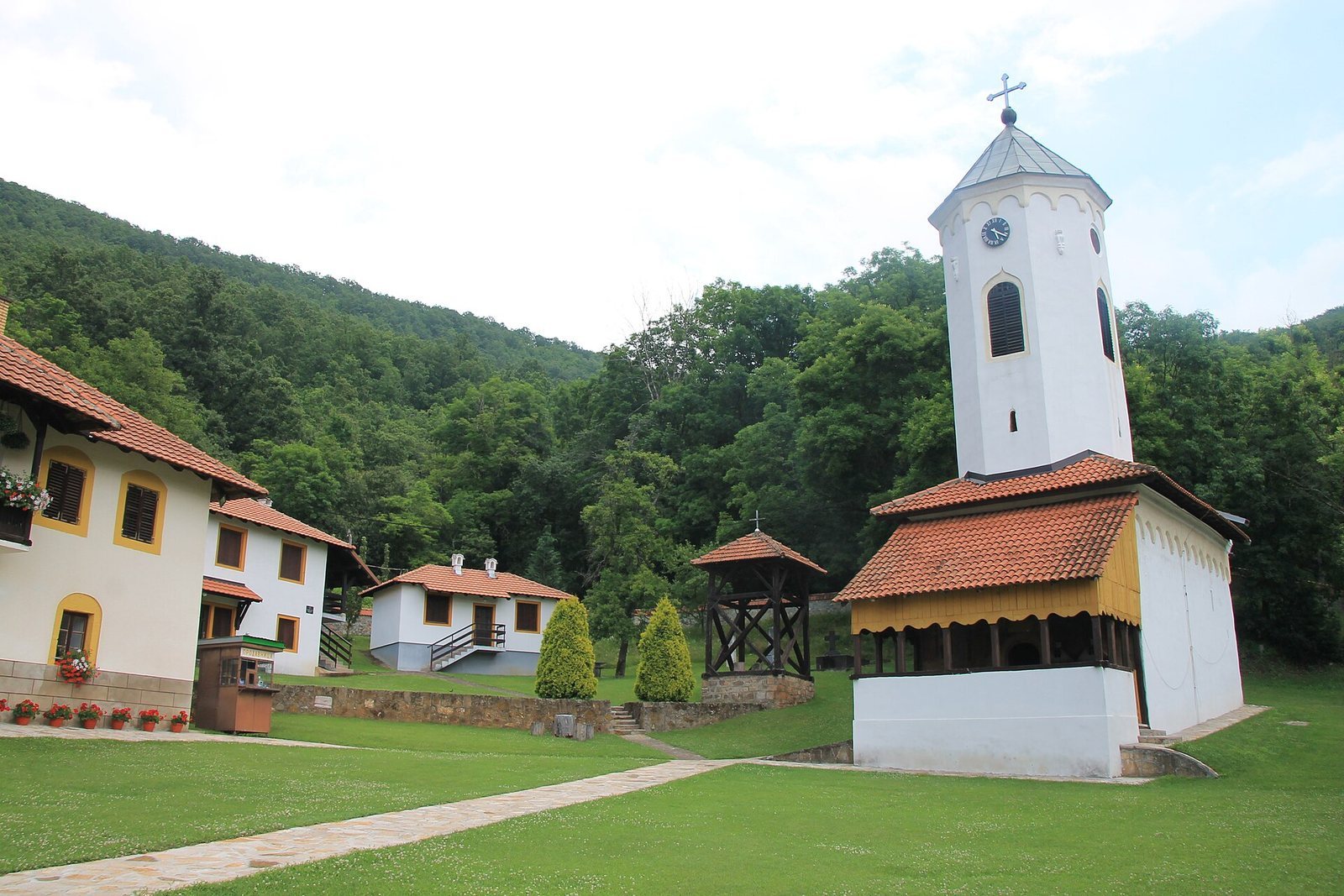
The church has shallow, arch-shaped vaults over its nave. Instead of a dome, a tall, round bell tower rises above the building; it has been described as disproportionate to the church. An open wooden porch is attached to the exterior. The walls are made of rubble and dressed stone covered with plaster. Beneath the roof cornice runs a slightly raised, serrated band of decorative blind arcades, shallow arch shapes that do not open through the wall. Lions holding human heads in their paws appear on the sides of the bell tower.
Interior and paintings
During the 1939–1943 restoration, painter Rafailo Marković copied a fresco dated to 1808 and attributed to Stojan and Jeremija. The frescoes now in the church date to 1939 and 1943, and the restoration also brought a new iconostasis, an icon screen separating the sanctuary from the main church. In 1851, Andreja Đaković painted the interior and exterior; one scene on the outside was described as a portrait of Mutap.
Furnishings and earlier remains
A section of an earlier iconostasis, dated to 1808 and attributed in a written record to icon painters Stojan and Jeremija Mihajlović, was transferred to the Church of the Holy Mother of God in Gornja Trepča. A Greek-inscribed icon was brought to Vujan in 1809 by Serbs from Sjenica during an uprising. The surviving column of the altar table is associated with the Nemanjić period, the era of the Serbian ruling dynasty founded by Stefan Nemanja.
Memorials and burials
Memorial slab and seal
During repairs, a stone slab inscribed with the date 1597 and a round bronze monastery seal from the same period were found. A memorial slab also concerns the ruin of Obrovin.
Burial places
The remains revered as those of the “Vujan saint” lie inside the church near the south wall of the entrance vestibule. Nikola Milićević Lunjevica’s gravestone stands beside the church’s south wall; its 1902 inscription by Queen Draga identifies him as her grandfather and as voivode Nikola Lunjevica. Voivode was a historical title for a military leader or governor. Family burials are also located east of the church, and the monastery porch served as a burial place for members of the Milićević-Lunjevica family. Mutap was buried in the church entrance vestibule.