Sharuna: An Ancient Egyptian Nome Capital and Settlement
Site at a Glance
- Popularity
- Medium
- Country
- Egypt
- Primary era
- Bronze Age
- Eras represented
- Bronze Age, Classical, Medieval
- Civilizations
- Byzantine, Egyptian, Roman
- Site type
- Settlement
- Remains
- City
On this page7 sections
History
Sharuna was an ancient Egyptian settlement east of the Nile in Egypt, almost opposite Per Medjed. It is identified with Hut-nesu, also called Hut-nesut, the capital of Upper Egypt’s 18th nome, an administrative district known from the Old Kingdom, an early period of Egyptian history. Occupation continued from the late Old Kingdom through the Late Roman and Byzantine periods.
Religious and royal traditions
Nemty, a falcon deity, was Hut-nesu’s principal god in the Old Kingdom. The White Chapel of Senusret I also connects Nemty with the settlement. In nearby Hut-Benu, or Cynopolis, capital of the 17th nome, Anubis, associated with funerary rites, was the principal deity. During Amenhotep III’s reign, Horus, associated with kingship, replaced Nemty as Hut-nesu’s principal god. Osiris, associated with the dead and afterlife, and Sobek, associated with crocodiles, became principal gods later, remaining so through the end of the Greco-Roman era of Greek and Roman rule in Egypt.
A coronation text on the reverse of the ancient Egyptian sculptural group known as the Turin group says that Horus of Hut-nesu, patron of Horemheb’s hometown, designated him as the future pharaoh. Horemheb was a general who later became king of Egypt.
Excavations and modern setting
Excavations at Sharuna began in 1984 and continued in campaigns through 2010. The Institute for the Cultures of the Ancient Orient at the University of Tübingen led the work. From 2006 to 2010, Egyptologist Beatrice Huber directed six excavations in the main cemetery, an area associated with later Roman occupation. The university’s Egyptology institute also investigated the area between el-Kom el-Ahmar, Sharuna, and Qarara over several years. The modern settlement at the archaeological site is el-Kom el-Ahmar Sawaris, about 3 km south of the village of Sharuna in Minya Governorate.
Remains
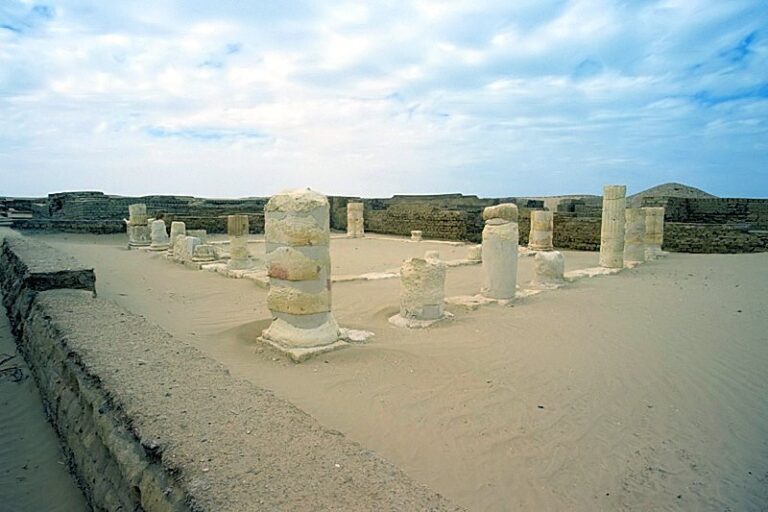
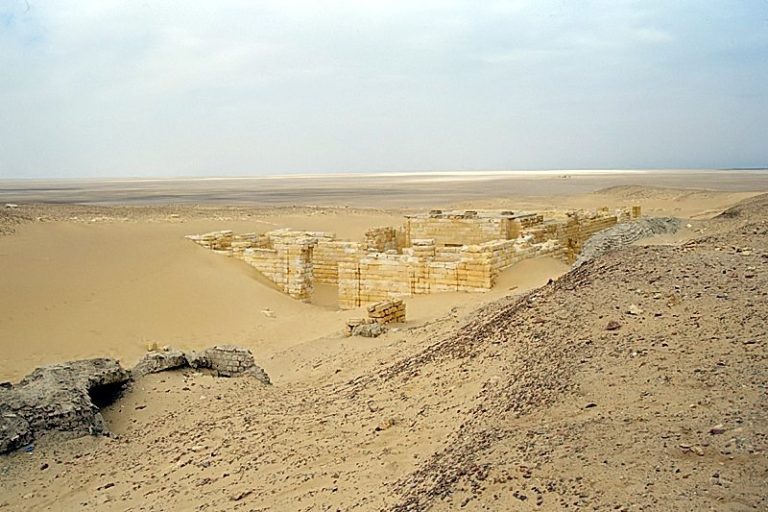
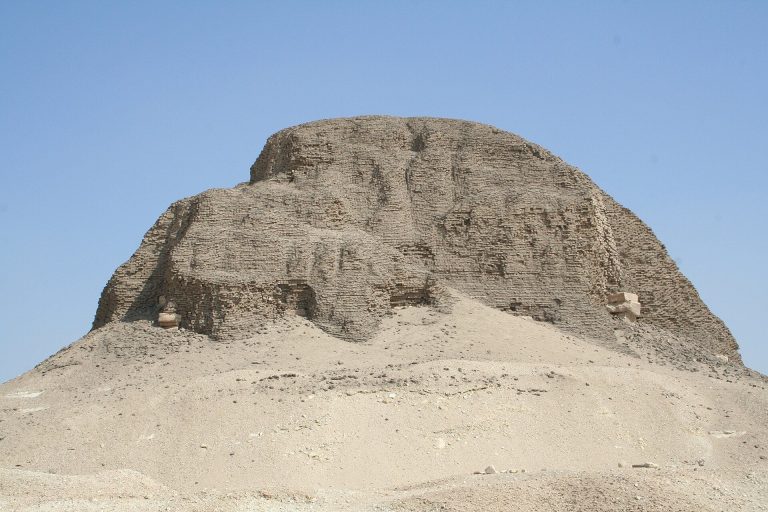
The remains include funerary structures, a destroyed temple, and Christian religious buildings and burial grounds. Small hermitages and monasteries are scattered across the surrounding desert.
Tombs and funerary structures
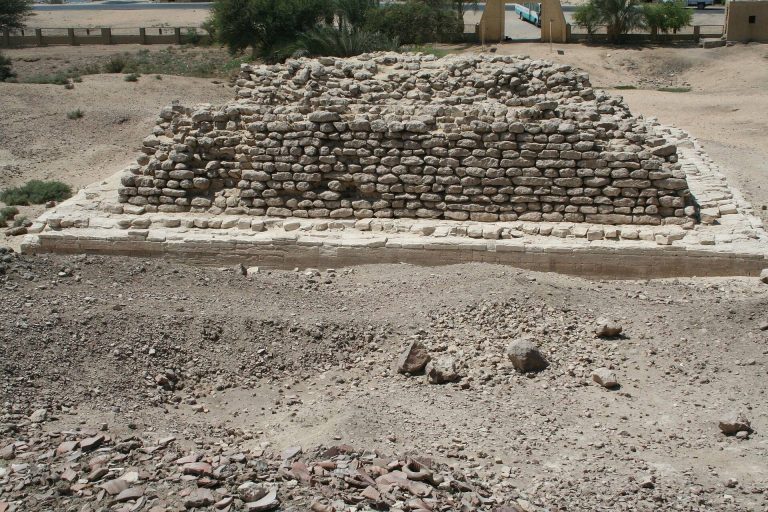
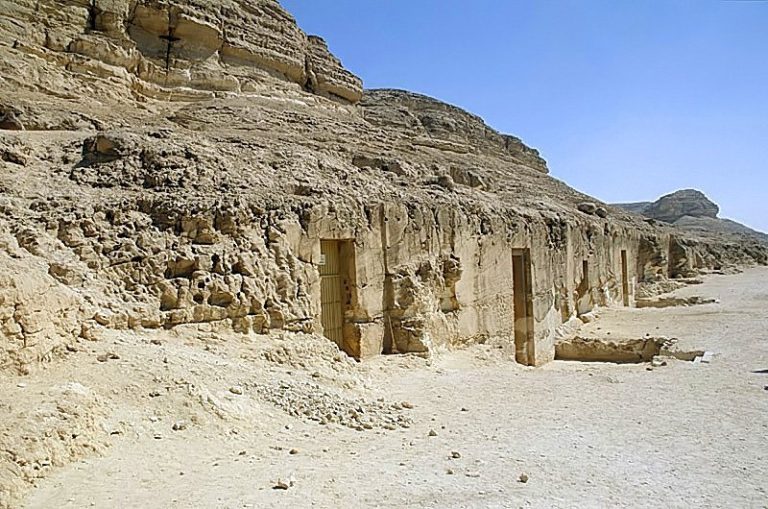
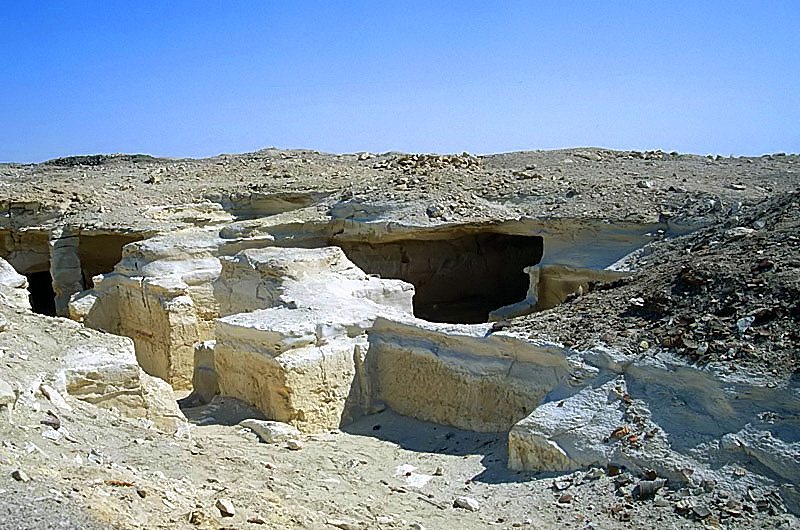
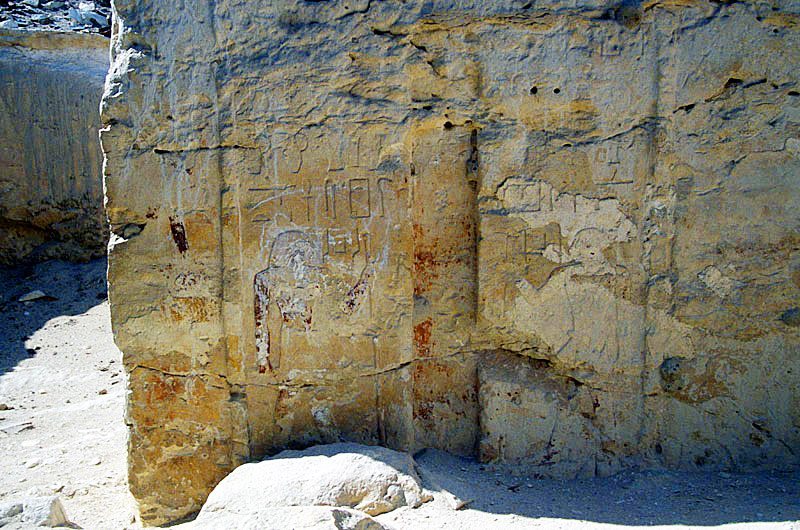
Tombs date to the late Old Kingdom, while other funerary structures belong to the Old Kingdom and First Intermediate Period, another early phase of Egyptian history. The tombs of Iuhy, Bebi, Bejeni, and Sabi are associated with the site, along with several Old Kingdom funerary inscriptions.
Temple remains
The site includes remains of a destroyed temple from the Ptolemaic period, when Greek-Macedonian rulers governed Egypt. A fragment of relief from the temple is held by the Museum of Fine Arts in Budapest.
Christian funerary and monastic remains
A funerary church dating to the Late Roman and Byzantine periods is associated with a large cemetery. The surrounding desert contains scattered small hermitages and monasteries. The Deir el-Qarabin monastery was used by Coptic Christians, members of Egypt’s Christian tradition.