Ancient Roman Circus of Vienne: A Roman Chariot-Racing Venue
Site at a Glance
- Rating
- 4.4
- Popularity
- Medium
- Country
- France
- Primary era
- Classical
- Eras represented
- Classical
- Civilizations
- Roman
- Site type
- Entertainment
- Remains
- Circus
On this page6 sections
History
Construction and later use
The Ancient Roman Circus of Vienne was a Roman chariot-racing complex in France, first built at the end of the first century AD. A larger stone structure followed during the second quarter of the second century, extending the complex northward. The completed circus and its central monument, now known as the Pyramid of Vienne, date to the late second century.
Chariot races were held at the circus. It may have been altered during the fourth century and could have remained active after nearby docks and residential districts were abandoned. Coins from that century found at the site may indicate continued use. Vienne itself occasionally served as an imperial residence at the time.
Traditions and archaeological study
Medieval traditions gave the central monument several identities. Some linked it to Venerius, the legendary founder of Vienne; others regarded it as the tomb or memorial of the emperors Augustus, Claudius, or Severus Alexander. Another tradition called it the tomb of Pontius Pilate, a Roman official associated with the trial of Jesus. A local story held that Pilate died by suicide in the Rhône at Vienne, and an account of a 1775 journey helped spread the tale. The monument was also associated with Symphorian, an early Christian martyr.
The pyramid was classified as a French historic monument on 22 March 1852. Excavations at the circus began in 1853, and work from 1903 to 1907 focused on determining its dimensions.
Remains
Circus layout
The circus occupied flat ground south of the ancient city, near the Rhône’s left bank, with its long axis running north to south. In its final form, it measured about 460 metres long and 118 metres wide. The inner arena was approximately 441 by 101 metres, while the seating area extended about 8.5 metres on each side; the venue may have held at least 10,000 spectators. Its central barrier, or spina, the divider around which chariots raced, was about 262 metres long and 7.8 metres wide. At roughly 0.60 metres high, it was the lowest known in the Roman Empire. Basins and fountains may have adorned it. The starting gates stood about 138 metres from the barrier, and the barrier’s end was about 41 metres from the curve.
Pyramid of Vienne
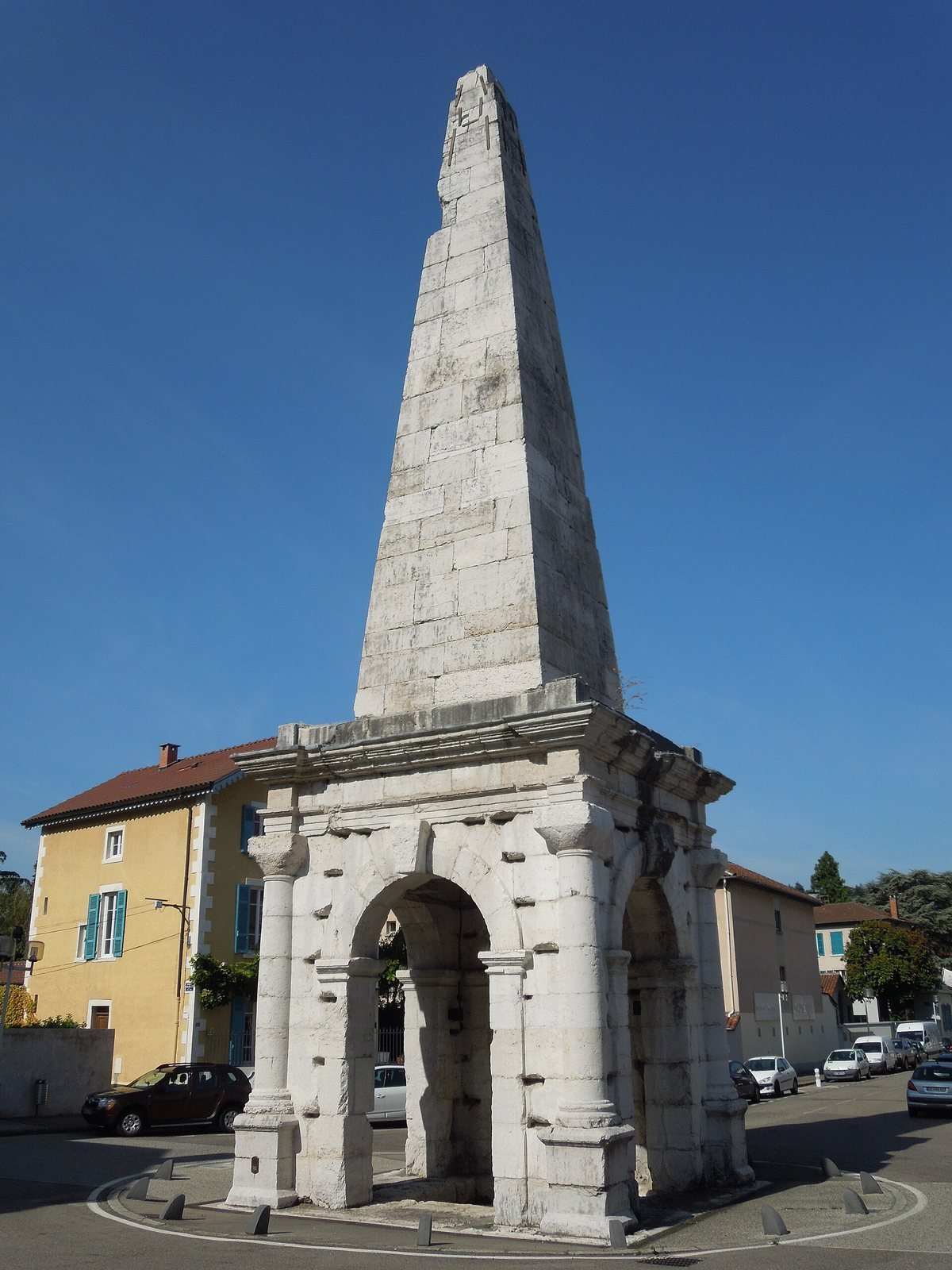
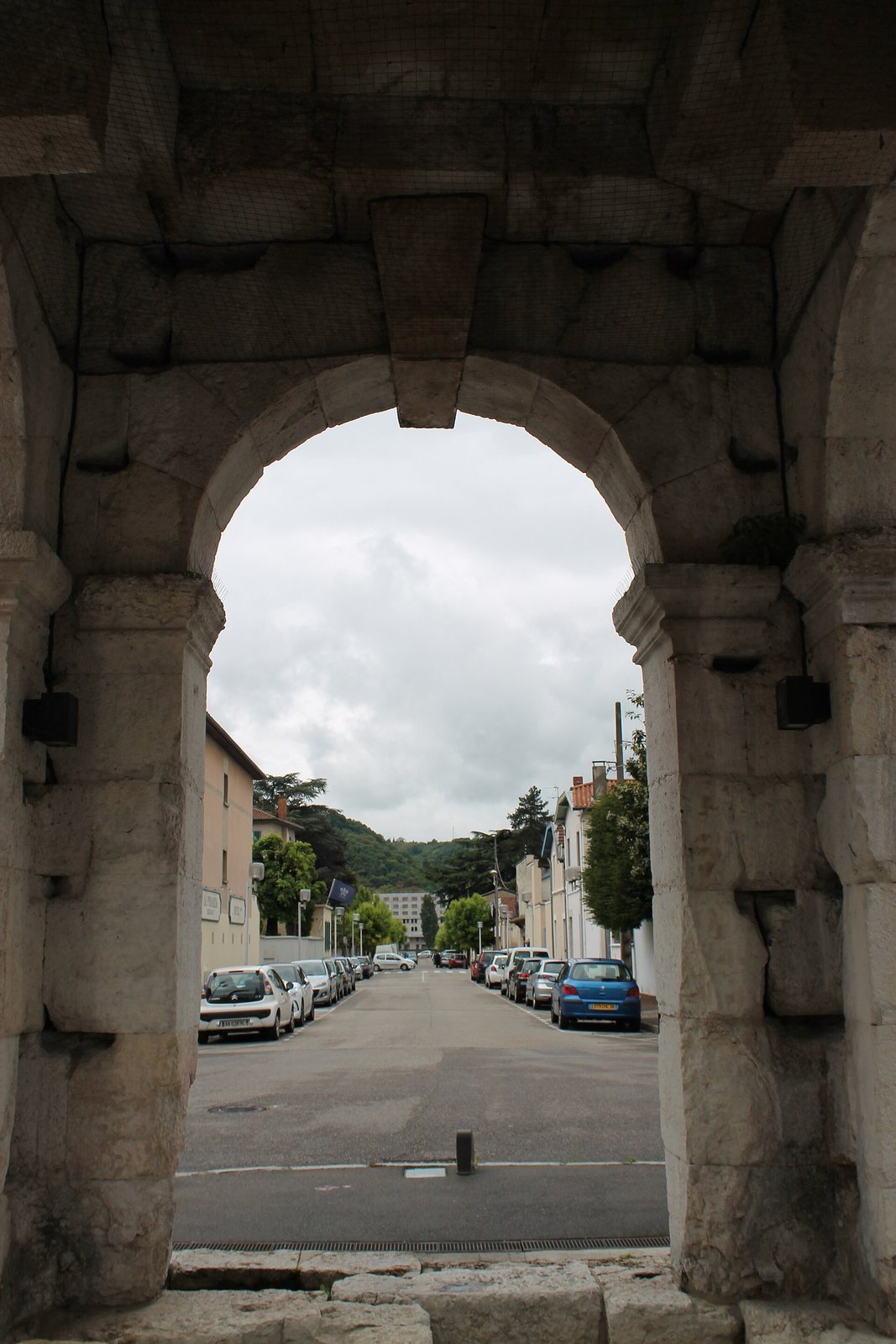
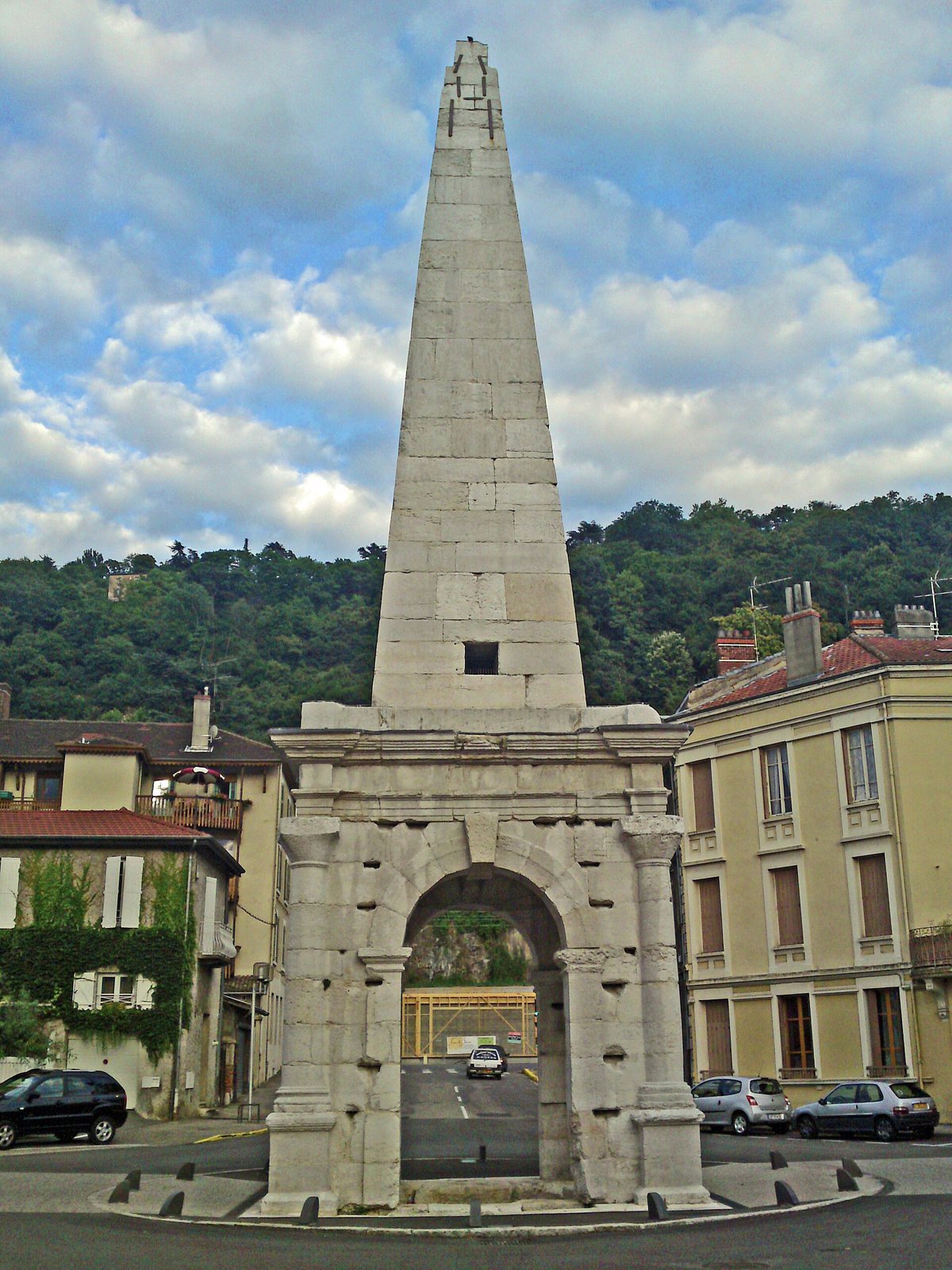
The restored stone-masonry monument stands in its original position at the centre of the circus’s spina. Commonly called the Pyramid of Vienne, it has an obelisk-like upper section above a four-sided pedestal pierced by vaulted passageways. The pedestal is about 7.45 metres high and measures 6.20 metres on each side. Above it, the obelisk-like structure rises about 15.5 metres, bringing the total height to roughly 23 metres. The monument may have replaced an earlier obelisk. It now stands on Place Fernand-Point, formerly Place de la Pyramide, along Boulevard Fernand-Point. Streets, homes, gardens, and low-rise buildings occupy the surrounding area.