Corbridge Bridge: A Historic Crossing of the River Tyne
Site at a Glance
- Rating
- 4.7
- Popularity
- Medium
- Country
- United Kingdom
- Primary era
- Early Modern
- Eras represented
- Early Modern, Modern
- Civilizations
- British, English
- Site type
- Infrastructure
- Remains
- Bridge
On this page4 sections
History
The medieval crossing
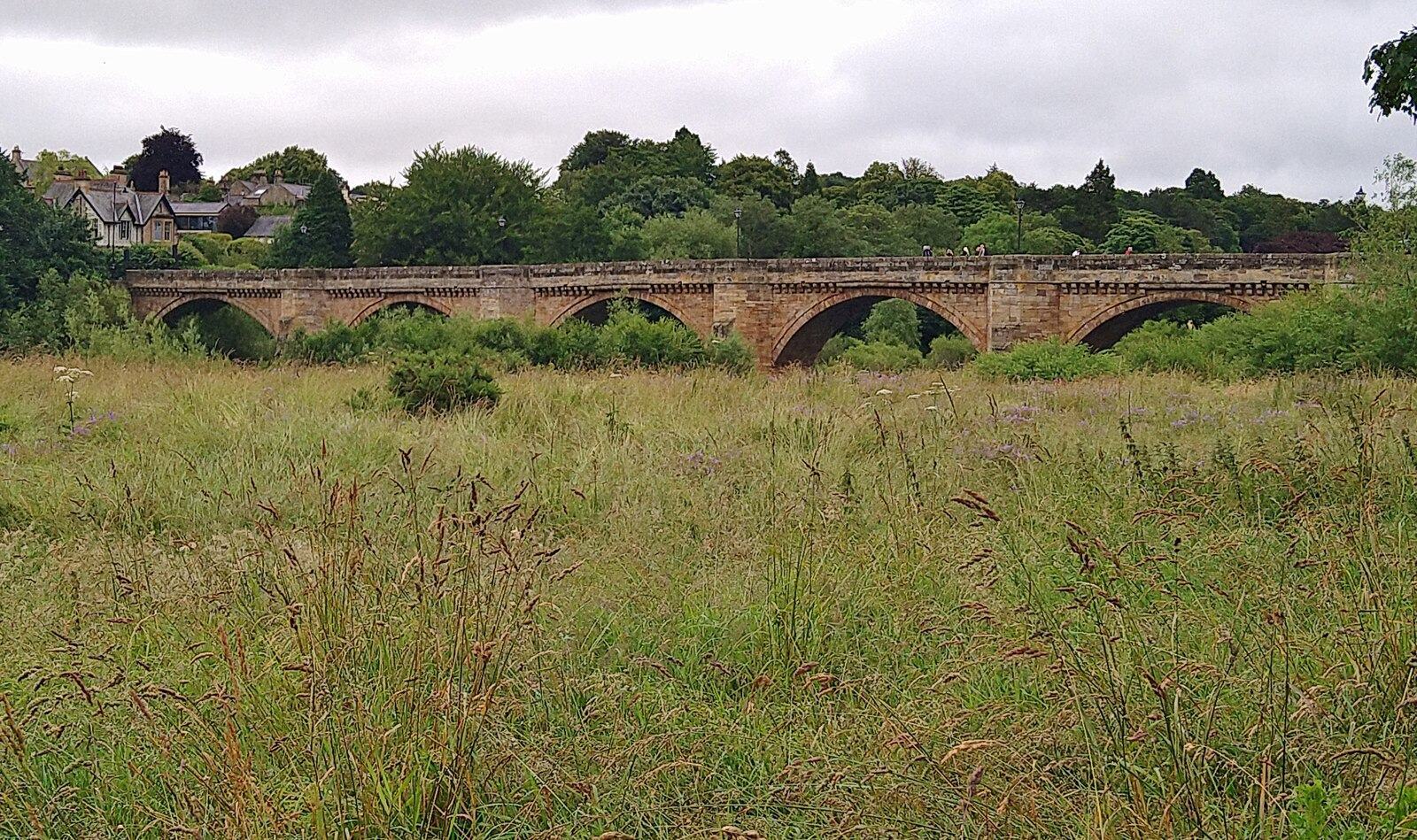
Corbridge Bridge is a stone bridge over the River Tyne at Corbridge, Northumberland, in the United Kingdom. A bridge was built there in 1235. By 1298, tolls were being collected to maintain it. The tariff covered items such as nails, horseshoes, cartwheel sheaths, griddles, iron cauldrons and vats. Royal officers visiting Corbridge that year bought nails and horseshoes, and the bridge had become an important asset to the town. In 1306, it was described as the only bridge between Newcastle and Carlisle and was maintained as a link between England and Scotland.
Rebuilding and changing role
A flood destroyed the medieval bridge in 1674. Its replacement was built in the late 17th century under the supervision of Robert Trollope, an English architect and builder. During the Great Flood of 1771, Corbridge Bridge was the only bridge on the River Tyne to escape major damage; the others collapsed. Its survival brought it the reputation of the river’s “only survivor.”
After the Hexham bypass opened, the A68 crossed the Tyne at Styford Bridge, about 3 miles (5 km) downstream, instead of at Corbridge. By 2015, Corbridge Bridge held Grade I status, England’s highest category of statutory listing, reserved for buildings of exceptional interest.
Remains
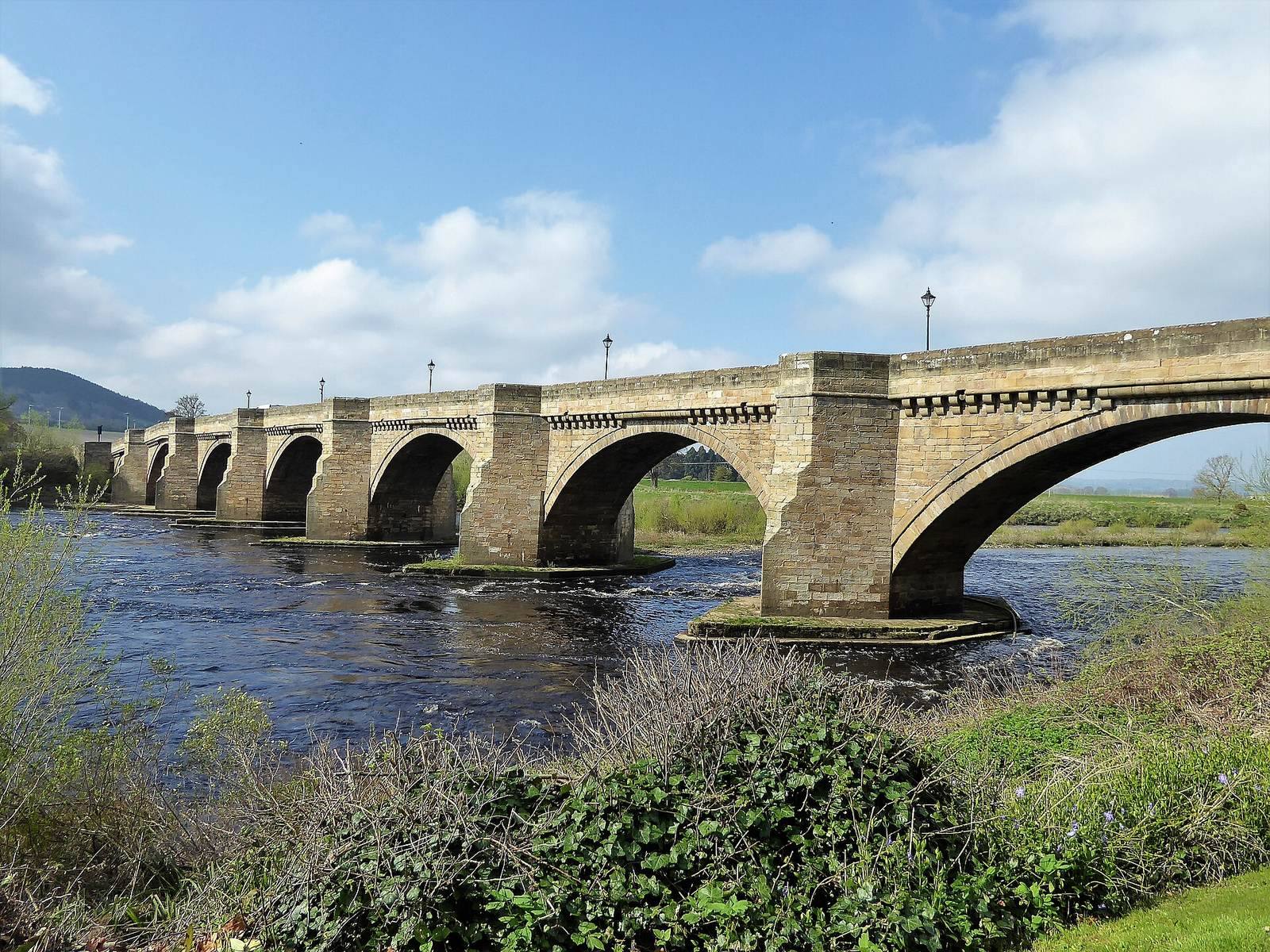
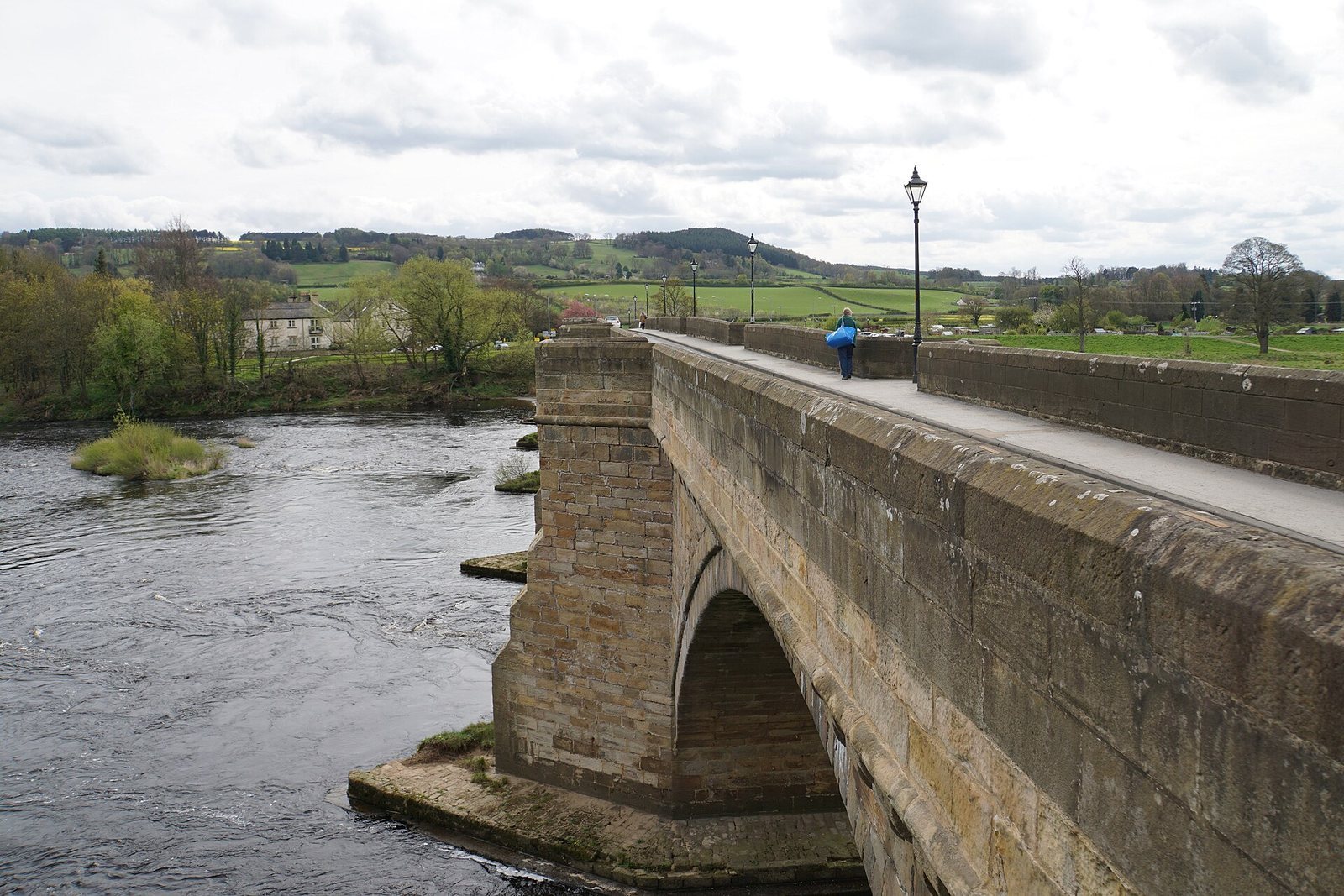
The stone bridge extends about 480 feet (146 m) across the river and has seven arches of varying sizes. The arches are ribbed, with ribs articulating their surfaces. Triangular cutwaters project from the bridge supports to divide the water, and also served as shelters for pedestrians. Before its widening in 1881, the bridge was about 3.5 m wide. For that work, the outer facing was carefully taken off and the original stones reused to cover the widened structure, leaving its external historic appearance substantially unchanged. Today, the bridge carries the B6321 on a single-track roadway controlled by traffic lights, with a stated load limit of 7.5 tonnes.