Magazine Gateway: Medieval Entrance to Leicester’s Newarke
Site at a Glance
- Rating
- 4.8
- Popularity
- Very Low
- Country
- United Kingdom
- Primary era
- Medieval
- Eras represented
- Medieval
- Civilizations
- English
- Site type
- Military
- Remains
- Gate
On this page8 sections
History
Foundation and medieval precinct
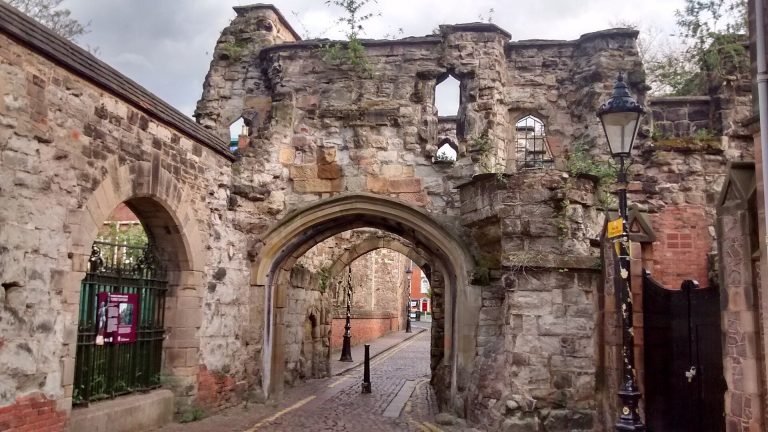
The Magazine Gateway is the principal surviving gatehouse of the Newarke, a religious precinct outside Leicester’s medieval walls in England. It was completed soon after 1400, when the precinct’s enclosing wall was built. A separate gate linked the Newarke with Leicester Castle.
The precinct’s religious foundations began in 1330, when Henry, 3rd Earl of Lancaster, established Trinity Hospital south of the castle wall. His son, later Duke of Lancaster, founded the collegiate Church of the Annunciation of St Mary there. The church held a relic believed to be a thorn from Christ’s crown of thorns.
Visitations in 1440 and 1525 raised concerns about the gateway’s porter admitting people considered unsuitable, including women late at night. The visitations also barred the sale of food and drink from the precinct and gateway.
Dissolution and the Civil War
In 1548, during the English Reformation, the break between the English church and the Roman Catholic Church that brought the dissolution of religious institutions, the college of canons was dissolved and the Church of the Annunciation was destroyed. The gateway, precinct wall and Trinity Hospital survived. The precinct later became an exclusive residential tax haven, with substantial houses including Skeffington House, now the principal part of Newarke Houses Museum.
During the English Civil War, the conflict between supporters of Parliament and the Crown from 1642 to 1651, Parliamentarian forces used the gateway to store munitions in 1642. This use gave it the name Magazine. Royalist efforts to disperse the weapons had little effect. On 30 and 31 May 1645, the Royalist army from Oxford, led by Prince Rupert, besieged and stormed Leicester, capturing the town, castle and Newarke. Parliamentarians regained the town on 18 June, after a short siege that followed their victory at the Battle of Naseby.
Military and civic uses
During the nineteenth century, the gateway served the local militia and was sometimes used as a prison. In 1908, the 4th Battalion of the Leicestershire Regiment was formed there when the regiment’s 1st Volunteer Battalion was split. The battalion mobilised at the gateway in August 1914 before deployment to the Western Front, the main land front in France and Belgium during the First World War. The building also housed the headquarters of the Leicestershire Yeomanry, a British volunteer mounted unit, during that conflict.
The vaulted passage remained open to traffic until 1905. In 1969, the building became available for use as a museum by the Royal Leicestershire Regiment. That use ended in 1996 because repairs were needed and the three-storey building had limited accessibility; the museum later reopened on an upper floor of Newarke Houses Museum.
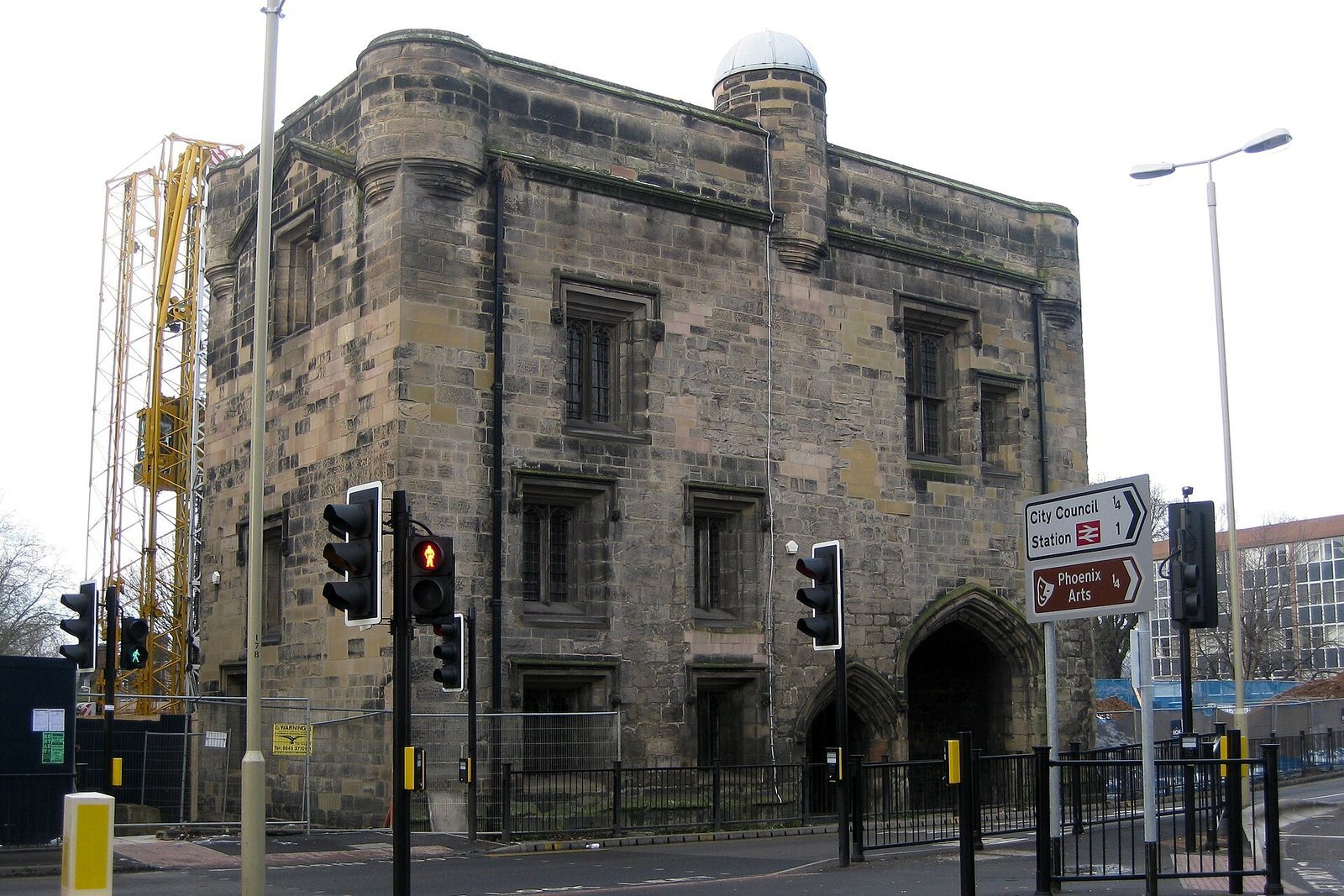
Leicester’s inner-ring-road scheme of the 1960s left the gateway isolated between carriageways. Work in 2007 filled an underpass, shifted the road east and lowered the ground to the west to match the gateway, creating a pedestrianised area that reconnected it with the Newarke. Excavations at the De Montfort University PACE Building site in 2006, after the James Went building was demolished, exposed buried remains of the precinct wall. The gateway is a Grade I listed building, the highest English category for buildings of exceptional architectural or historic interest.
Remains
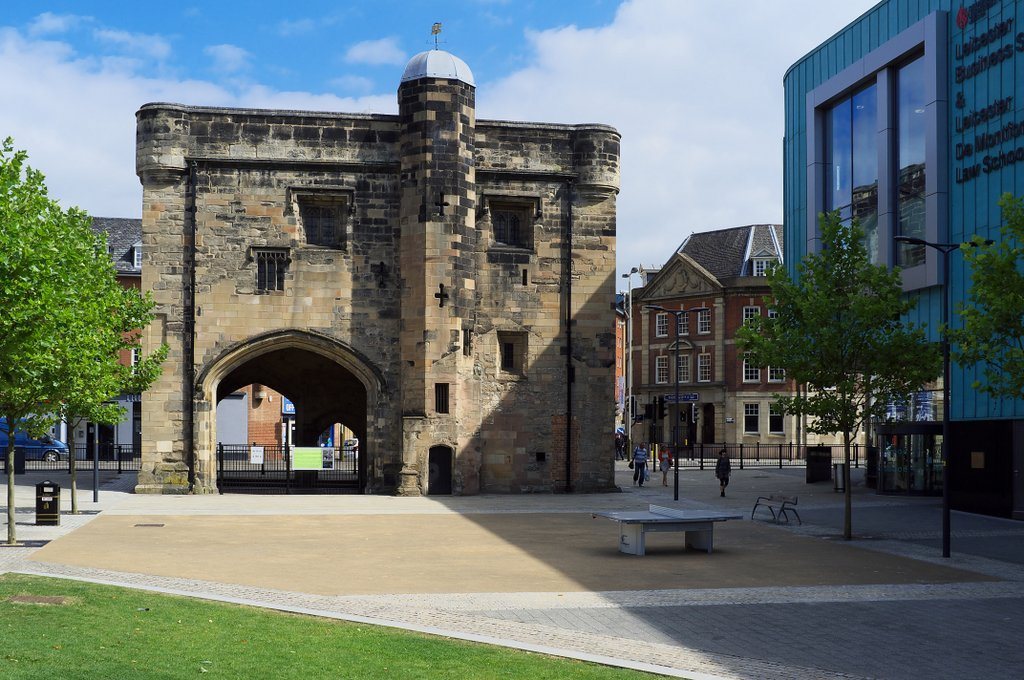
The surviving gateway combines two passage arches with rooms on three storeys above and beside them. It stands at the eastern end of a pedestrianised area between De Montfort University’s Business and Law building and Newarke Houses Museum. The ring road’s carriageways diverge alongside the building, with the road now to its east and pedestrian space to its west.
Gatehouse and precinct wall
Gatehouse
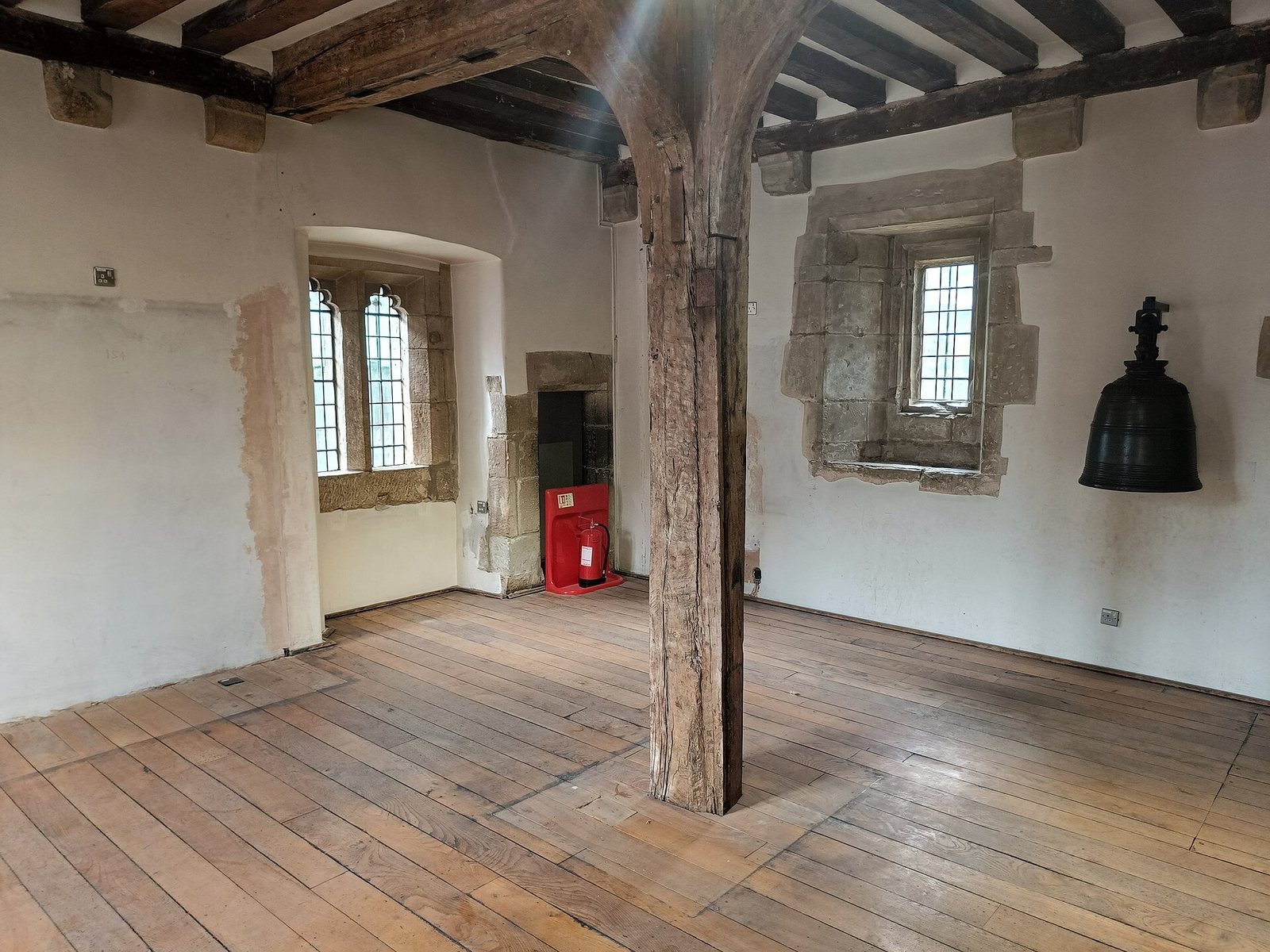
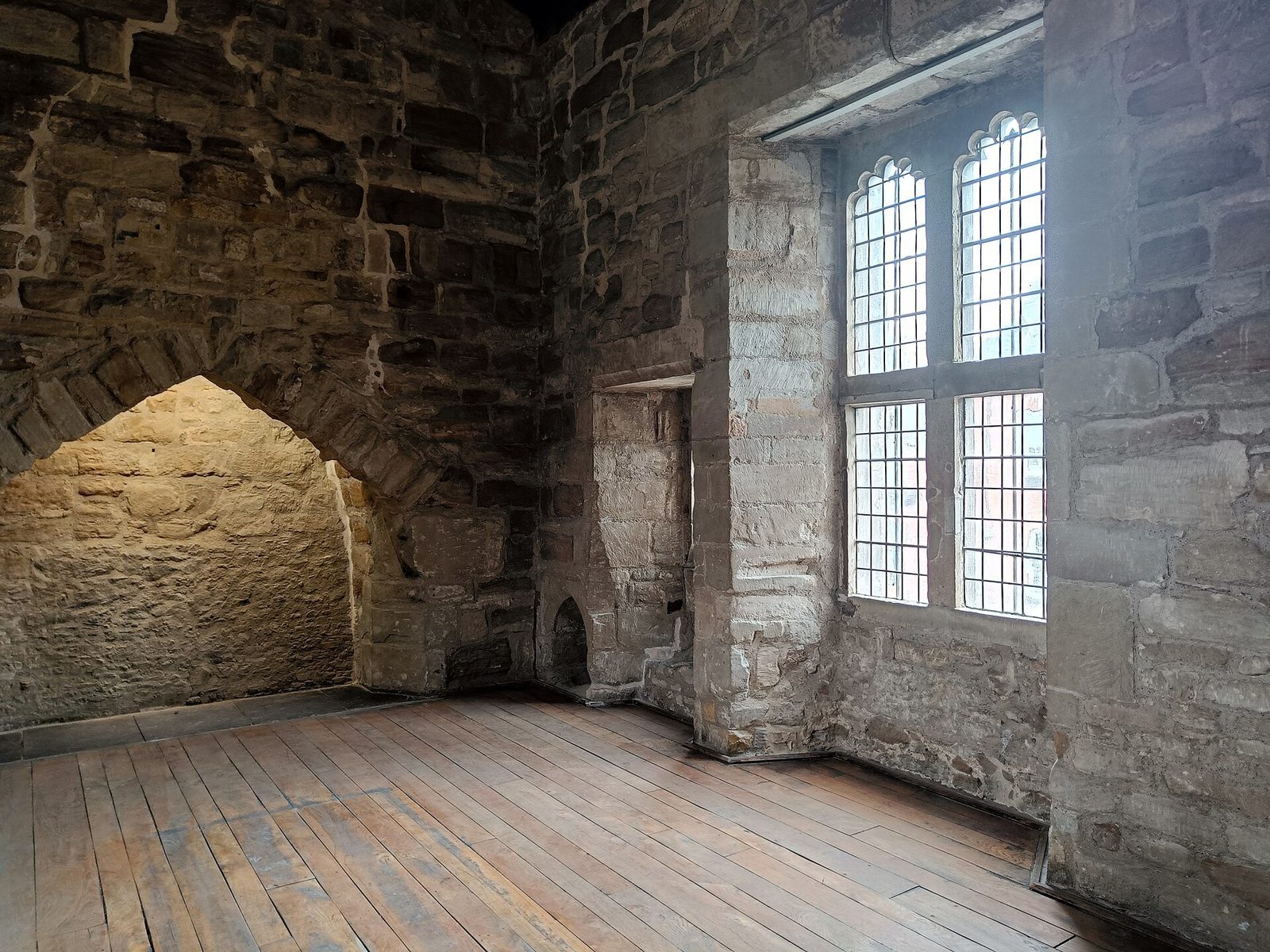
The gatehouse has separate archways for pedestrian and carriage passage. Rooms on the first floor, above the archways, provided accommodation for visitors to the college. The rooms also served over time as a porter’s lodge, guest accommodation, a prison, a militia building and a regimental museum. Graffiti on the walls includes markings dated to 1809 and the 1940s, associated with prisoners and military occupants.
Precinct wall
Parts of the enclosing wall remained standing to about three metres before the area was built over by the James Went building in 1967. Excavations in 2006 revealed buried sections surviving to a height of 1.5 metres.