Roos Hall: A Manor House in Suffolk
Site at a Glance
- Rating
- 5
- Popularity
- Very Low
- Country
- United Kingdom
- Primary era
- Unclassified
- Eras represented
- Unclassified
- Civilizations
- Unclassified
- Site type
- Domestic
- Remains
- Manor House
History
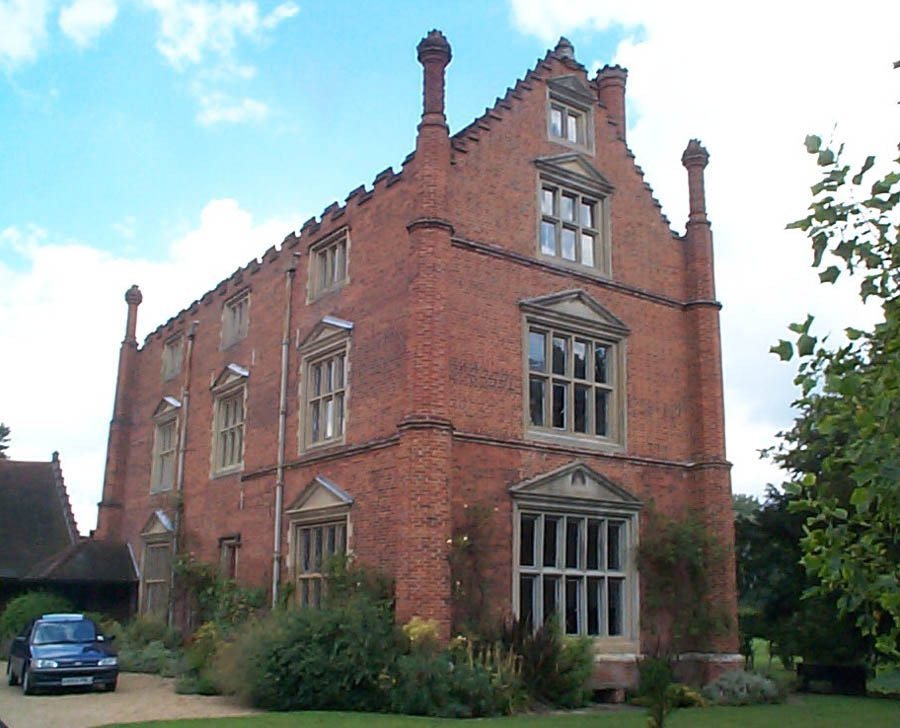
Roos Hall is a manor house on the site of a former manor about half a mile west of Beccles in Suffolk, United Kingdom. The Suckling family owned it in the seventeenth century, and Sir John Suckling bought the property in 1600.
When Sir John died, the manor was subject to a £6,000 mortgage, a loan secured against the property. His will required repayment within a year. If the money was not raised, the manor was to pass to feoffees, trustees who held land for another person, for the benefit of his wife, Jane. His eldest son could have more time to pay off the debt and reclaim the manor if Jane agreed. The money was not raised in time, and the property came into the hands of Sir Alexander Temple, Jane’s brother-in-law through her sister Mary.
In 1629, Temple directed his executors to sell the Suffolk manors of Rosehall and Ashmans to meet debts for which his son James was liable on Temple’s behalf. Any proceeds remaining were to go to James and his heirs. It is uncertain whether Temple had paid £6,000 for Jane or instead held a claim for that amount as her settlement, though payment is considered more likely.
Jane, who had been widowed from Charles Hawkins, married Sir John Suckling on 2 March 1616. The property is said to have later returned to the Suckling family, then passed to the Rich family after Jane married Sir Edwin Rich on 14 September 1629. Jane died in November 1662, and Sir Edwin held the manor when he died in 1675.
Sir Charles Rich and his wife, Mary Frances, sold the property to Thomas Rede of Beccles in 1805 for £12,160. Roos Hall is Grade I listed, the highest category of listed-building protection in England, reserved for buildings of exceptional interest. It is also reputed to be among England’s most haunted houses.
Remains
A local tradition identifies an imprint on one of the hall’s walls as the Devil’s footprint.