Old Saint Peter’s Church, Strasbourg: A Shared Catholic and Lutheran Church
Site at a Glance
- Rating
- 4.5
- Popularity
- High
- Country
- France
- Primary era
- Medieval
- Eras represented
- Classical, Medieval, Early Modern, Modern
- Civilizations
- French, German, Holy Roman Empire, Merovingian, Roman
- Site type
- Religious
- Remains
- Church
On this page13 sections
History
Old Saint Peter’s Church is a medieval Gothic church in Strasbourg, France, first documented in 1130. Its principal Gothic construction is dated to 1382, within a building campaign of 1381–1428. Some historians regard it as Strasbourg’s first Christian cathedral; in the Middle Ages, it was one of the nine parish churches of the Diocese of Strasbourg.
The medieval church and the Honau chapter
On 22 May 1398, the chapter of Honau Abbey moved from Rhinau to Saint Peter’s because flooding threatened its former home. The canons had been based at Rhinau since 1290. At Saint Peter’s, they held services in the choir while the parish congregation used the nave. The chapter left in 1529.
Reformation and divided worship
In 1525, Strasbourg’s city council voted to retain the Mass in several churches, including Saint Peter’s, despite campaigns by reformer Martin Bucer and others for Protestant services throughout the city. When Strasbourg adopted the Reformation on 20 February 1529, the church became Lutheran and services by the Honau canons stopped. Pastor Thiébaut Schwartz oversaw the destruction of altars and images of saints, as well as the covering of wall paintings. A Latin school opened at the church in 1535.
Catholic worship returned briefly from 1550 to 1560 under a religious settlement imposed by Holy Roman Emperor Charles V. The Honau canons then left voluntarily, and Saint Peter’s was used wholly for Lutheran worship. After Strasbourg became French in 1681, King Louis XIV ordered the choir returned to Catholic use in 1683. This created a shared-use arrangement, with Catholics worshipping in the choir and Lutherans in the nave. The Honau chapter returned and remained until its dissolution in 1790.
Revolution, rebuilding, and later use
During the Reign of Terror, a period of repression during the French Revolution, both the Protestant and Catholic parish churches were closed from 1793 to 1795 and used as meat depots for troops. This use contributed to the building’s deterioration. In 1865, the Catholic organ made in 1762 was transferred to the Church of Saint Maurice in Soultz-les-Bains. As the Catholic congregation grew, a larger church was built at right angles to the older one and opened in 1867. Its construction cost much of the medieval choir, and the Catholic parish was re-established that year.
German bombardment on the night of 24–25 August 1870 destroyed the Protestant Temple-Neuf during the war between France and Prussia. Its congregation worshipped at Saint Peter’s from 1870 to 1877 and provided a Neo-Gothic pulpit and altar. The church was listed as a historic monument on 18 December 1981. Its Catholic portion is associated with the Archdiocese of Strasbourg, and its Lutheran portion with the Protestant Church of the Augsburg Confession of Alsace and Lorraine.
Ecumenical services were held regularly at the church before a doorway was opened between its two sections in 2012. Regular Protestant worship ended that year, although services continue on special occasions. After discussions begun in 2016, the NooToos project adapted the Protestant interior from 2018 for cultural, social, and spiritual activities rather than regular congregational worship.
Remains
Plan and early fabric
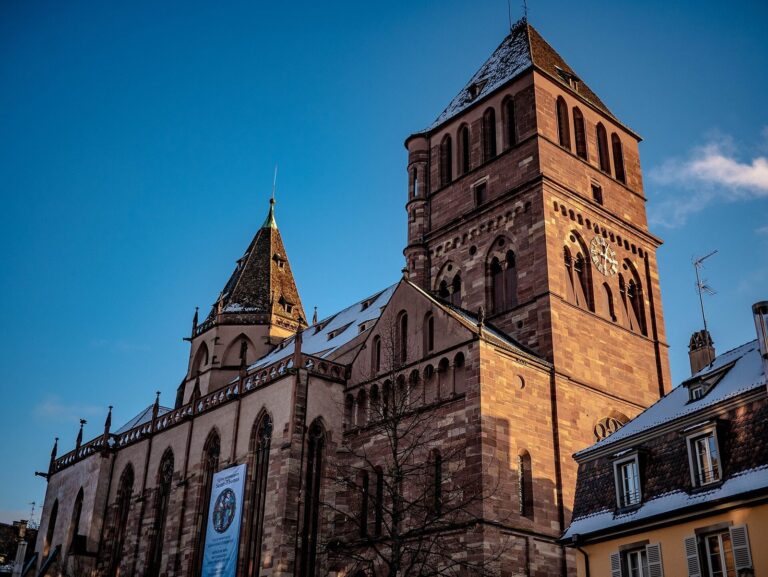
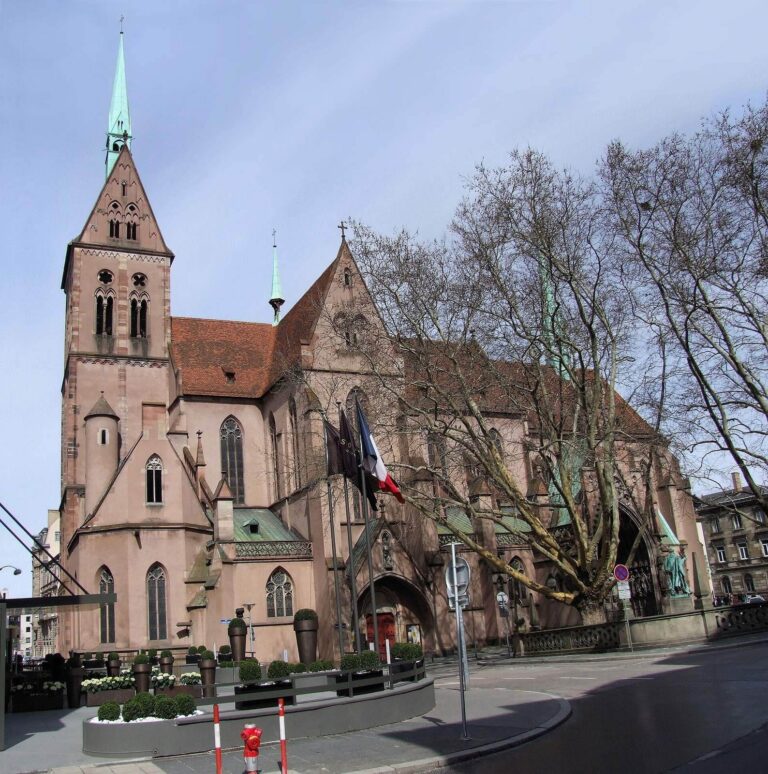
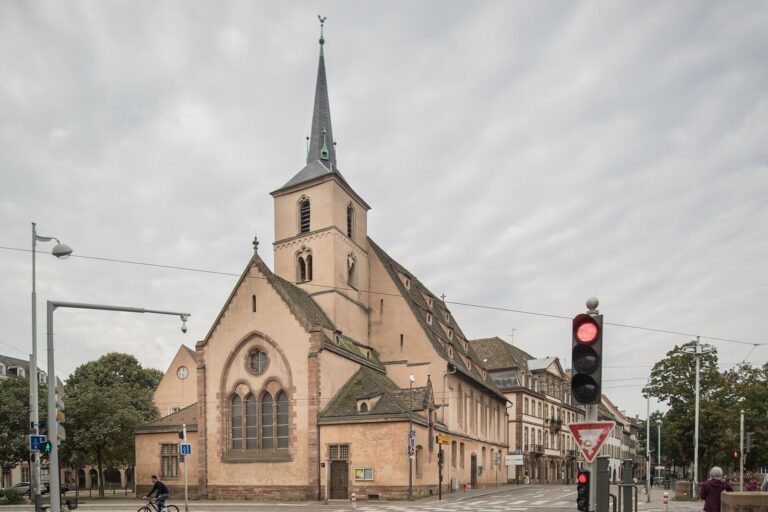
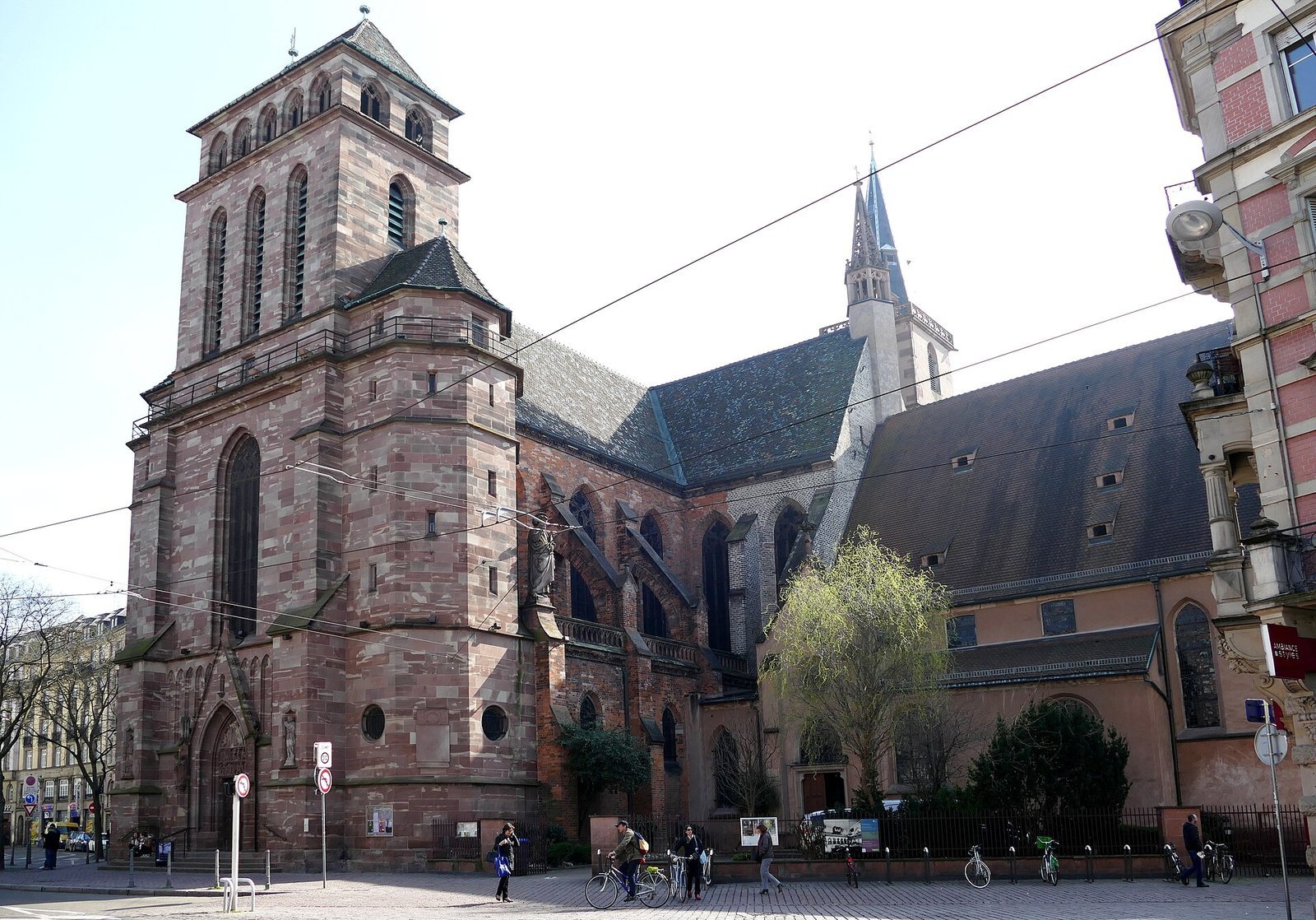
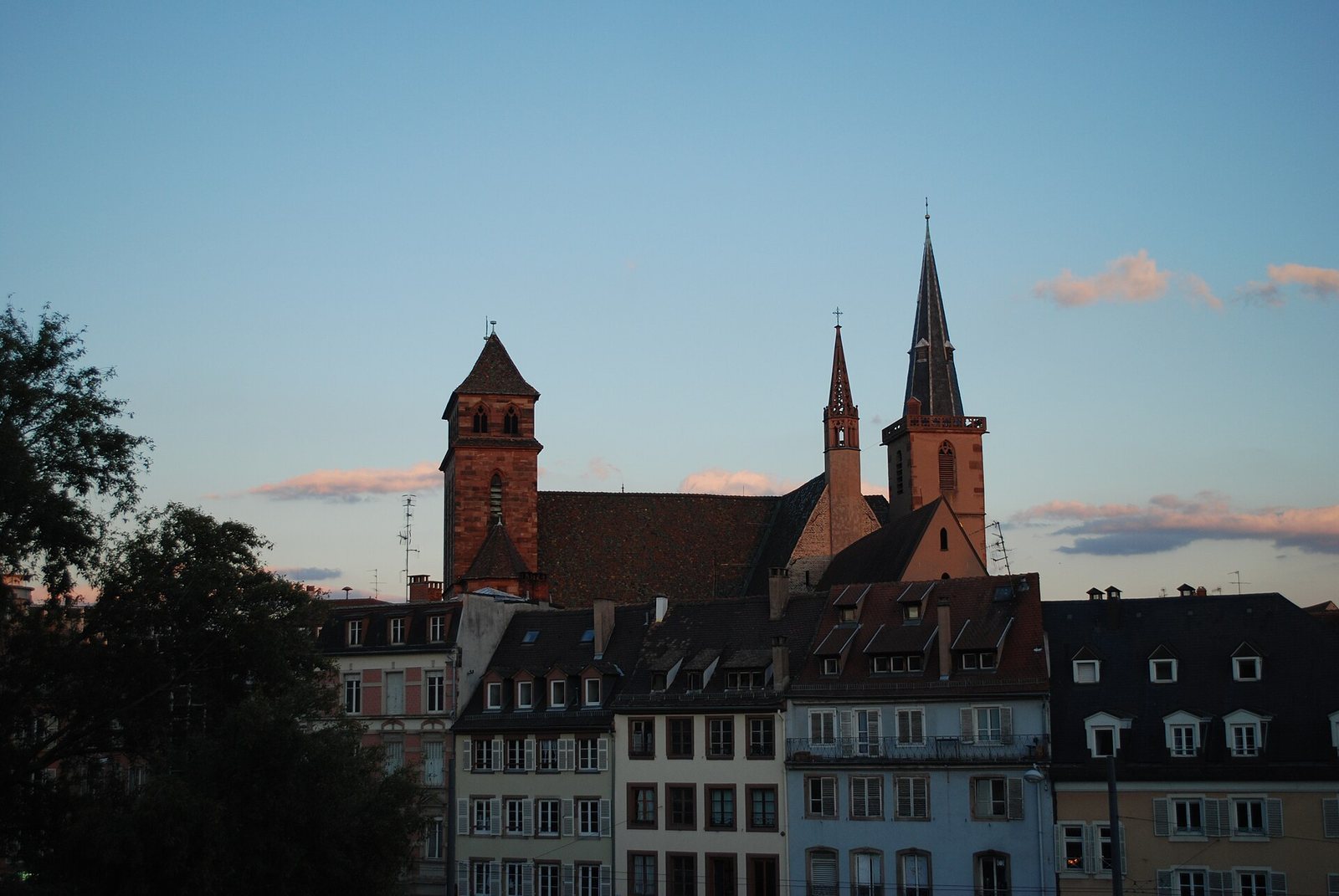
The complex brings together Catholic and Protestant sections set at right angles: the Catholic church faces Rue du 22-Novembre, while the older Protestant section faces Grand’rue. The building stands along Strata Superior, a major Roman road through the city. Wall remains from Roman and Merovingian periods were found in the southern part of the building. The Catholic choir was an ornate late Gothic structure dating to 1455. A dividing wall 1.5 metres thick once separated it from the Protestant nave, and a doorway now links the two sections. The older church retains its medieval tower, while the Catholic church has a separate tower.
The Protestant section
Nave and gallery
The nave retains medieval wall paintings and grave slabs beneath its ceiling. A gallery was added between 1607 and 1616, then decorated with paintings of biblical scenes in 1727.
Organ and carved works
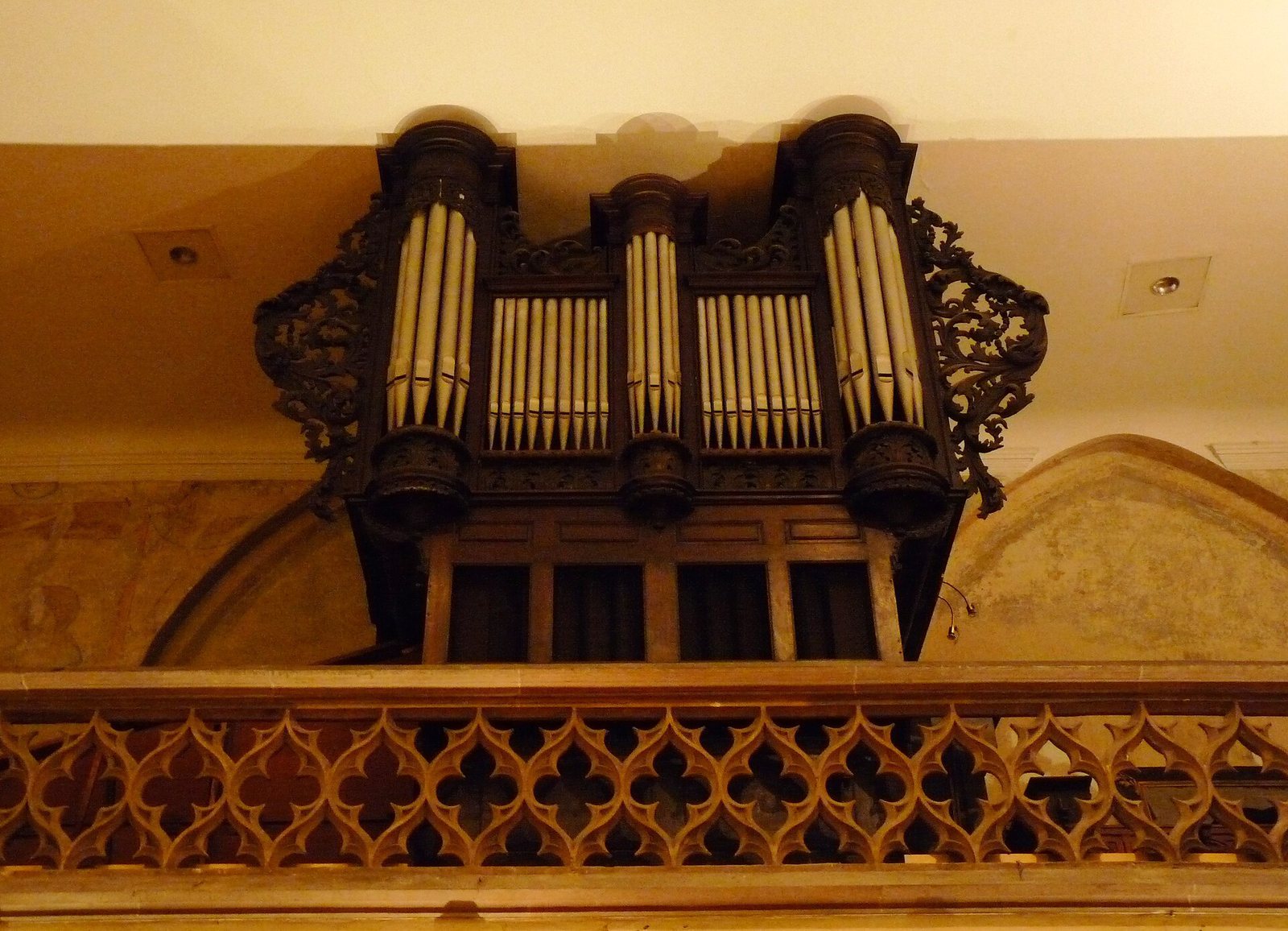
The Protestant church’s organ was built by Eberhard Friedrich Walcker in 1898. Its case comes from a Silbermann organ made in 1709; the instrument has 24 sound registers, two keyboards, and a pedalboard. Four limewood panels from a fifteenth-century choir altarpiece show episodes from the life of Saint Peter. The section also holds a wooden Renaissance relief of the Holy Family, made by Hans Wydyz in the 1520s.
Adapted interior
For the NooToos project, the altar was moved to one side and a glass partition was installed across the nave. Wooden pews were replaced with loungers and beanbags, and the interior gained a kitchen, meeting rooms, social space, and coworking areas.
The Catholic section
Paintings of Christ’s life
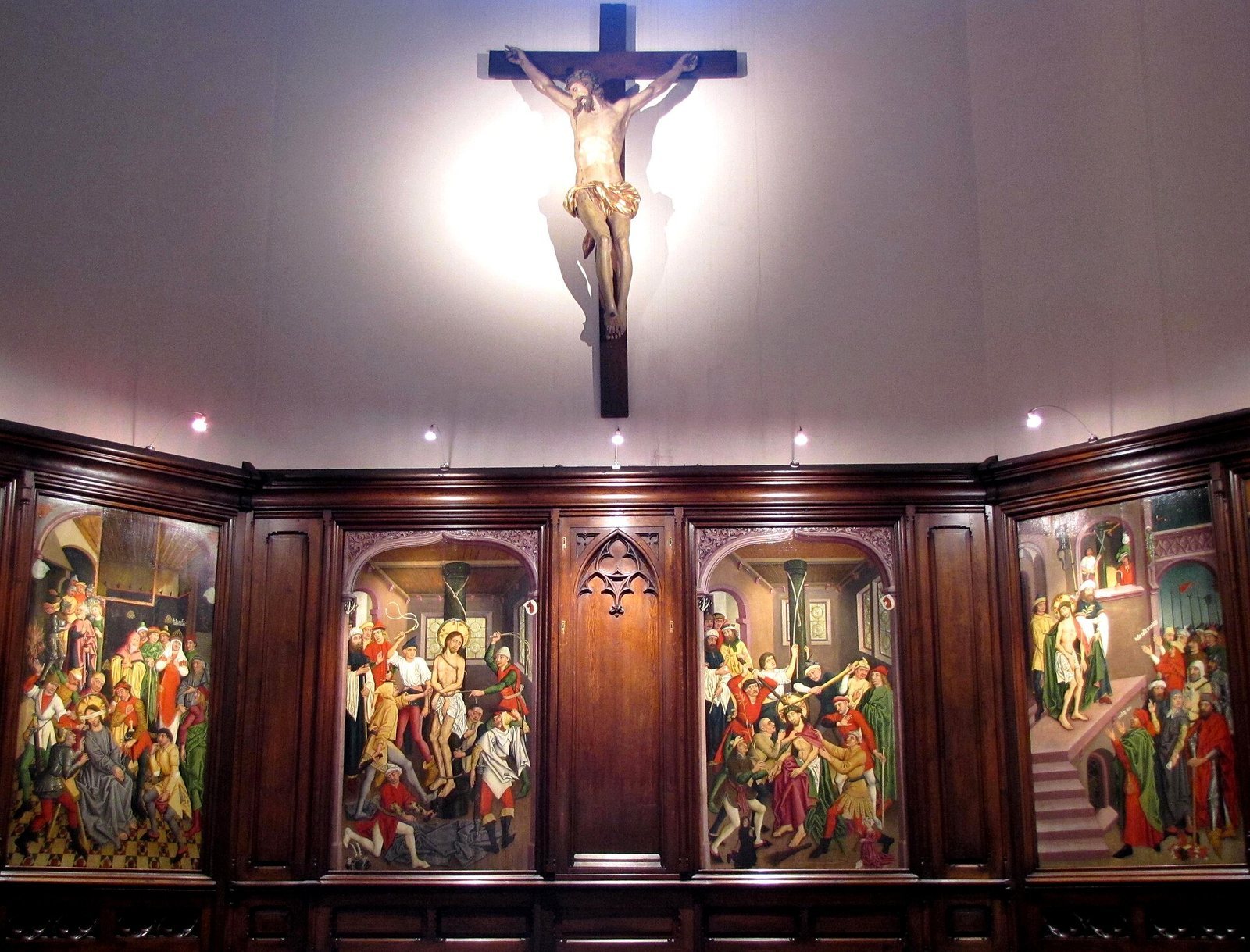
The Catholic choir contains ten Gothic paintings of the Passion of Christ dated to 1485 and attributed mainly to Henri Lützelmann. Four further paintings, dated to 1504, depict events from Christ’s life after the Resurrection.
Altarpieces and relic traditions
Late Gothic and early Renaissance altarpieces with hinged wings were brought here in the early twentieth century after being rescued from churches in Upper Alsace threatened with demolition. Relics associated with Amandus of Strasbourg are kept at the church, though their authenticity is disputed. Local tradition connects some relics in the sacristy with Brigit of Kildare.