Simon en Judaskerk: A Westphalian Romanesque-Gothic Church in Ootmarsum
Site at a Glance
- Rating
- 4.5
- Popularity
- Medium
- Country
- Netherlands
- Primary era
- Medieval
- Eras represented
- Medieval, Early Modern, Modern
- Civilizations
- Dutch, Holy Roman Empire
- Site type
- Religious
- Remains
- Church
On this page14 sections
History
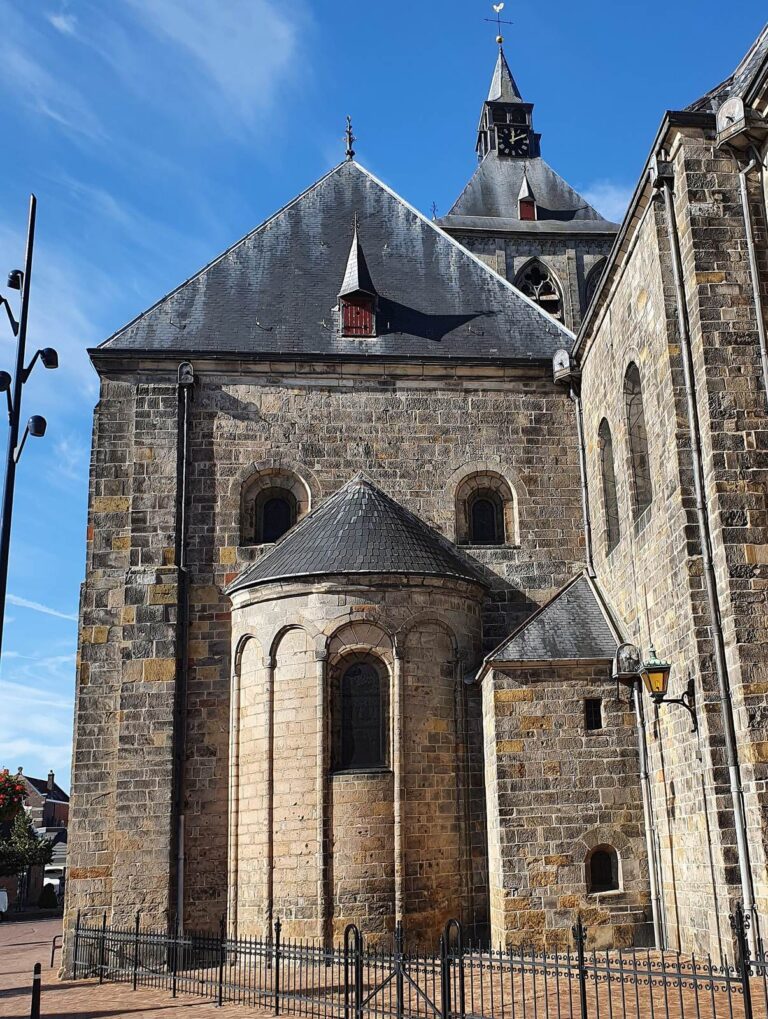
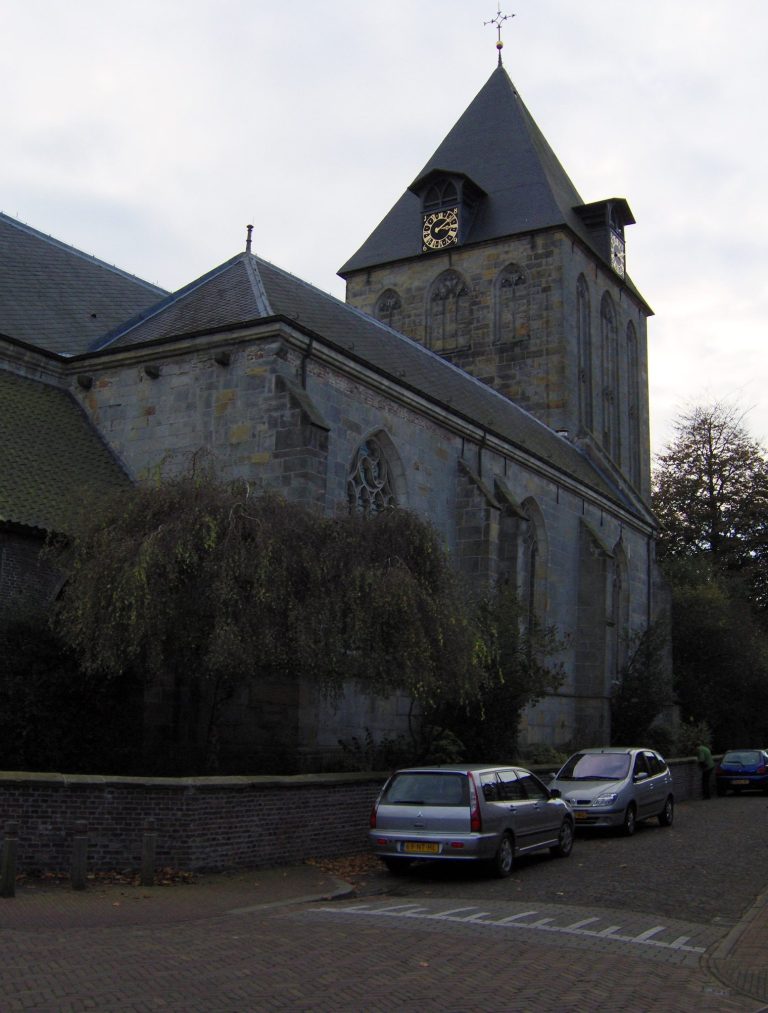
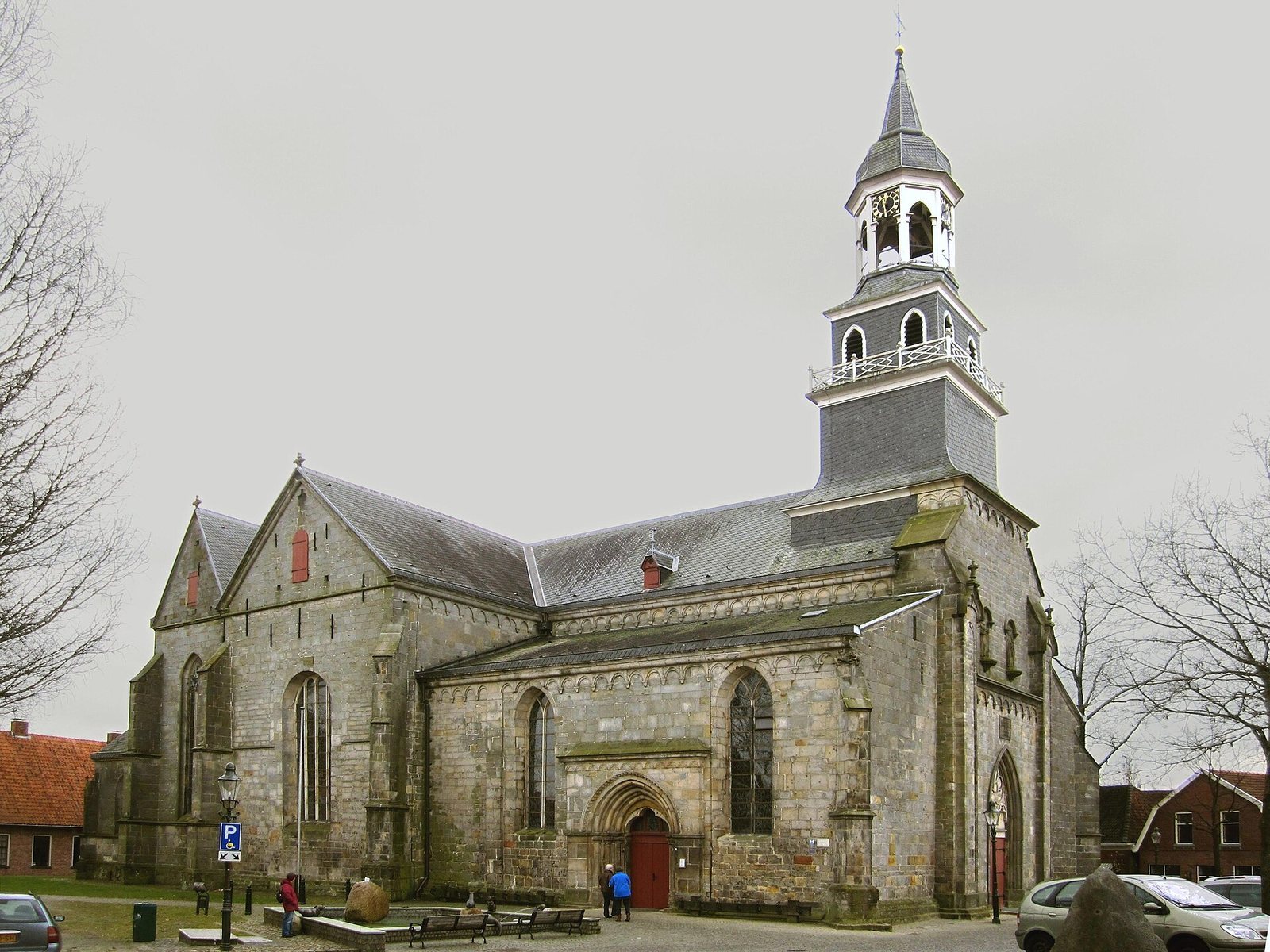
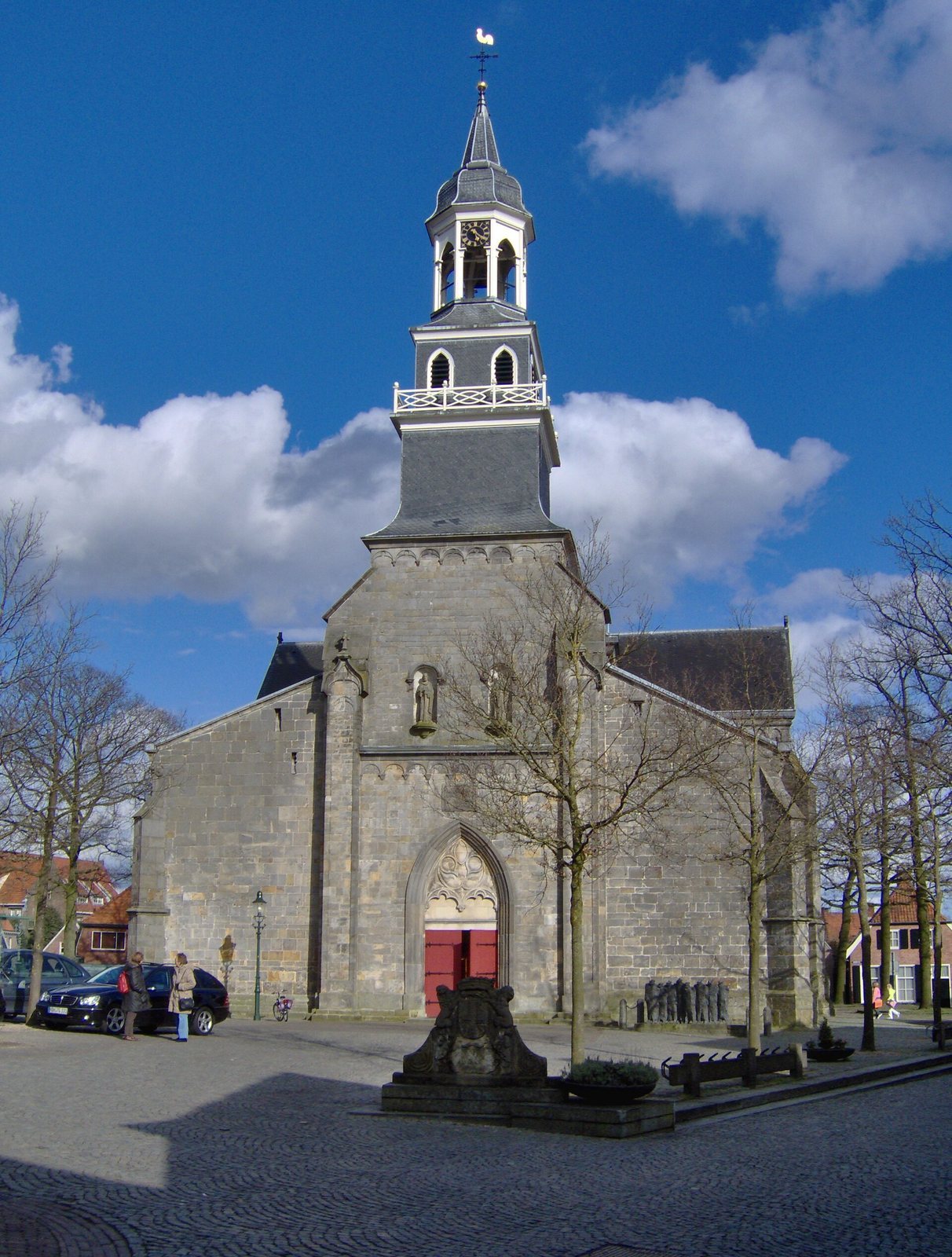
Simon en Judaskerk, a Roman Catholic church dedicated to the apostles Simon and Judas, stands in Ootmarsum, the Netherlands. The present church took shape in the thirteenth century in Westphalian Romanesque-Gothic architecture, combining features of Romanesque and Gothic design. It is the only example of this style in the Netherlands.
Early church and parish
The earliest reference to a church at Ootmarsum appears in a biography of Radbod, Bishop of Utrecht, who died in 917. The account describes an oratory at the settlement. In 1162, Bishop Godfrey transferred the church to the Benedictine convent at Weerselo. Ootmarsum had one of Twente’s oldest parishes, with a territory that included Tubbergen and its dependent churches at Albergen and Geesteren. Almelo’s chapel became a separate parish church in 1236.
People from Drenthe sacked Ootmarsum in 1195 or 1196. The destruction provides the earliest possible date for the start of the present church’s construction.
Confessional change and Catholic return
The States-General, the governing assembly of the Dutch Republic, took Ootmarsum in 1597. During the seventeenth century, the church passed into Protestant hands and became the property of the Dutch Reformed Church in 1639, although most of the town’s population remained Roman Catholic.
In 1809, King Louis Bonaparte returned the church to the Catholic community because the Protestant congregation had become much smaller. Louis, Napoleon Bonaparte’s younger brother, ruled the Kingdom of Holland from 1806 to 1810. The church has belonged to the Archdiocese of Utrecht, a Roman Catholic jurisdiction headed by an archbishop, since its return. The Protestant congregation built a smaller Neoclassical church at Ganzenmarkt.
Nineteenth-century changes and protection
Municipal authorities ordered the medieval west tower demolished in 1839 as a safety measure. Their concern followed the major collapse of the Romanesque tower at Rijssen in 1826. In 1891, the church received Neo-Gothic furnishings by the sculptor August Schmiemann of Münster. Since 1965, the building has been designated a Rijksmonument, the Dutch status for a protected national monument.
Remains
Medieval church
Built of Bentheim sandstone, the church combines features of a hall church, where aisle vaults approach the height of the nave, and a pseudo-basilica, where the aisles are lower. Here, the side aisles stand below the central nave and have lean-to roofs, while the ribs of the vaults over both begin at the same level. Two sections in the nave correspond to four in each side aisle. Smaller supports between the main piers carry paired rows of arches, and shallow, dome-like ribbed vaults cover the interior.
Nave and west transept
The nave dates to around 1230. Its two sections correspond to four sections in each side aisle. The vaults and west transept were added around 1250. The original choir bay belonged to this phase, and a band of arches from it survives above the later Gothic vaults.
Eastern choir and sacristy
A new Gothic end to the choir was built in 1491. Soon afterward, an eastern transept and a sacristy on the north side were added. The transept was enlarged into a hall-like space leading to a choir with a polygonal end formed by five sides of an imagined eight-sided figure.
West façade and south wall
West façade
A wooden roof turret rises above the west façade. A stone chronogram, an inscription whose letters also encode a date, was placed there in 1844 to commemorate the alteration.
South wall
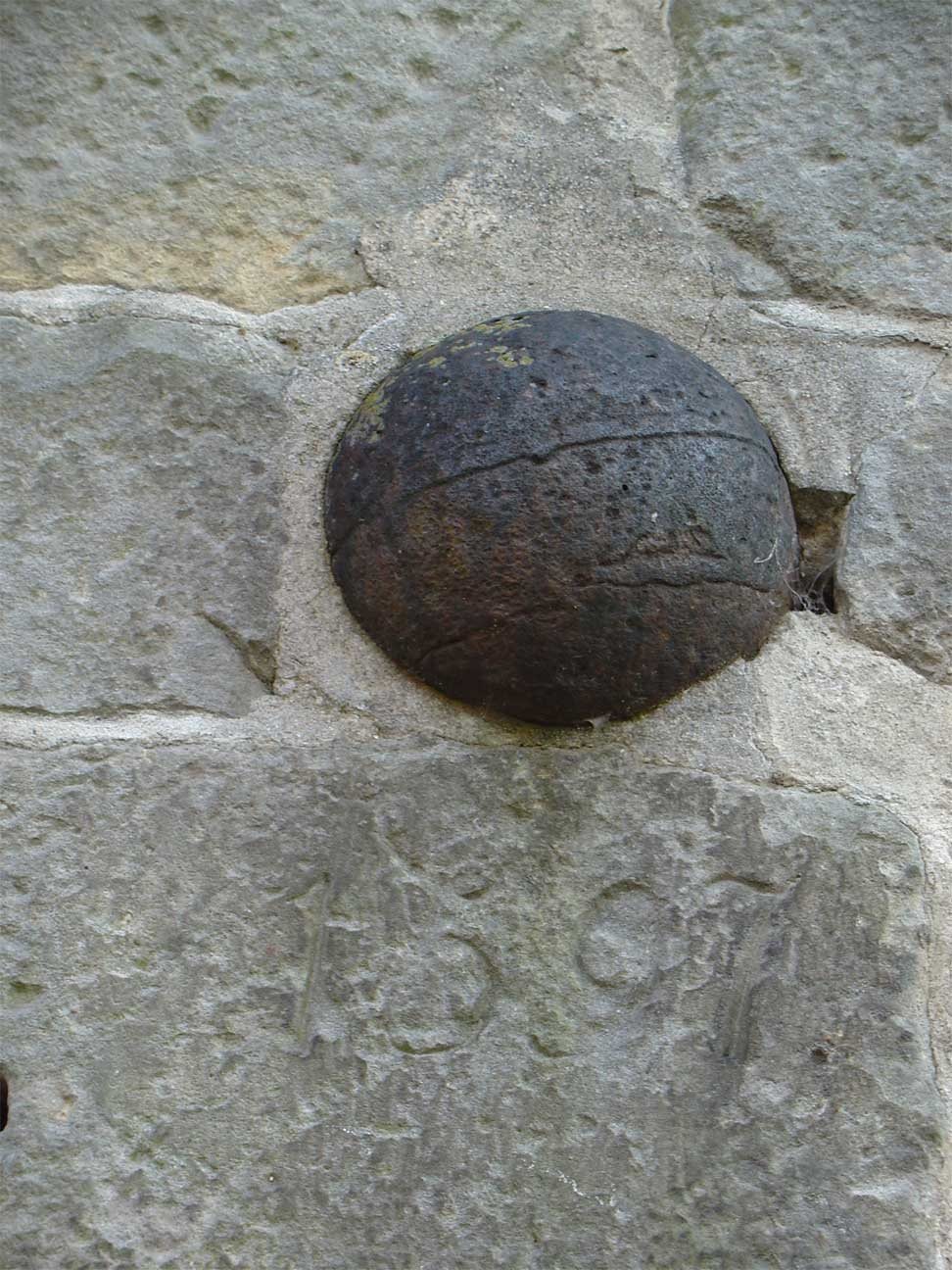
A cannonball is embedded in the south wall, with the year 1597 beneath it.
Organ and furnishings
Organ
The church’s first known organ was made between 1567 and 1569 by the brothers Cornelis and Michael Slegel of Zwolle. Eberhard Berner of Osnabrück replaced it in 1781 with an instrument of 22 stops, controls that select sets of pipes. The new organ probably incorporated parts of the Slegel instrument. It was transferred to the Dutch Reformed church at Ganzenmarkt in 1810. Franz Friedrich Epmann of Essen built a replacement for Simon en Judaskerk in 1814, and Gerardus Elberink of Oldenzaal overhauled it between 1868 and 1870.
Neo-Gothic furnishings
The furnishings include a carved figure of Christ from a cross in the chancel, statues of the Sacred Heart of Jesus and the Sacred Heart of Mary, and statues of the apostles Simon and Judas. The Sacred Heart devotions use the heart as a symbol of Jesus’ and Mary’s love. Reliefs associated with the altars and a carved pulpit are also part of the church’s furnishings.