Porta al Prato: A Historic City Gate in Florence
Site at a Glance
- Rating
- 4.2
- Popularity
- High
- Country
- Italy
- Primary era
- Medieval
- Eras represented
- Medieval, Early Modern
- Civilizations
- Republic of Florence
- Site type
- Military
- Remains
- Gate
On this page6 sections
History
Porta al Prato is a city gate in Florence, Italy, begun in 1285 as work started on the city’s sixth circuit of walls. It is one of Florence’s oldest surviving gates. Tradition attributes its design to Arnolfo di Cambio, the medieval Italian architect and sculptor associated with the new, final defensive circuit.
The gate takes its name from the open ground outside it, known as Il Prato or Prato di Ognissanti, rather than from a route to the city of Prato. The area was once unpaved and held a weekly cattle market. For three centuries, the square also hosted Calcio Fiorentino, a traditional Florentine form of football associated with play in historical dress.
Artillery defenses and later changes
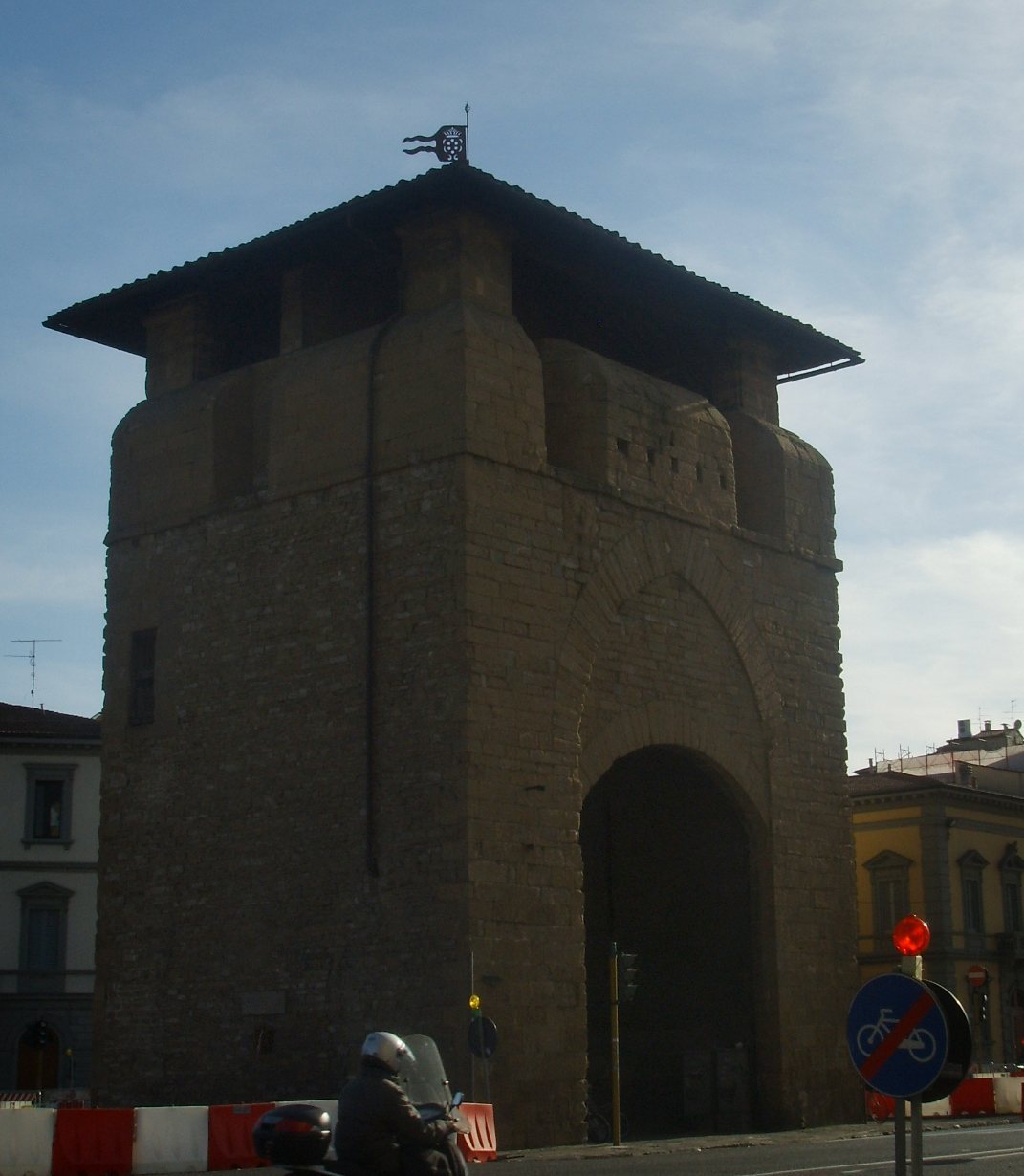
In 1526, the gate was lowered and altered to reduce its vulnerability to artillery. A small roofed, open-sided space was added above it, sheltering openings intended for heavy guns. A section of chain taken from the port of Pisa was displayed on the gate’s countryside-facing side until 1849.
When Florence’s walls were demolished during the period when the city served as Italy’s capital, Porta al Prato stood isolated in the middle of the square. It appeared in a 1901 list of monumental buildings considered part of Italy’s national artistic heritage. Restoration work completed in 2013 affected the gate and its surviving features.
Remains
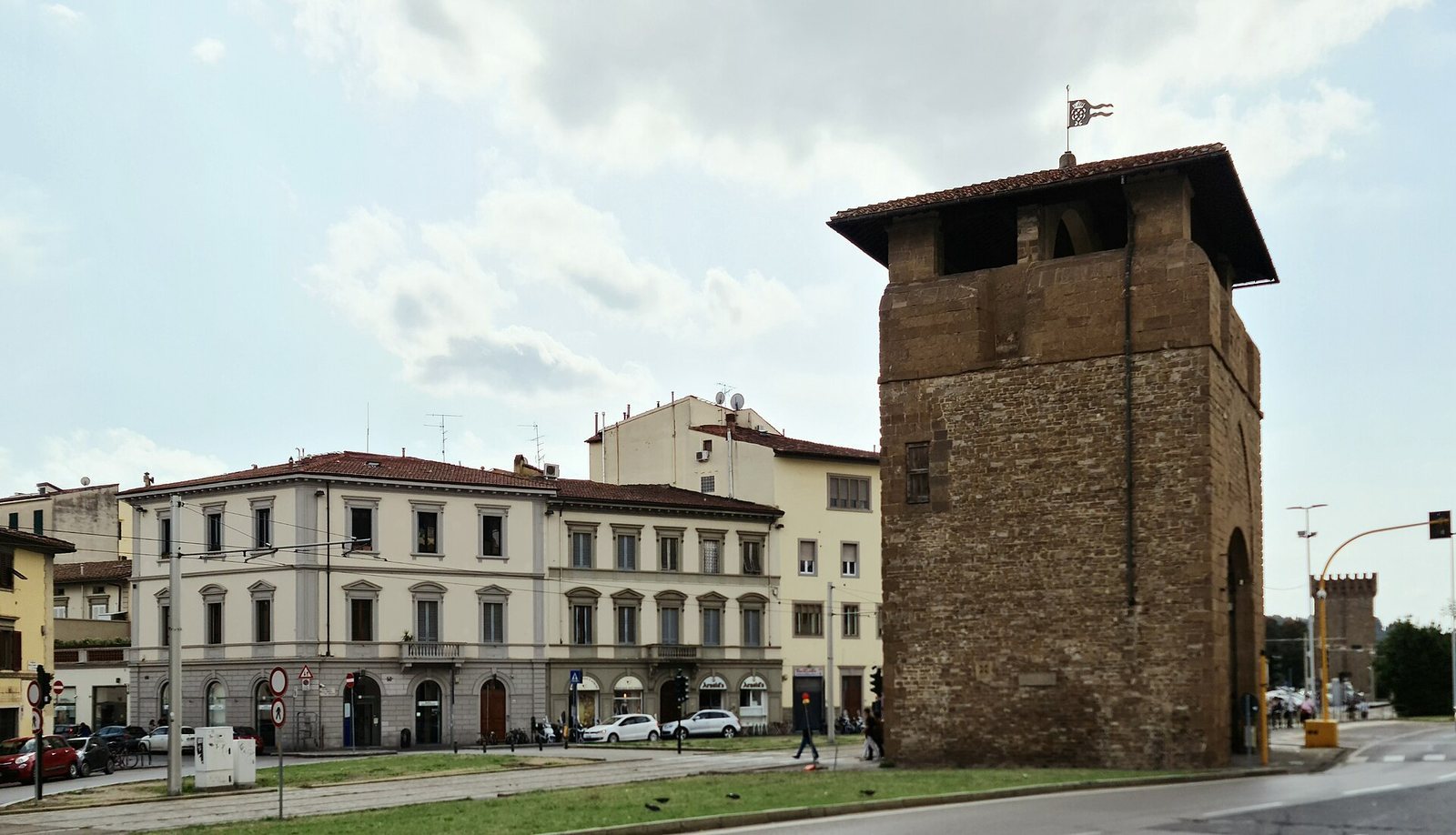
Porta al Prato stands at the center of Piazzale Porta al Prato, where Viale Fratelli Rosselli, Via del Ponte alle Mosse, Viale Belfiore, and the area called Il Prato meet. The gate remains part of Florence’s historic city walls, with a small upper loggia and several inscriptions and artworks associated with its structure.
Gate and associated features
Gate and loggia
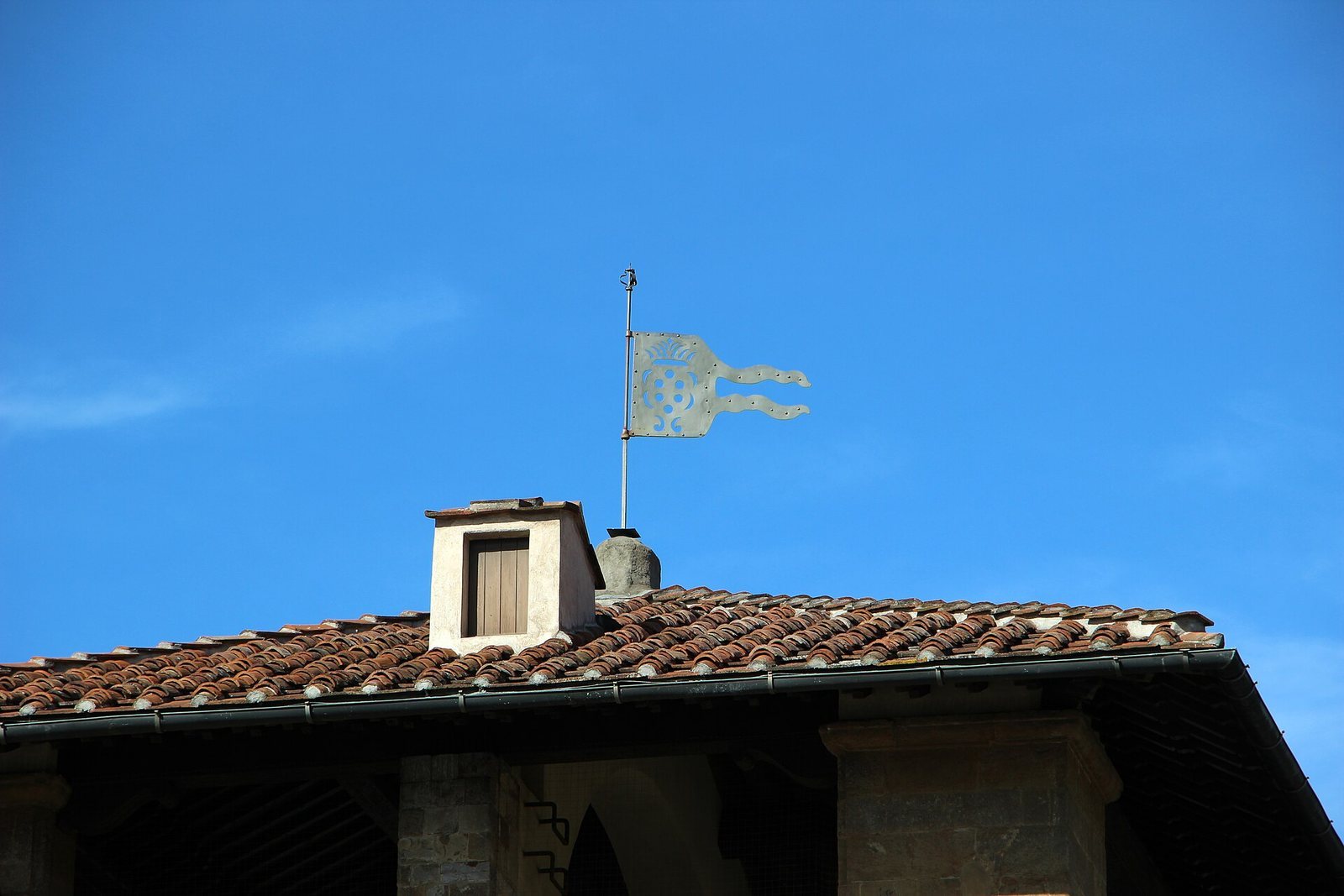
A small loggia, a roofed space open at the sides, sits above the gate. Its sloping roof shelters openings for heavy artillery and is topped by a metal weather vane. The present loggia was reconstructed by Florence’s Municipal Fine Arts Office in the early 1930s. The gate is thought to have originally resembled Porta San Niccolò, another historic gate in Florence.
Artwork and inscriptions
A fresco depicting the Madonna and Child with Saints John and Cosmas once occupied a semicircular recess inside the gate. Attributed to the Renaissance painter Michele di Ridolfo del Ghirlandaio, it is now kept in the conference room of the Biblioteca delle Oblate, a public library in Florence. A marble plaque records measurements of the city walls, a tower, and the defensive ditch in accordance with a decree of 1311. Another inscription commemorates district residents who died in the Second World War.