Toscanos: A Phoenician Trading Settlement in Spain
Site at a Glance
- Popularity
- Medium
- Country
- Spain
- Primary era
- Iron Age
- Eras represented
- Iron Age
- Civilizations
- Phoenician
- Site type
- Settlement
- Remains
- Town
On this page9 sections
History
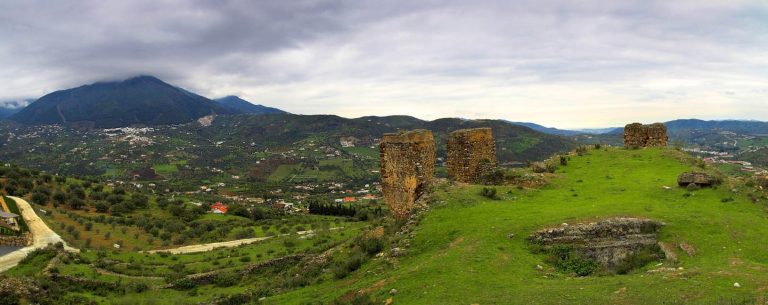
Toscanos is a Phoenician settlement on a hill above the mouth of the Vélez River in Spain. Founded around 740–730 BC by Phoenicians, seafaring people from the eastern Mediterranean, it formed part of a wave of southern Iberian colonies established to trade with inland communities. Though modest in scale, the settlement helps explain how contact with eastern Mediterranean peoples affected local Iberian societies.
Foundation and local economy
Access to farmland, fresh water and routes inland supported the settlement. Around 700 BC, when Toscanos was at its height, the region was more humid than it is today, and extensive forests covered the Penibetic Mountains. Its residents traded with Greece and Cyprus, but Toscanos was not a major center for commerce in metal ores. Its economy also relied on farming, raising cattle, sheep and goats, making olive oil and wine, and hunting deer, boar and wild cats.
Fishing and fish processing were also part of local life. People caught tuna, sturgeon and eels, then salted fish or prepared fermented sauces such as garum, a fish sauce. Craftspeople worked copper and iron, while marine snails called murex were processed to make textile dye.
Expansion and decline
In the 7th century BC, Toscanos grew and gained a fortified district around 635 BC. The settlement then covered about 12 hectares and may have held 1,000–1,500 people. A large central storehouse and nearby grand houses fell out of use early in the 6th century BC, amid a collapse in trade with communities inland.
The central settlement was abandoned around 550 BC. The remaining population eventually moved across the Vélez River to Cerro del Mar. As Carthage, a Phoenician-founded power that became dominant in the western Mediterranean, extended its control over Phoenician communities, political and commercial authority in the area increasingly centered on nearby Malakat, the ancient name for Málaga.
Rediscovery and modern name
Toscanos came to light by chance during a search for Mainake, a Greek settlement. Excavation continues. In 2008 the site received Spain’s Asset of Cultural Interest designation, a formal heritage status. Historian David Abulafia describes Toscanos as a modest trading center with limited standing in the wider Phoenician network, while emphasizing its value for understanding eastern Mediterranean influence on Iberian communities.
The modern name is attributed to Italian migrants who settled in the area during the 18th century, under Charles III, king of Spain. Toscanos is also the name of an Andalusian rural estate.
Remains
Settlement and archaeological remains
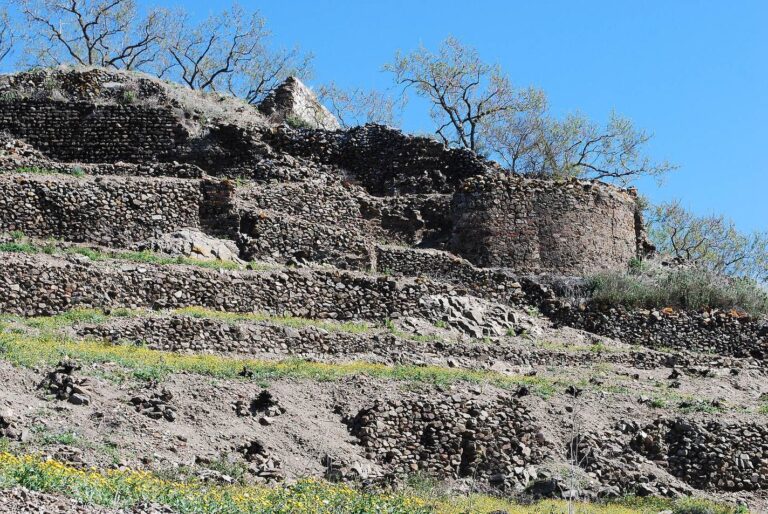
The settlement followed a regular plan, with houses arranged along streets or around open spaces. Their stone foundations supported adobe walls and flat roofs. Excavation has exposed the ground plan of these buildings and spaces.
Defenses and houses
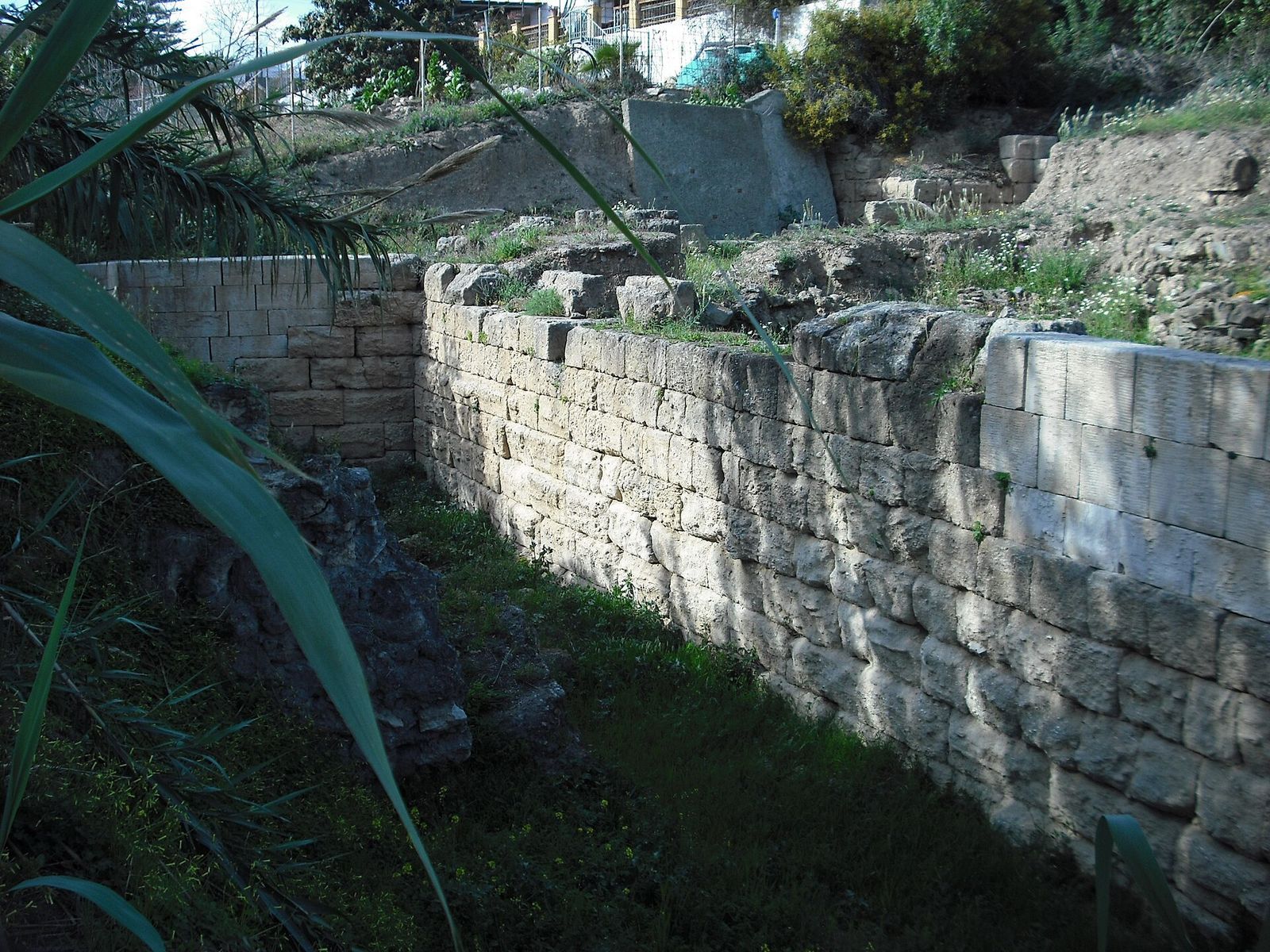
The earliest defenses included a V-shaped ditch cut into the rock; a wall was built later. A further fortified district was added as the settlement expanded. Some houses, built from the mid-8th century BC, were as much as 15 metres wide. Differences in house size suggest a varied population that included a mercantile elite, craftspeople, laborers and enslaved people.
Central storehouse
A large building from the 7th century BC, when the settlement was flourishing, is interpreted as a storehouse. It covered about 150 square metres and may have had two storeys. Inside, three long sections divided the space.
Burial places and finds
The settlement’s necropolis lay at Cerro del Mar, on the Vélez River’s eastern bank in Almayate. At Jardín, burials took place from the 6th to the 4th century BC, and more than 200 tombs have been found. Finds from Toscanos include copper and iron remains, murex shells, and Archaic Greek pottery, including kotylai, or drinking cups, other vessels and transport jars.