Royal Chapel in Gdańsk: A Baroque Catholic Church
Site at a Glance
- Rating
- 4.7
- Popularity
- Medium
- Country
- Poland
- Primary era
- Early Modern
- Eras represented
- Early Modern
- Civilizations
- Polish–Lithuanian Commonwealth
- Site type
- Religious
- Remains
- Chapel
On this page5 sections
History
The Royal Chapel in Gdańsk is a Baroque Roman Catholic church in Poland, built in the late seventeenth century as a temporary place of Catholic worship while St. Mary’s Church was in Protestant hands. Baroque is an architectural and artistic style known for elaborate forms and ornament.
Earlier religious use
Clergy houses stood on the site by the middle of the fourteenth century. In 1589, a chapel dedicated to Andrew the Apostle, one of Jesus’s apostles, was established beside one of these houses.
Foundation and consecration
Construction of the Royal Chapel began on 21 July 1678 at the initiative of Gdańsk’s Catholics. King John III Sobieski, who ruled Poland from 1674 to 1696 within the Polish-Lithuanian Commonwealth, a federated state of Poland and Lithuania, was a principal patron. The project received 80,000 zlotys from the will of Andrzej Olszowski, the Primate of Poland, a senior office in the Catholic hierarchy, and a further 20,000 zlotys from the king. Sobieski’s patronage gave the chapel its “Royal” name.
Work was completed on 10 May 1681. On 16 October 1685, the Polish Catholic bishop Bonawentura Madaliński consecrated the chapel under the dedication of the Holy Spirit, a person of the Christian Trinity, Andrew the Apostle, and John the Baptist, a Jewish preacher revered as a Christian saint.
Parish and wartime damage
From 1840 until October 1962, the chapel served as the seat of its own parish. It suffered extensive damage during the 1945 Siege of Danzig and was rebuilt between 1946 and 1948. The chapel is now part of St. Mary’s Church and is associated with the Parish of the Assumption of Mary in Gdańsk, within the Roman Catholic Archdiocese of Gdańsk. Mass is held there on certain occasions. Renovation began in 2025.
Remains
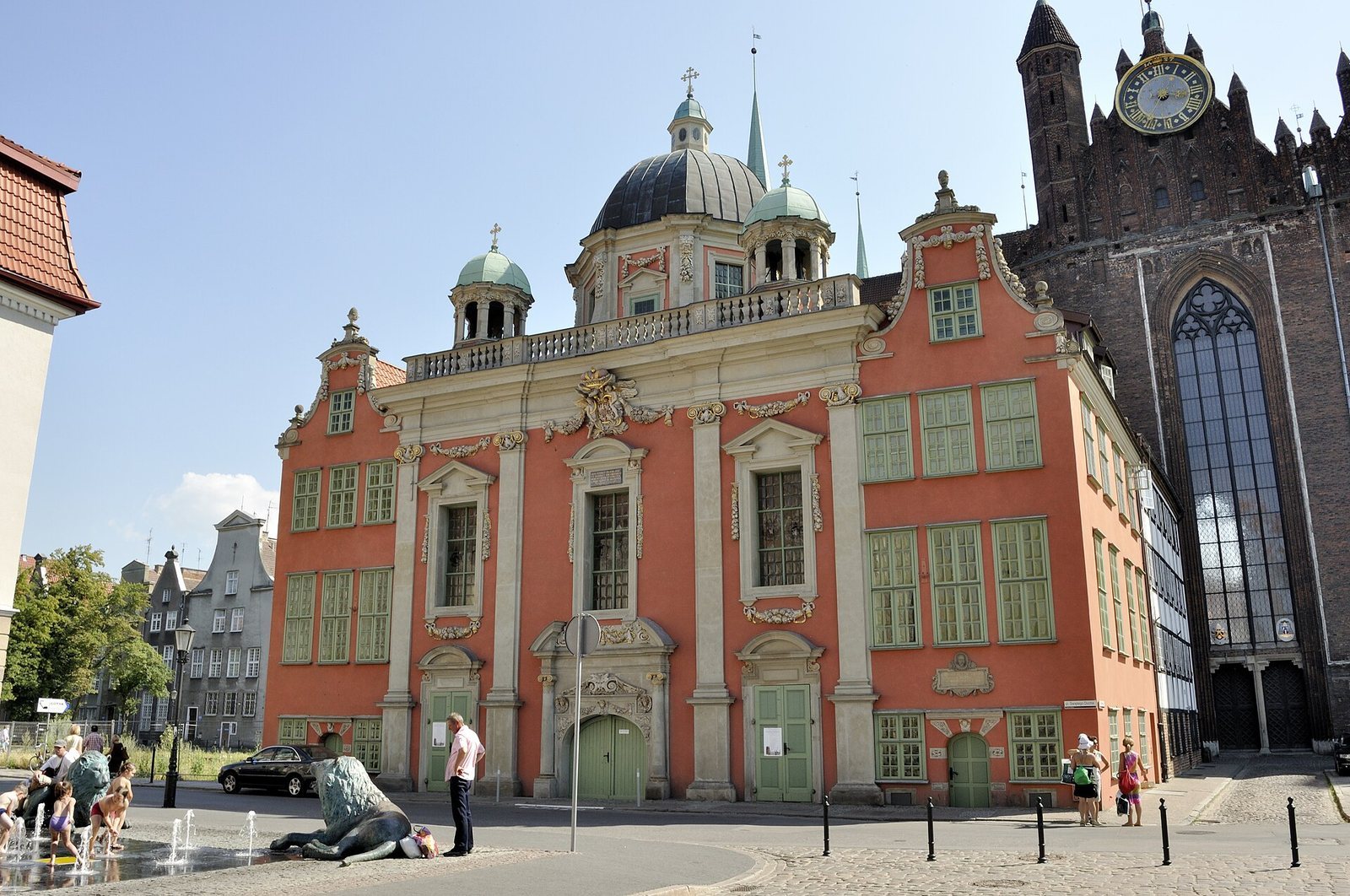
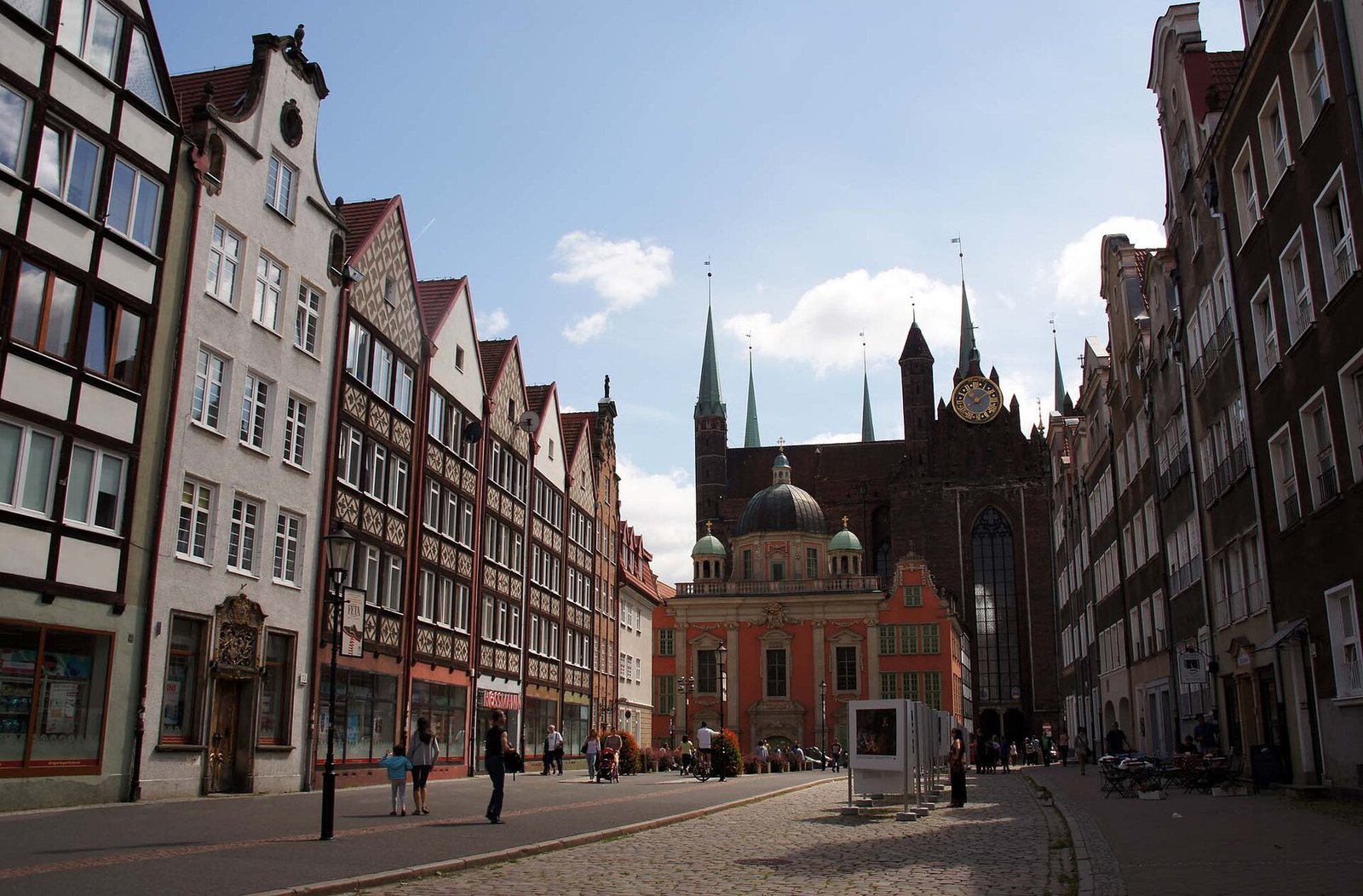
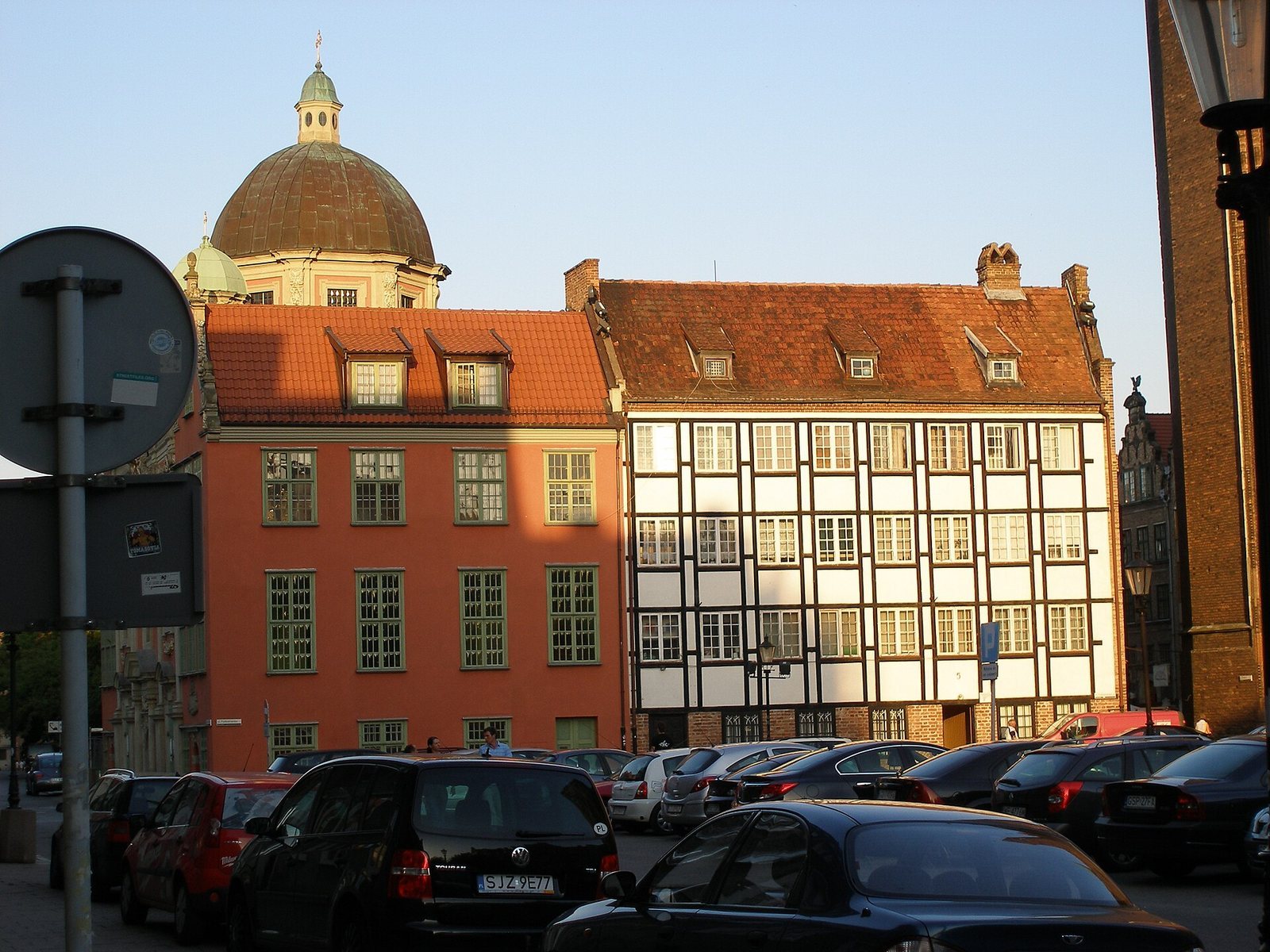
The north-facing chapel stands between two smaller townhouses in Gdańsk’s Main City, where it is the only Baroque church. Two pilasters, shallow columns attached to a wall, distinguish its façade from the neighboring buildings; two more set off the central portal from the other two entrances. A large dome and two smaller dome-like structures rise above the façade. Its ornamental cartouche, a framed panel, displays the coat of arms of the Polish-Lithuanian Commonwealth during Sobieski’s reign, and a memorial plaque to the king is set into the façade. Tylman van Gameren was the architect, Barthel Ranisch the builder, and Andreas Schlüter designed the interior.