St Andrew’s Church, Burnham-on-Sea: Parish Church and Navigation Light
Site at a Glance
- Rating
- 4.7
- Popularity
- Medium
- Country
- United Kingdom
- Primary era
- Medieval
- Eras represented
- Medieval, Modern
- Civilizations
- British, English
- Site type
- Religious
- Remains
- Church
On this page8 sections
History
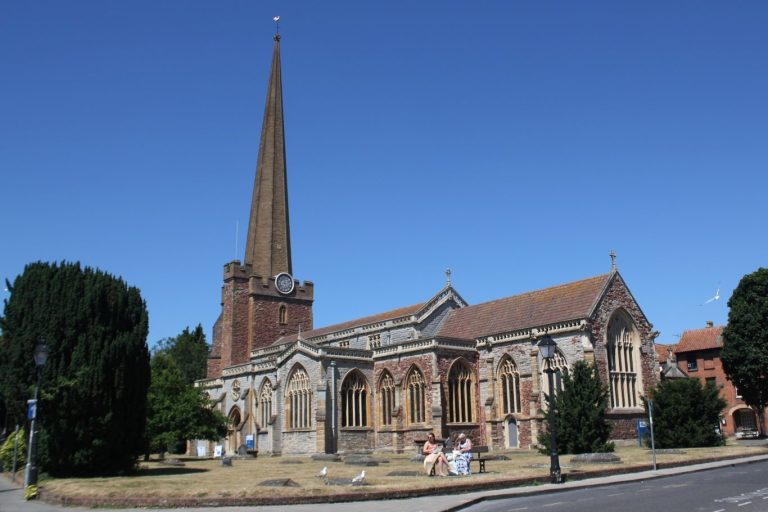
St Andrew’s Church is the Church of England parish church of Burnham-on-Sea, United Kingdom. A church has occupied the site since the late 11th century, and its history connects parish worship with efforts to guide vessels along a hazardous stretch of the Bristol Channel coast.
Medieval origins and later changes
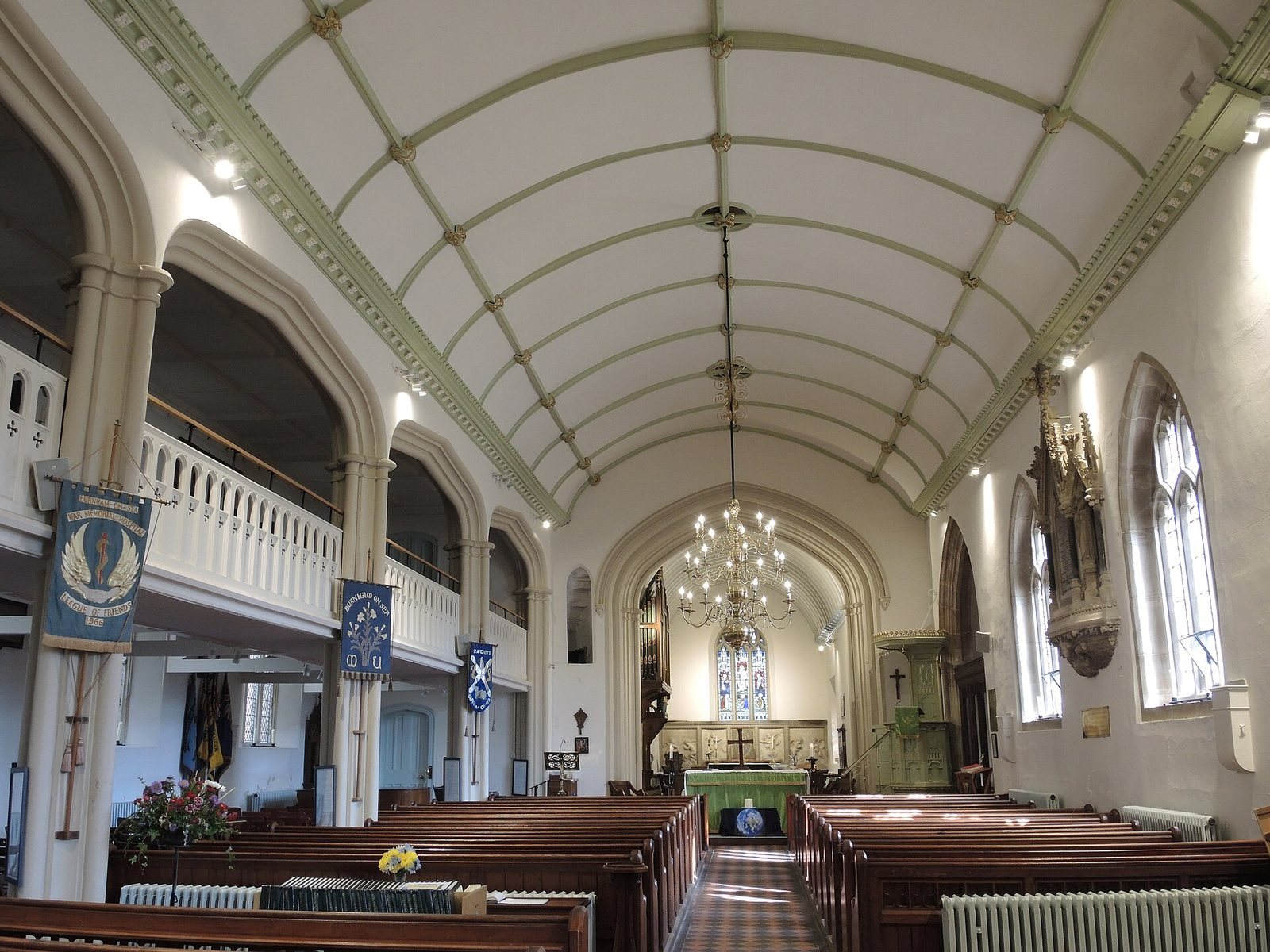
Between 1305 and 1314, the earlier church was either replaced or substantially altered. The building underwent further changes in 1838, when a north aisle and gallery were added and the chancel arch was modified. The chancel was remodelled in 1878.
Since 1949, the church has held Grade I listed status, the highest category of listed-building protection in England.
Lights for the coast
During the 18th century, a light on the church tower helped fishing boats find their way into the harbour. Local vicars John Goulden and Walter Harris raised subscriptions to replace the light in 1764 and 1799 respectively. A separate, four-storey round light tower was completed beside the church in 1801. The vicar David Davies contributed £20, with local merchants and shipowners also helping to pay for it.
In 1813, because the light income could not cover maintenance, Davies was authorised to collect dues under a 100-year lease. Around 1829, the remaining 85 years of the lease were sold to Trinity House, the British maritime institution responsible for aids to navigation. Trinity House took over and improved the tower. Davies used the sale proceeds to improve the area with the aim of encouraging its development as a spa town.
Trinity House operated the light until 1832, when the High and Low lighthouses replaced it. The round tower was then taken out of service and shortened to distinguish it from the High Lighthouse. The red light on the church was associated with Burnham Low. These lights served a dangerous coast near the River Parrett estuary, where mudflats and shifting sands posed a risk to shipping. At Burnham-on-Sea, the tide can retreat up to 2.4 km, and the tidal range reaches 15 m, exceeded only by that of the Bay of Fundy.
Carvings brought from royal and religious settings
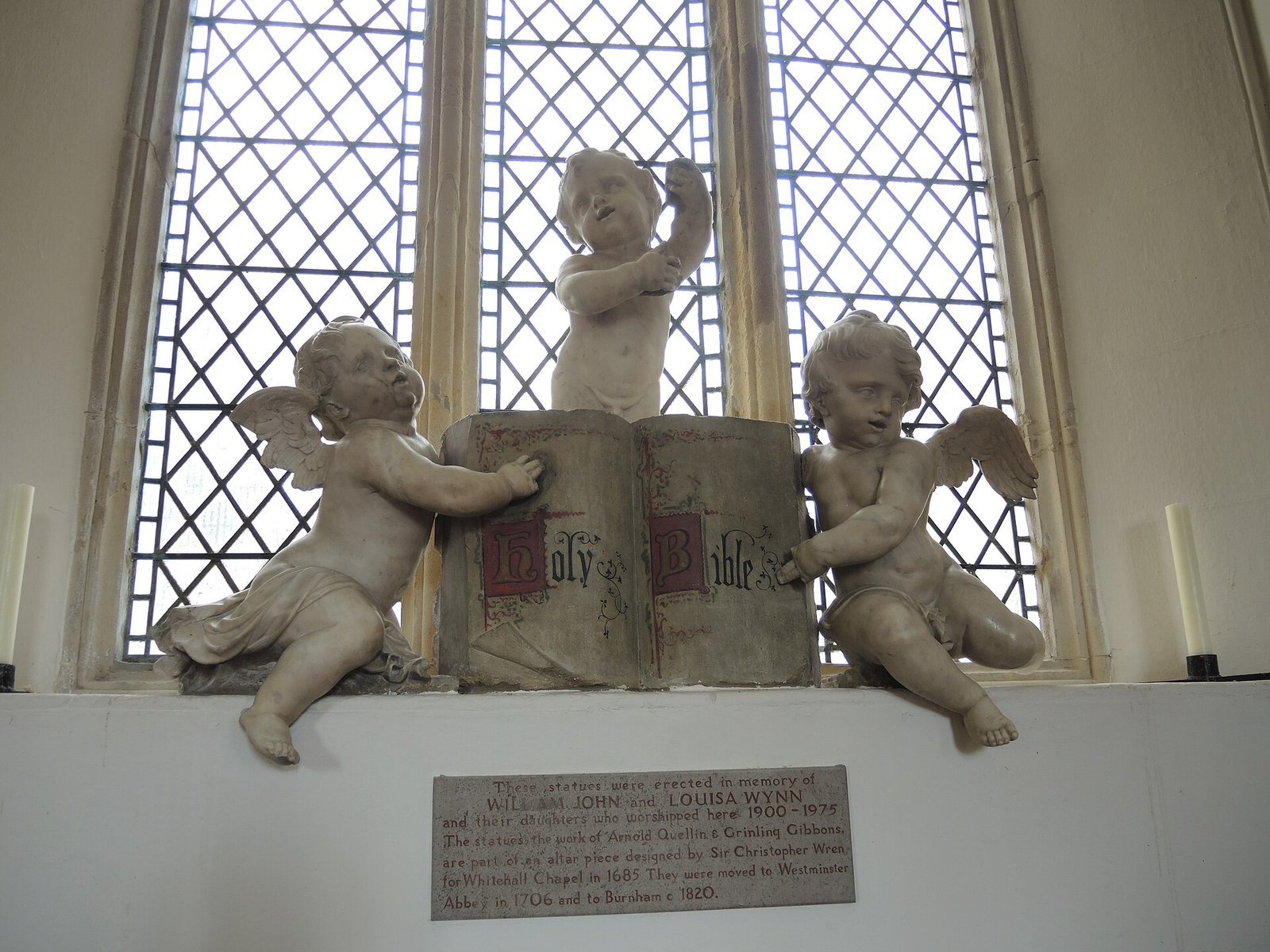
The church’s marble carvings began as part of an altar commissioned by James II in 1685 for the private chapel at the Palace of Whitehall, a royal residence in London. The English architect Christopher Wren designed them as part of a larger sculptural project by Grinling Gibbons, a sculptor and woodcarver, and his assistant Arnold Quellin, a sculptor from Antwerp. In 1706, the carvings were taken to Westminster Abbey and placed behind its High Altar. Walker King, then Bishop of Rochester and vicar of Burnham-on-Sea, later acquired them and brought them to Burnham in the late 18th or early 19th century. He wrote a pamphlet about the carvings, which was sold to raise money for charity.
Remains
Church fabric
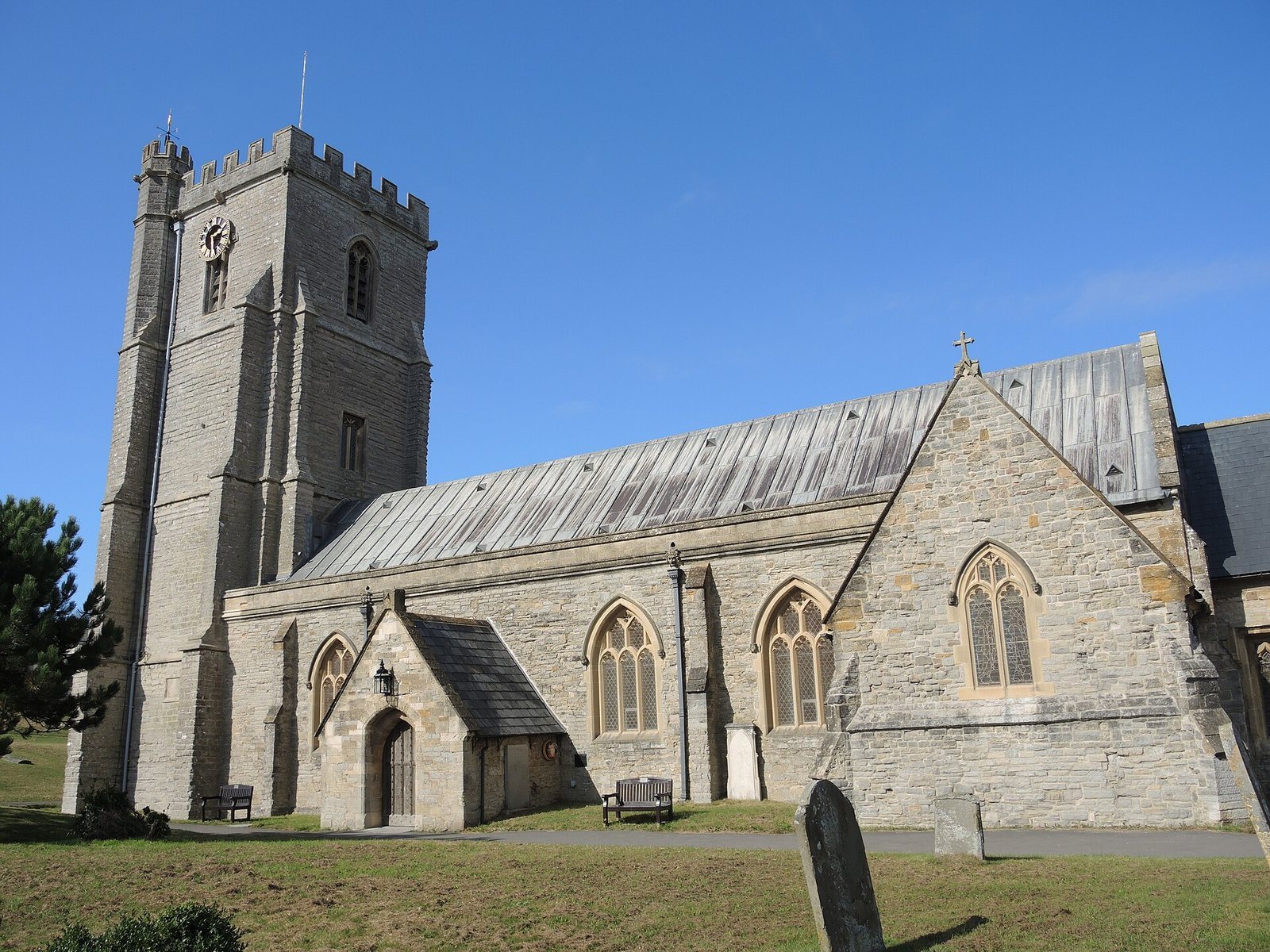
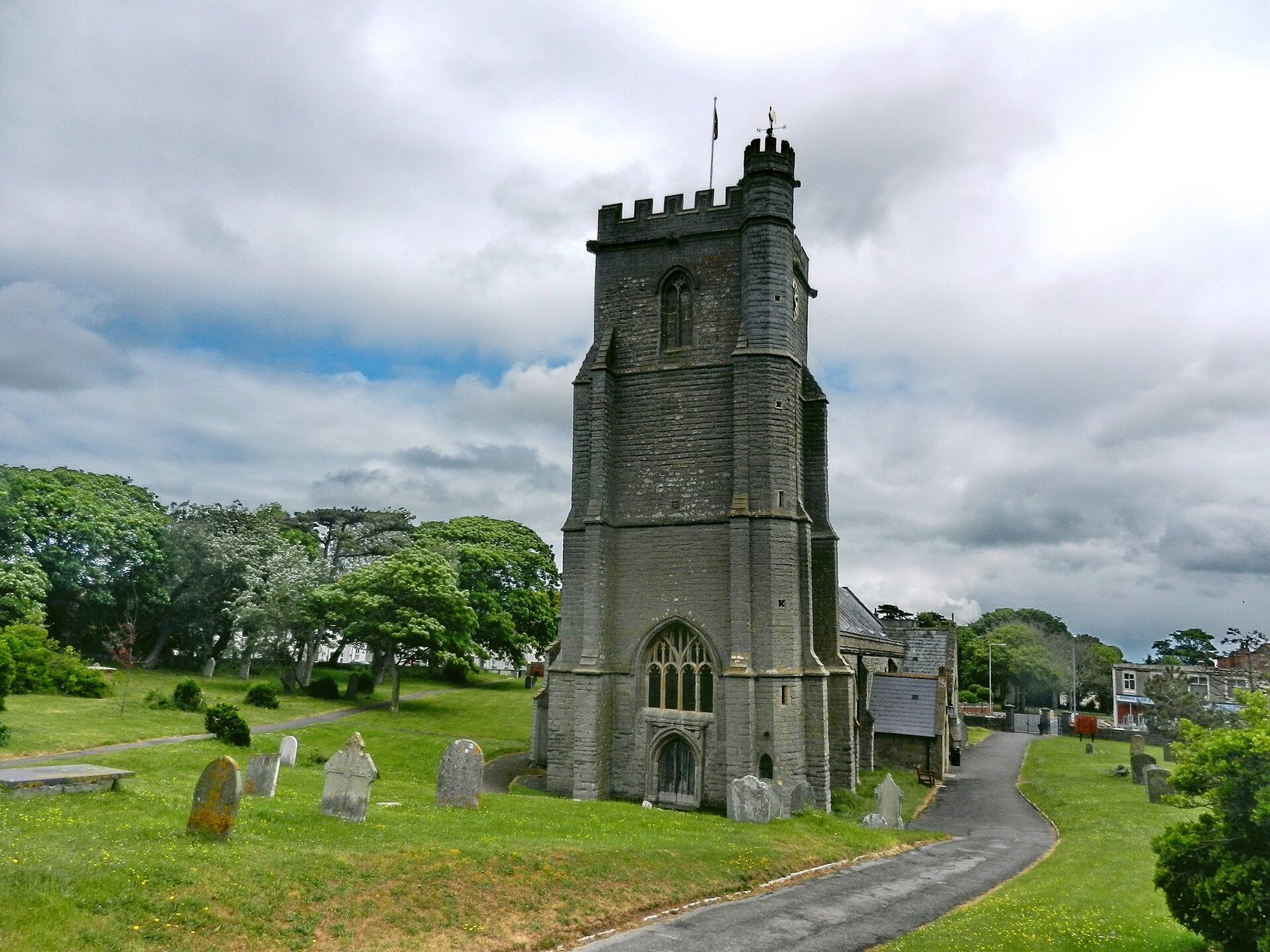
The church is arranged around a nave, the main body, and a chancel, the area around the altar, separated by a chancel arch. Its surviving older fabric includes the south transept, a crosswise section of the church, the arch over the south doorway, a holy water stoup, or vessel, and a consecration cross marking the church’s dedication. The tower dates to the late 14th century, while the nave dates to the late 14th or early 15th century. The north aisle and raised gallery form part of the later fabric. The tower stands about 24 m high and leans markedly. A vertical line dropped from its north side would reach the ground about 0.91 m from the building. Poor foundations are thought to have caused the lean.
Navigation structures and lights
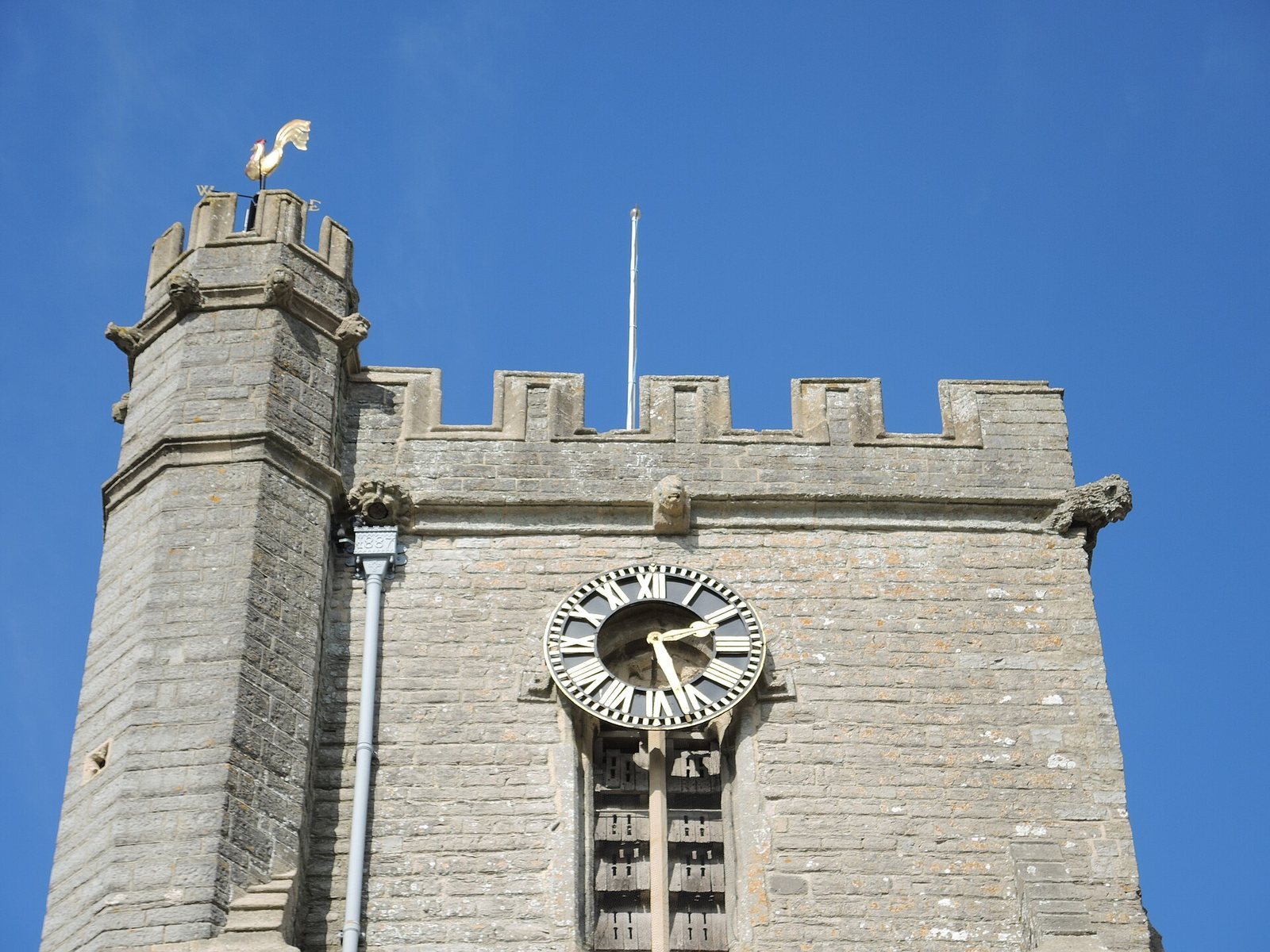
The round tower beside the church survives in its shortened, two-storey form. A red directional light remains on the church’s weather vane and operates automatically. Its stated height is 11 m; its focal point is 12 m above sea level, and its range is three nautical miles.
Carvings and bells
The surviving altar carvings are distributed through the church. The principal panels are behind the altar, while other fragments appear in different parts of the main body. The original arrangement covered the whole east wall behind the altar. The church also has a ring of eight bells cast at different times by the Whitechapel Bell Foundry, a London bell-making workshop.