St Barnabas Church, Oxford: A Victorian Romanesque Parish Church
Site at a Glance
- Rating
- 4.5
- Popularity
- Medium
- Country
- United Kingdom
- Primary era
- Modern
- Eras represented
- Modern
- Civilizations
- British
- Site type
- Religious
- Remains
- Basilica
On this page6 sections
History
Foundation and consecration
An associated girls’ and infants’ school was built on a Cardigan Street site in 1857. St Barnabas Church was founded in 1868 in Jericho, Oxford, United Kingdom, to serve the spiritual and practical needs of poor and working people in a rapidly growing Victorian city. Its founders, Thomas and Martha Combe, supported the Oxford Movement, a nineteenth-century Church of England movement that emphasized historic catholic traditions and sacramental life. Thomas was superintendent of the nearby Oxford University Press.
Local landowner George Ward donated the church land. The parish was formed in 1869 from St Paul’s parish, which had itself been created from parts of St Thomas and St Giles. Father Montague Noel became its first parish priest. Bishop Samuel Wilberforce of Oxford consecrated the church on 19 October 1869. Thomas and Martha Combe were later commemorated with a blue plaque installed by the Oxfordshire Blue Plaques Board. St Barnabas Church of England Primary School is now at the end of Cardigan Street, on Hart Street.
Parish changes and churchmanship
In September 2015, St Barnabas joined the neighbouring parish of St Thomas the Martyr to form the parish of St Barnabas and St Paul, with St Thomas the Martyr, Oxford. St Barnabas became the parish church, while St Thomas served as a chapel of ease, a church for part of a parish separate from its main church. Father Jonathan Beswick was the new parish’s first vicar.
St Barnabas belongs to the Church of England and the Diocese of Oxford. Its traditionalist Anglo-Catholic churchmanship, a strand of Anglicanism emphasizing catholic practices and beliefs, continues the tradition of its foundation. The church is Grade I listed, England’s highest category for buildings of exceptional architectural or historic interest.
Historically, St Barnabas adopted two resolutions that prevented women from presiding at Holy Communion or being appointed incumbent; St Thomas had adopted all three such resolutions. From 2018 to 2023, the parish received joint episcopal oversight from the Bishops of Oxford and Ebbsfleet. After the Bishop of Ebbsfleet became a Roman Catholic in 2022, the Bishop of Oswestry served as provincial episcopal visitor, a bishop providing oversight to parishes unable to accept women priests and bishops.
The parish began consulting in November 2022 on accepting women’s priestly and episcopal ministry. In January 2023, its Parochial Church Council voted by a majority to welcome women priests and bishops. On 14 May 2023, the Reverend Dr Melanie Marshall presided at the Parish Mass, becoming the first woman to do so at St Barnabas.
Remains
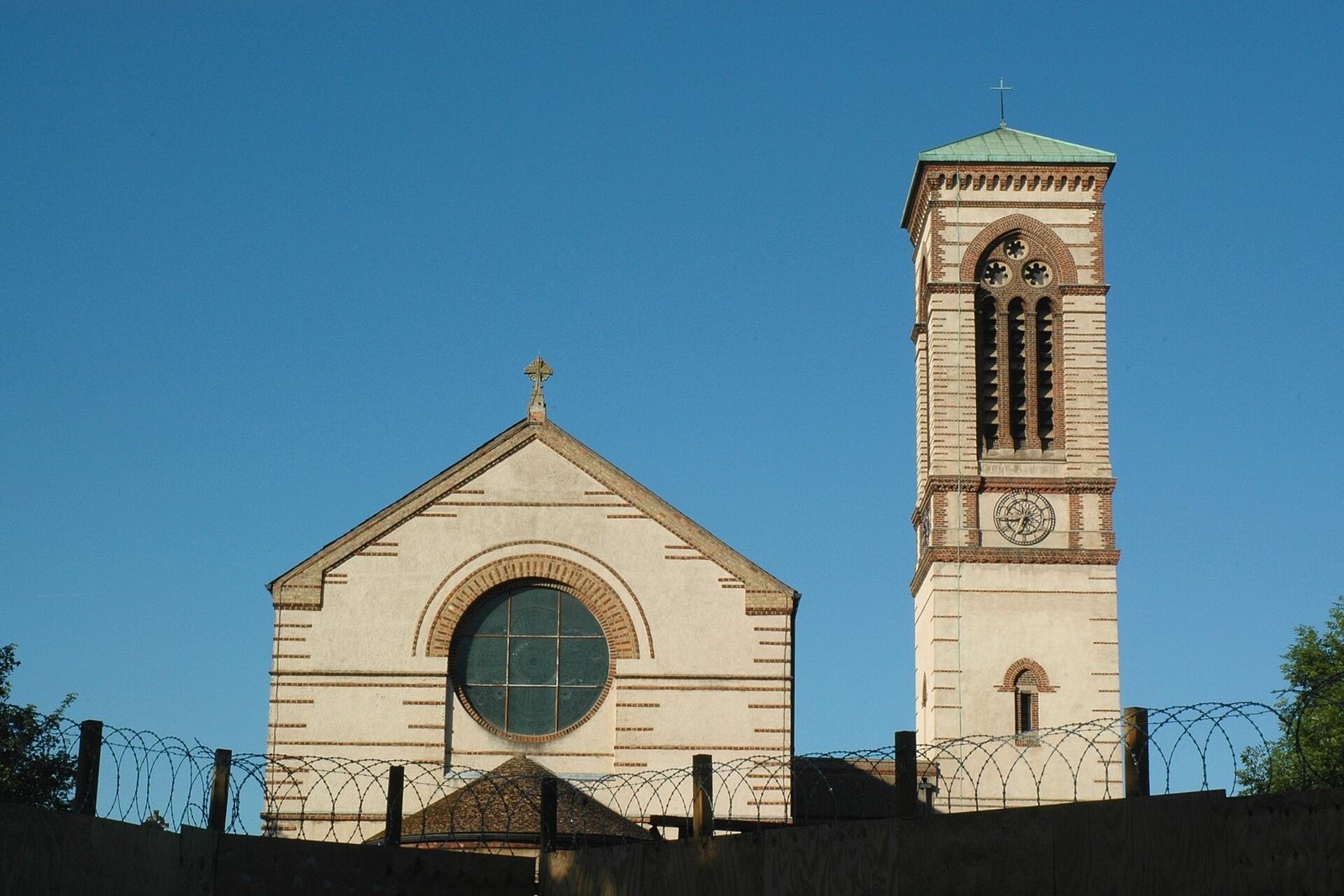
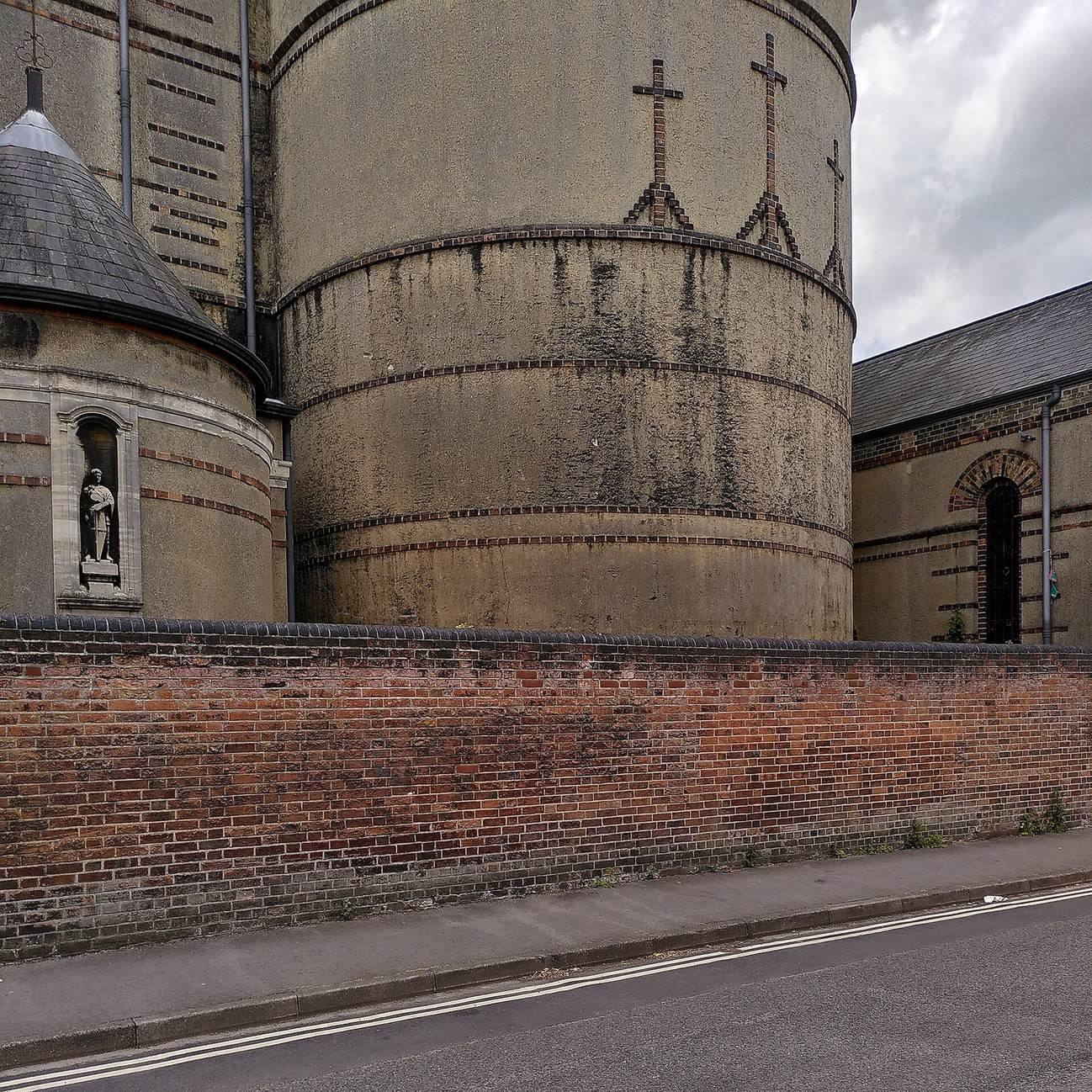
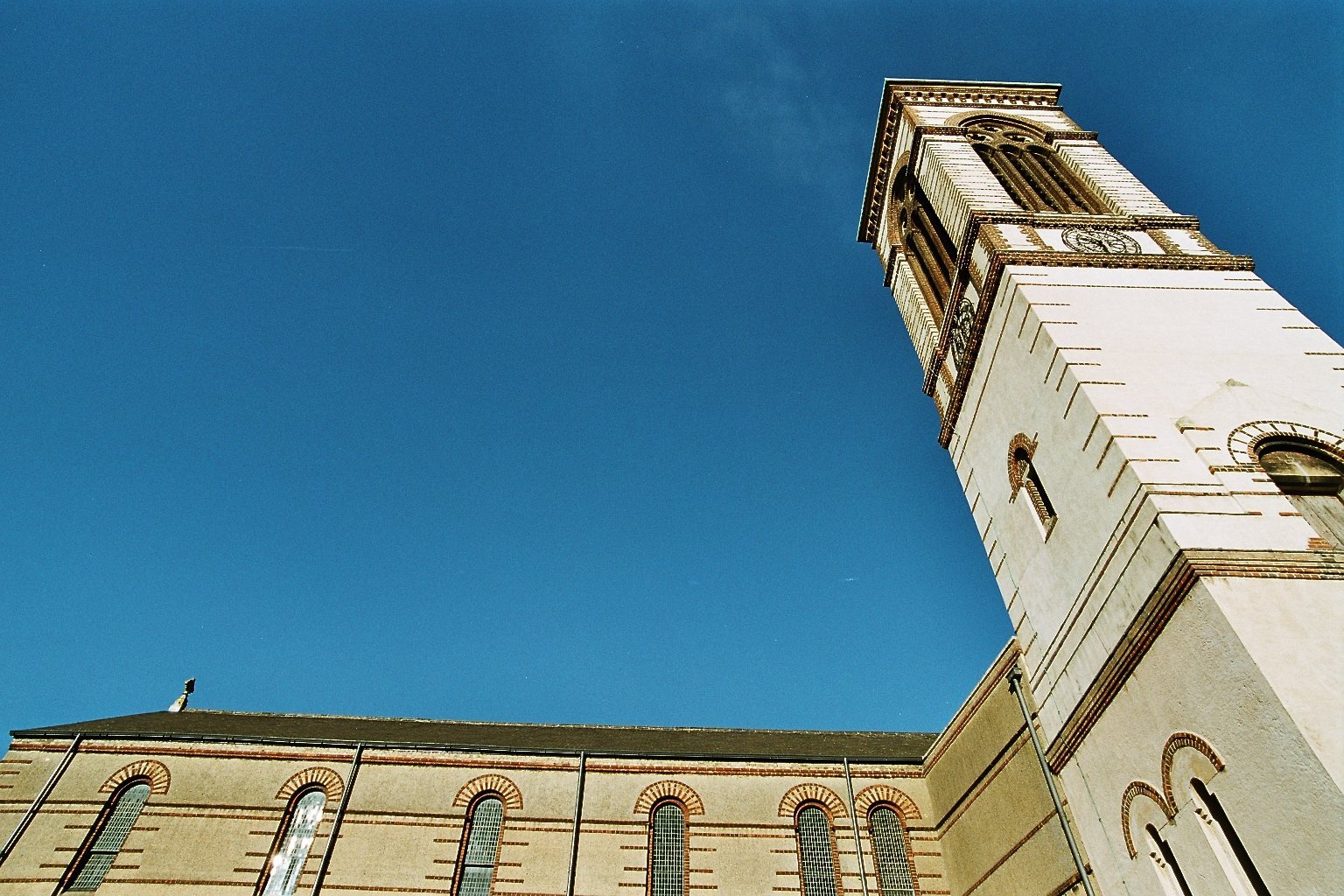
The church follows a basilica plan, organized around a central nave and side aisles. Its Victorian design combines Romanesque architecture, a style characterized by rounded arches and substantial masonry, with Italianate features inspired by Italian architecture. Designed by Sir Arthur Blomfield, it drew on San Clemente in Rome, San Francesco and Sant’Apollinare Nuovo in Ravenna, and Santa Maria Assunta in Torcello. The church is informally known as the “Oxford Basilica.”
Bell tower
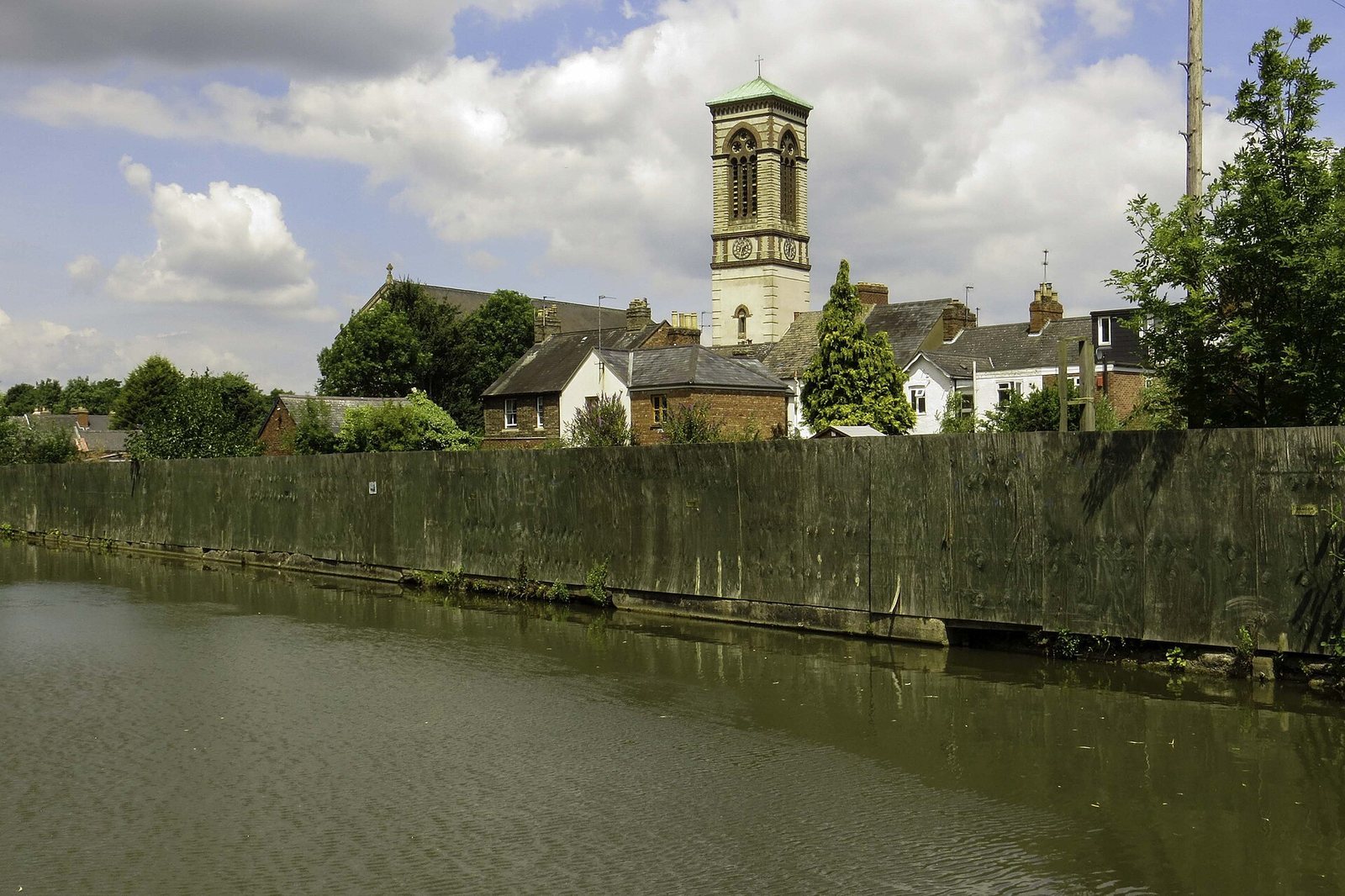
The square Italianate bell tower, completed in 1872, is visible from the surrounding area. A ring of ten tubular bells sounds the hours and quarter-hours.
Pulpit
Heaton, Butler, and Bayne added the present pulpit in 1887, with panels painted by Charles Floyce. It replaced an earlier cylindrical timber pulpit with columns and a moulded cornice. That earlier pulpit is now at St Peter’s, London Docks.