Visovac Monastery: A Monastic Complex on Visovac Island, Croatia
Site at a Glance
- Rating
- 4.7
- Popularity
- Medium
- Country
- Croatia
- Primary era
- Early Modern
- Eras represented
- Medieval, Early Modern
- Civilizations
- Hungarian, Kingdom of Croatia, Venetian
- Site type
- Religious
- Remains
- Monastery
On this page11 sections
History
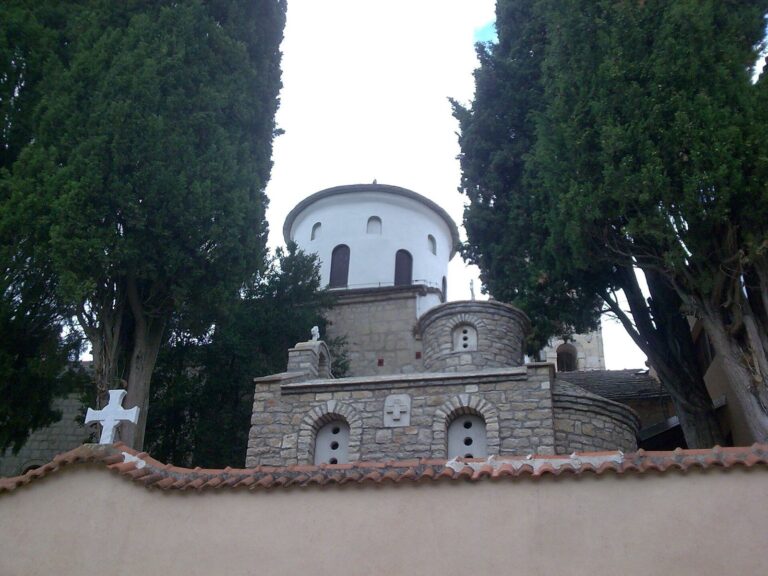
Visovac Monastery is a monastic complex on Visovac Island in Croatia. Its history began in the fourteenth century, when Augustinian hermits, members of a religious order following the Rule of Saint Augustine, established a small monastery and a church dedicated to the Apostle Paul, an early Christian missionary.
From Augustinian foundation to Franciscan house
In 1345, King Louis I of Hungary granted Rog and Visovac Island to Count Budislav Ugrinić. Soon afterward, Augustinian hermits settled on the island under the protection of Croatian nobles. A manuscript tradition connected the island with a visit by Paul, and it was also associated with the name Saint Paul’s Reef.
The transfer of Kamičak and surrounding estates followed a dispute over inheritance. When Count Ivaniš, the last member of the Nelipić family, died in 1434, his adopted son-in-law Anž Frankopan inherited the estates, but the king rejected his claim. Franciscans arrived on Visovac in 1440 after leaving parts of Bosnia during the Ottoman advance into southeastern Europe. They remained on the island. In 1445, Grgur Utješinović took control of Kamičak and gave Visovac to the Franciscans, who enlarged and adapted the monastery.
Franciscan community and devotion
The Franciscans belonged to the Province of the Most Holy Redeemer, a regional administrative body within the order based in Split. The province supported the union of Dalmatia with the rest of Croatia and closer ties with Austria. The monastery was first within the Diocese of Skradin, a Catholic district overseen by a bishop, and later within the Diocese of Šibenik. In 1800, it was recorded as belonging to the Redemptorists, a Catholic religious congregation.
For centuries, the monastery has been dedicated to Our Lady of Mercy, a title for Mary, the mother of Jesus. Visovac is also known as Mother of God Island. A legend associated with the story of Miljenko and Dobrila says that Miljenko hid in the monastery.
Attack and rebuilding
In 1645, Ottoman forces attacked the monastery and hanged two elderly friars from elm trees. The monastery was abandoned and burned. It had been partly rebuilt by 1700, and a new monastery was constructed in the eighteenth century. The complex underwent a full restoration in the twentieth century.
Remains
Island setting
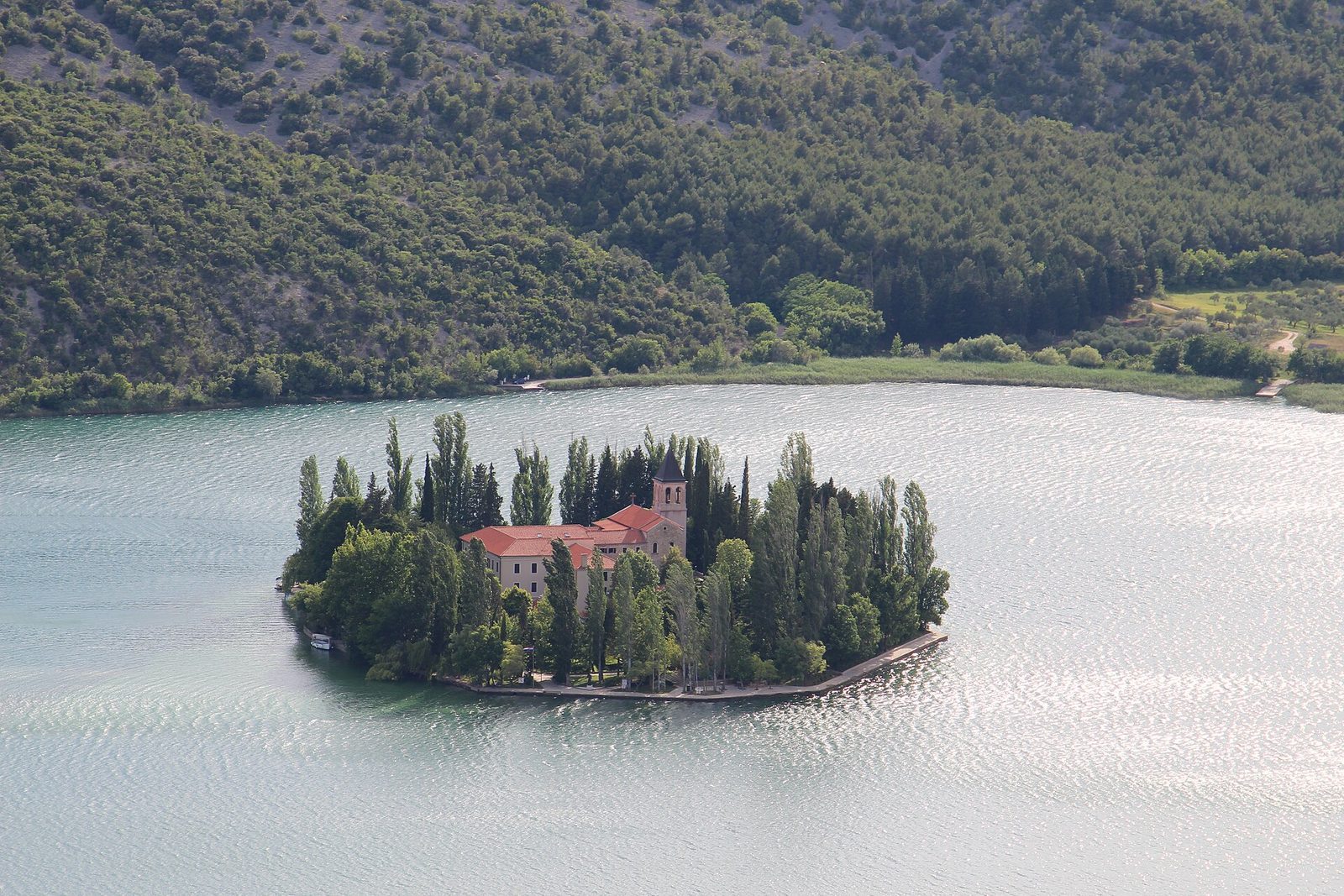
The monastery stands on Visovac Island, in the course of the Krka River near the centre of Lake Visovac. The roughly oval island is surrounded by the river and measures about 170 by 120 metres. Its area is 0.017 square kilometres, and its highest point reaches 49.6 metres. The island lies about 350 metres from the northeastern shore and 250 metres from the southwestern shore. An elongated, shallow, triangular shelf adjoins its southeastern side.
Buildings and furnishings
Church and organ
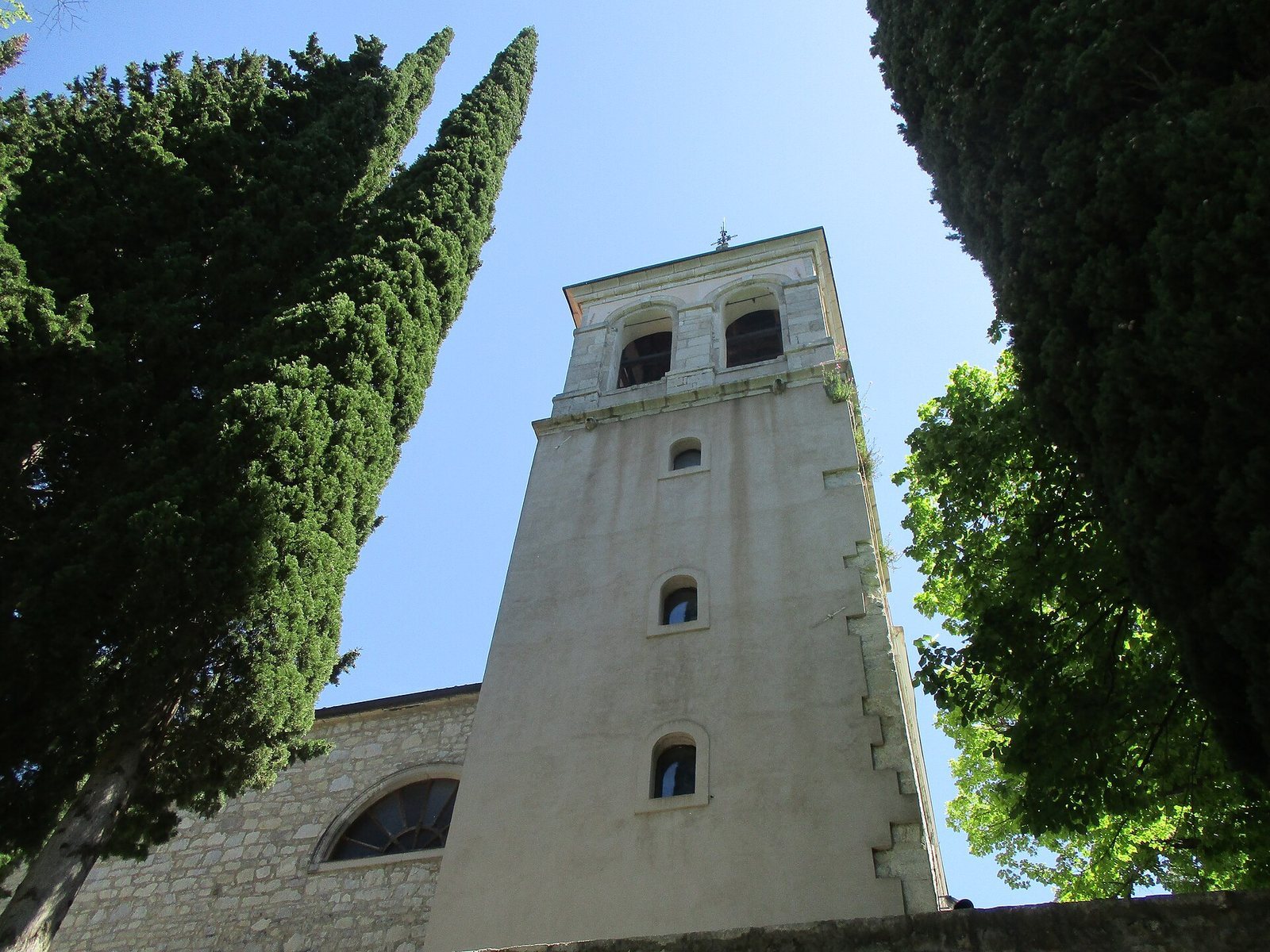
The present church dates to the seventeenth century. It contains an Italian organ probably built by F. Dacci in 1771. The keys transmit movement to the pipes through physical linkages, while sliding controls direct air to groups of pipes.
Wellhead
The oldest preserved part of the complex is a fourteenth-century wellhead, the structure around the opening of a well.
Cloister
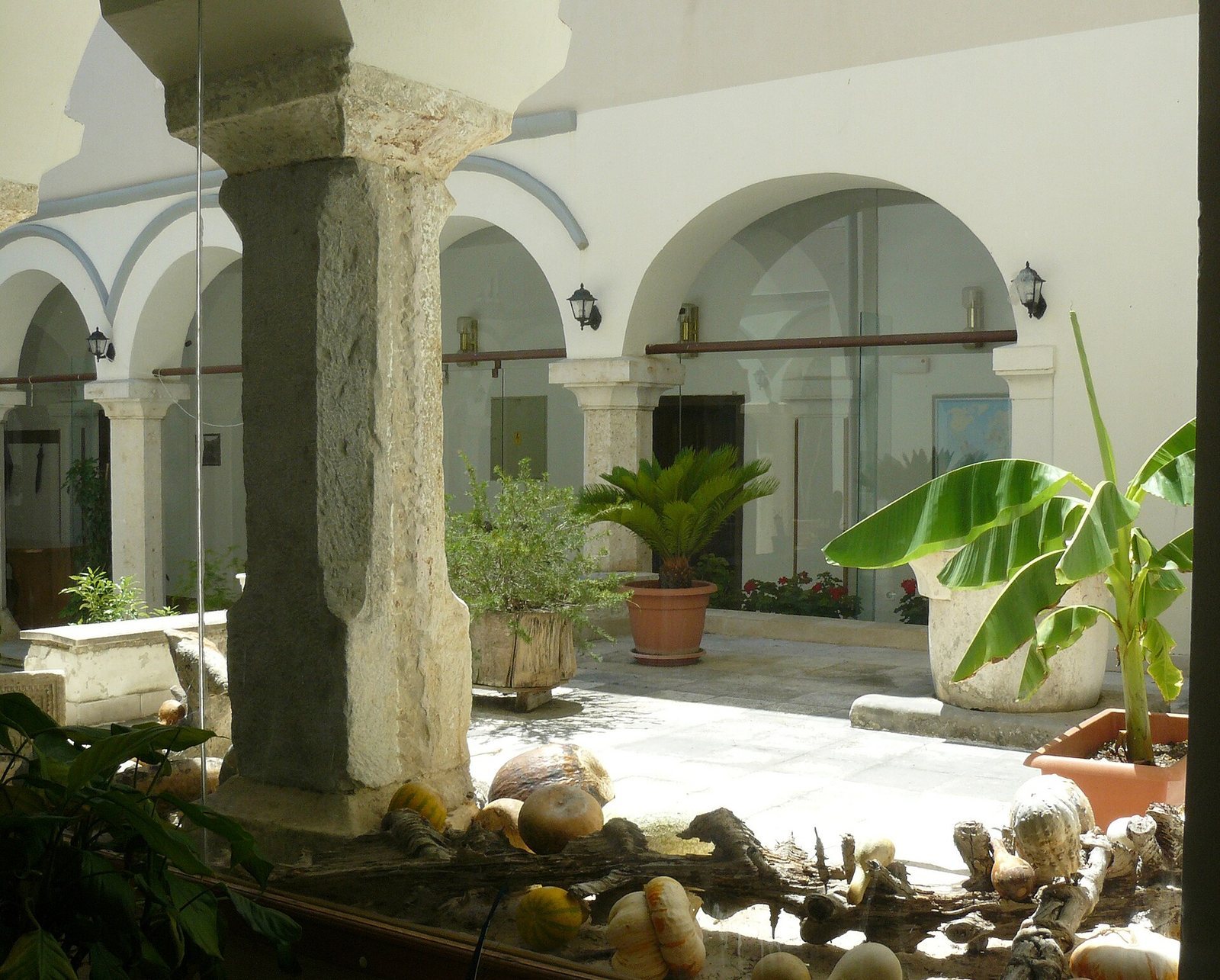
Sections of the fifteenth-century cloister, the covered walkway around a monastery courtyard, also survive.
Library and collections
The monastery holds ecclesiastical vestments, books, artworks, and documents, as well as a large library of historical manuscripts and rare books. Among its holdings is an incunable, a book printed before 1501: an edition of Aesop’s fables printed in Brescia in 1487 by the Lastovo printer Dobrić Dobričević. The collection also includes documents known as the sultan’s edicts and a sabre that belonged to Vuk Mandušić, celebrated as a hero in Serbian epic poetry.