Al-Shibani Church: Aleppo’s Former College and Cultural Centre
Site at a Glance
- Popularity
- Medium
- Country
- Syria
- Primary era
- Medieval
- Eras represented
- Medieval, Modern
- Civilizations
- Ottoman
- Site type
- Civic
- Remains
- School
On this page7 sections
History
Early church and Ottoman-era ownership
Al-Shibani Church is a historic complex in Aleppo, Syria. Its present building was constructed in the 12th century, on a site with an earlier religious history.
Before the Islamic period, the site was occupied by one of ancient Aleppo’s four principal churches. After Islamic rule began, part of the church was assigned to the Glassmakers School, an Islamic school. By the end of the 16th century, the property belonged to Ahmet Pasha Matyab Zadeh, an Ottoman provincial governor. The Ottoman Empire ruled much of the Middle East and southeastern Europe for centuries. In the 17th century, the al-Shibani family acquired the site, and the building and surrounding area came to be known as Khan al-Shibani, using a term also applied to commercial inns and lodging complexes.
The Holy Land College
In the 19th century, the Franciscan Missionaries of Mary, a Catholic religious congregation, took possession of the khan and established Aleppo’s first college there, the Holy Land College. Work to rehabilitate the building began in 1853, the college opened in 1859, and the complex was completed in 1879. The institution contributed to educational and cultural life in Aleppo and Syria. Among its graduates in the late 19th and early 20th centuries were prominent politicians and writers.
A Latin Catholic church stood near the college within the complex. It was demolished in 1934, and its stones were reused to build a new Latin Catholic cathedral in Aleppo’s al-Aziziyah quarter. Completed in 1937, the cathedral was named for Saint Francis of Assisi, the 13th-century Italian religious leader associated with the Franciscan movement. That same year, the Holy Land College moved to a new site in Aleppo’s southwestern suburbs, in what is now the al-Furqan district. It operated there until 1967, when the premises became the Partisans Enrollment Institute of the Arab Socialist Ba’ath Party, a political party.
From warehouse to cultural centre
The Al-Shibani building later became state property and was used as a tobacco warehouse. It went without maintenance for more than 50 years, and warehouse use continued until 2001, when a rehabilitation plan was developed through Syrian-German cooperation. Aleppo City Council, with assistance from German Technical Cooperation, completed the rehabilitation in December 2006. The restored complex became a venue for cultural events and exhibitions.
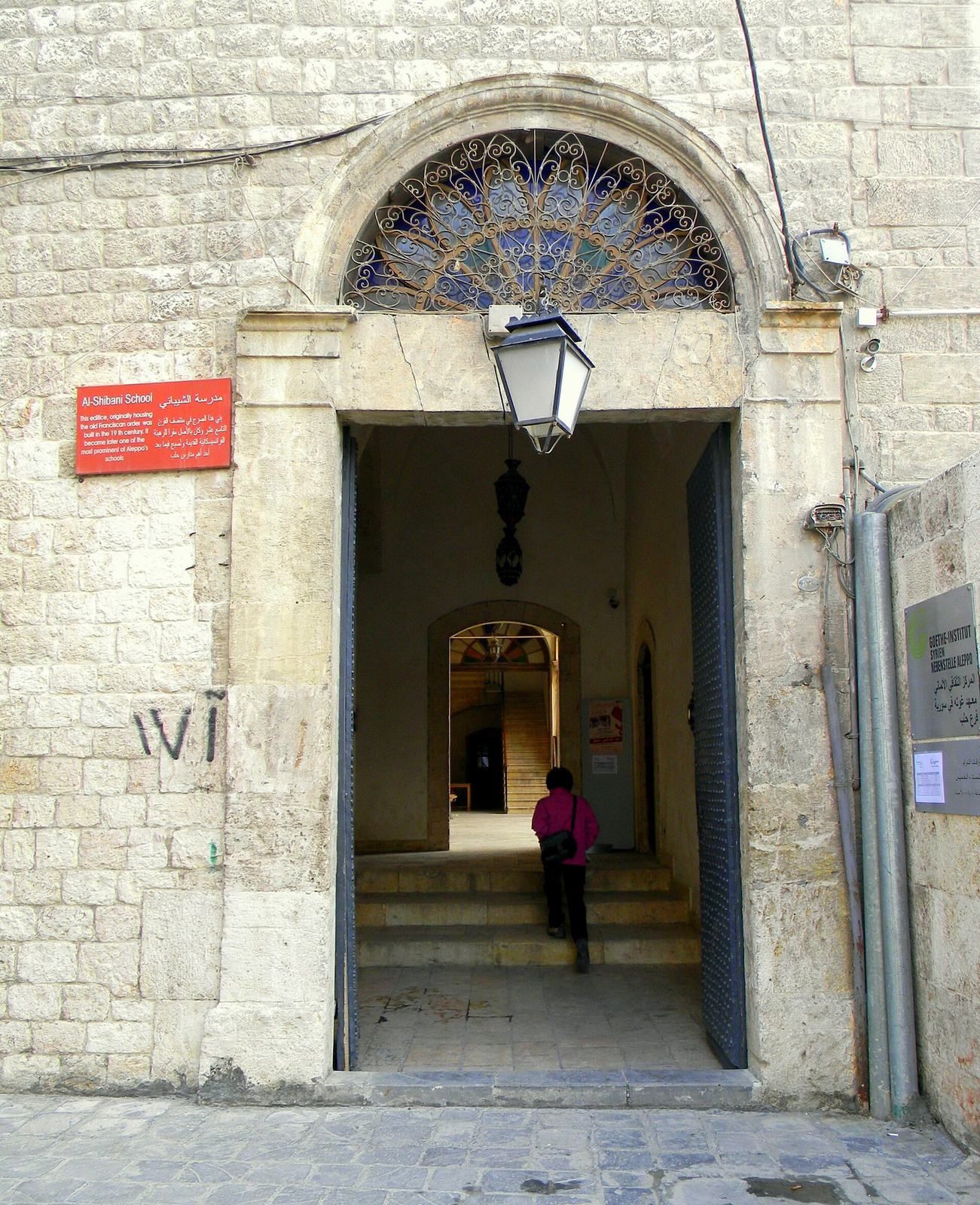
Today, the complex hosts cultural activities and houses the Aleppo offices of the Goethe-Institut, Germany’s cultural institute, and Aga Khan Cultural Services, a cultural organization. It also contains the Heritage Archive Centre of the Aleppo Archaeological Society.
Remains
Building and setting
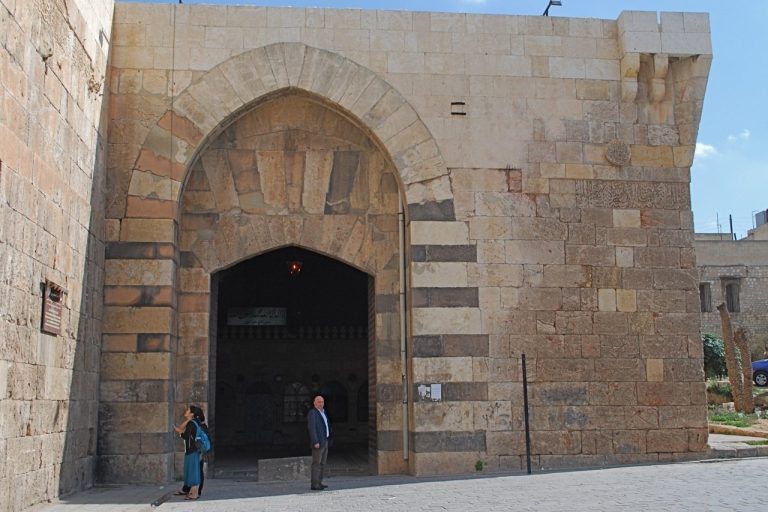
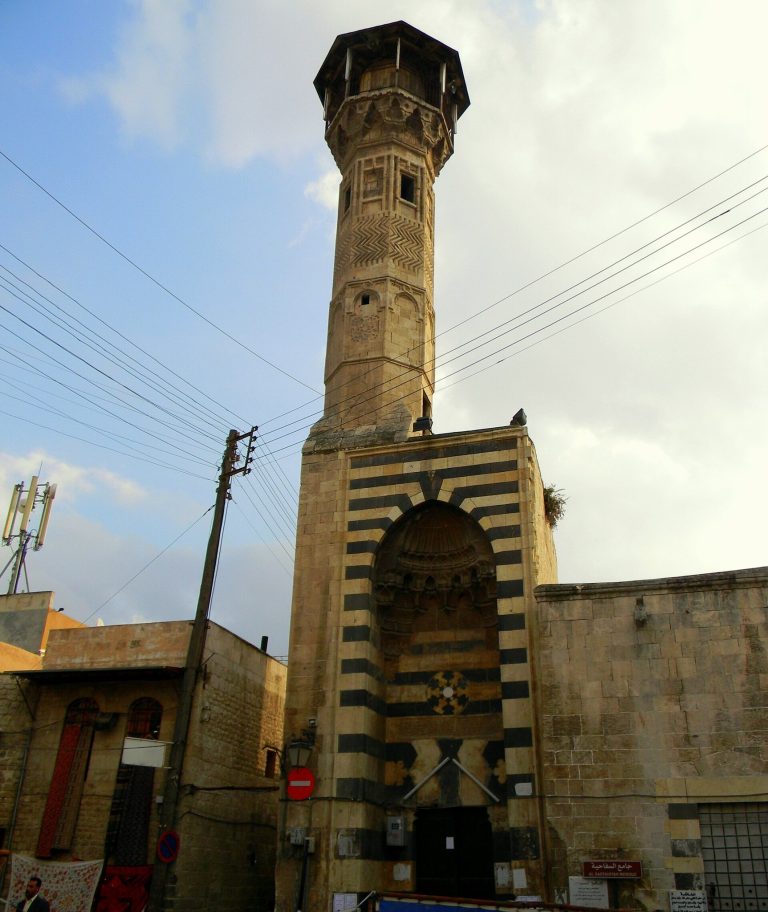
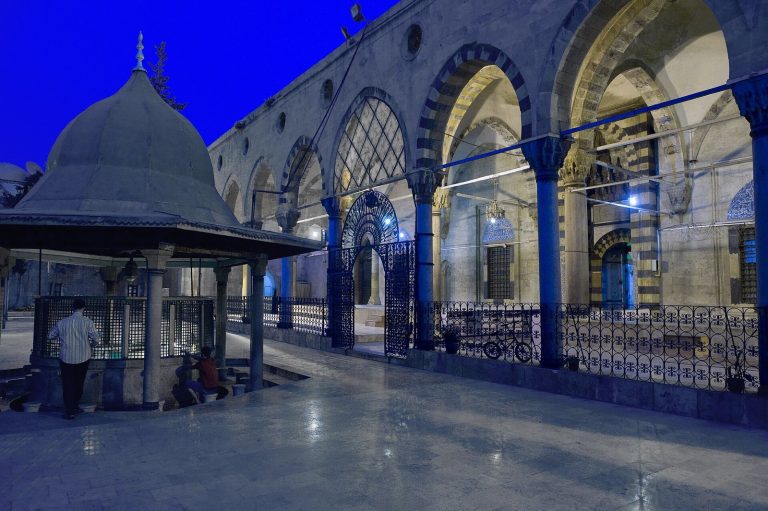
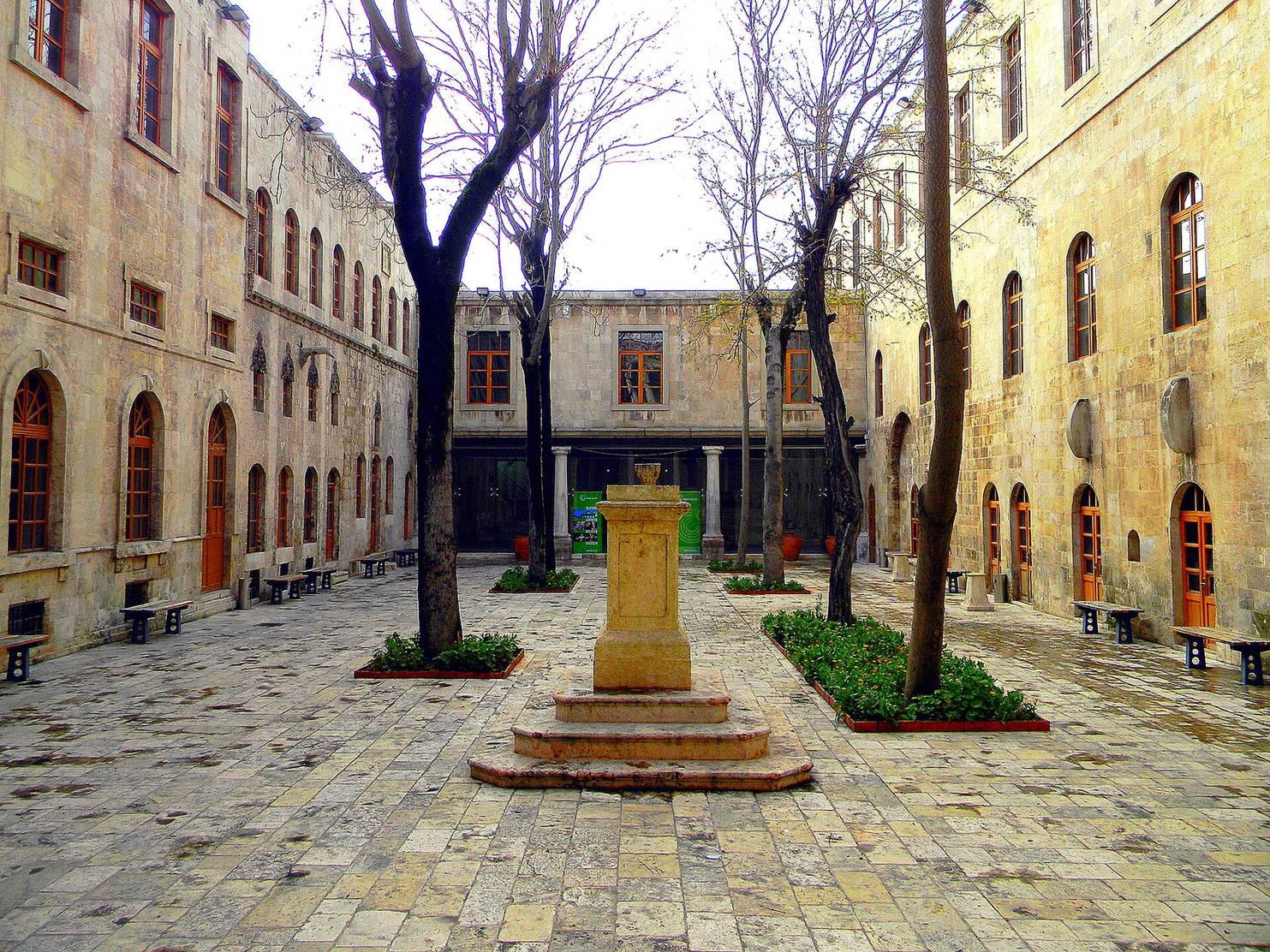
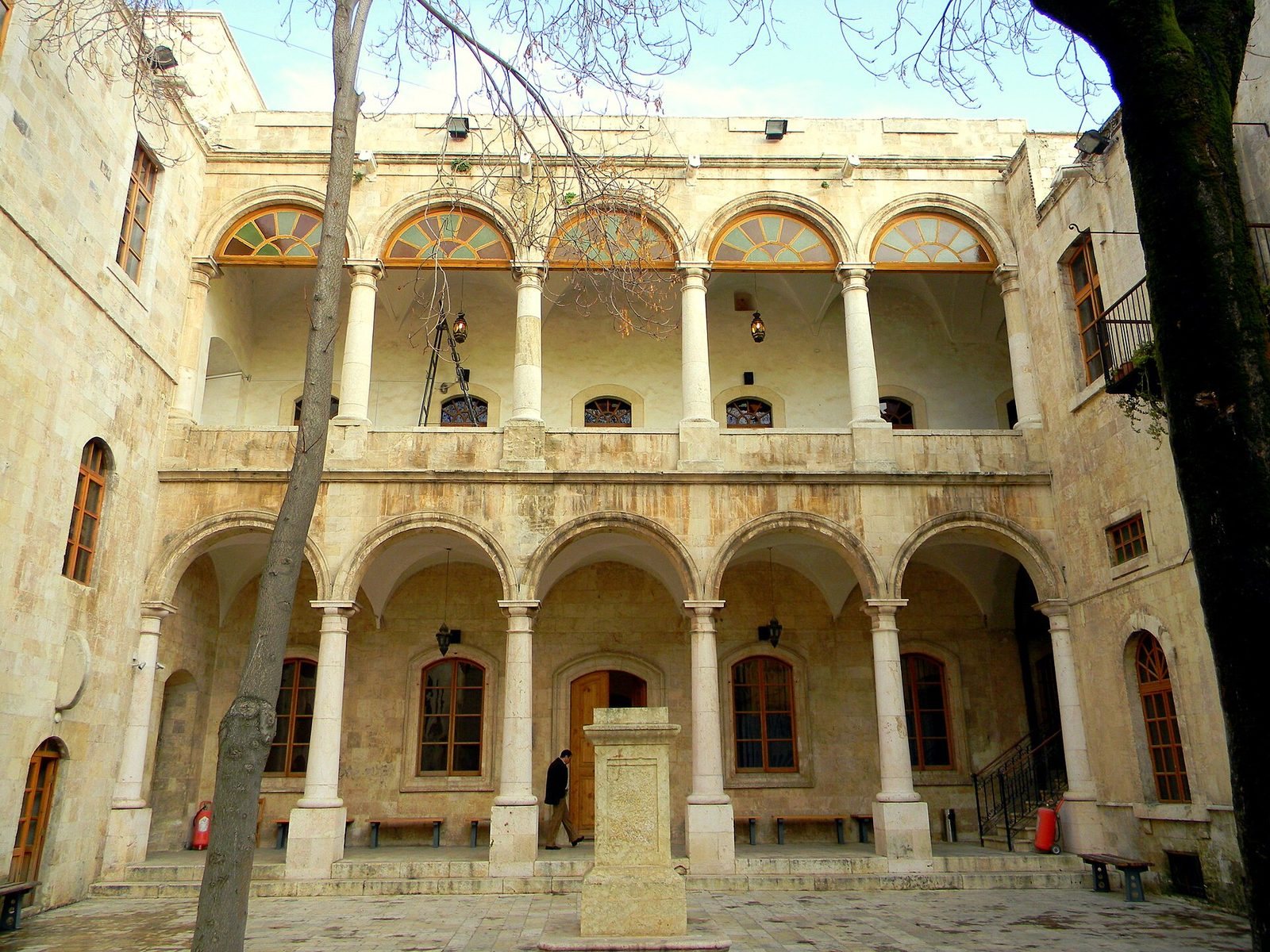
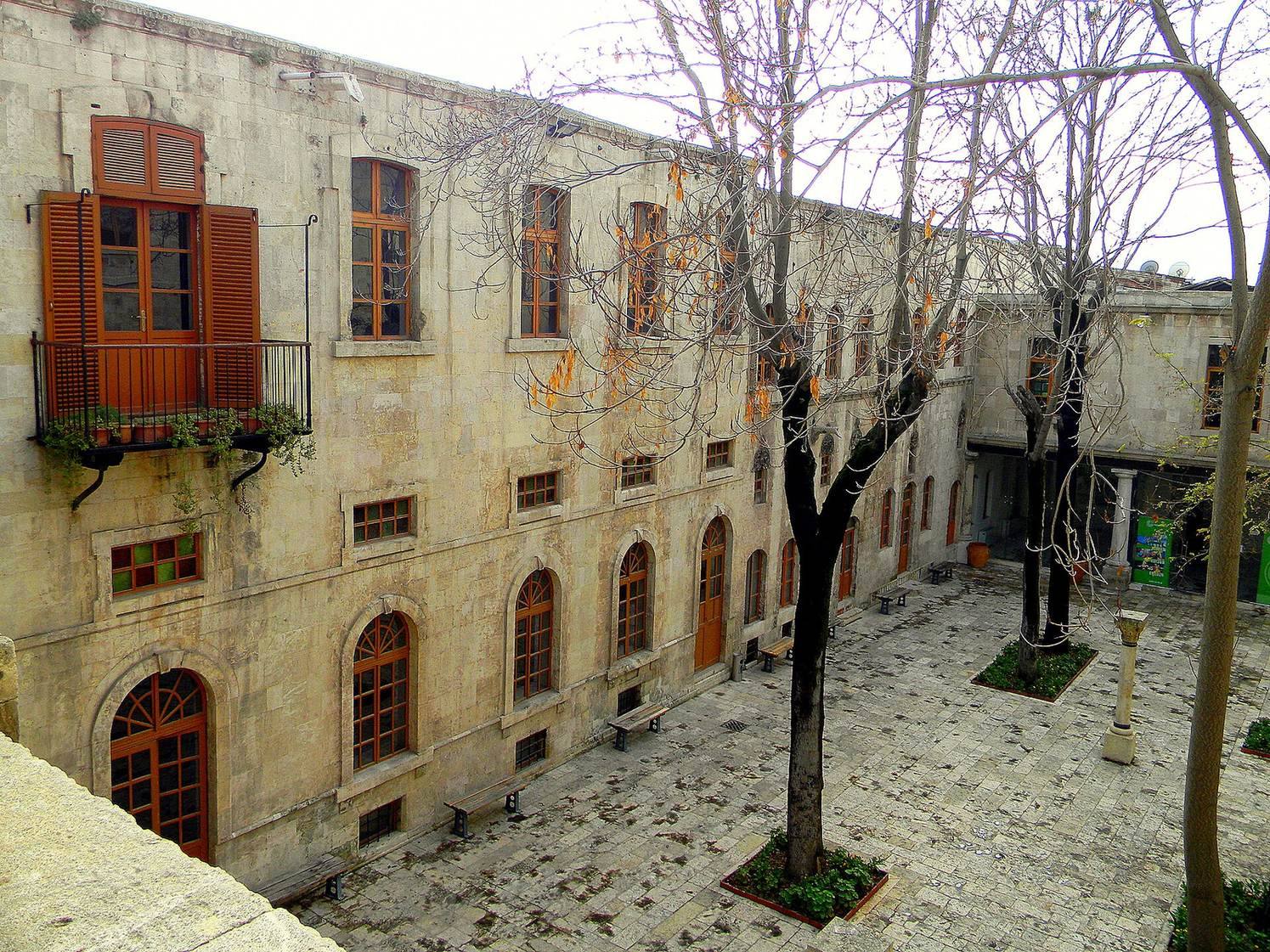
The complex stands in the al-Jalloum district of Aleppo’s Old City, west of al-Saffahiyah Mosque and south of Souq Khan al-Nahhaseen. It has two floors and a large central courtyard, as well as a main façade and an exterior courtyard. The building is a prominent example of old Aleppine architecture.
Exhibition spaces
The building contains numerous exhibition halls. A ground-floor hall houses a permanent exhibition about the rehabilitation. Another hall has been proposed as the Old Aleppo Revival Hall, intended to evoke the old city and its markets, mosques, and khans through pictures and models. These include a model of the Citadel of Aleppo and the surrounding old quarters.