St Nicholas Church: A Medieval Parish Church in Utrecht
Site at a Glance
- Rating
- 4.5
- Popularity
- Medium
- Country
- Netherlands
- Primary era
- Medieval
- Eras represented
- Medieval, Early Modern, Modern
- Civilizations
- Dutch, Holy Roman Empire
- Site type
- Religious
- Remains
- Church
On this page17 sections
History
St Nicholas Church, known in Dutch as the Nicolaïkerk, stands in Utrecht, Netherlands. Built in the early twelfth century in the Romanesque period, it became the city’s second parish church after the Buurkerk. Its parish extended beyond Utrecht to places including De Bilt and Vechten. Dedicated to St Nicholas of Myra, the church served fishermen and sailors, who regarded the saint as a protector.
Parish and religious change
In 1529, the church became a monastery church for the Carmelites, a Catholic religious order. They had been required to surrender their church and monastery, now St Catherine’s Cathedral and Catharijneconvent, to the Order of St John, also known as the Hospitallers. The Carmelites were then assigned the Nicolaïkerk.
The church was affected by the Iconoclastic Fury of 1566, a period of attacks on religious images, and Protestants took it over in 1579. It was subsequently associated with the Dutch Reformed Church and the Netherlands Reformed Church. Today it is used by the Protestant Church in the Netherlands.
Organs and musicians
A record from 1120 refers to a portable organ, though the reliability of that reference is disputed. The church may therefore have been the first in the Netherlands to have an organ. An older organ was certainly present by 1430. Peter Gerritsz made an organ for the church between 1477 and 1479, an instrument regarded as one of the most important in Dutch and European cultural history.
In 1732, ten-year-old Pieter Hellendaal became the church’s organist. He later became a composer.
Towers and restoration
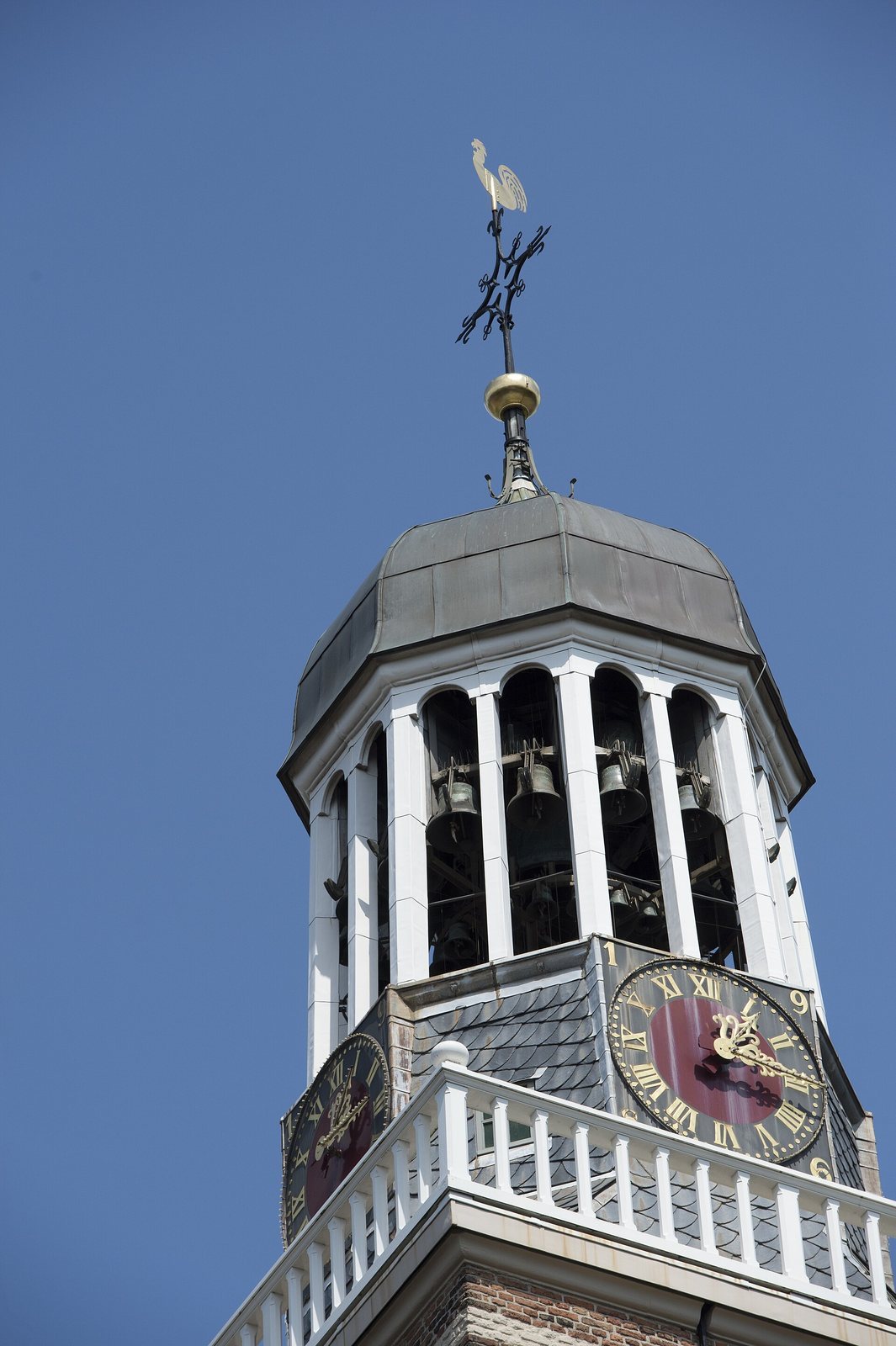
In 1586, the south tower was raised to make room for a carillon, a set of tuned bells played from a keyboard. A severe storm in the summer of 1674 also damaged the church: a tower spire was blown out of position. The storm brought down the central nave of Utrecht’s Dom Church as well.
Major restoration took place in two twentieth-century phases. Work on the west façade ran from 1942 to 1953, followed by restoration of the nave and choir from 1970 to 1978. The church is registered as a Dutch national monument.
Remains
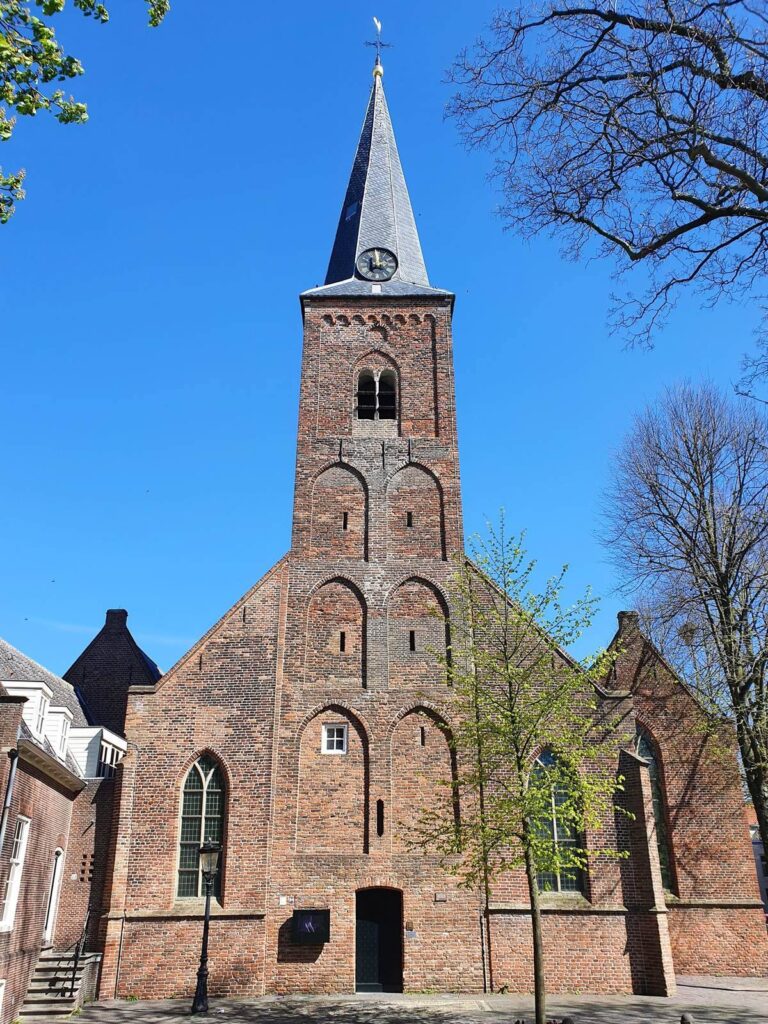
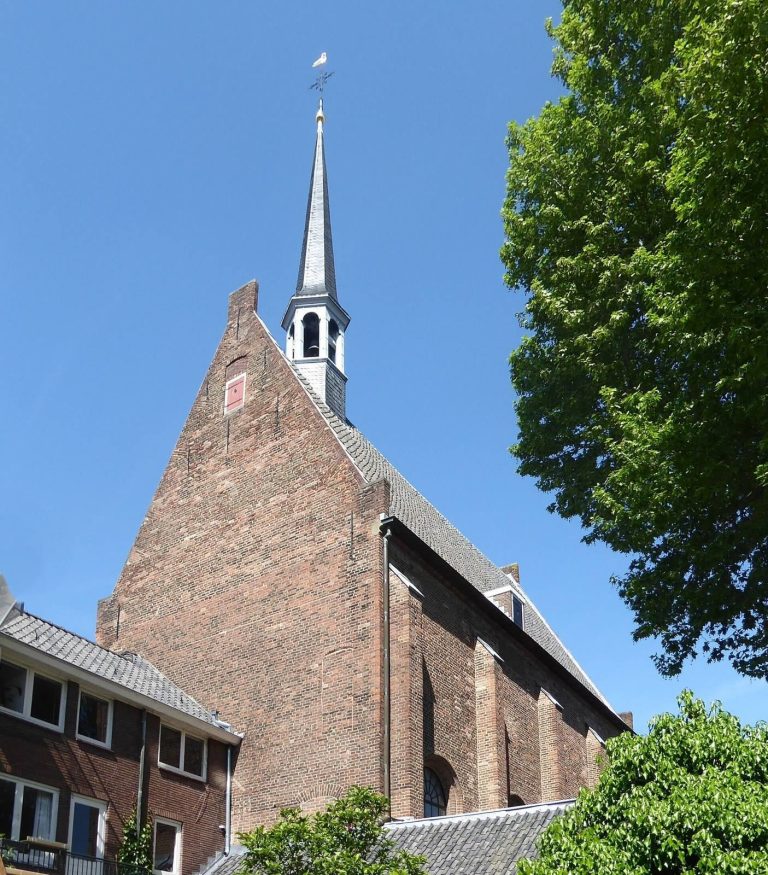
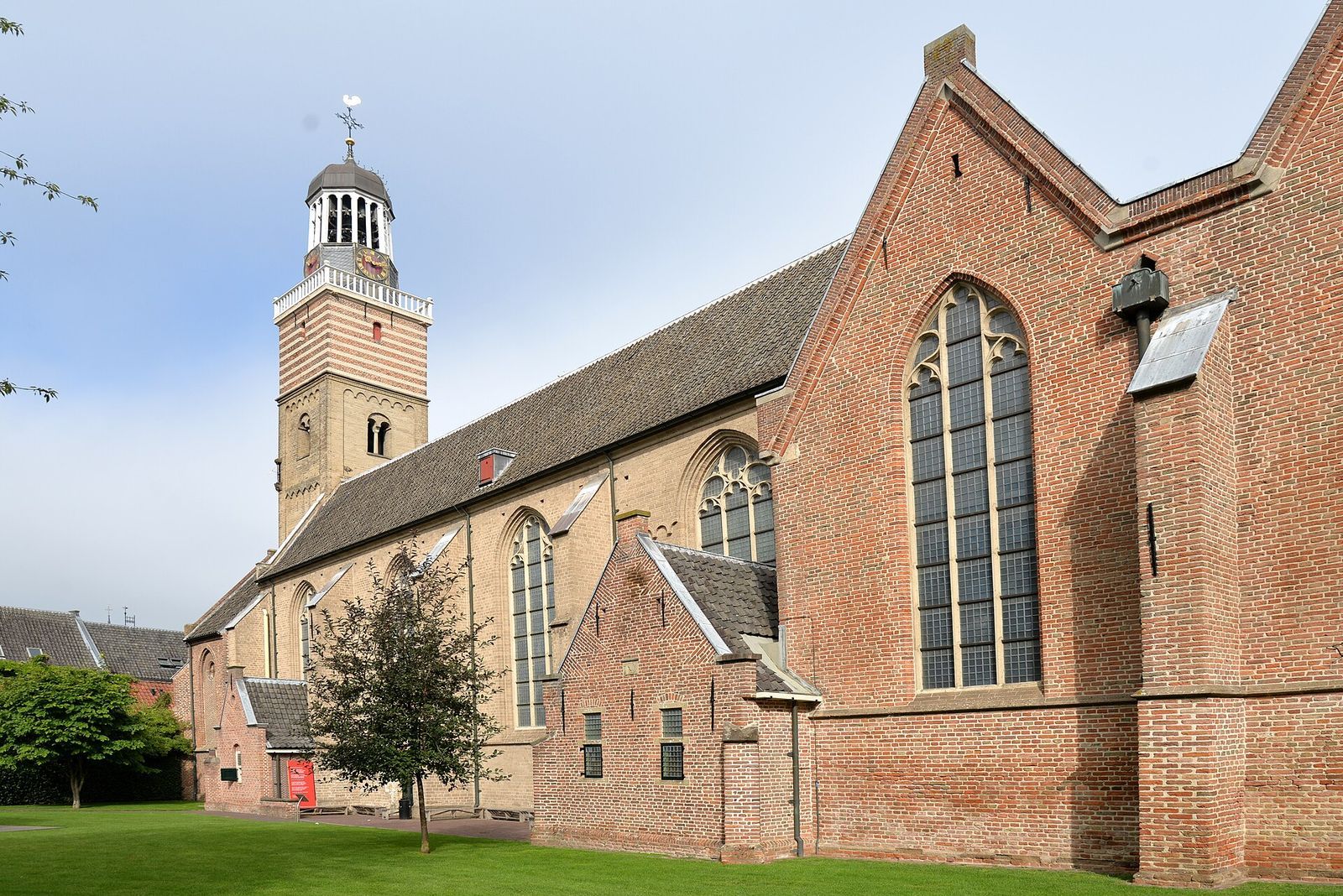
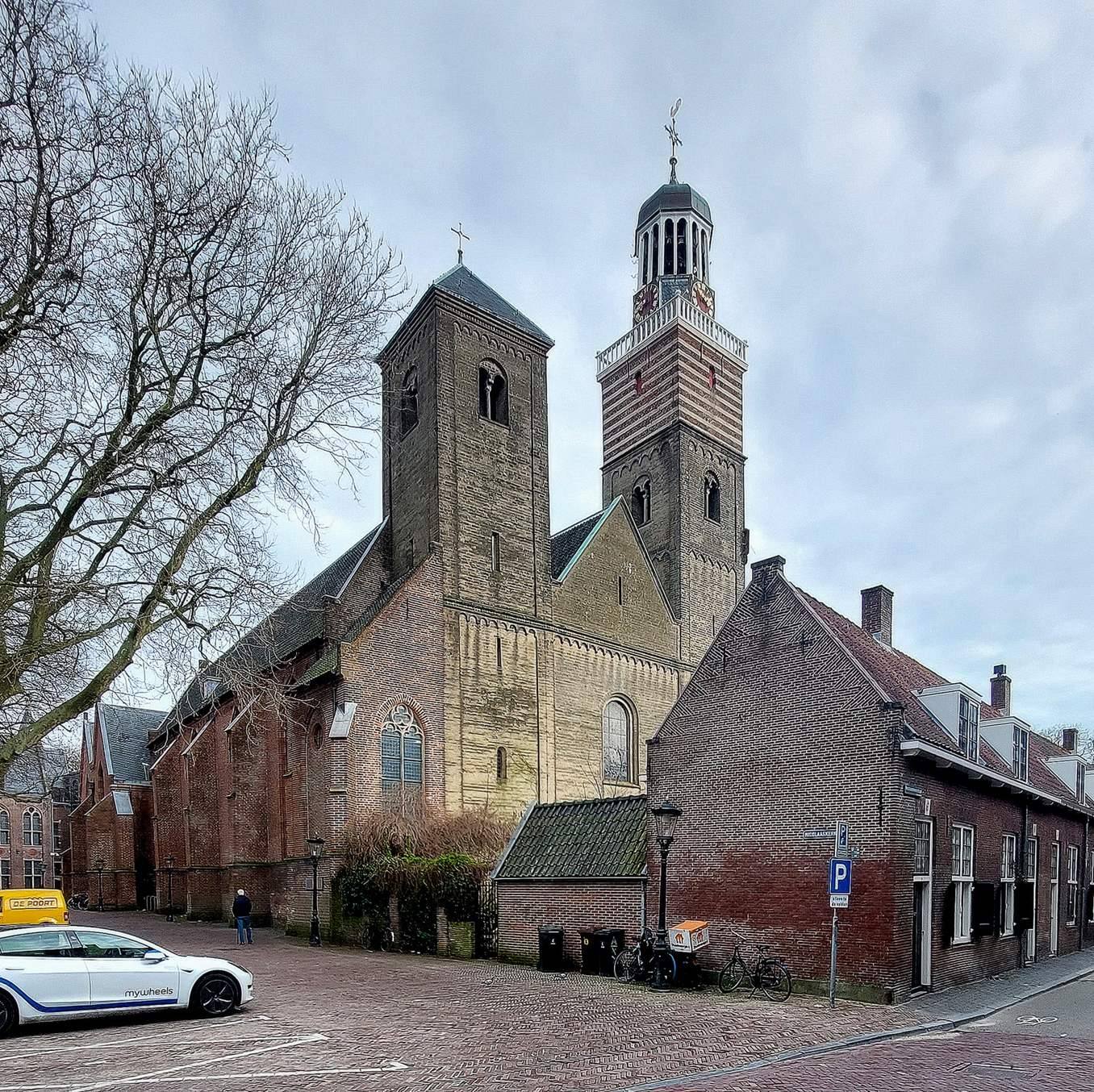
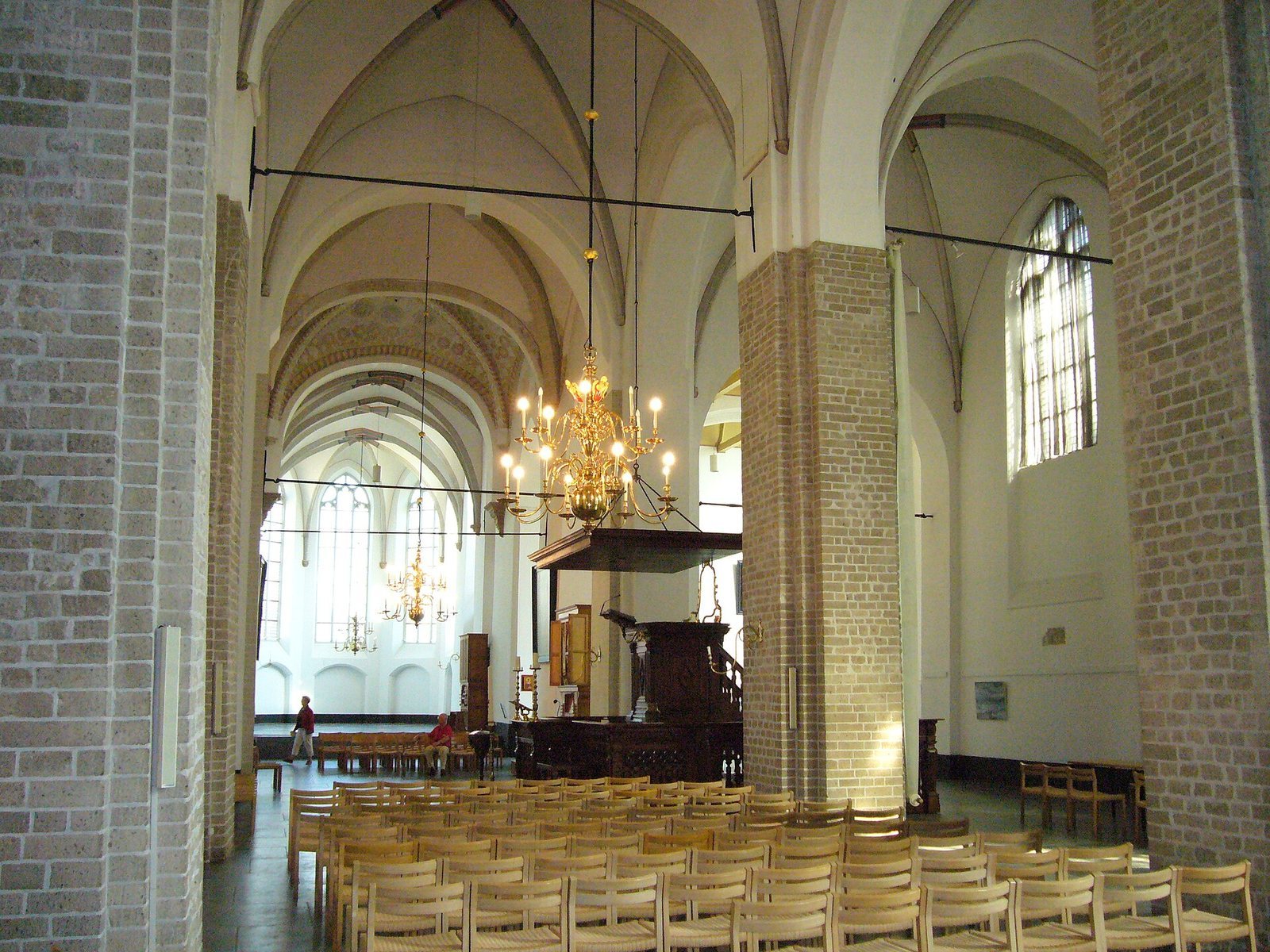
The church combines a Gothic hall-church layout, with a central nave and side aisles of similar height, with Romanesque elements. Its two-towered western entrance end, or westwork, is the main exterior fabric surviving from the original church; parts of the interior also retain Romanesque origins.
Church fabric and towers
Westwork and interior
The westwork forms the monumental entrance end of the church and includes two towers. In the fifteenth century the building was substantially remodelled as a Gothic hall church. The surviving Romanesque exterior and the Romanesque origins of parts of the interior preserve evidence of the church’s earlier form alongside that later design.
South tower
The south tower is approximately 40 metres high. Its carillon dates from 1649 to 1650 and was made by the bell founders Pieter and François Hemony. Four more bells, cast by Petit and Fritsen in 1997, are named Salvator, Maria, Nicolaas and Johannes. The words on the bells were written by theologian, writer and poet Willem Barnard.
North tower
The north tower holds the Martinus bell, cast in 1573 by Willem Wegewaert the Elder.
Organs
Peter Gerritsz organ
The medieval organ made by Peter Gerritsz has a group of pipes that sound together, known as blockwork, on its main keyboard. Its case is now in the Koorkerk in Middelburg. The pipes, windchests and action mechanism are kept in a government bunker.
Main organ
The church’s main organ was built by Marcussen in 1956 and is regarded as a model for postwar organ building in the Netherlands.
Sweelinck organ
A second Marcussen instrument, the Sweelinck organ, dates from 1953 and belongs to the NCRV. It was used for radio recordings in the broadcaster’s studios in Hilversum. Since December 2000, it has been set up in the church on a movable platform.
Choir organ
The church also has a small choir organ, called a positive organ, made by the Utrecht organ builders the Van Vulpen brothers.
Inscription and wall painting
South-side inscription
An inscription, possibly from the twentieth century, was once positioned above the gate on the south side. Its message is, “Give what is yours while it is yours; after death it is no longer yours.” In 2016, the inscription was moved to the courtyard of the Centraal Museum.
Carillon poem
A wall painting in Nicolaasdwarsstraat bears a poem about the church’s carillon by Dutch writer and poet C.C.S. Crone.