Pokajnica Monastery: A Serbian Orthodox Church Built in 1818
Site at a Glance
- Rating
- 4.8
- Popularity
- High
- Country
- Serbia
- Primary era
- Modern
- Eras represented
- Modern
- Civilizations
- Ottoman, Serbian
- Site type
- Religious
- Remains
- Monastery
On this page8 sections
History
Construction and meaning
Pokajnica Monastery is a Serbian Orthodox monastic complex at Staro Selo, near Velika Plana, Serbia. Its church was built in 1818 by Vujica Vulićević, a Serbian military commander and chief of the Smederevo district. In 1817, Vulićević and men serving Miloš Obrenović, a Serbian political and military leader who later became prince, took part nearby in the killing of Vulićević’s godfather, Karađorđe. Karađorđe was a Serbian revolutionary leader whose uprising against Ottoman rule began in 1804. The church’s construction was understood as an act of repentance, reflected in the name Pokajnica, meaning “repentance.”
The church is dedicated to the Translation of the Relics of Saint Nicholas, commemorating the transfer of the remains of Nicholas, an early Christian bishop venerated as a saint.
Monastic use and protection
The church served as a parish church until 1954, when it became a monastery. Pokajnica is now an active Serbian Orthodox monastery within the Braničevo Eparchy, the church diocese. Conservation work was carried out on the church in 1951 and on its icon screen in 1987–1988. In 1979, the site was designated a Monument of Culture of Exceptional Importance in Serbia and placed under state protection.
Remains
Buildings in the churchyard
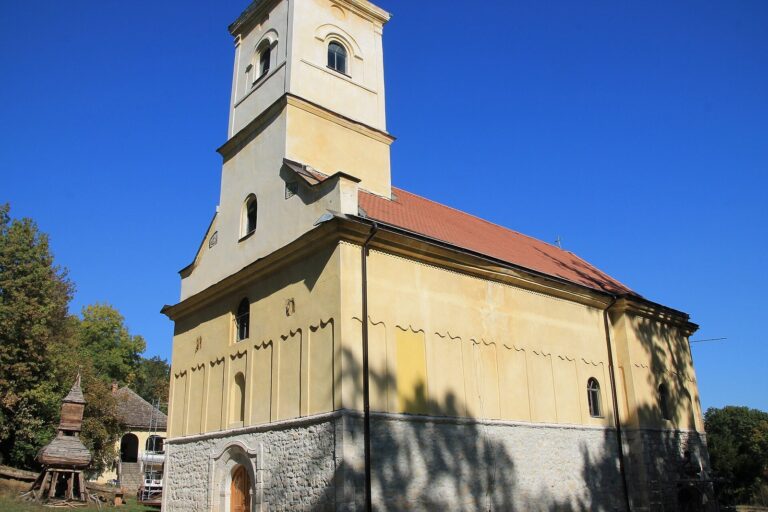
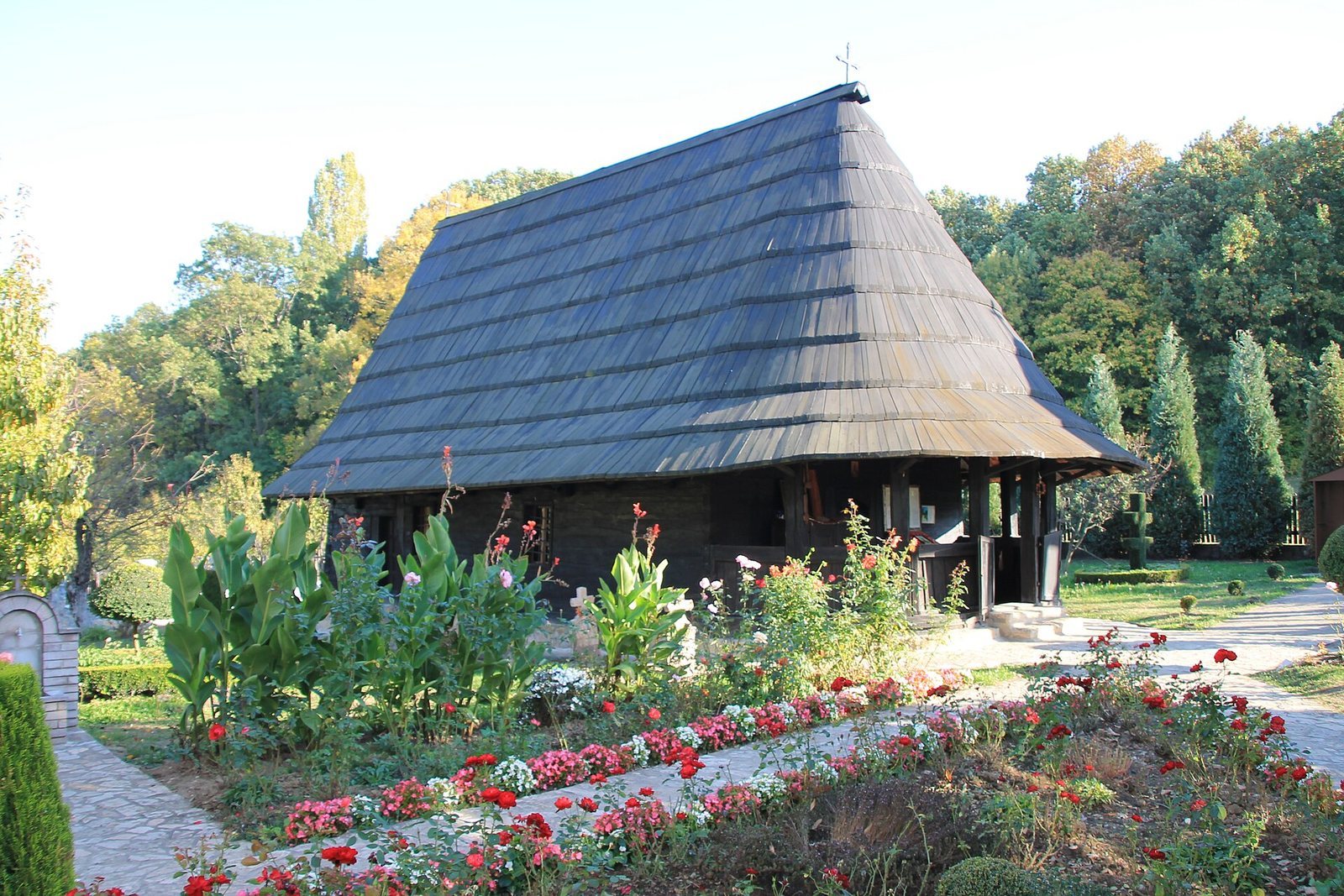
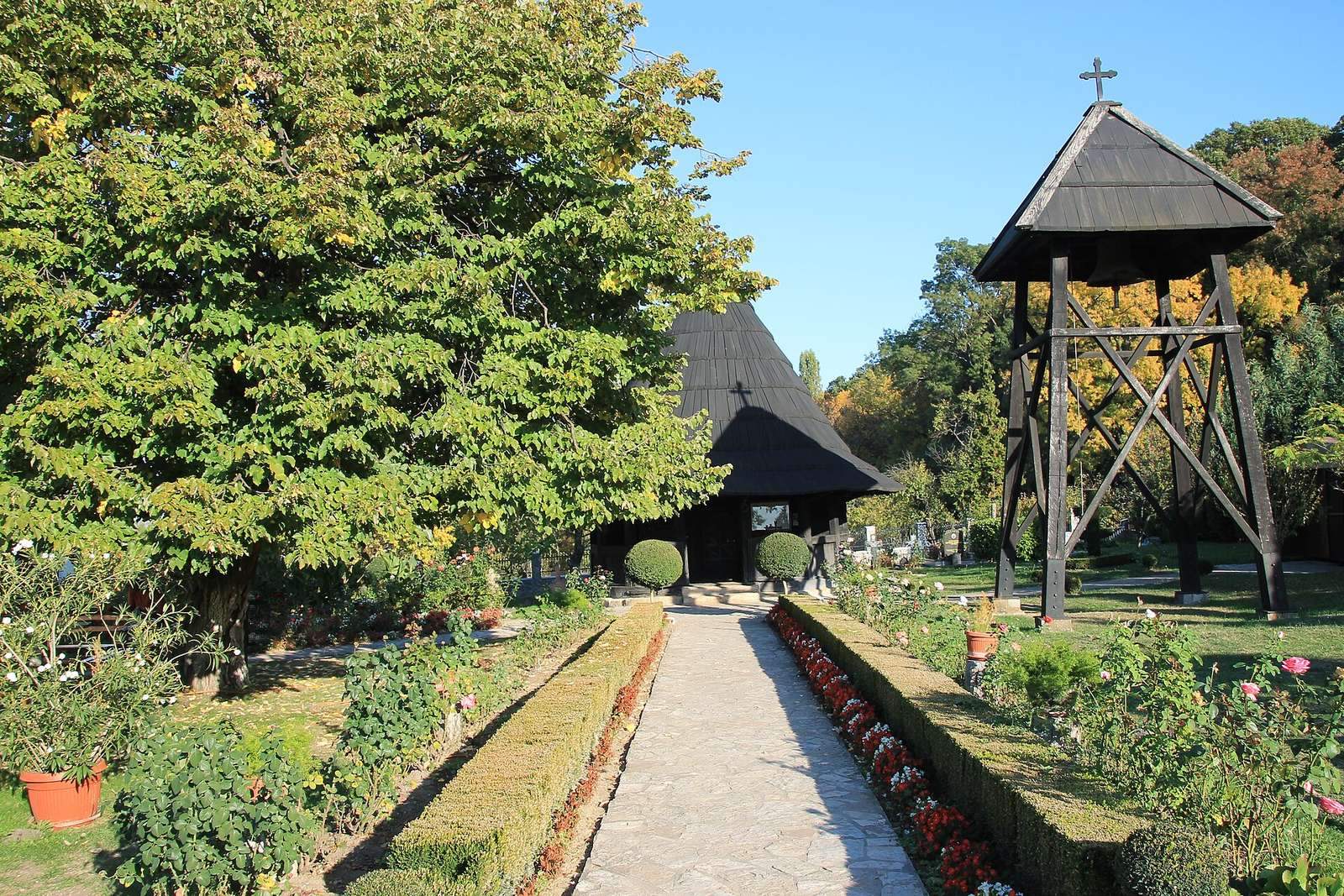
The churchyard contains the timber-built church, a wooden bell tower standing centrally within the monastery, and residential quarters. These buildings form the main elements of the surviving complex.
Church
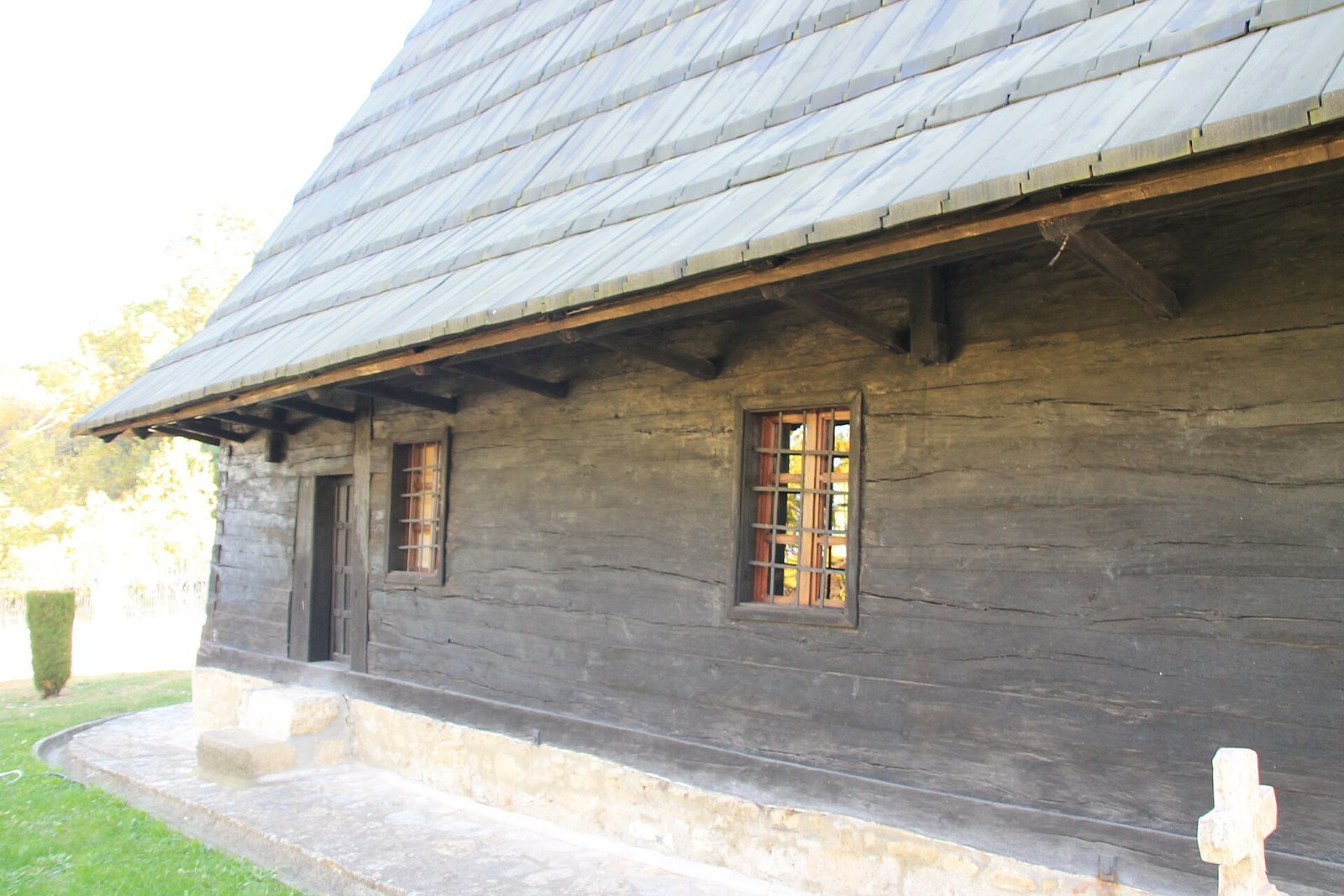
The church is a timber structure, part of the comparatively small group of wooden architectural monuments in Serbia. A carved date on a timber to the left of the entrance marks its construction. An inscription on an icon of Saint George also records the church’s building; the icon dates to the same period. The original iconostasis, a screen bearing religious images, was carved by a local craftsman and painted by Konstantin Zograf, an icon painter active in Serbia in the early nineteenth century.
Bell tower
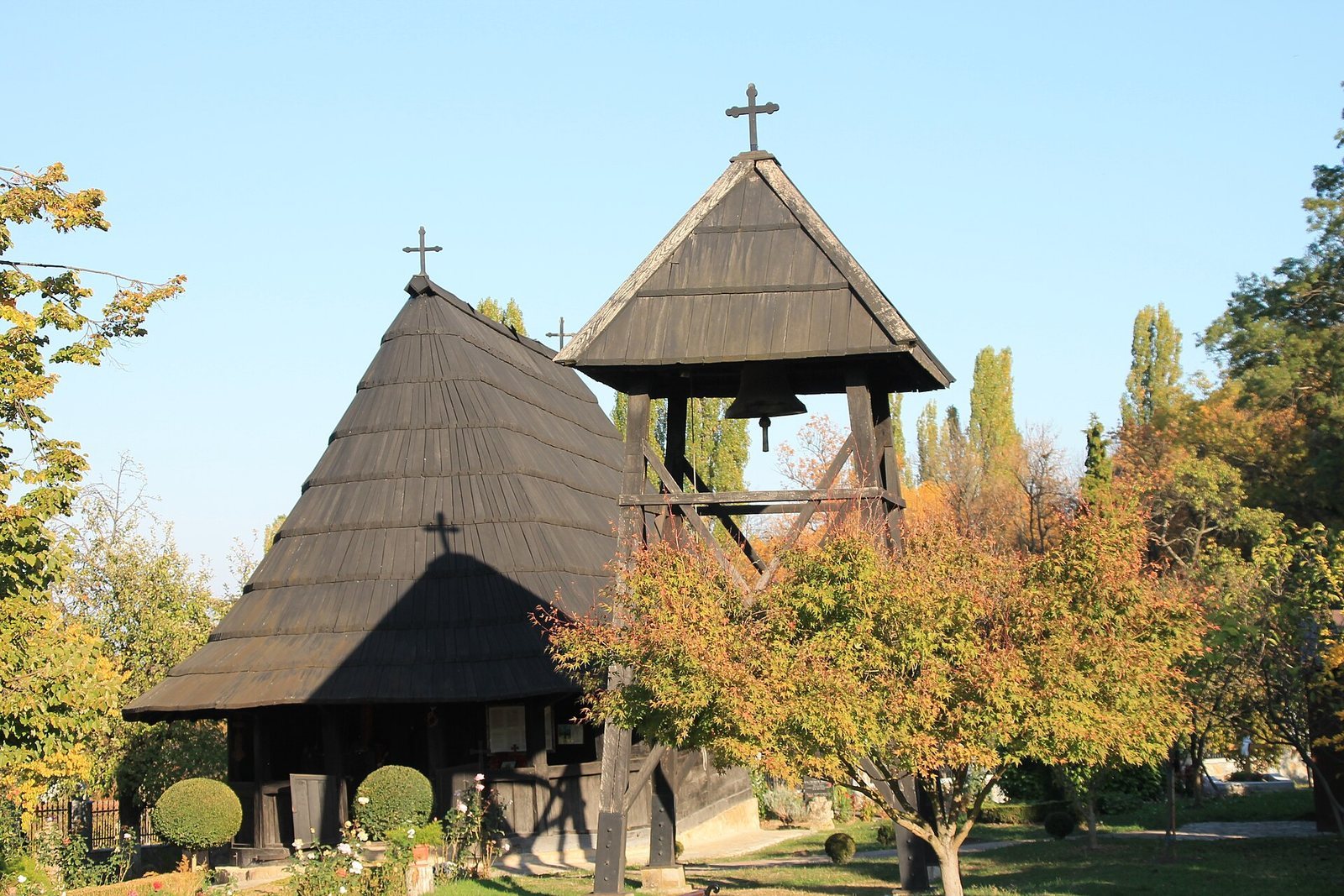
A wooden bell tower stands in the churchyard at the monastery’s center. Its roof is covered with wooden shingles.
Residential quarters
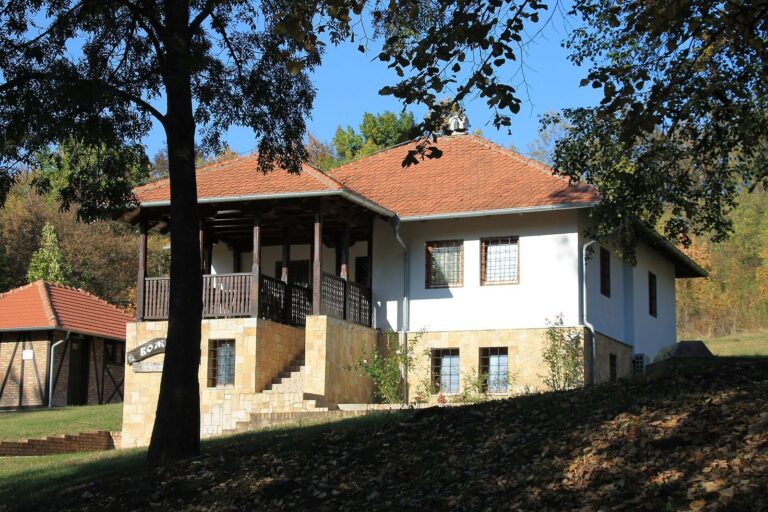
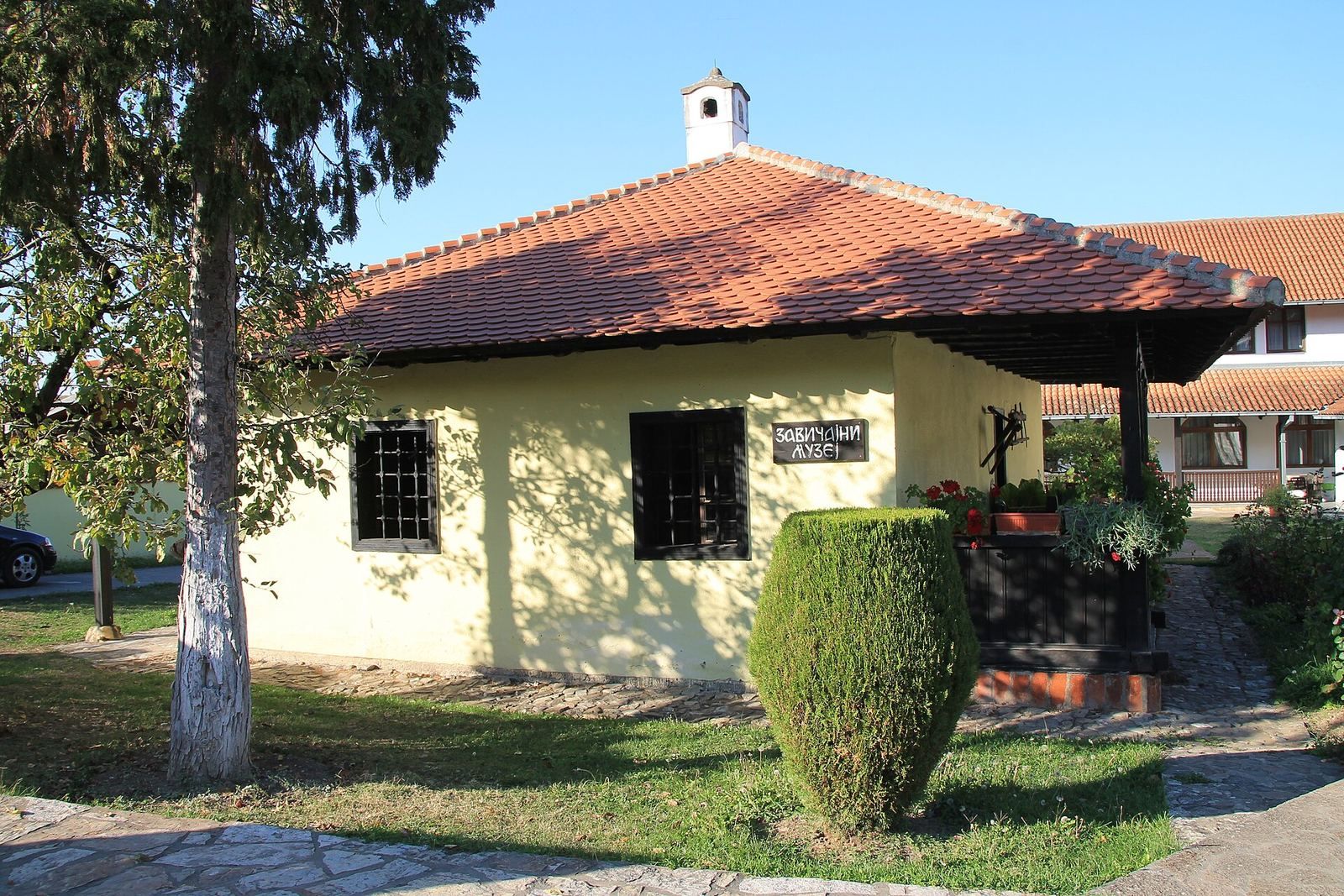
The churchyard’s residential quarters were probably built around the time of the church. Their windows have wooden bars.