St Mary Magdalen’s Church, Oxford: An Ancient Parish Church
Site at a Glance
- Rating
- 4.6
- Popularity
- Medium
- Country
- United Kingdom
- Primary era
- Medieval
- Eras represented
- Medieval, Early Modern, Modern
- Civilizations
- British, English
- Site type
- Religious
- Remains
- Church
On this page13 sections
History
St Mary Magdalen’s Church, Oxford, is an ancient parish church in the United Kingdom. Dedicated to Mary Magdalene, traditionally a close follower of Jesus, its foundation is dated to 1101. The church combines medieval Gothic architecture with later Gothic Revival work, a movement that revived medieval Gothic forms.
Early church and medieval rebuilding
A wooden church stood beyond Oxford’s North Gate, outside the Saxon walls, until it burned in 1074. Robert D’Oyly, a Norman official who served as Oxford’s constable, a senior military or administrative officer, then commissioned a single-aisle chapel to replace it. The church’s foundation is dated to 1101.
In 1194, Hugh, Bishop of Lincoln and later venerated as a saint, ordered the church rebuilt. The chancel was rebuilt again in the late 13th century. About a century after Hugh’s rebuilding, scholars from Balliol College, a constituent college of the University of Oxford, established a small place of worship dedicated to Saint Catherine, a Christian martyr venerated as a saint. In 1320, the Carmelites, a Catholic religious order, founded a chapel in the south aisle.
Later construction
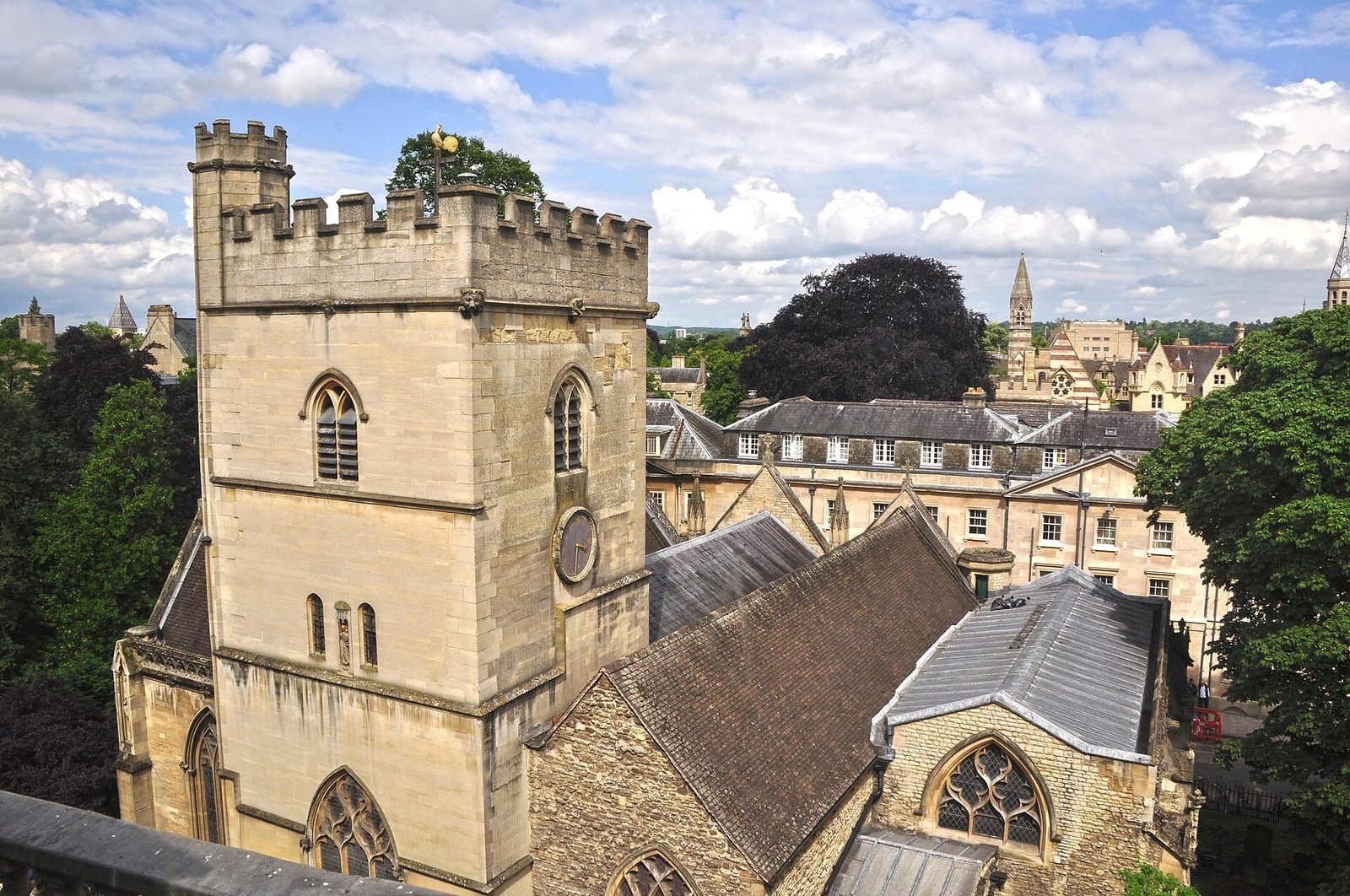
The west tower was built between 1511 and 1531, and a south porch with a room above it was added around the same time.
Restoration and continuing use
The church was restored in 1841–42, with further alterations to the chancel and tower in 1874–75 under William Wilkinson. It was designated a Grade I listed building on 12 January 1954, a category offering England’s highest level of listed-building protection. The church remains active in the Church of England and follows the Anglo-Catholic tradition, which emphasizes Catholic liturgy and practice within Anglicanism. The antiquary and biographer John Aubrey was buried in its churchyard.
Remains
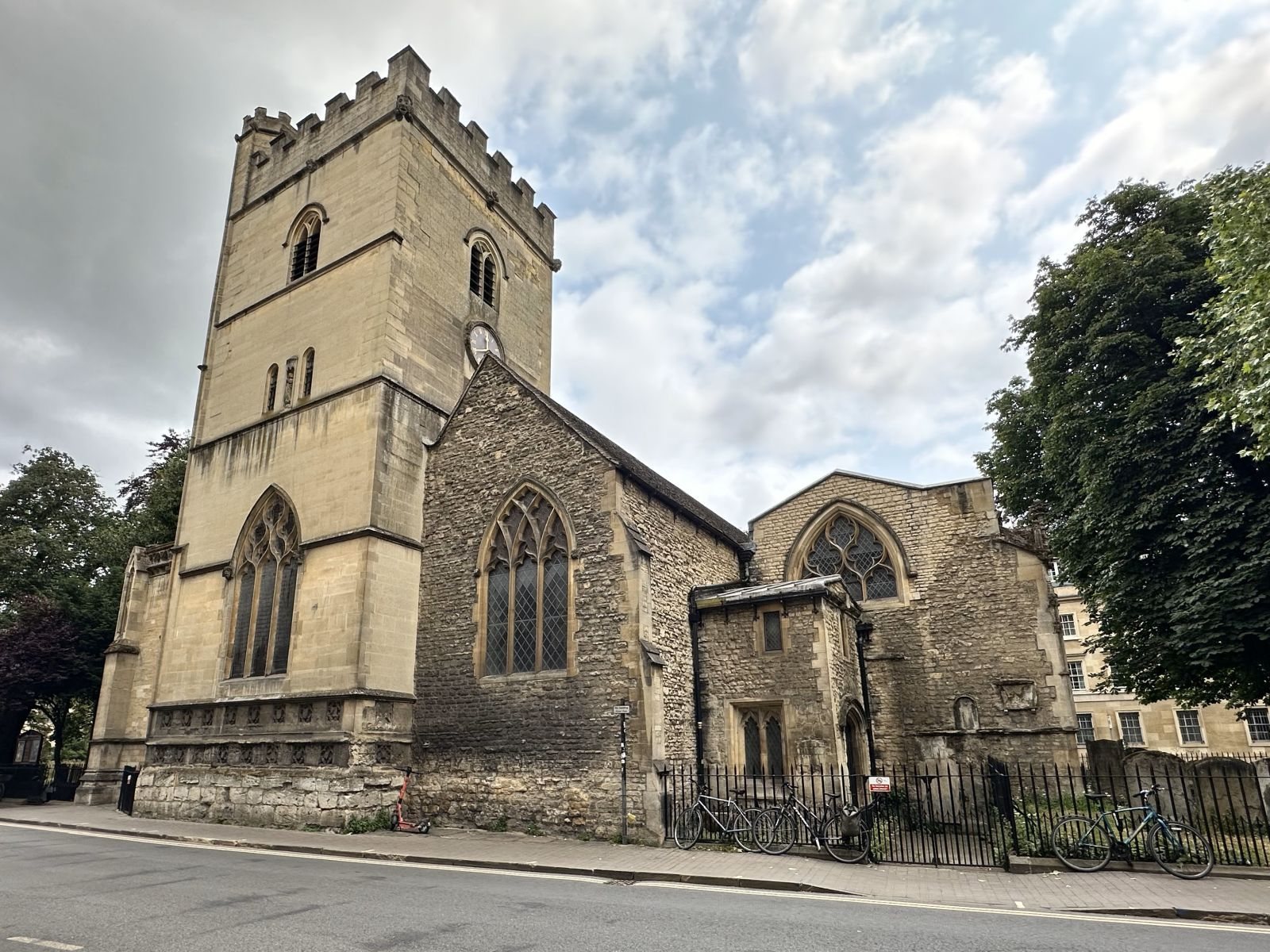
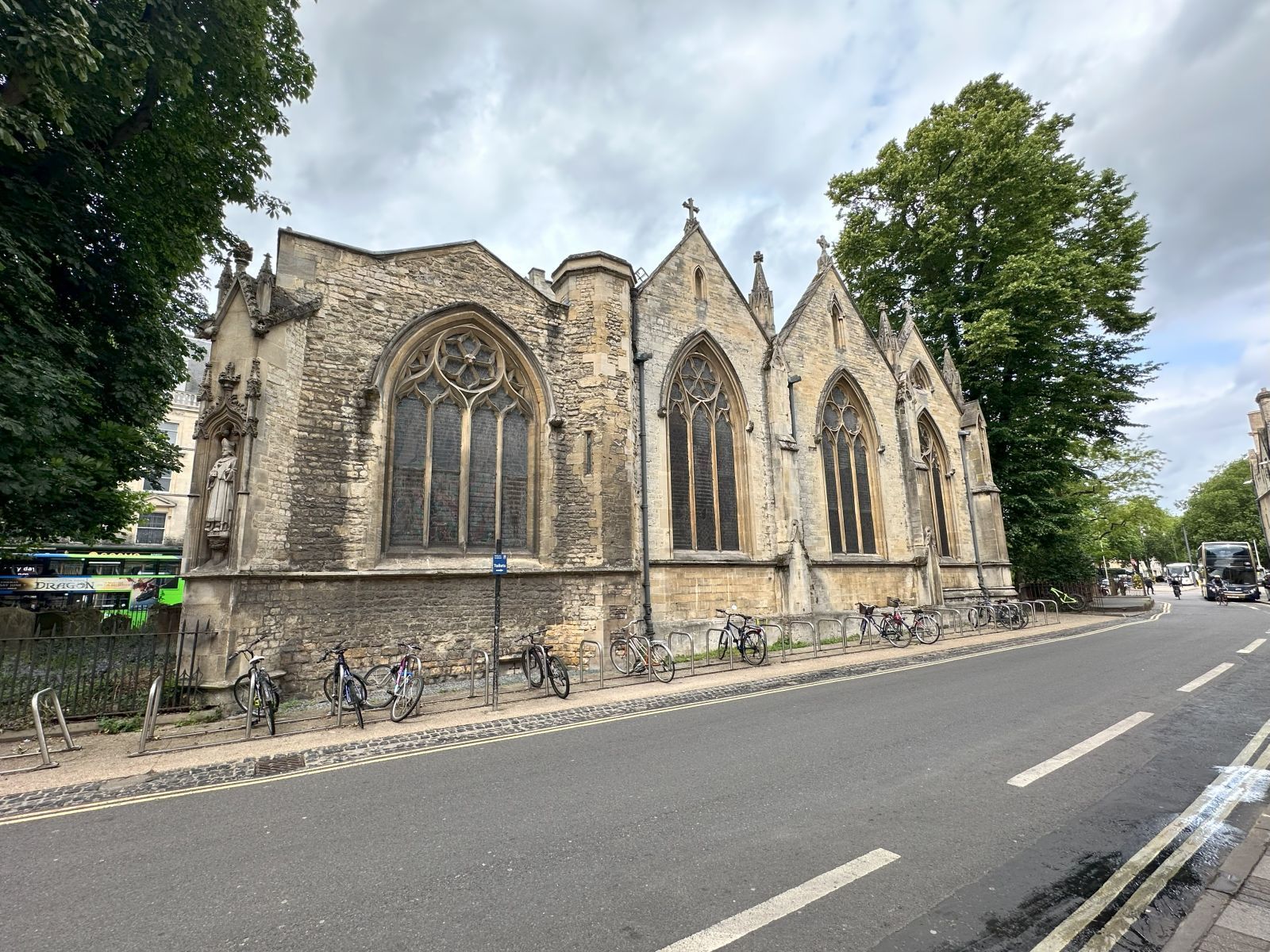
Built of Jurassic limestone, stone associated with geological strata of the Jurassic Period, the church has a chancel, north and south aisles, a west tower, and a south porch. Its surviving fabric brings together medieval work and later alterations.
Chancel and aisles
Chancel
The eastern wall of the chancel retains work from the medieval rebuilding, and the floor before the altar is raised. A screen stands in the chancel, while the church’s altars included one dedicated to Thomas Becket, Archbishop of Canterbury, who was killed in 1170 and venerated as a martyr. By 1235, another altar was dedicated to the Virgin Mary, the mother of Jesus in Christian belief.
North aisle
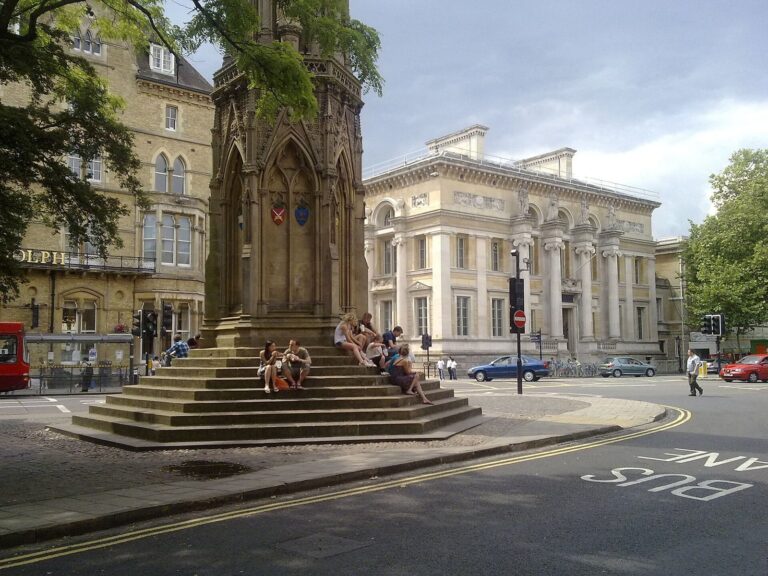
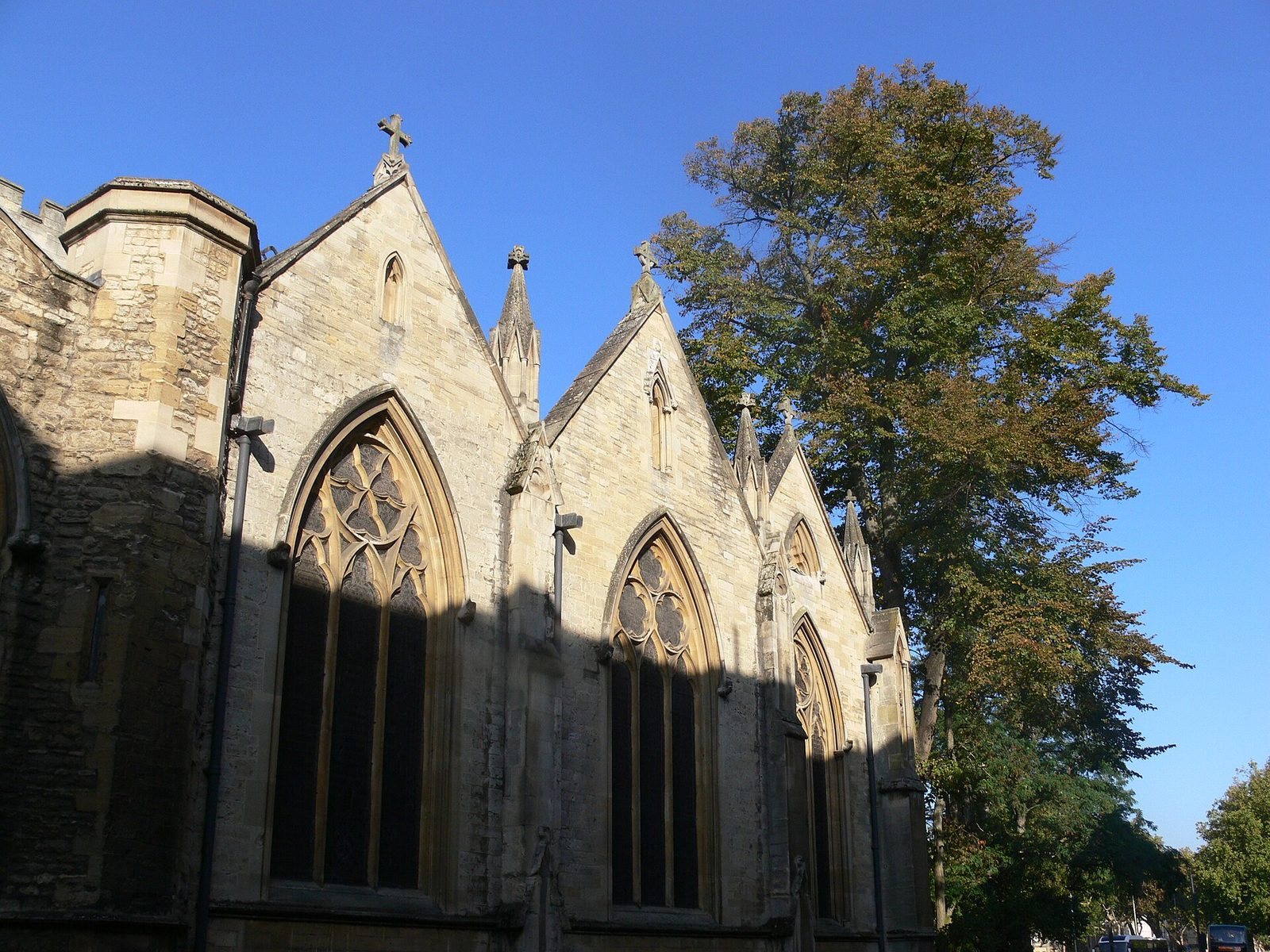
Also known as the Martyrs’ Aisle, the north aisle was designed by George Gilbert Scott and W. B. Moffatt. It was planned to complement the Martyrs’ Memorial immediately north of the church and was the first Gothic Revival interior in Oxford.
South aisle and Lady Chapel
The south aisle preserves medieval work, and its chapel survives as the present Lady Chapel, dedicated to the Virgin Mary. Edward Blore designed the aisle’s restoration.
West tower and south porch
The west tower’s windows open into the church. The south porch has a room above it, and both form part of the church’s later architectural fabric.
Carved chest and bells
Jewel Chest
The church holds an early 14th-century carved wooden chest known as the Jewel Chest.
Bell ring
The tower contains ten bells, all cast or recast by the John Taylor & Co. bell foundry of Loughborough. The tenor, generally the heaviest and lowest-pitched bell, was recast in 1988. Bells five through nine were recast in 1990, and the third and fourth were cast in 2000. The ring had eight bells until the treble, generally the lightest, and the second bell were cast and hung in 2001. The Oxford University Society of Change Ringers, whose practice involves sounding bells in changing sequences, has rung them since the 1930s.