Jelšingrad Manor: A Neo-Moorish Estate in Slovenia
Site at a Glance
- Rating
- 4.3
- Popularity
- Low
- Country
- Slovenia
- Primary era
- Modern
- Eras represented
- Early Modern, Modern
- Civilizations
- Austrian Empire, Duchy of Styria, Habsburg, Habsburg Austria, Holy Roman Empire
- Site type
- Domestic
- Remains
- Manor House
On this page8 sections
History
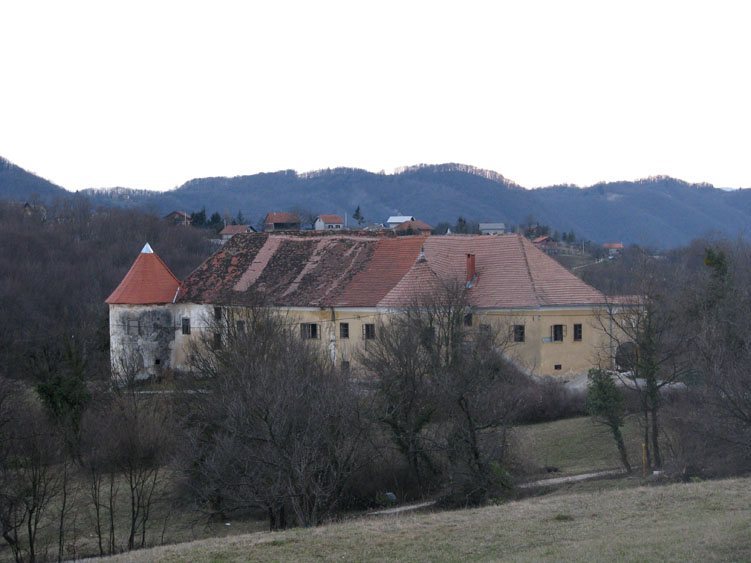
Jelšingrad Manor stands in Zadrže, Slovenia, near Šmarje pri Jelšah. Its construction dates to the seventeenth century, while its present appearance reflects an 1860 redesign in the Neo-Moorish style, a nineteenth-century revival drawing on Islamic forms. The manor’s later history was closely connected to Austrian diplomat Rudolf Oskar Gödel-Lannoy and the collection of antiquities he assembled there.
Medieval estate and seventeenth-century manor
The estate probably originated in the medieval period. It appears in written records in 1424 as Erlach, a name meaning ‘alders’. Records from 1479 and 1490 identify it as a manor and use the Slovenian form Jelsche. The estate was first held as a fief, or land granted under a superior lord, by the Counts of Celje, a powerful late-medieval noble dynasty. After their line died out, it passed into the domain of the territorial prince, the ruler exercising authority over the territory.
Rebellious peasants attacked and looted the manor in 1635. In 1666, Žiga Gaisruck leased the estate, rebuilt the residence as a manor house, and enlarged the property. An outbuilding burned in 1695, causing damage valued at 1,040 florins. By 1754, the estate’s administration encompassed offices for Korpule, Jelše, Vojnik, and Kostrivnica. The Gaisruck family retained ownership until 1799, when Anton Nagy bought the manor and estate.
Gödel-Lannoy and the nineteenth-century redesign
Rajmond Novak owned the estate from 1837 and sold it in 1845 to Rudolf and Terezija Gödel-Lannoy. Rudolf, an Austrian diplomat who had served in the Middle East, commissioned a major redesign in 1860. After retiring, he lived at the manor until his death in 1883.
During his travels, Gödel-Lannoy gathered objects for an ‘Oriental Museum’ at the manor. A description from 1863 indicates that he valued the collection for its scientific and art-historical interest. A guide published in 1868 says visitors could see it by prior arrangement, with Gödel-Lannoy acting as their guide.
After Rudolf’s death, Terezija and their son Emil inherited the manor and its antiquities. Emil later donated parts of his father’s collection to museums. When Wilhelm Artens bought Jelšingrad in 1887, important groups of objects remained at the manor. Artens sold the property to the Cais family in 1934, and the family lived there until the Second World War.
Wartime seizure and later use
In 1943, the German army seized the manor and established Arbeitsdienst, a compulsory youth labor service before military call-up, there. The collection’s last remaining pieces were removed at that time.
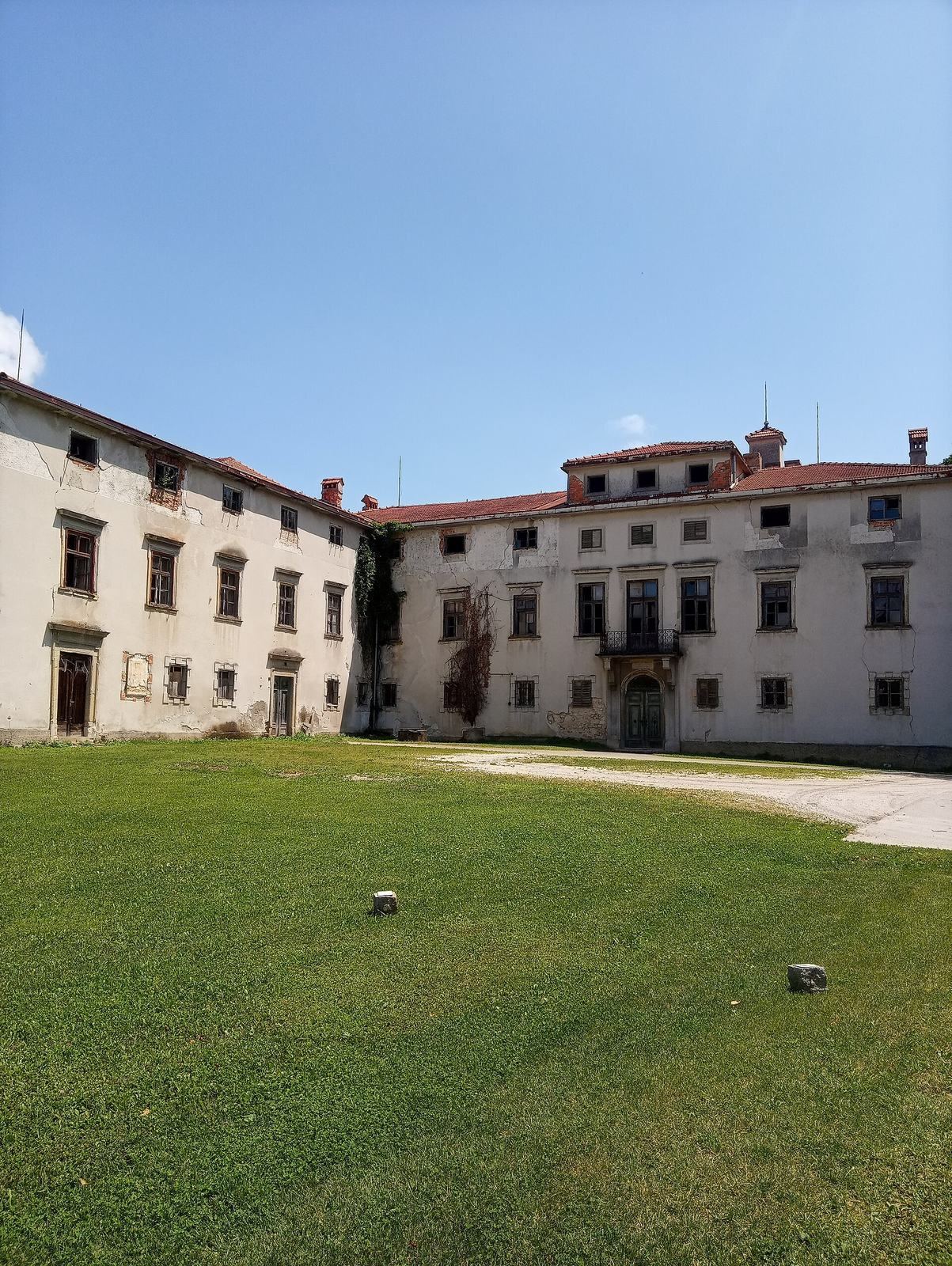
The manor later housed a home for older people, until the 1974 earthquake. After passing to several owners who did not maintain it, the property became the possession of the Municipality of Šmarje pri Jelšah in 2022. Urgent renovation of the complex and its surroundings began in 2023.
Remains
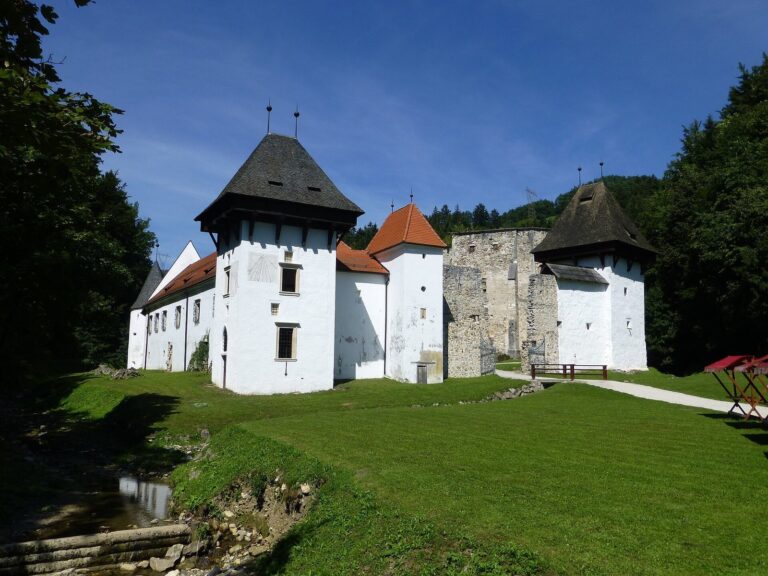
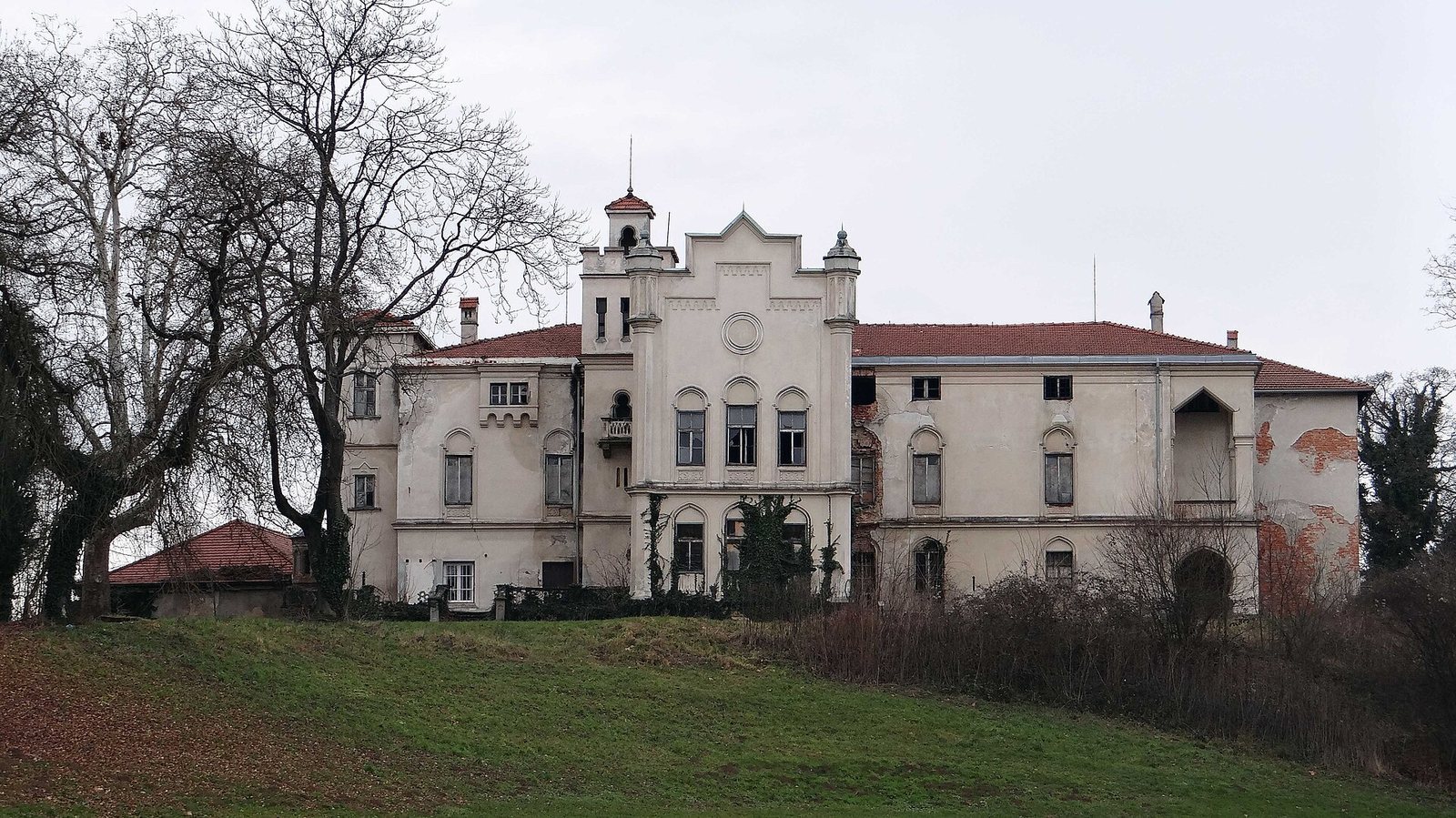
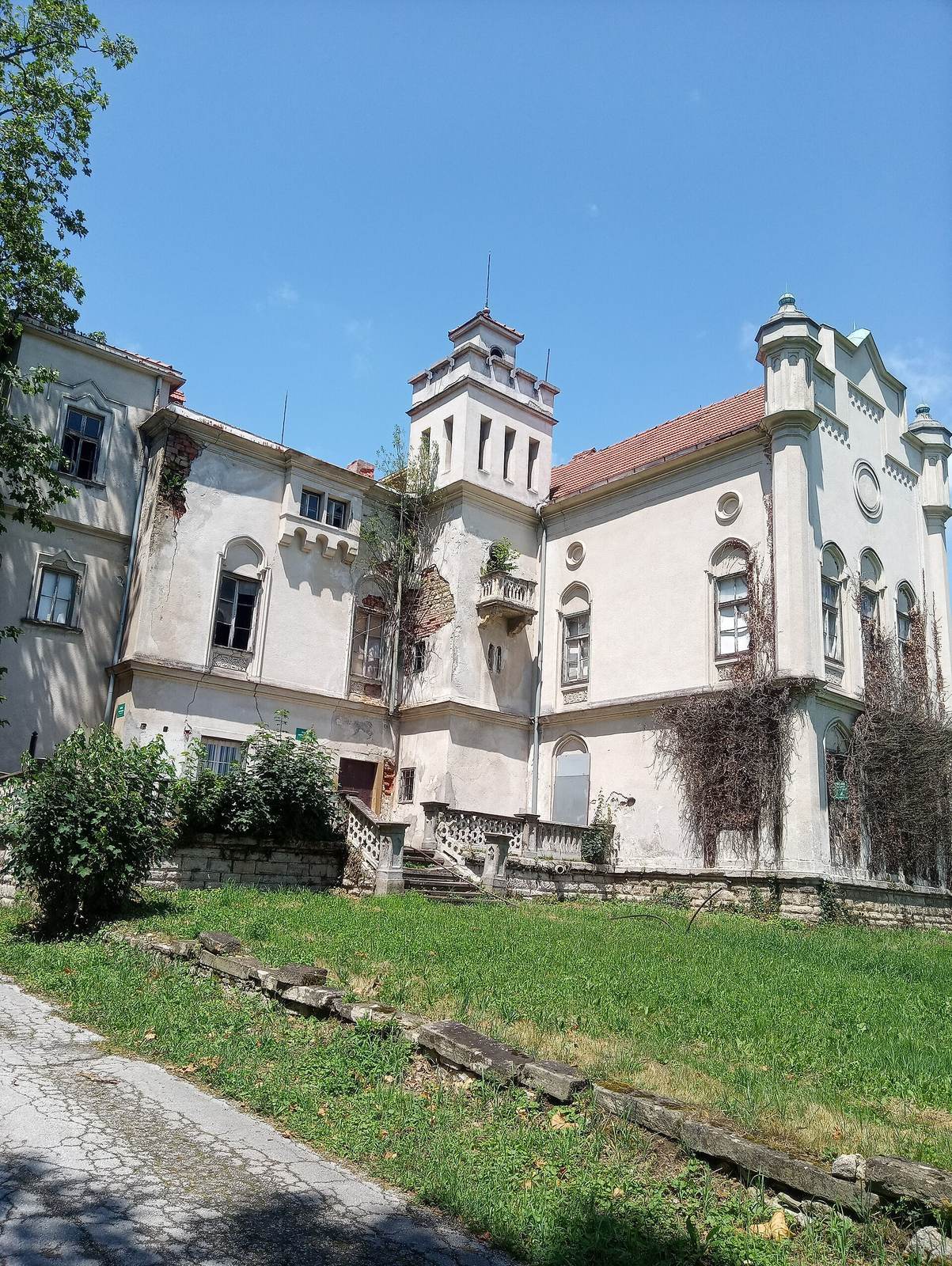
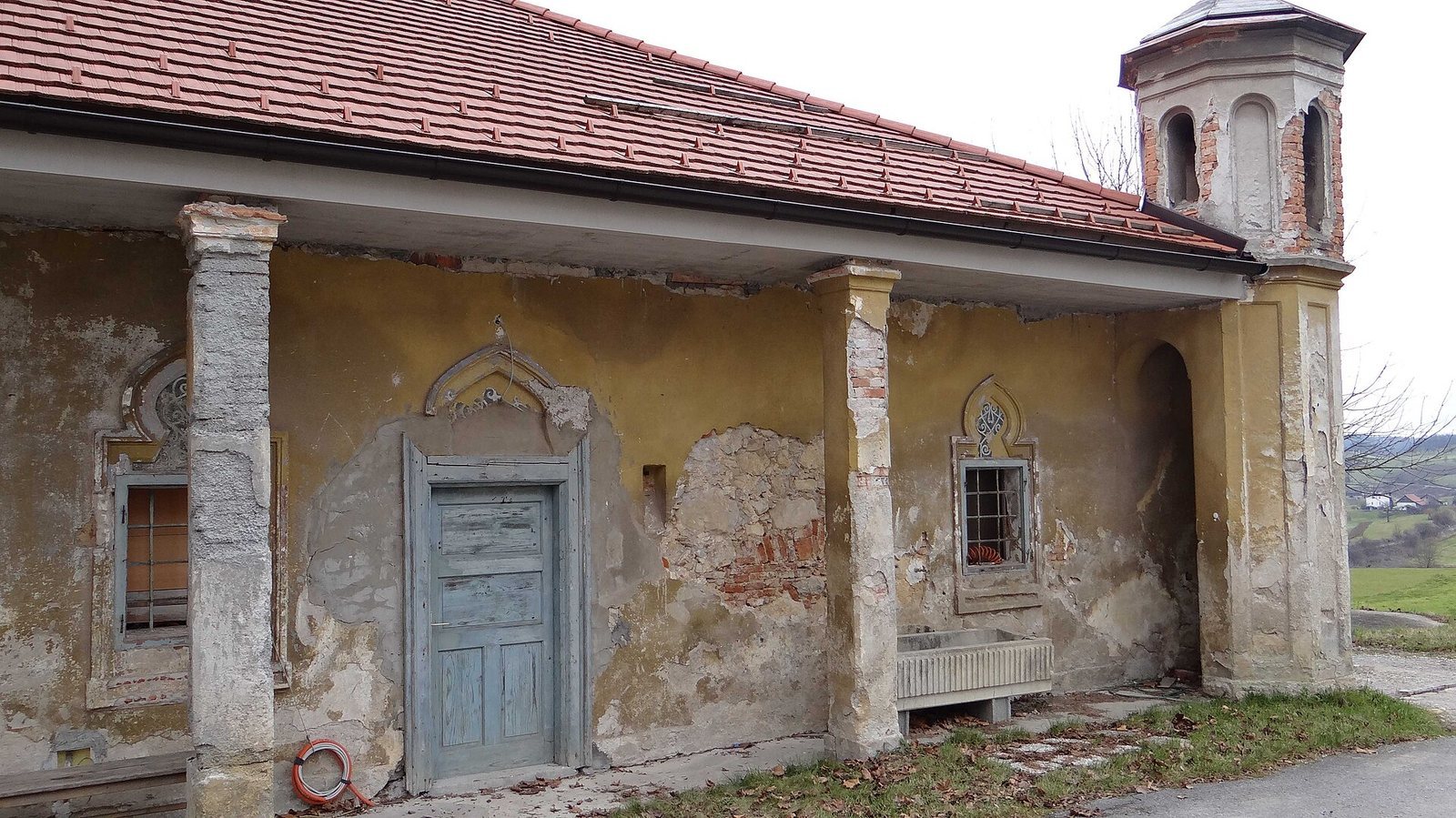
The surviving manor is a seventeenth-century building reshaped by Franz Stichl’s 1860 redesign. Its Neo-Moorish, or neo-Islamic, architecture draws on Islamic forms. Jelšingrad and Villa Rafut are Slovenia’s only two unified examples of neo-Islamic architecture, and Jelšingrad is among the surviving examples of the style in the wider European region.
Exterior features
A crescent once stood at the manor’s highest point, and a façade rosette carried an inscription meaning ‘In the name of Allah’. Both features were removed after the Second World War. Above a door at the rear, an Italian dedicatory inscription remains: ‘For love I created you; for love I maintain you.’
Interiors and gardens
An extension added three reception rooms, or salons, decorated in Turkish, Persian, and Arab styles. Interwar photographs taken by art historian France Stele and local photographer Slavko Ciglenečki show the rooms’ furnishings. The design brought the manor, its interiors, and its exotic gardens together as a unified artistic composition.
The collection
The collection included archaeological and ethnological objects from Egypt and the Middle East, alongside valuable antiquities from classical Greece and Rome. Some of its objects are held in storage in the archaeological collection of the Universal Museum Joanneum in Graz; others are elsewhere.