La Centinela: Capital of the Chincha Kingdom in Peru
Site at a Glance
- Rating
- 4.1
- Popularity
- Medium
- Country
- Peru
- Primary era
- Medieval
- Eras represented
- Medieval
- Civilizations
- Inca
- Site type
- Settlement
- Remains
- City
On this page10 sections
History
La Centinela is an archaeological complex in Peru’s Ica Region, built by the Chincha, a pre-Columbian society on the country’s south coast. It became the capital and principal political and administrative center of the Chincha kingdom. The site developed between AD 900 and 1450, within the Late Intermediate Period (AD 1000–1500), an Andean era preceding Inca imperial rule. Its construction is dated to AD 1100–1350.
Chincha capital under Inca rule
After the Inca Empire, an Andean state that incorporated other peoples and territories, absorbed the Chincha kingdom, La Centinela remained occupied and retained administrative importance. From 1470, the Incas modified the functioning Chincha capital and established a major state installation within it.
Archaeological interpretation and tradition
In 1958, archaeologist Dwight T. Wallace identified straight roads running from La Centinela through approximately 30 to 40 towns in the valley. Their network points to a highly centralized system of pre-Inca administration. The site is classified in Peru as an Intangible Archaeological Monument, meaning a protected archaeological area.
A legend connects La Centinela with a heavy gold chain associated with the coronation of Huayna Capac, an Inca ruler who preceded Atahualpa. According to the story, messengers carried the chain as part of a ransom for Atahualpa, who had been captured by the Spanish. After learning that he had died while they were traveling, they hid the chain at La Centinela.
Remains
Overall plan and construction
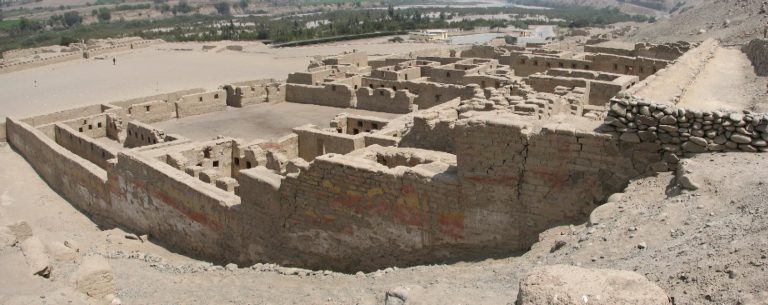
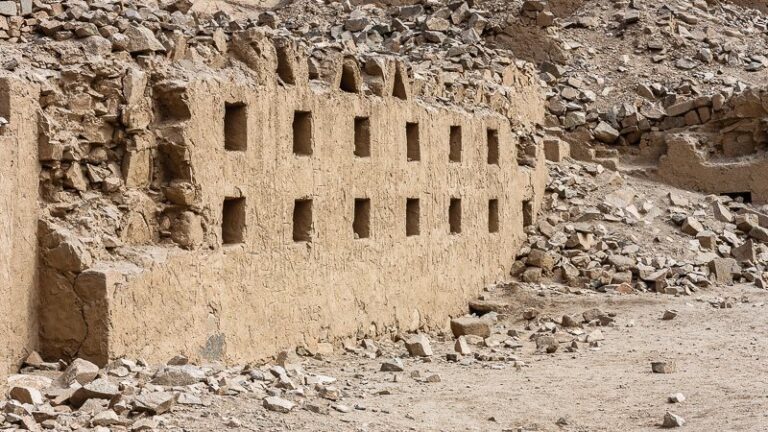
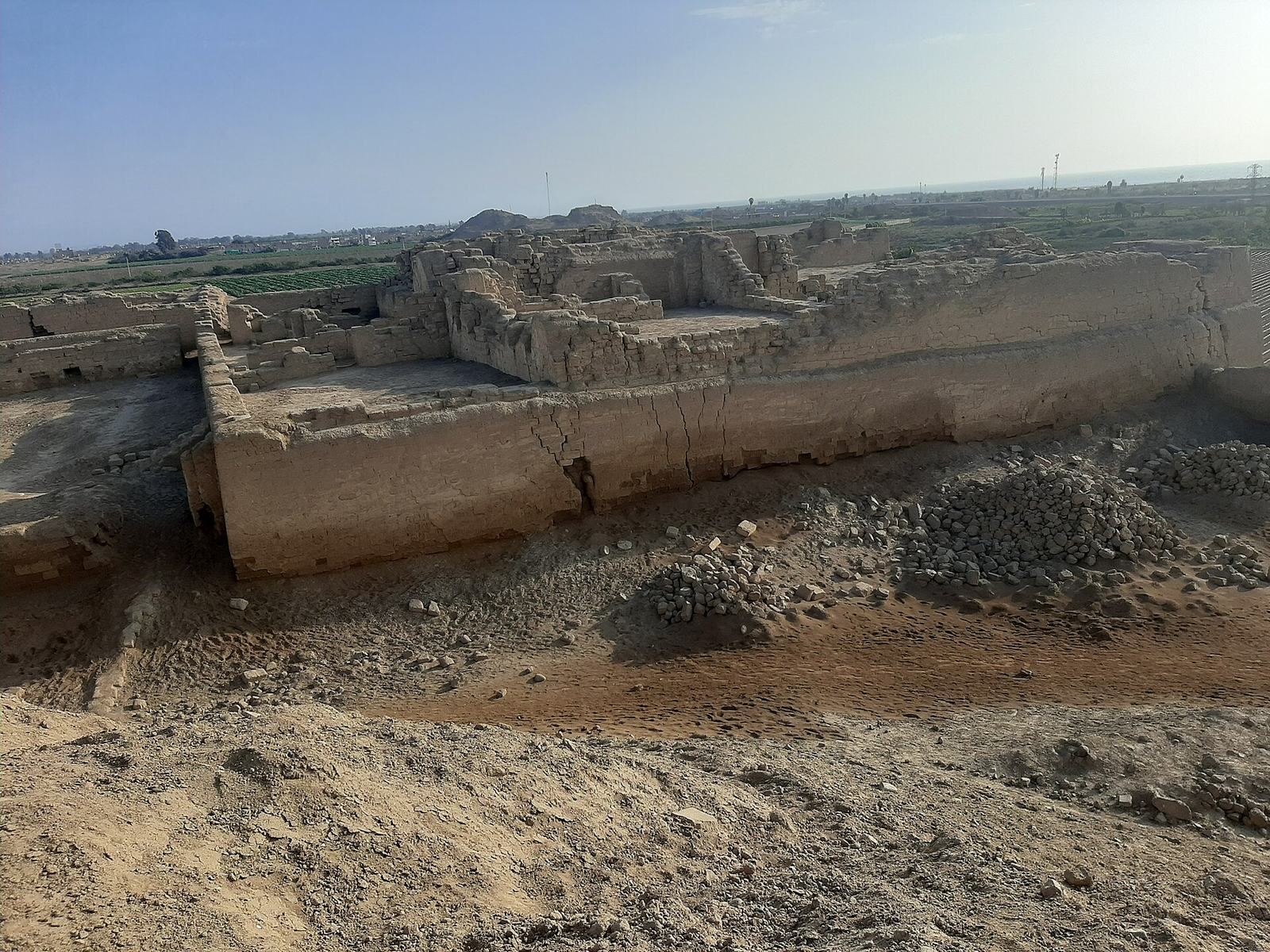
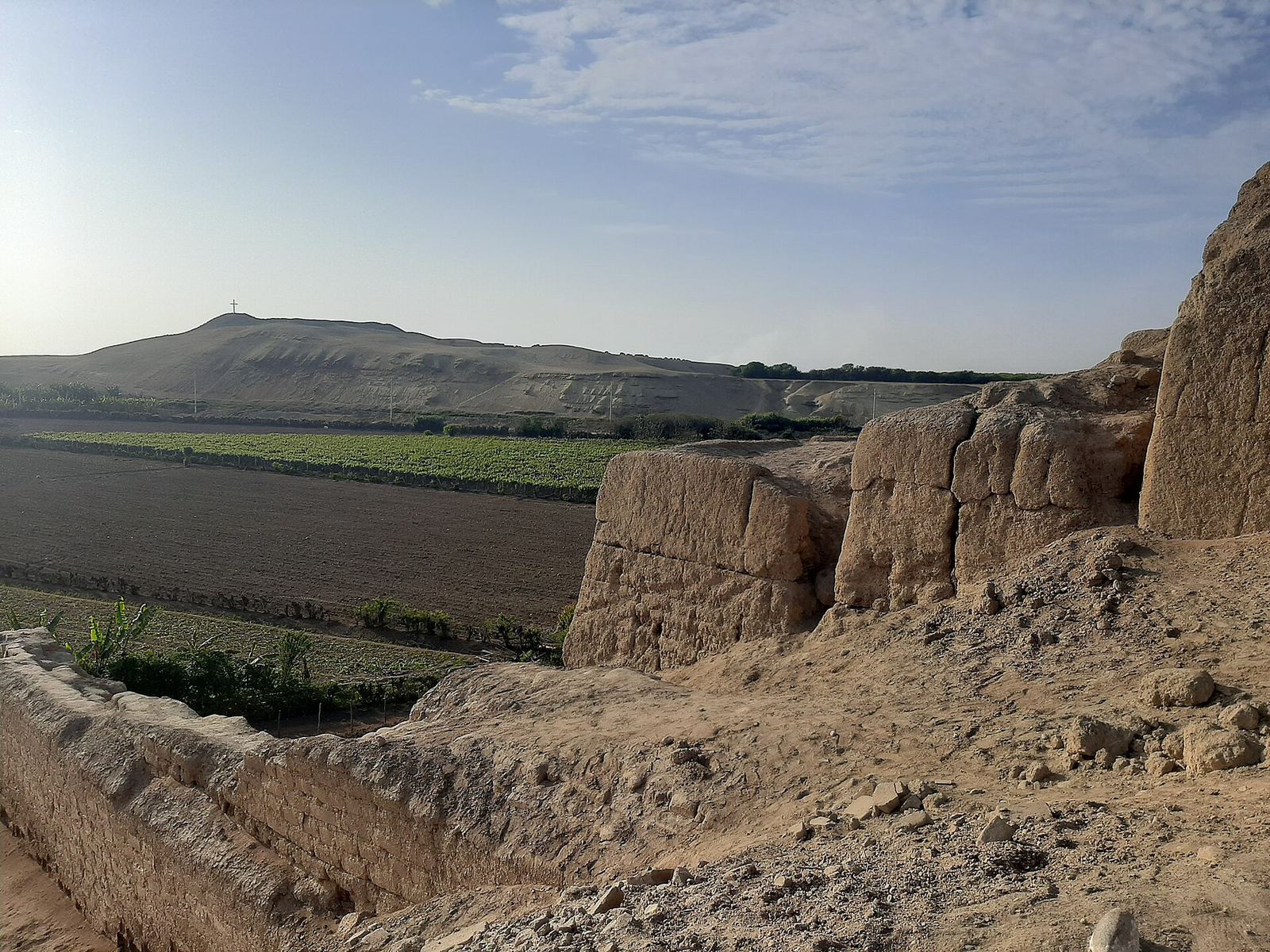
Set amid irrigated farmland in the Chincha Valley, the complex lies about 200 km south of Lima, 8 km from Chincha Baja, and 1 km from the Pacific Ocean. It covers more than 75 hectares and consists of two large pyramid groups, La Centinela and Tambo de Mora, with 11 clearly defined pyramids and smaller buildings. Rectangular adobe structures were built mostly during the Inca phase, and the smaller buildings also use adobe brick. Some adobe walls have designs formed by recessed areas.
Pyramids and enclosed spaces
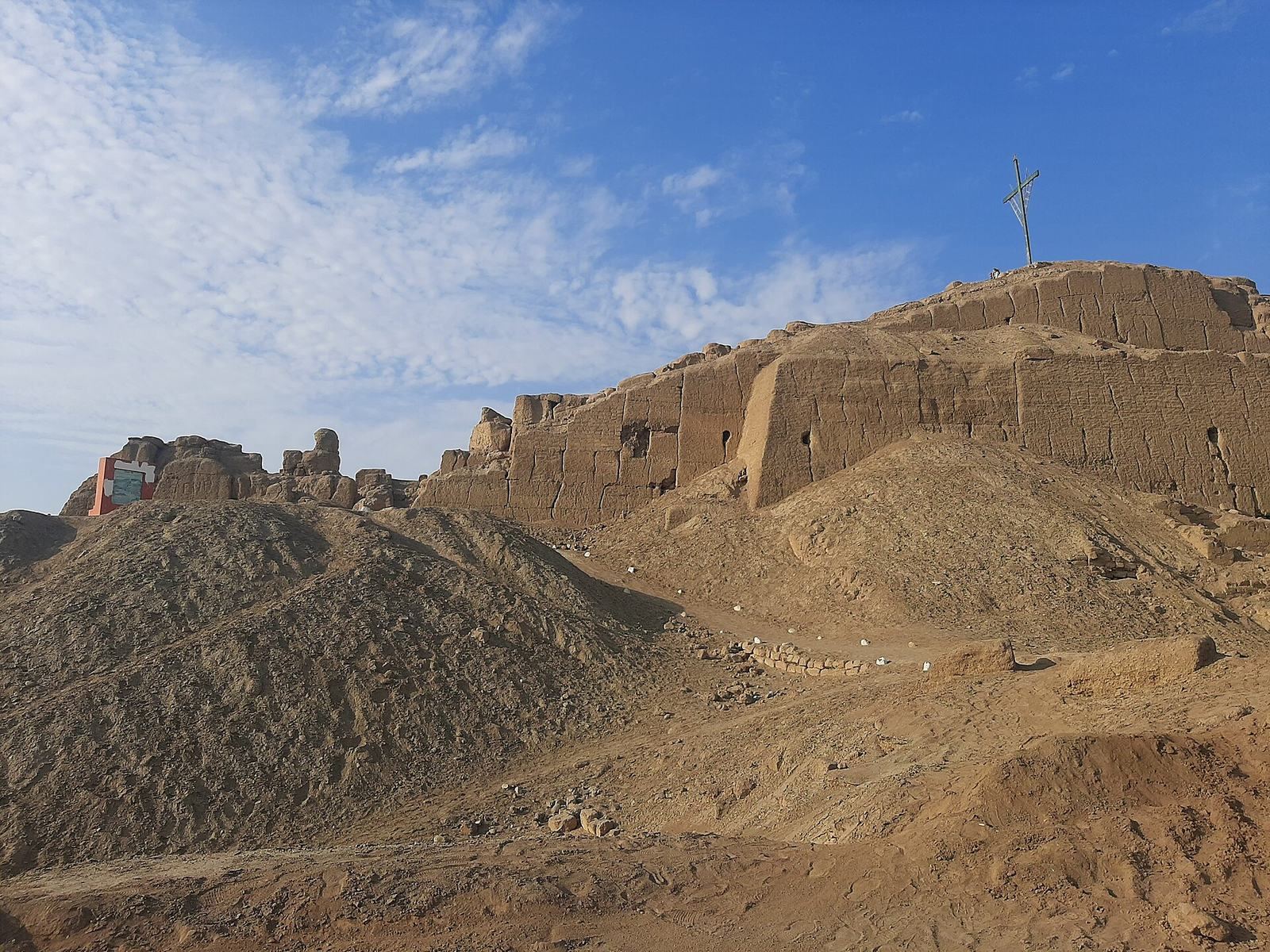
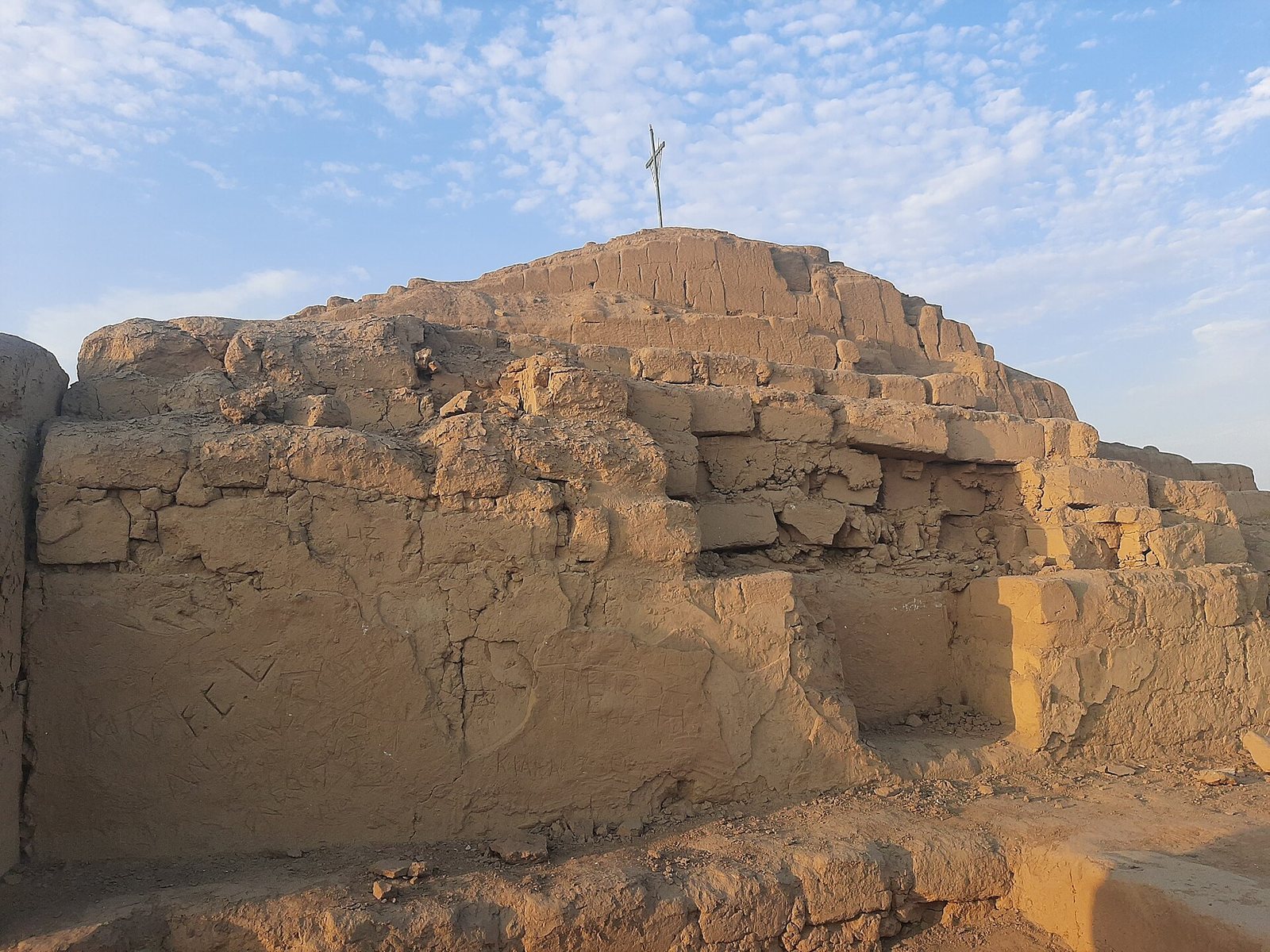
The principal pyramid gives the complex its name because of its height and served as the palace of the Chincha curaca, a local Andean ruler. Smaller pyramids stand around it. High, thick walls divide the spaces between the pyramids into enclosed plazas, with narrow passageways separating them. Rooms and courtyards on the highest level held the greatest importance, while those on intermediate platforms ranked lower.
Surviving decoration
Frieze Enclosure
At the summit of the main pyramid, the Frieze Enclosure retains the lower part of a formerly long wall. Its decoration depicts seabirds, fish, and waves.
Principal Inca building
Inside the principal Inca building, geometric paintings in black and red appear against a white background.
Sectors and site markers
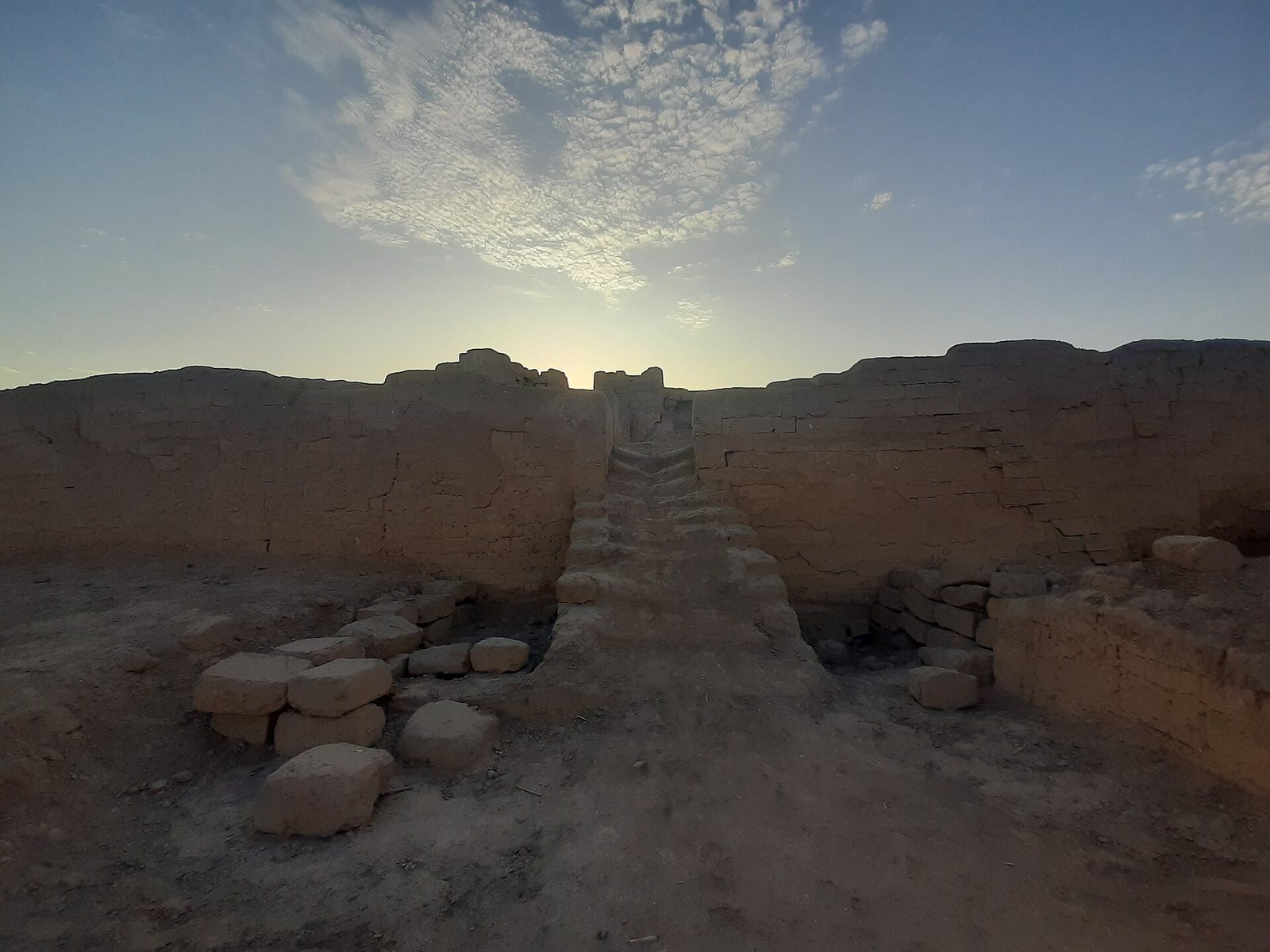
The complex includes Sector X and the eastern part of Sector XI, as well as a stepped path and a site museum. A wall erected by Peru’s Ministry of Culture marks the archaeological area.