Pons Lapidis: A Roman Bridge in Parma
Site at a Glance
- Rating
- 4.5
- Popularity
- Low
- Country
- Italy
- Primary era
- Classical
- Eras represented
- Classical
- Civilizations
- Ostrogothic, Roman
- Site type
- Infrastructure
- Remains
- Bridge
On this page6 sections
History
Roman construction
Pons Lapidis, also called the Roman Bridge, is an ancient Roman crossing beside Piazza Ghiaia in Parma, Italy. Built in 187 BC to carry the Via Emilia, a major Roman road, over the Parma stream, it initially had stone foundations and a timber upper structure. During the reign of Augustus, Rome’s first emperor, a masonry bridge replaced the earlier form, but floods later damaged it.
In 493, Theodoric the Great, an Ostrogothic king who ruled Italy in the late fifth and early sixth centuries, ordered the bridge rebuilt entirely in stone, retaining the foundations of its eleven original arches. The bridge is also known as Theodoric’s Bridge.
Changes to the crossing
A flood in 1177 shifted the Parma stream westward, leaving the bridge on dry ground and making a new crossing necessary. Houses were built on the dry area and incorporated into the city. Some stood over the bridge arches and partly obstructed the Via Emilia, until Duke Pier Luigi Farnese ordered their demolition in 1547.
Rediscovery and redevelopment
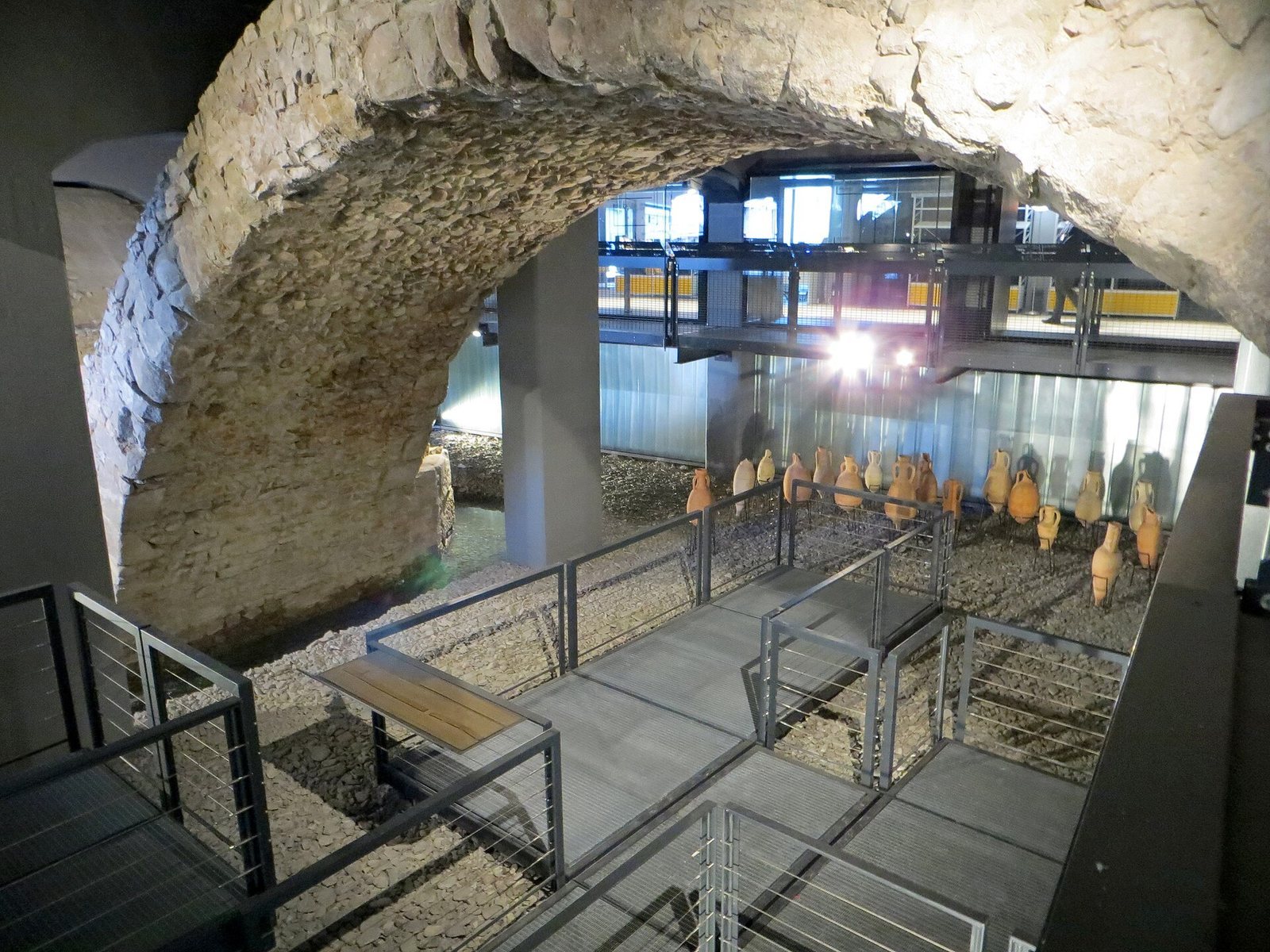
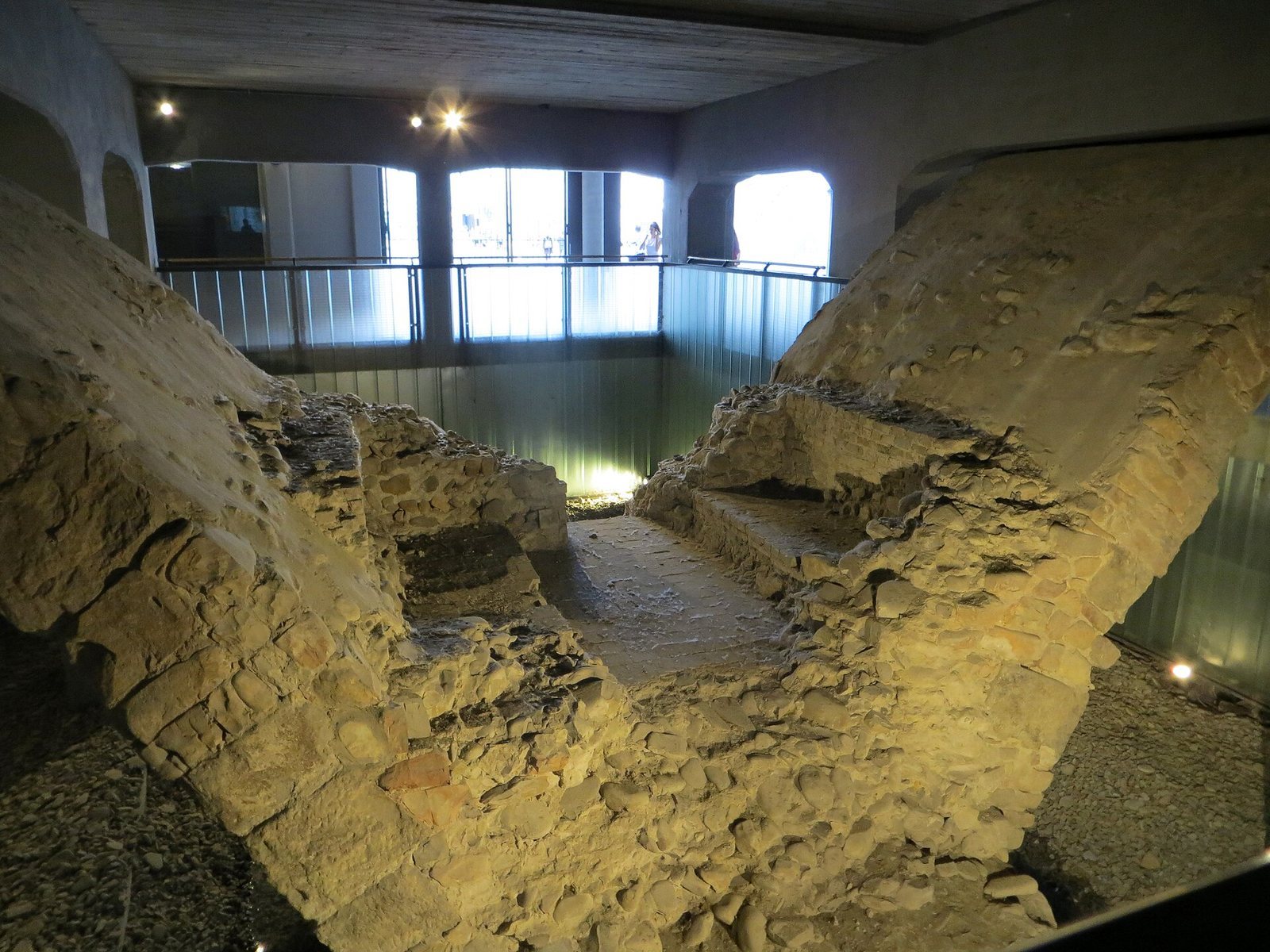
Two arches came to light in 1966 during work to reprofile Strada Mazzini, the urban section of the Via Emilia. The municipal administration built a pedestrian underpass with shops and other businesses, linking it directly to Piazza Ghiaia. The businesses later closed, and the passage itself eventually shut.
Piazza Ghiaia was redeveloped in 2012. Structural work on the underpass began in 2014 after water infiltration threatened it, as part of preparations for a wider redevelopment. Completed in October 2018, the work lowered Borgo Romagnosi to connect the square directly with the commercial galleries on Strada Mazzini and opened a university hub within the passage.
Remains
Bridge structure and setting
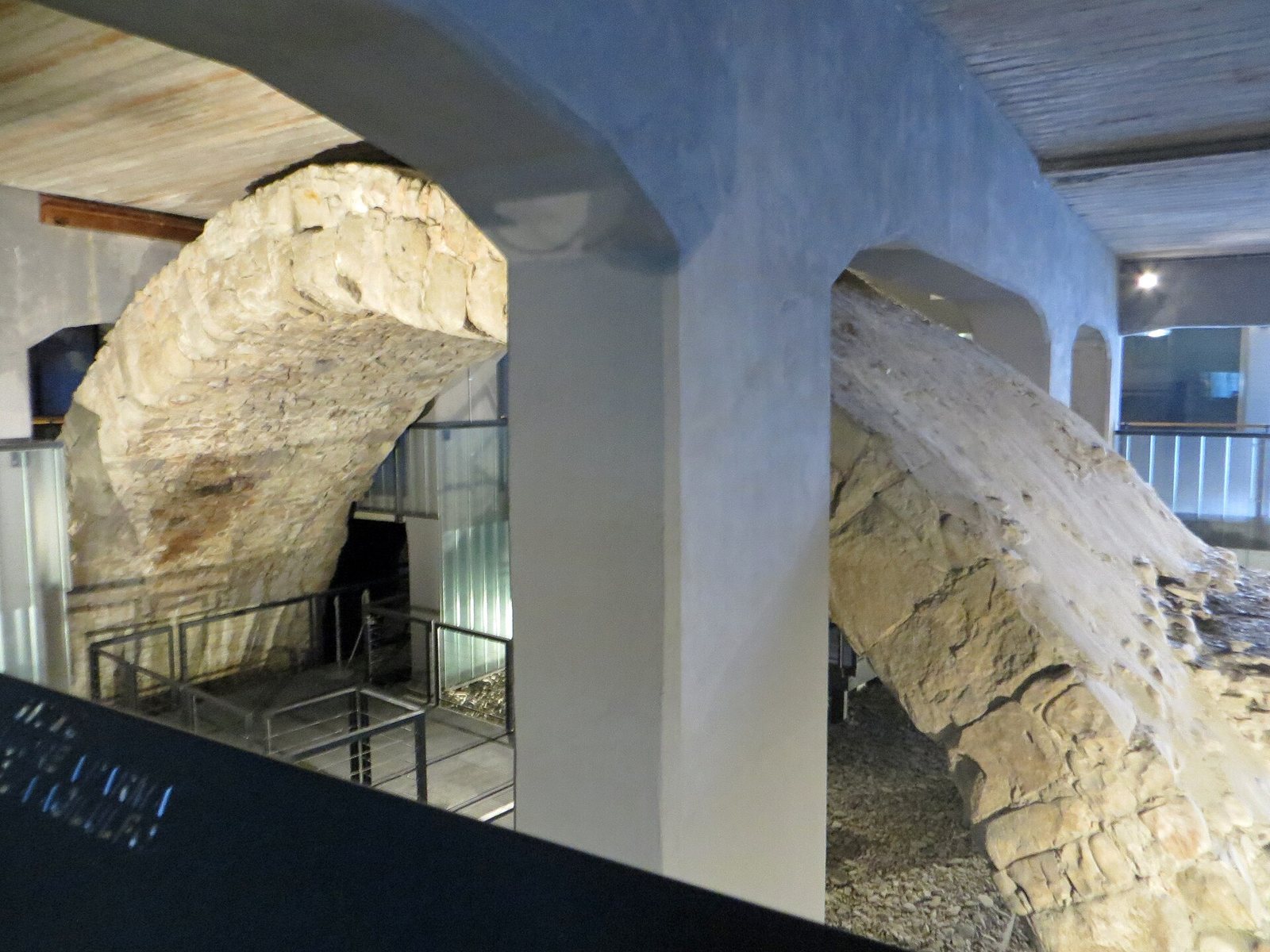
The 140-metre bridge had eleven arches of varying widths, extending beside Piazza Ghiaia and beneath present-day Strada Mazzini. Two arches are visible in the pedestrian underpass, while the others remain buried below the street. Their arch rings combine local sandstone and Verona biancone with river pebbles, a construction method used in the Roman period. Part of the large staircase between Piazza Ghiaia and Strada Mazzini was demolished, opening a view toward the bridge.