Garrick’s Temple to Shakespeare: A Riverside Memorial in Hampton
Site at a Glance
- Rating
- 4.6
- Popularity
- Medium
- Country
- United Kingdom
- Primary era
- Early Modern
- Eras represented
- Early Modern
- Civilizations
- British
- Site type
- Civic
- Remains
- Monument
On this page10 sections
History
Garrick’s Temple to Shakespeare is an eighteenth-century riverside summerhouse in Hampton, United Kingdom, built by actor and theatrical manager David Garrick in 1755–56 as a tribute to playwright William Shakespeare. Garrick used it as a place for study and entertainment, and it is reputed to be the world’s only shrine to Shakespeare.
Creation and Garrick’s use
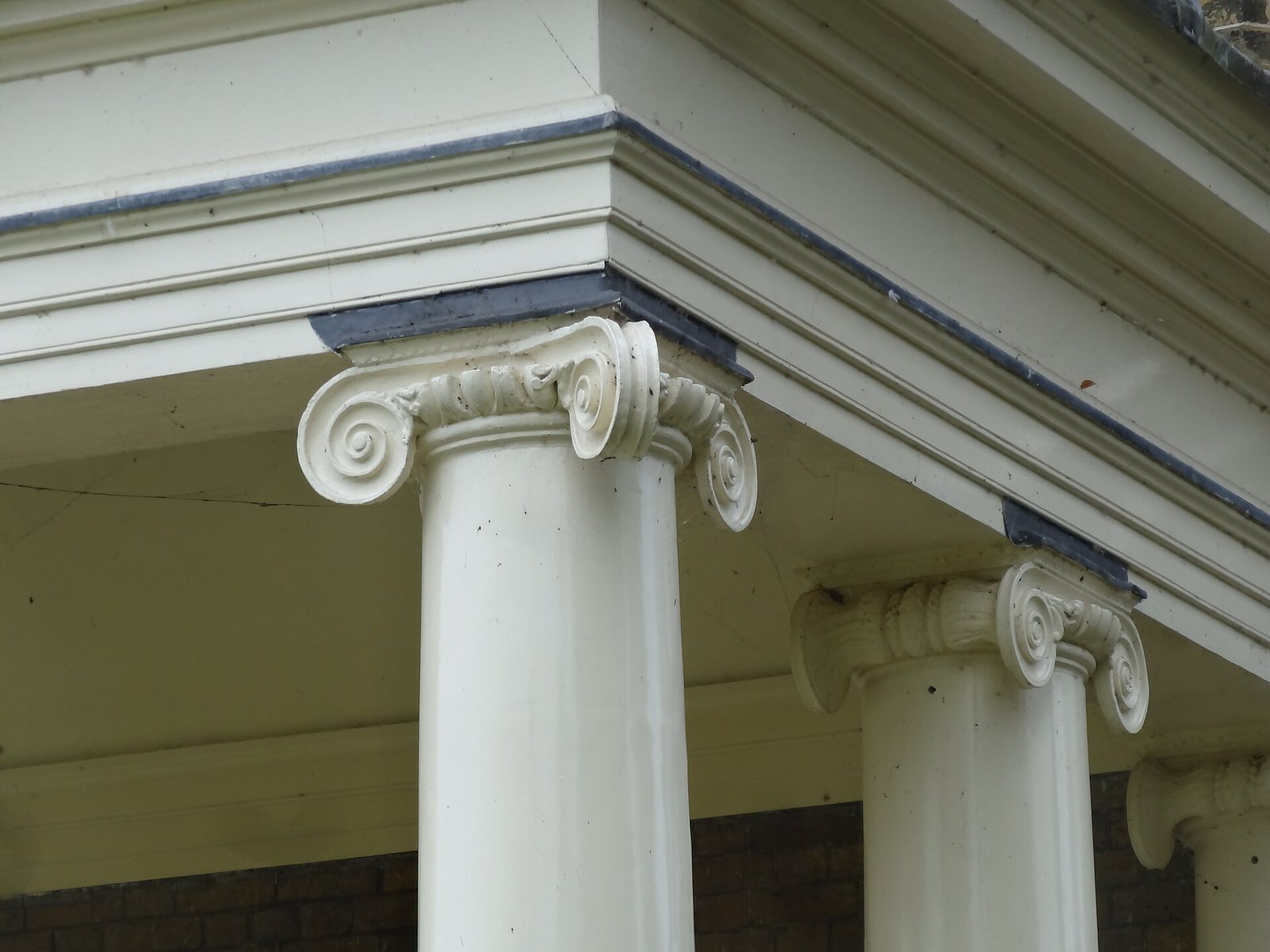
Garrick bought a villa at Hampton as a country retreat in October 1754. The following year, he decided to build a summerhouse on adjoining land beside the Thames. The architect is unknown. Robert Adam and landscape designer Lancelot “Capability” Brown have both been suggested, but neither attribution is established. A temple with Ionic columns, distinguished by their scroll-shaped capitals, at Chiswick House may have inspired the design. Garrick had spent his honeymoon there with his wife and her guardians, the Burlingtons.
Garrick’s friend Horace Walpole offered a motto connecting Shakespeare with Garrick’s ability to move and delight audiences. Garrick declined Walpole’s offer to decorate the interior with mottos, after which Walpole proposed decorating the outside instead. Garrick displayed Shakespeare-related relics in the temple, studied his lines there, wrote letters, and entertained his wife and guests over tea and dinner. Painter Johann Zoffany depicted Garrick, his wife, and their friends on the lawn and near the building.
Visitors were invited to write verses in Shakespeare’s honour and leave them at the statue’s feet. Garrick arranged for selected poems to be published anonymously in London journals, though some contemporaries mocked the practice. Actor Samuel Foote ridiculed Garrick’s devotion, and Voltaire made fun of the temple in a letter published in 1776. Some people also suspected that Garrick wanted to associate himself with Shakespeare, or even to place himself on an equal footing with the playwright.
In August 1774, Garrick celebrated 25 years of marriage with a silver-jubilee party in the garden. The festivities included fireworks and a concert, while 6,000 lamps illuminated the temple and grounds. Garrick also opened the garden and temple to the public on special occasions. Each May Day, he and his wife gave money and cakes to poor children from Hampton.
After Garrick
After Garrick’s widow died in 1822, aged 98, the Shakespeare collection she had retained was dispersed in an auction lasting ten days. Her solicitor, Thomas Carr, then bought the villa and temple and kept the latter as a memorial to Garrick. The property passed through several subsequent owners. In 1923 the villa became apartments, and Paul Glaize bought the riverside lawn and temple separately from it. He built a three-storey house beside the temple.
Public opposition to the new house prompted Hampton Urban District Council to buy the site in 1932 so that the house could be demolished. The lawn and temple then opened to the public and have remained in public ownership. During the Second World War, civilian Air Raid Precautions wardens, who supported Britain’s preparations for air attacks, used the temple as a post. It received Grade I status in 1952, England’s highest listed-building grade for structures of exceptional interest, and became part of a conservation area in the 1960s. The temple was also used for poetry readings during that decade.
Neglect and restoration
By the 1970s, wet and dry rot had damaged the building. Vibration from the nearby road affected its fabric, and thieves took lead from the roof. Richmond upon Thames Council commissioned a restoration. The temple deteriorated again by the 1990s, with further vandalism, graffiti, roof-lead theft, and damage to a wooden portico column. A campaign launched in 1995 sought to restore the temple and garden for cultural use. Lottery support, local groups, and donations helped fund the work, which was completed in April 1999.
Remains
The temple building
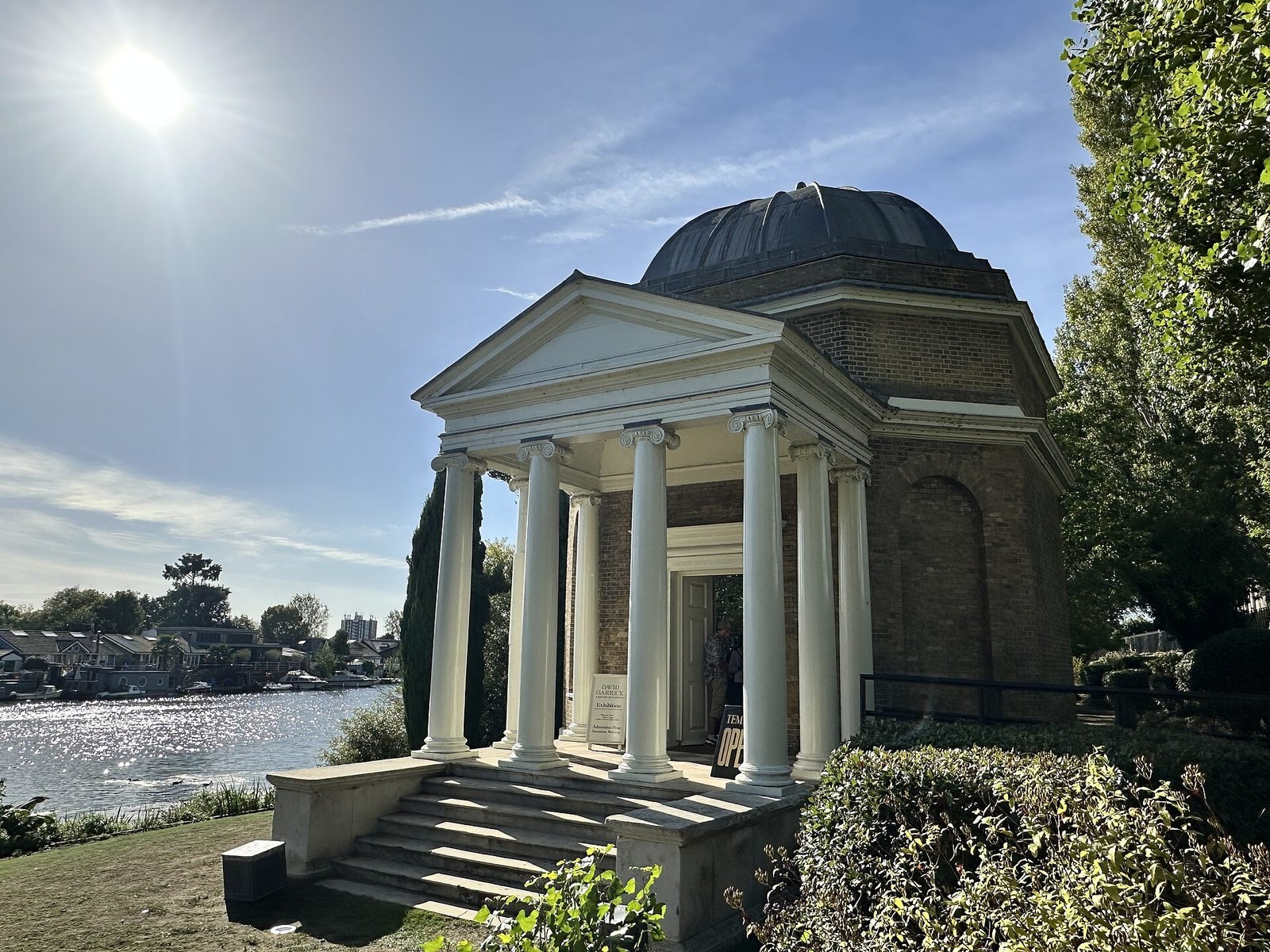
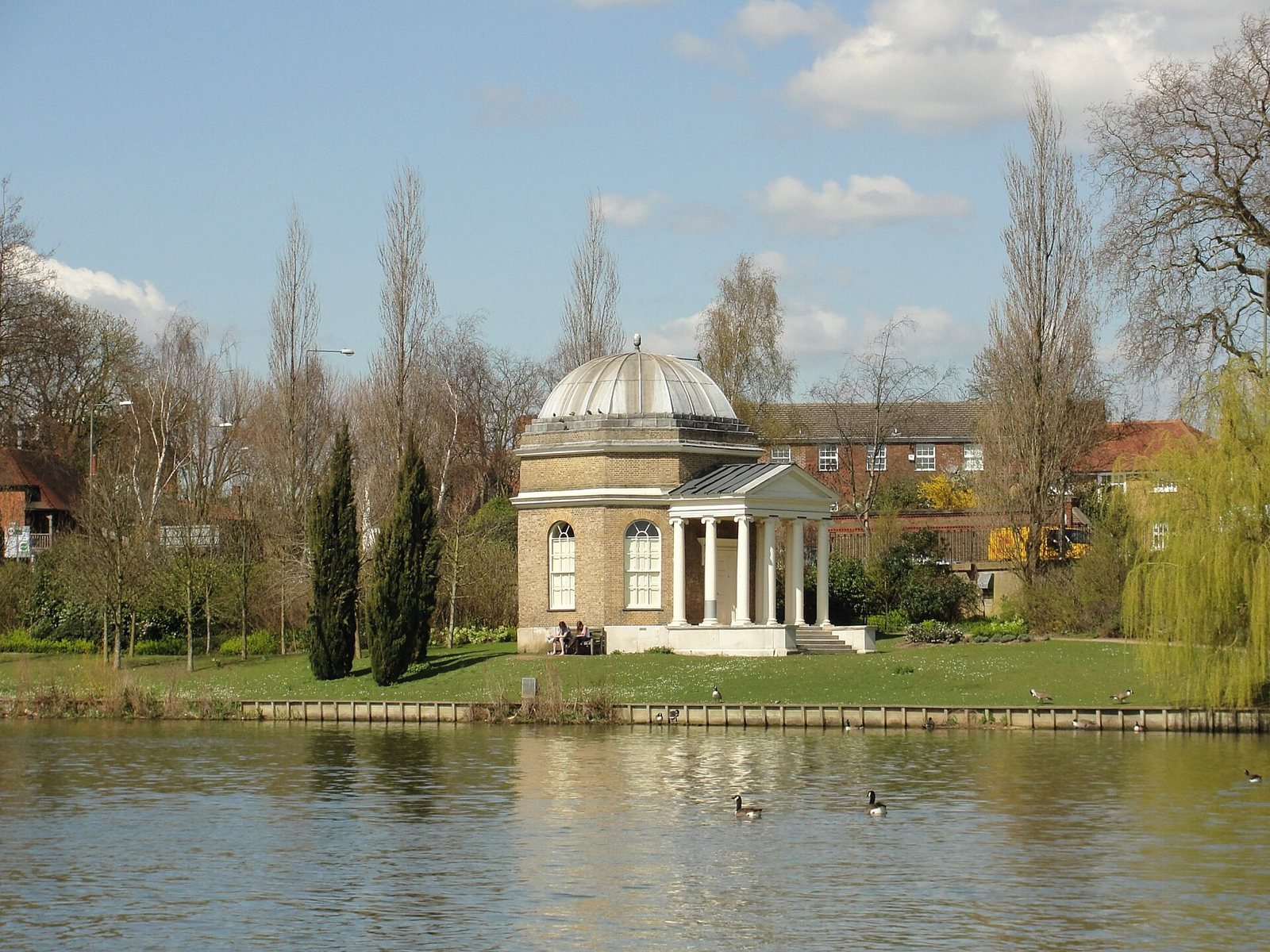
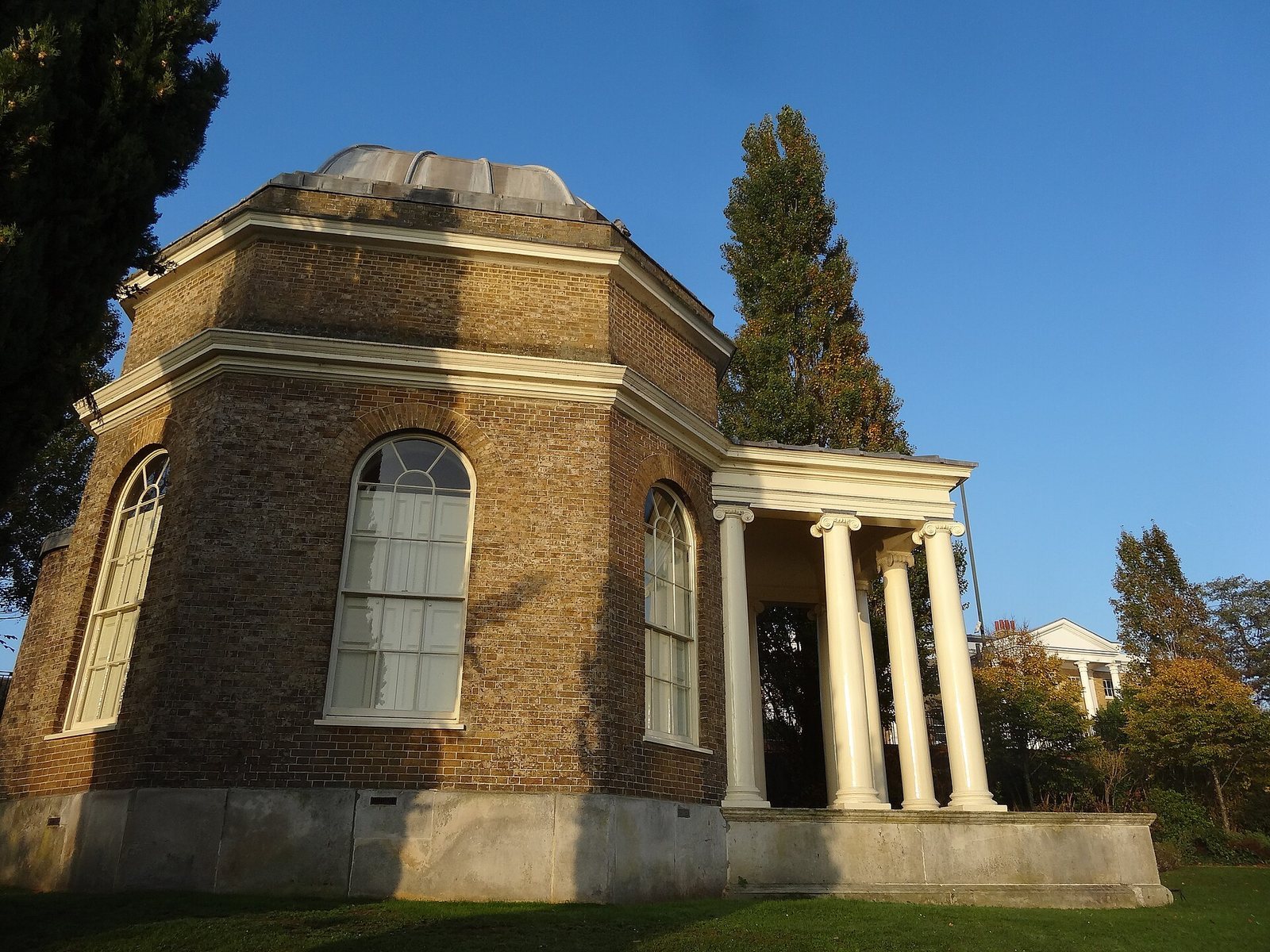
The small brick building is a garden folly, an ornamental structure intended chiefly to enhance a landscape. Its plain exterior encloses an octagonal chamber beneath a dome, with a single entrance facing east. An Ionic portico, or columned entrance porch with scroll-shaped capitals, frames the doorway. It is four columns wide and three deep, and steps lead up to it. Inside, glazed arched windows extend to floor level and face the river. A deep, curved recess in the west wall holds a statue.
Garden and riverside setting
Garrick’s riverside garden lay across the road from his villa, on a plot now known as Garrick’s Lawn. A tunnel-grotto under the road provided private access between the house and lawn; Garrick had it lit with 500 lanterns. The garden’s S-shaped path ran among flowering shrubs, following William Hogarth’s idea of the Line of Beauty, the notion that an S-shaped curve could be pleasing to the eye. Walpole donated a grove of Italian cypresses. The lawn slopes towards the Thames and provides views south across the river. It was replanted in the late 1990s to evoke its Georgian appearance.
Temple collections
Shakespeare statue
Garrick commissioned French-born sculptor Louis-François Roubiliac to make a statue of Shakespeare for the temple. Roubiliac based it on the Chandos portrait, a painting traditionally identified as showing Shakespeare. Garrick reportedly posed for the sculpture, which was said to look more like the actor than the playwright. Dissatisfied with the head, Garrick asked Roubiliac to replace it with one carved from a different type of marble. Carr later installed a statue of Garrick in its place. Garrick had bequeathed the Shakespeare statue to the British Museum, where it stood in the King’s Library until 1998, when it was moved to the British Library. A copy supplied by the British Museum now occupies the temple’s recess.
Other objects
The temple’s collection also included a chair made from a mulberry tree supposedly planted by Shakespeare at his house, New Place, in Stratford-upon-Avon. Walpole attributed the chair’s design to Hogarth; a carved medallion of Shakespeare decorated its back. The chair is now owned by the Folger Shakespeare Library in Washington, D.C. Other displayed objects included a pointed-fingered leather glove with blackened metal embroidery, a dagger, and a signet ring bearing the initials “W.S.” An exhibition installed in 1999 included copies of portraits by Thomas Gainsborough, Joshua Reynolds, and Zoffany.