Sukiennice: Kraków’s Renaissance Cloth Hall
Site at a Glance
- Popularity
- Very High
- Country
- Poland
- Primary era
- Early Modern
- Eras represented
- Medieval, Early Modern, Modern
- Civilizations
- Austria-Hungary, Habsburg, Kingdom of Poland, Polish–Lithuanian Commonwealth
- Site type
- Economic
- Remains
- Market
On this page13 sections
History
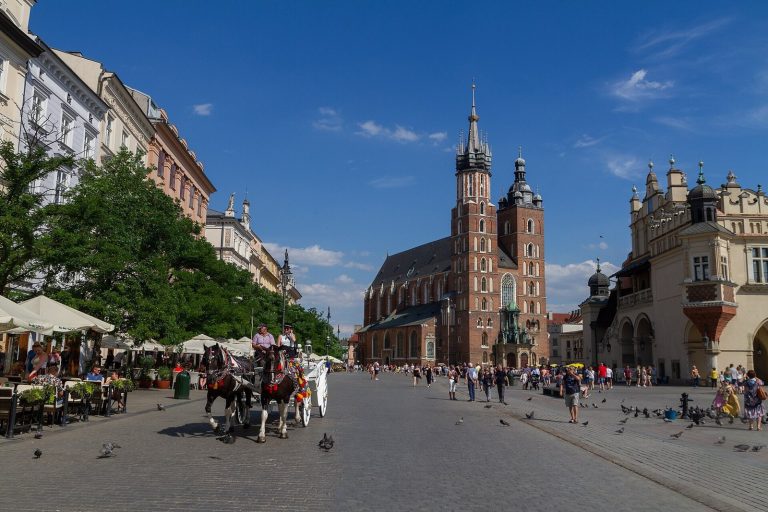
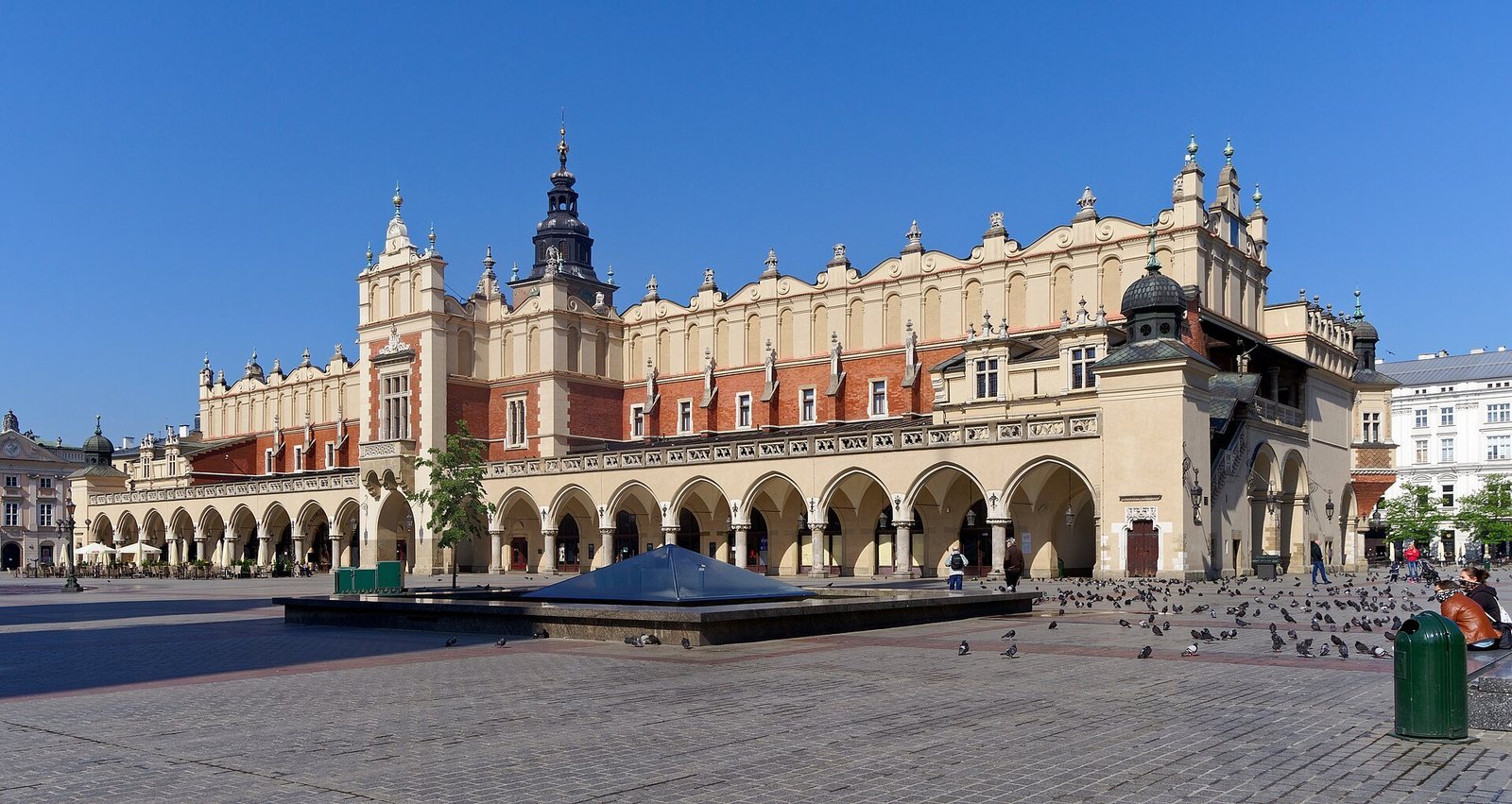
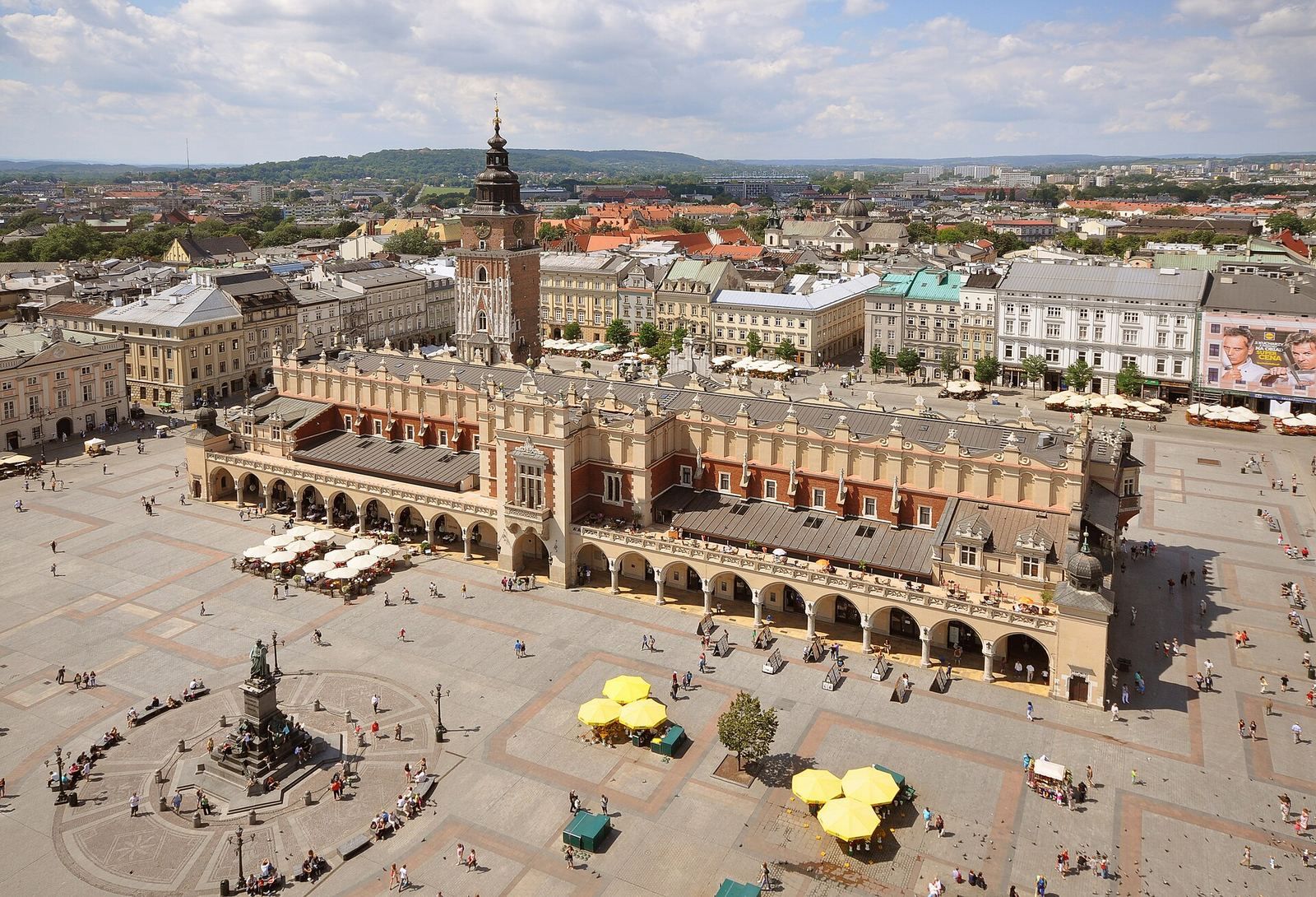
Sukiennice is a Renaissance cloth hall at the center of the Main Market Square in Kraków, Poland. Its history began in 1257, when King Bolesław V the Chaste established two stone rows of cloth stalls as the city received Magdeburg law, a system of municipal privileges that provided a framework for local government and commerce.
Medieval origins
In 1358, King Casimir III the Great had a new cloth hall built. Its Gothic structure later became a focus of Kraków’s international trade. In the 15th century, when the city was flourishing, merchants met there to negotiate and barter. Imports from the east included spices, silk, leather, and wax; exports included textiles, lead, and salt from the Wieliczka Salt Mine.
Renaissance rebuilding and trade
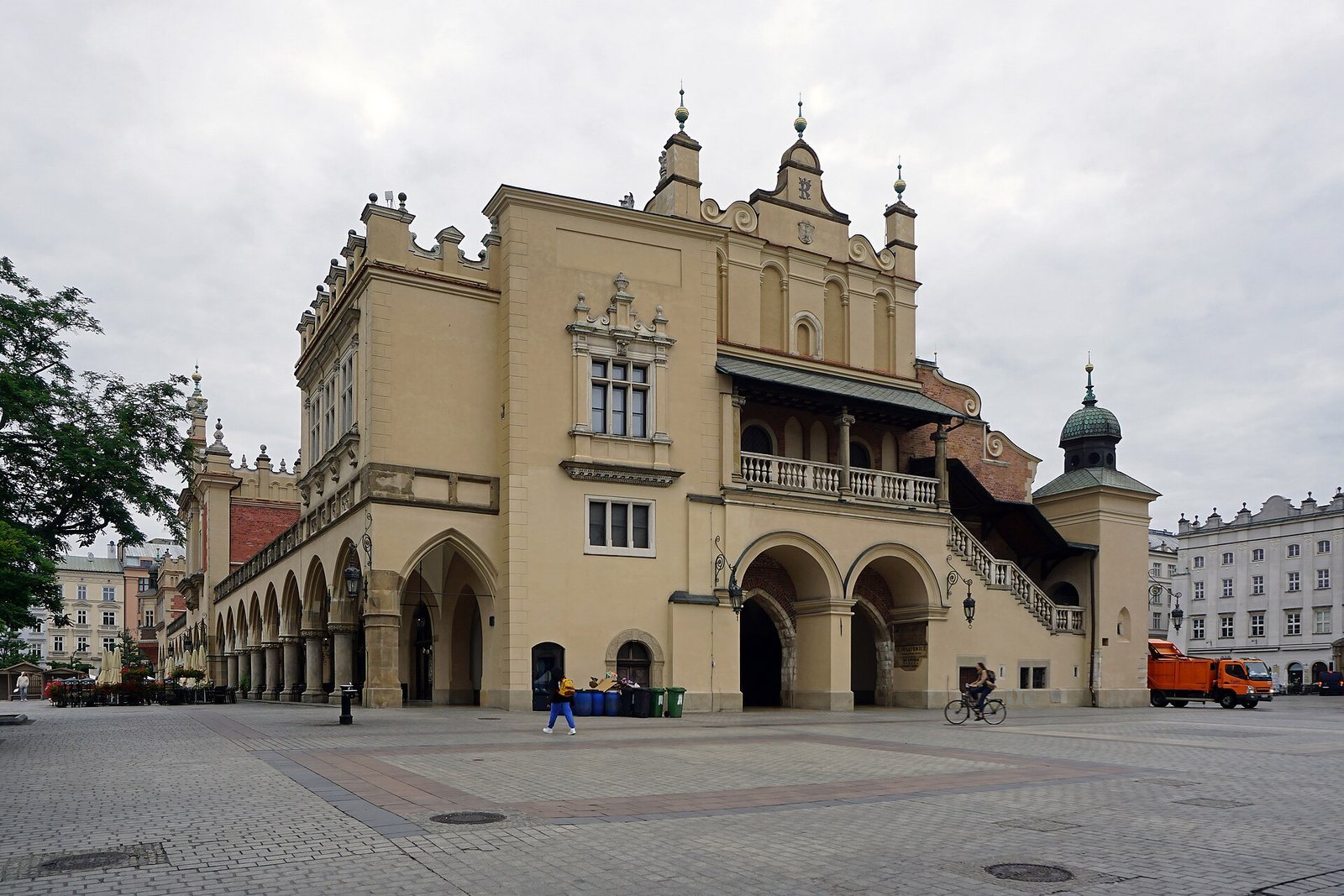
A fire destroyed the Gothic hall in 1555. It was rebuilt in Renaissance style between 1556 and 1560 by Giovanni il Mosca, also known as Giammaria Mosca, an artist from Padua. A cross-passage was added in 1601. The cloth hall continued to serve commerce as Kraków’s fortunes changed.
Decline and nineteenth-century renewal
Kraków’s decline began after the Polish capital moved to Warsaw at the end of the 16th century. Wars and political upheavals deepened it, including the Partitions of Poland, the late-18th-century division of Polish territory among neighboring powers. In the 19th century, the city experienced a revival under Austrian rule, amid changing political and economic conditions in Galicia and Lodomeria, a Habsburg crown land, and the establishment of its Legislative Assembly.
The hall hosted balls, particularly after Prince Józef Poniatowski briefly freed Kraków from Austrian rule in 1809. A restoration was proposed in 1870, and rebuilding and renovation followed from 1875 to 1879. Architect Tomasz Pryliński designed the work, supervised by Kraków mayor Mikołaj Zyblikiewicz, who also served as Sejm Marshal, a legislative leader. The Gallery of 19th-Century Polish Art opened in the hall on 7 October 1879. The upper-floor museum, now part of the National Museum in Kraków, received new technical equipment, storage and service spaces, and a revised thematic display arrangement in 2010.
Sukiennice entered the Małopolska Voivodeship register of monuments in 1931. It forms part of Kraków’s Historic Centre, a UNESCO World Heritage Site since 1978, and the city’s historical urban complex, designated a Historic Monument of Poland in 1994.
Remains
The Renaissance hall stands within the Main Market Square, its central trading space shaped by successive rebuilding. The earlier Gothic building had shop rows on either side of its main hall; the current building combines commercial space on the ground floor with exhibition galleries above.
The hall and its architectural development
Gothic hall and shops
The 14th-century Gothic predecessor measured 108 metres long and 10 metres wide. Rows of shops, each 7.5 metres wide, ran along both sides of the hall. Arched vaults covered the shops, which opened toward the interior through arches. The Great Weigh House and Small Weigh House stood immediately beside the cloth hall until the 19th century.
Renaissance features
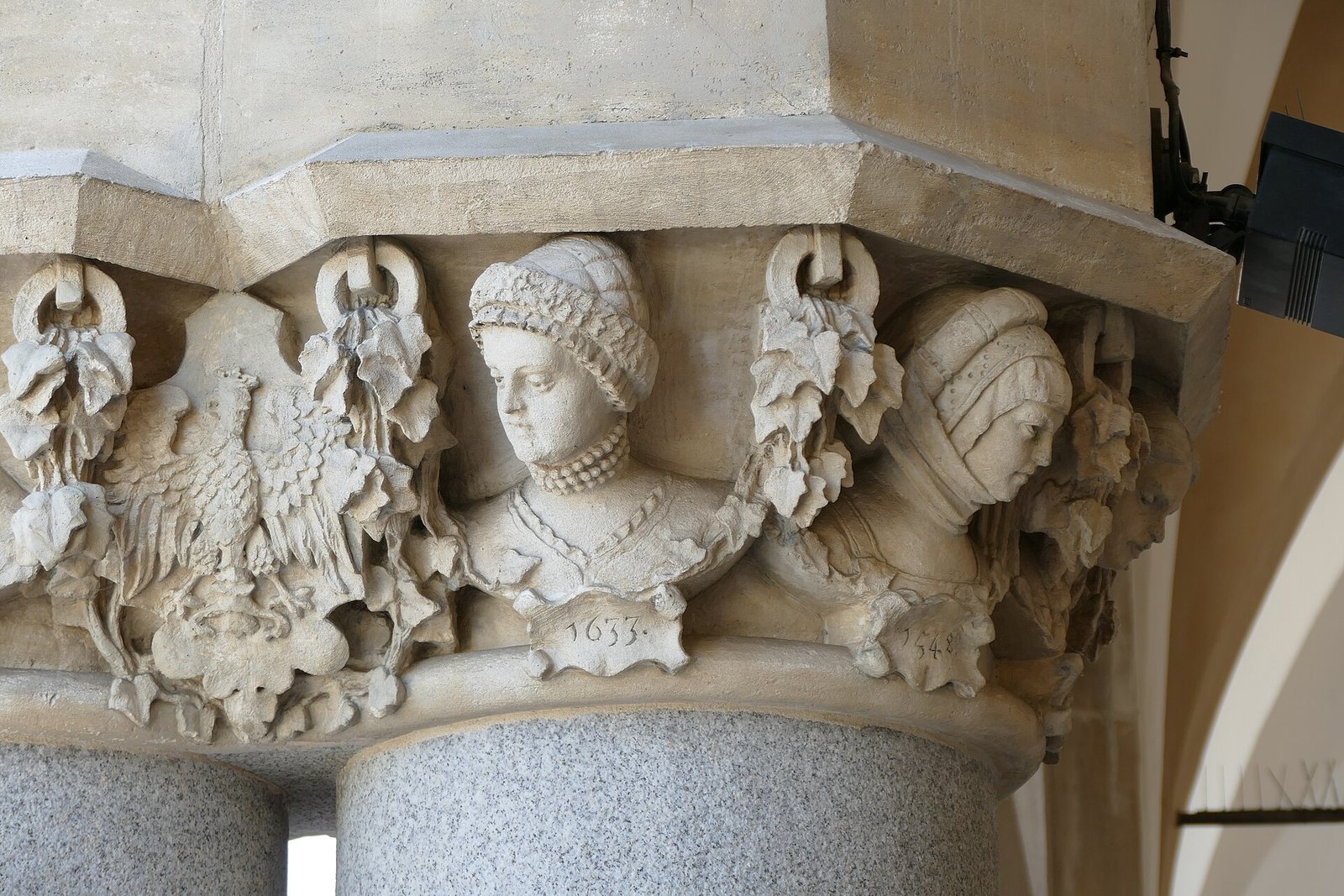
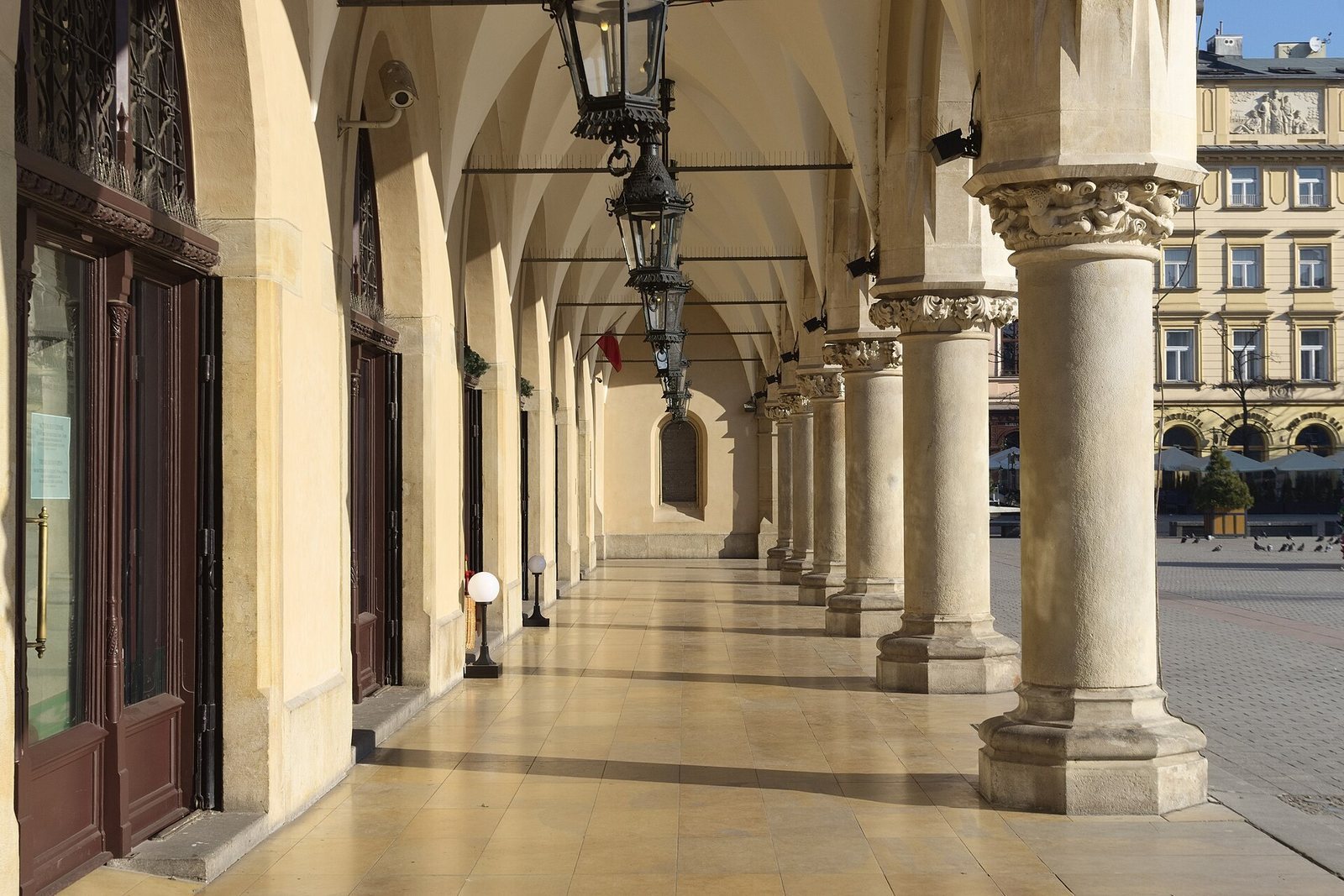
During the 16th-century rebuilding, the main hall received a vaulted ceiling. A decorative upper wall adorned with carved faces was added to the exterior, along with columned galleries designed by Giovanni Maria Padovano. In 1601, projecting sections of the building were joined by a cross-passage.
Nineteenth-century alterations
The 19th-century work added pointed neo-Gothic arches around the building. Jan Matejko’s designs inspired the capitals atop the arcade columns. Wooden stalls were also installed along the walls of the lower hall.
Commercial and museum interiors
Ground floor and gallery spaces
Trade continues on the ground floor, where stalls and cafés occupy the hall. The upper floor houses the Sukiennice Museum’s Gallery of 19th-Century Polish Art. Its displays are divided among four large halls according to historical period and artistic theme, forming the largest permanent exhibition of 19th-century Polish painting and sculpture.
Earlier paintings and works on Polish history
The collection includes 18th-century late Baroque, Rococo, and Classicist portraits and battle scenes by Polish and foreign artists who worked before Romanticism. Among them are Marcello Bacciarelli, Józef Grassi, Giambattista Lampi, Per Krafft, Józef Pitschmann, Aleksander Orłowski, Franciszek Smuglewicz, Michał Stachowicz, and Kazimierz Wojniakowski. Works connected with partitioned Poland include Jan Matejko’s Prussian Homage, Wernyhora, and Kościuszko at Racławice. Prussian Homage shows Albrecht, Duke of Prussia, paying homage to King Sigismund I in Kraków’s Main Market Square.
Later painting and sculpture
Mythological and biblical subjects include Henryk Siemiradzki’s large painting Nero’s Torches. Paintings associated with Young Poland, an artistic movement around the turn of the 20th century, include works by Jacek Malczewski and Józef Chełmoński. The gallery also displays Impressionist paintings by Józef Pankiewicz and Leon Wyczółkowski, works by Wojciech Gerson and Julian Fałat, and Władysław Podkowiński’s large, controversial Ecstasy, or Frenzy of Exultations. Its sculptures include works by Jakub Tatarkiewicz, Pius Weloński, Antoni Kurzawa, and Antoni Madeyski.