St Andrew’s Cathedral in Glasgow: The Catholic Cathedral of the Archdiocese
Site at a Glance
- Rating
- 4.7
- Popularity
- High
- Country
- United Kingdom
- Primary era
- Modern
- Eras represented
- Modern
- Civilizations
- British
- Site type
- Religious
- Remains
- Cathedral
On this page9 sections
History
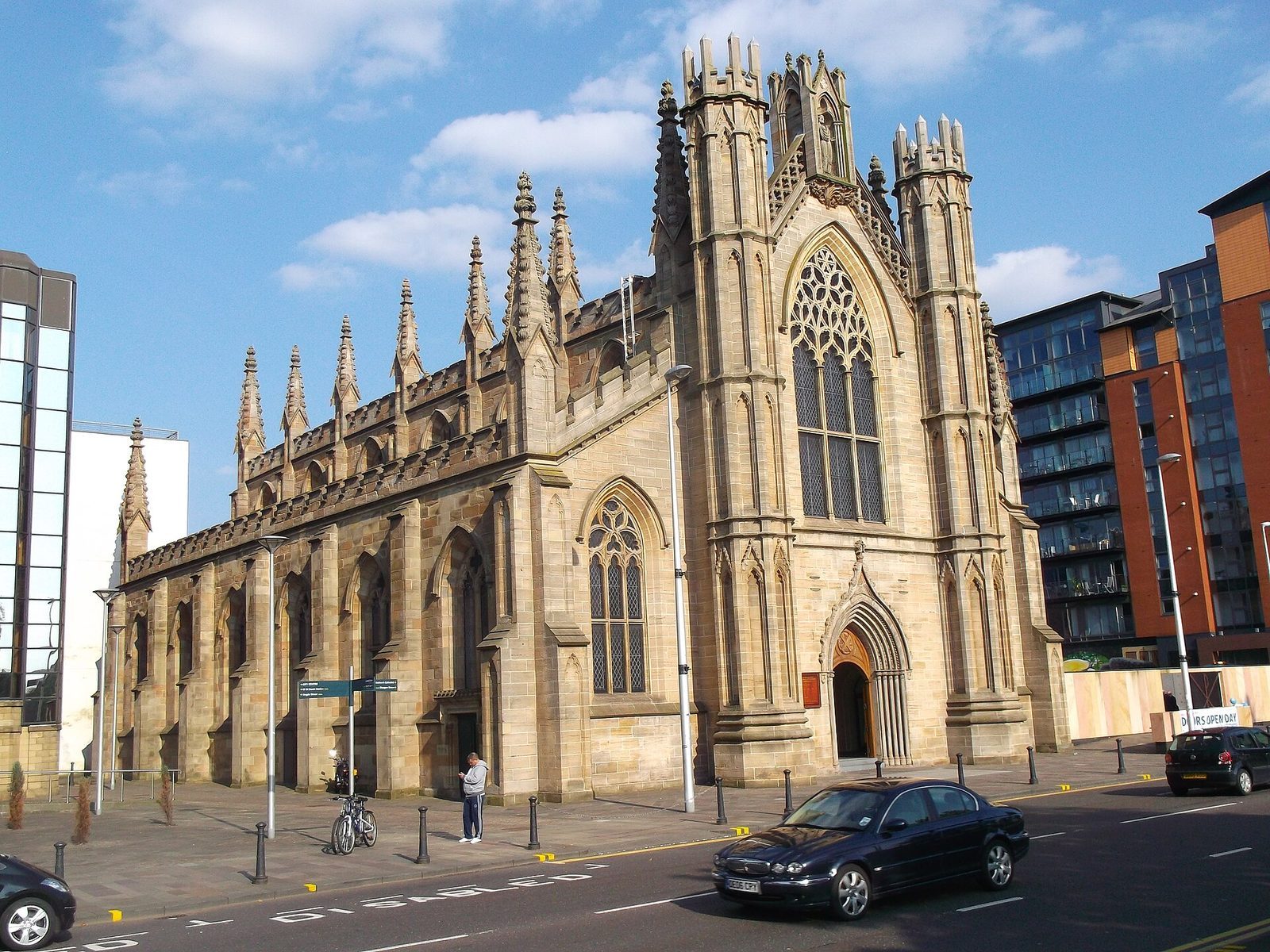
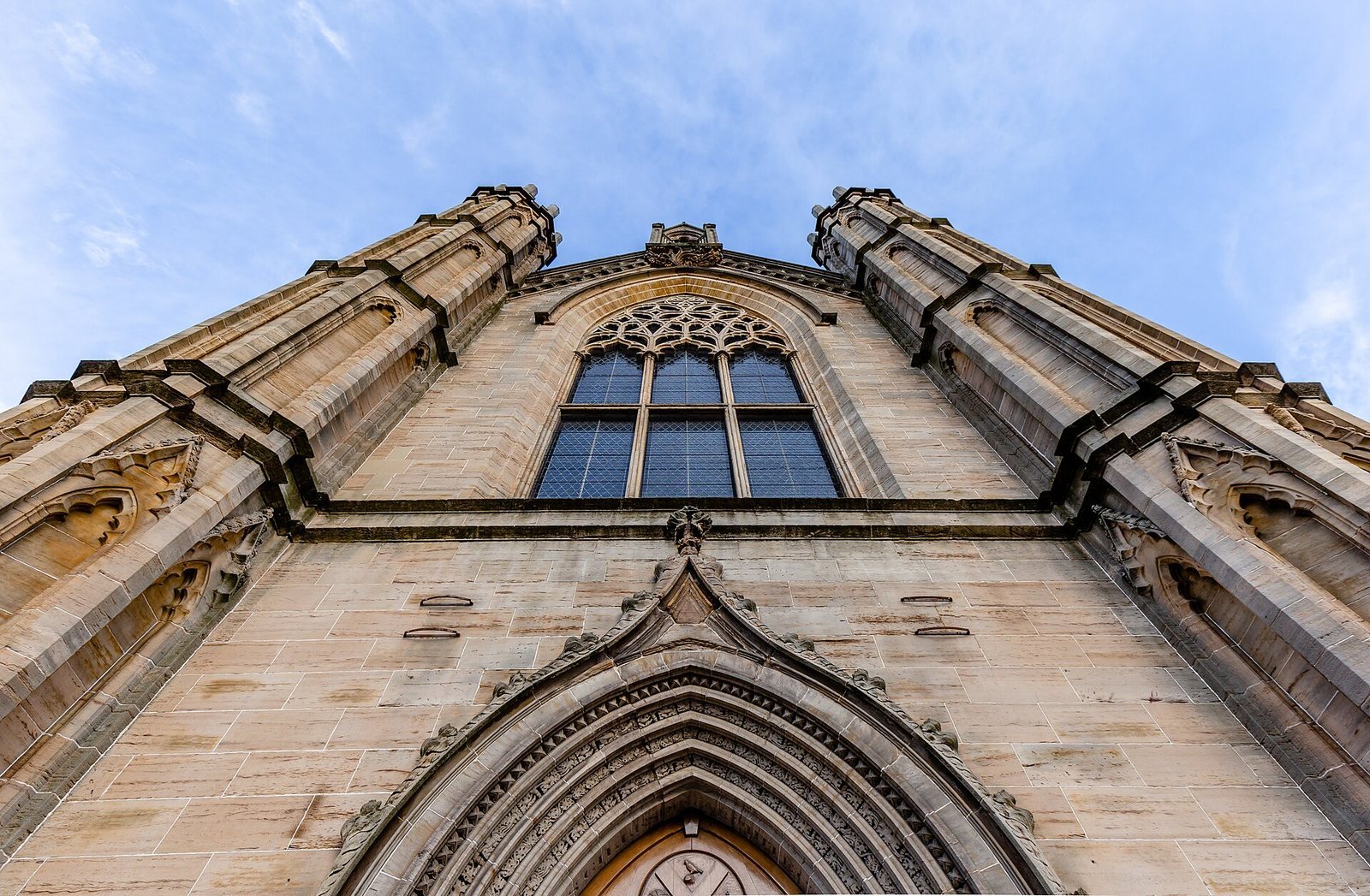
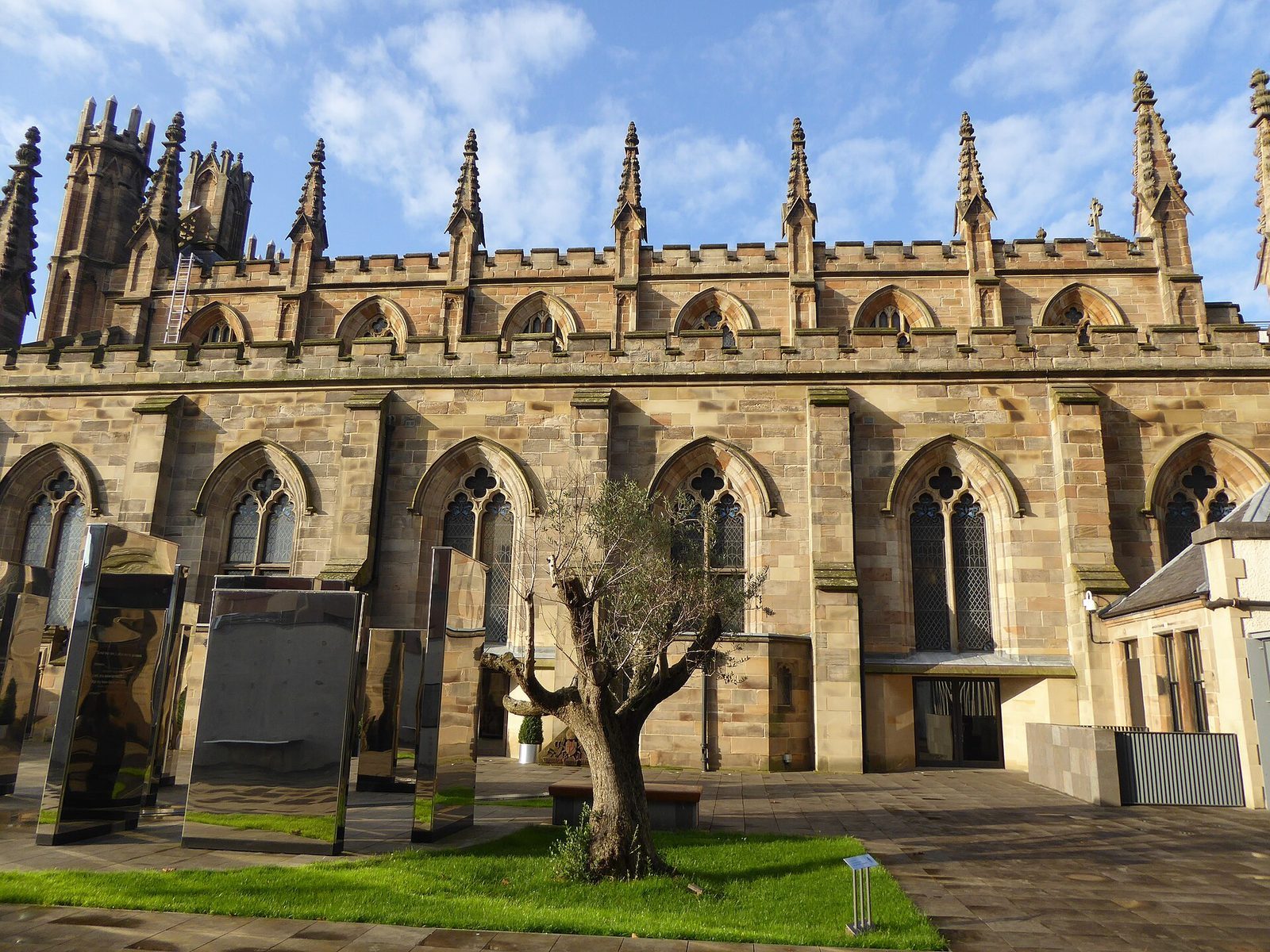
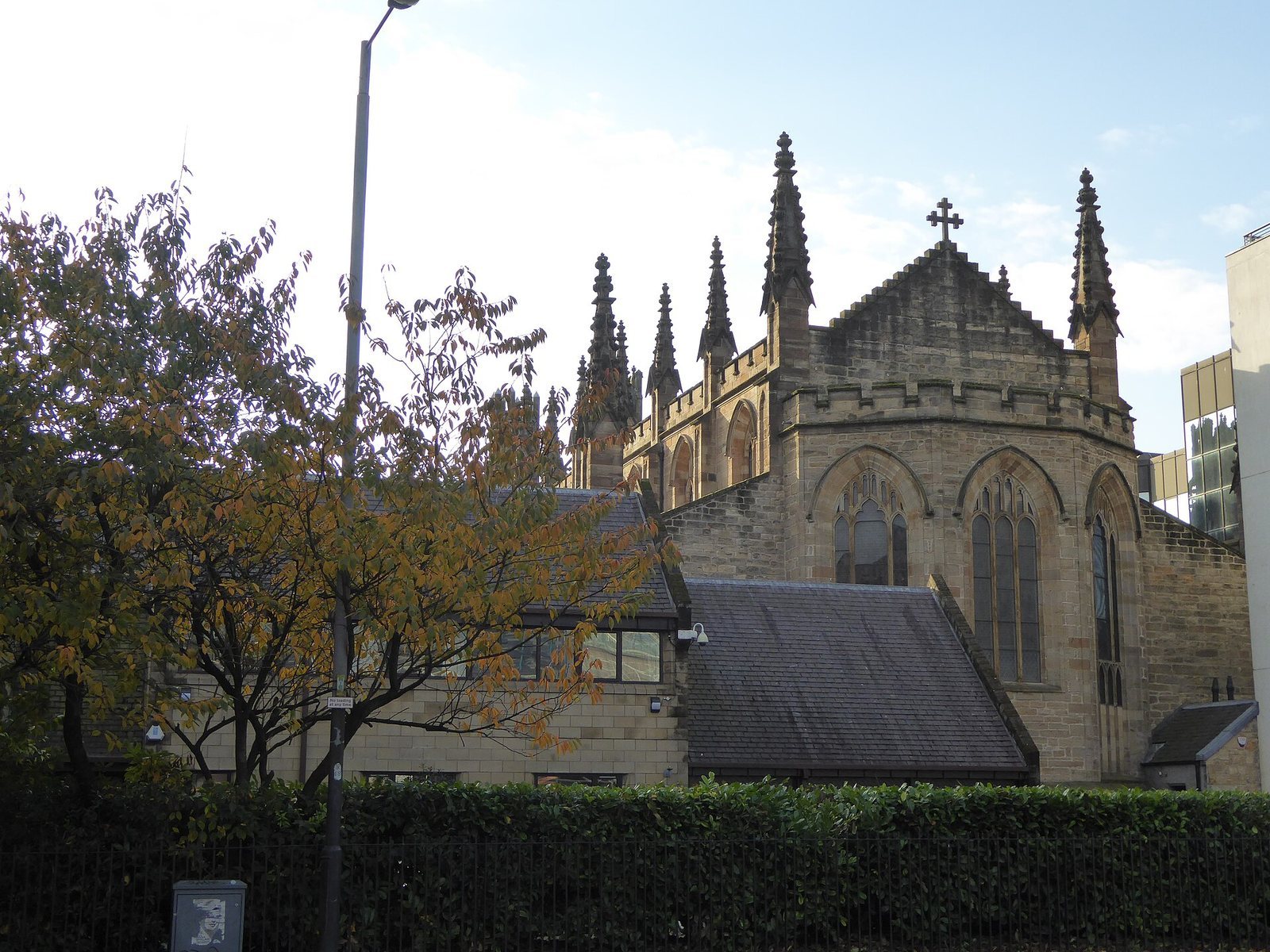
St Andrew’s Cathedral in Glasgow is a Roman Catholic cathedral on Clyde Street, beside the River Clyde in the United Kingdom. Designed by James Gillespie Graham in 1814, it was built from 1814 to 1816 in the Gothic Revival style, which drew on forms associated with medieval Gothic architecture.
Parish formation and church construction
After the Scottish Reformation of 1560 established Protestantism in Scotland, Catholics in Glasgow worshipped covertly. Catholic relief began in 1791, and the growing Irish Catholic population during the early Industrial Revolution increased demand for a church. Glasgow had about 450 Catholics in 1805; by 1814, the city recorded 3,000 communicants.
St Andrew’s Parish began with the appointment of a parish priest in 1792. About 200 people attended its opening Mass in a rented hall on Mitchell Street. In 1797, parishioners moved to premises in Calton, in the East End, which could accommodate up to 600 people each Sunday. Worship continued there until the first Mass in the Clyde Street church on 22 December 1816.
Father Andrew Scott chose the Clyde Street site in 1814. The land was purchased from the owners of Bogle and Scott, a firm that had traded tobacco and sugar with America and the West Indies from the property. The Bogle and Scott families were prominent landowners and civic officeholders, and were mostly Presbyterian and Episcopalian. During construction, people opposed to the project pulled down work completed during the day. Guards were eventually stationed to protect it, while members of other Christian congregations contributed money towards the church’s completion.
The Catholic Relief Act of 1791 eased legal restrictions, but limits on the prominence of Catholic places of worship remained until the 1829 Act. These restrictions help explain the church’s modest scale and its lack of a steeple or bell tower.
From parish church to cathedral
Pope Leo XIII restored the Catholic hierarchy in Scotland in 1878. St Andrew’s became a pro-cathedral in 1884, meaning it served provisionally as a cathedral, and then underwent extensive renovation by the architectural partnership Pugin and Pugin.
In 1947, the creation of the dioceses of Motherwell and Paisley restored Glasgow’s pre-Reformation position as a metropolitan diocese, an archdiocese headed by a metropolitan archbishop. St Andrew’s became the metropolitan cathedral and mother church of the Archdiocese of Glasgow, as well as the seat of the archbishop.
The cathedral was designated a Category A listed building on 15 December 1970. In Scotland, Category A is the listing for buildings considered of national or international importance.
Restoration and parish life
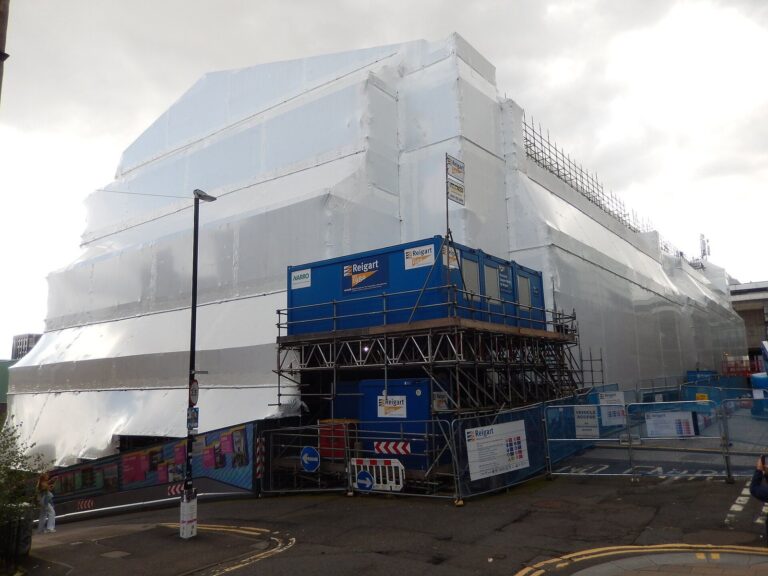
A major refurbishment and expansion began on 14 August 2009 and concluded in April 2011. During the project, the cathedra, the bishop’s official chair and a sign of cathedral status, had been at the Archdiocese’s temporary pro-cathedral at St Mary’s in Calton. It was returned to St Andrew’s when the work was complete.
The cathedral parish’s population declined as new parishes opened and Glasgow’s city centre was redeveloped. Its community is now supplemented by people who come from elsewhere, including those who travel considerable distances to participate in liturgy and help care for the building.
Remains
The cathedral stands on Clyde Street on the north bank of the River Clyde. Its modestly scaled brick structure has neither a steeple nor a bell tower, features restricted by the legal limits once placed on the prominence of Catholic churches.
Building and interior
Church structure
The brick construction and restrained outline are the principal features described for the building’s exterior. Its modest scale and lack of a steeple or bell tower reflect the restrictions on Catholic places of worship that remained in force until 1829.
Refurbishment and artwork
The 2009–11 work brought new heating and lighting systems, redecoration, and the restoration of gold leaf. Newly commissioned bronze doors were installed, along with a canvas by Scottish artist Peter Howson depicting the martyrdom of St John Ogilvie, a Scottish Jesuit priest venerated as a Catholic martyr.
Pipe organ
The cathedral’s pipe organ was built in 1903 by Henry Willis & Sons for Elgin Place Congregational Church, at the corner of Pitt Street and Bath Street. It was transferred to St Andrew’s in 1981, when the former church closed for worship. During the cathedral’s 2009–11 renovation, David Wells Organ Builders Ltd of Liverpool dismantled it and placed it in storage. An Allen Protégé AP-6 electronic organ was in use, and a fund was established to support the Willis organ’s reinstallation.
The instrument has four divisions, groups of pipes controlled from a keyboard or pedalboard. Its stops, which select the pipes that sound, include Open Diapason, Bourdon, Octave and Flute Bass in the pedals; Hohl Flute, Gamba, Dulciana, Flute Harmonique, Piccolo and Corno Di Bassetto in the choir; and Double Diapason, two Open Diapasons, Clarabel Flute, Principal, Harmonic Flute, Fifteenth, a three-rank Mixture, Trumpet and Clarion in the great. The swell division has Lieblich Bourdon, Open Diapason, Lieblich Gedact, Salicional, Vox Angelica, Gemshorn, Flageolet, Hautboy, Cornopean and Clarion. Six couplers allow one division to be played from another: Swell to Pedal, Choir to Pedal, Great to Pedal, Swell to Choir, Swell Octave to Great and Swell to Great.