Reichenbach Priory: A Benedictine Monastery in the Black Forest
Site at a Glance
- Rating
- 4.4
- Popularity
- Medium
- Country
- Germany
- Primary era
- Medieval
- Eras represented
- Medieval
- Civilizations
- Holy Roman Empire
- Site type
- Religious
- Remains
- Monastery
On this page10 sections
History
Foundation and Hirsau
Reichenbach Priory was a Benedictine monastery at Klosterreichenbach, now part of Baiersbronn in Germany, in the Murg valley of the northern Black Forest. Founded in May 1082 as a dependent priory, a monastic house governed by a larger monastery, it remained under Hirsau Abbey throughout its history. Hirsau was an influential Benedictine center, and the priory’s foundation took place amid the Hirsau Reforms, a movement to renew Benedictine religious life, and the Investiture Controversy, a wider dispute over whether secular rulers or church authorities should appoint church leaders. A man named Bern donated land for the foundation, and three monks and five lay brothers came from Hirsau.
The church, built in the Romanesque style, was consecrated to Saint Gregory in 1085 by Gebhard III of Zähringen, Bishop of Constance. The priory’s holdings originated in gifts to Hirsau. They lay mainly on both sides of the Murg valley and in the upper Neckar and upper Nagold regions, with other properties in the lower Rhine valley and along the lower Neckar.
Political and religious change
The Counts of Eberstein held the priory’s protectorate rights. The Counts of Württemberg also claimed rights over Reichenbach through their claims over Hirsau, contributing to a long dispute involving Württemberg, Baden, and Eberstein. After Hirsau was reformed in 1535, Duke Frederick I of Württemberg occupied Reichenbach in 1595. The priory adopted Protestantism in 1603, and a Protestant pastor took up residence. Some of its holdings, including the mill and farms, were sold.
During the Thirty Years’ War, the European conflict of 1618 to 1648, Reichenbach returned to Catholic use and monks from Wiblingen Abbey settled there. They departed after the Peace of Westphalia, the 1648 settlements that ended the war. The surrounding village remained Protestant.
Restoration and present use
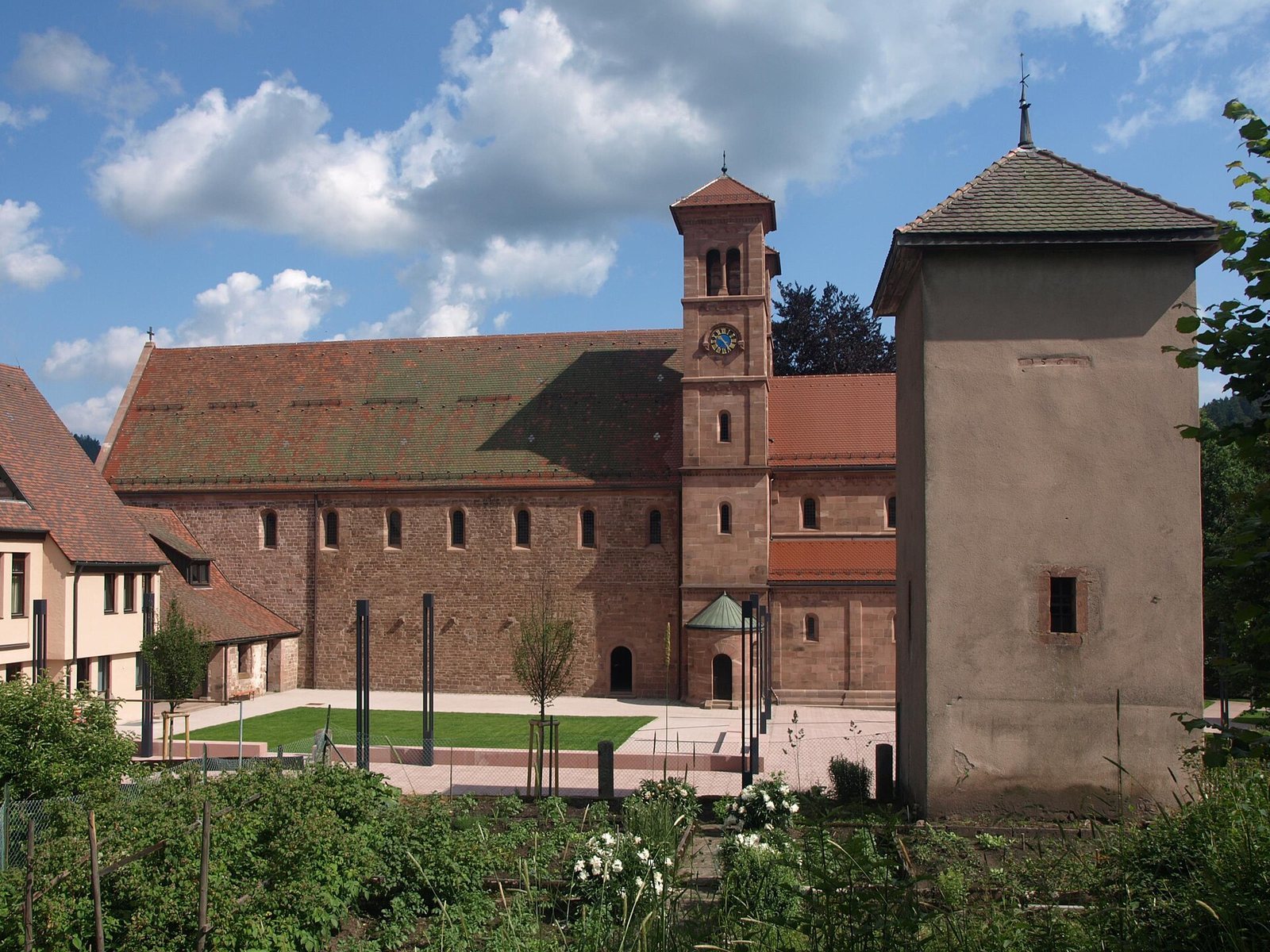
In the nineteenth century the former priory was recognized as a historic monument and renovated according to the standards of the time. The church was restored from 1965 to 1968 to reflect its original Romanesque monastic form, and parts of the former monastery buildings were restored during the nineteenth and twentieth centuries. The church now serves the local Lutheran congregation as its parish church, while the former monastery buildings are associated with the Evangelical congregation.
Remains
Priory church
Eleventh-century structure
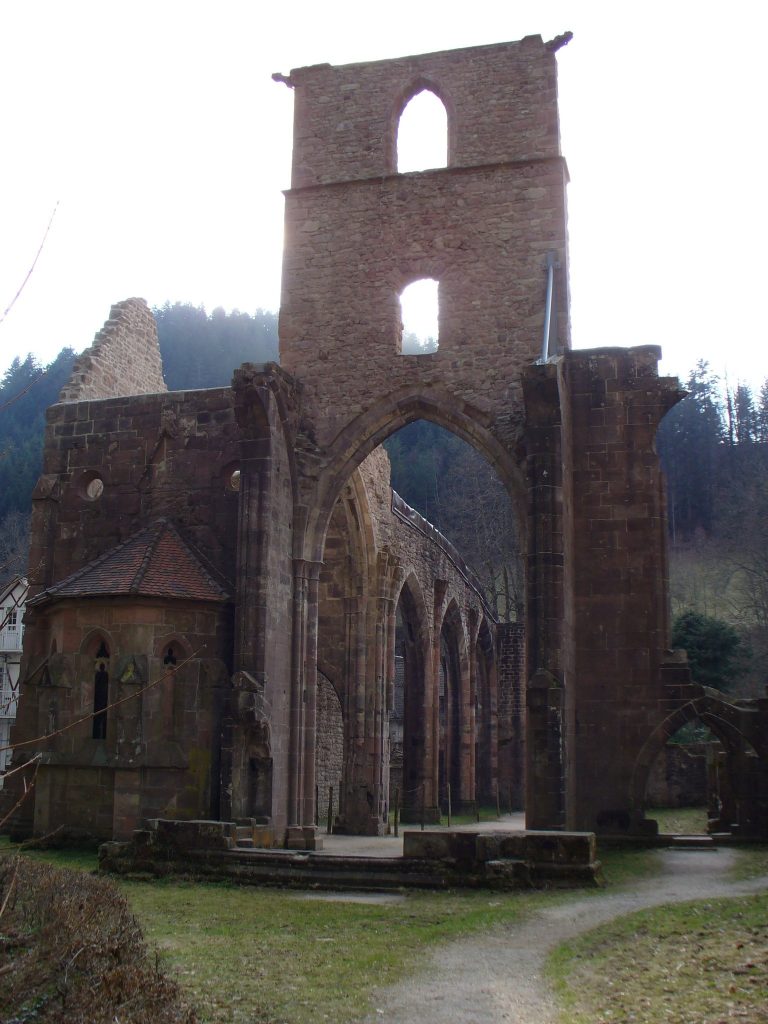
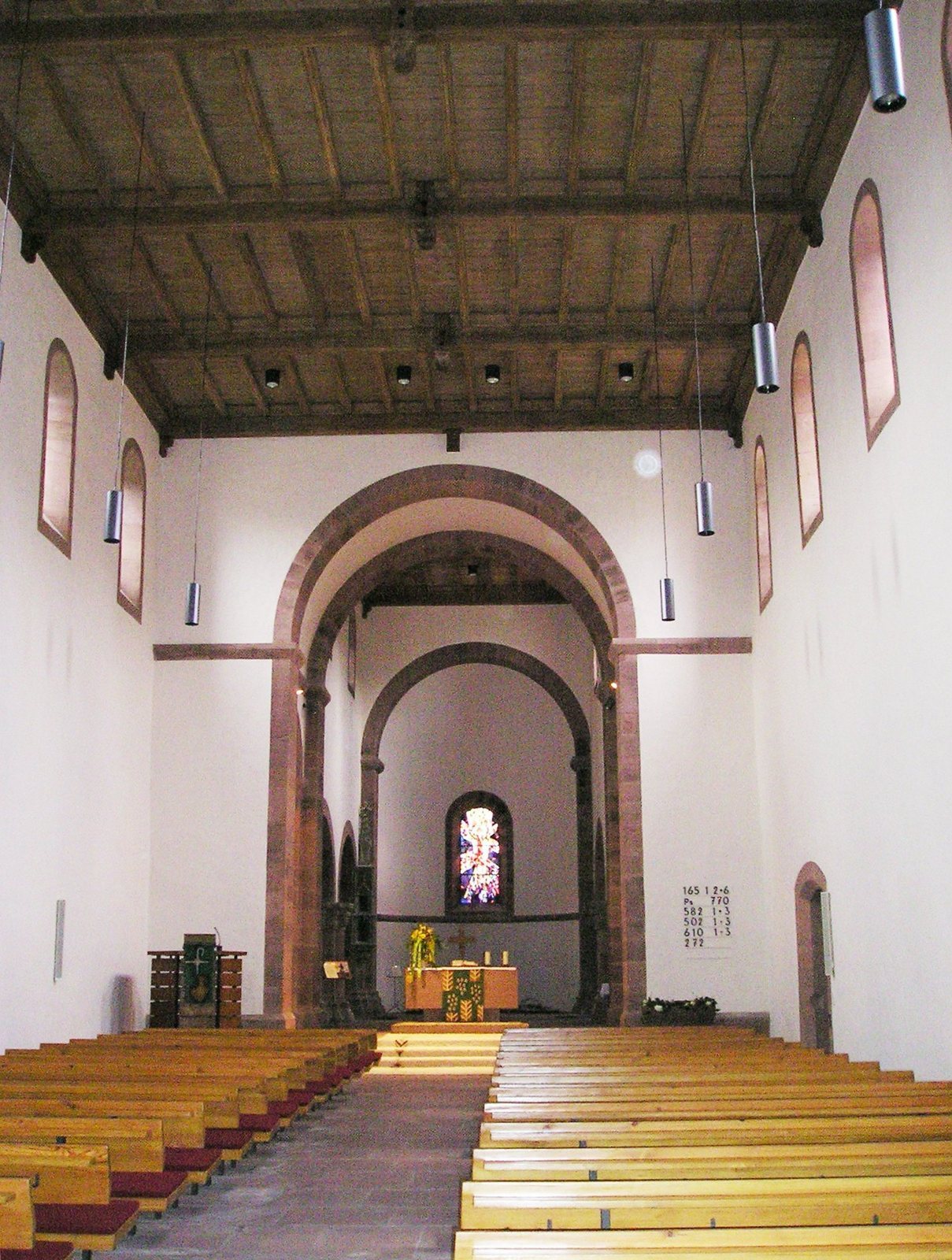
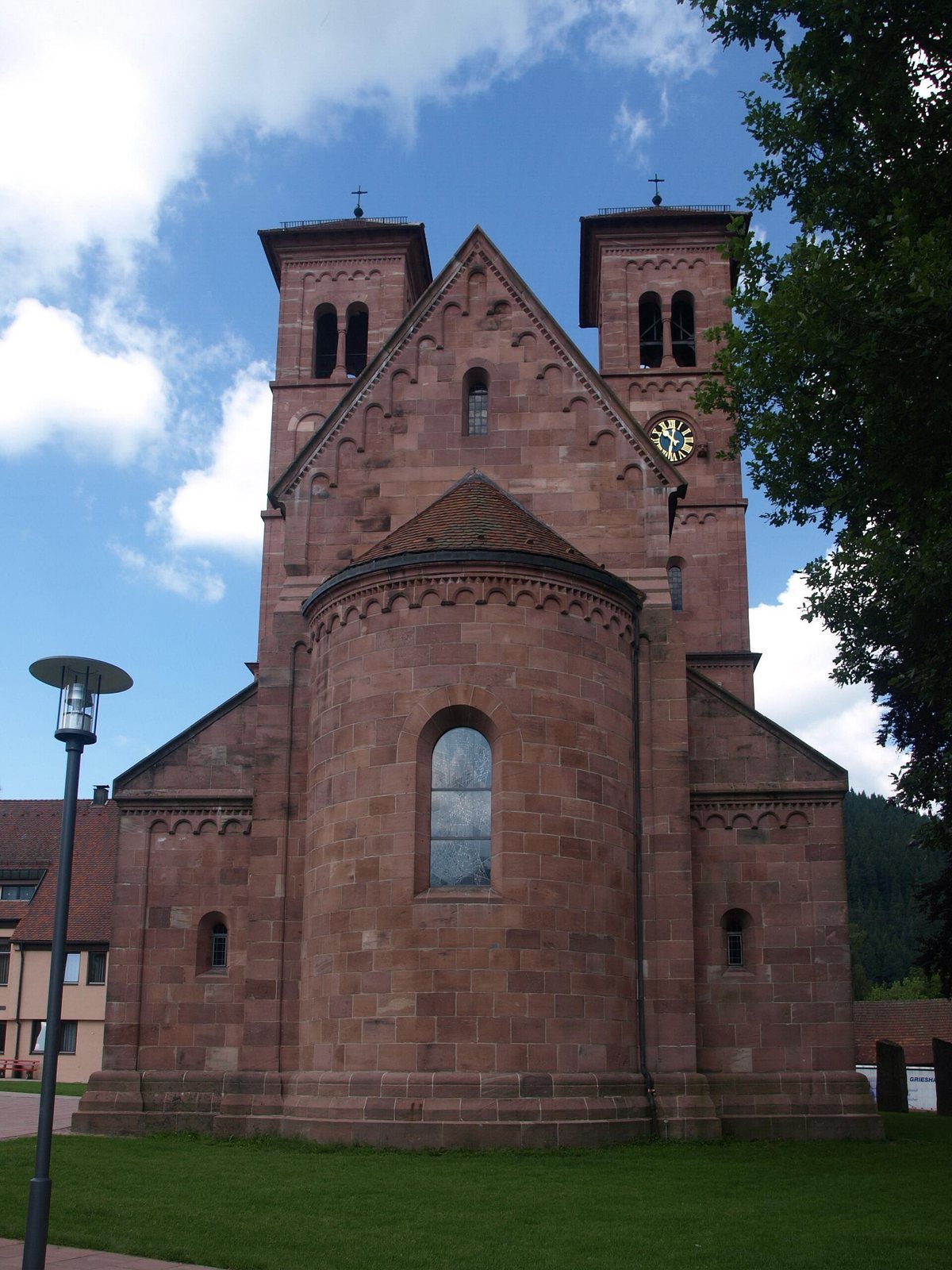
The surviving church preserves the original building, which was modeled on St Aurelius at Hirsau and has a strongly similar plan. Its earliest fabric includes a single-nave layout, with a nave forming the main body of the church, beneath a flat ceiling. The porch walls and the lower levels of the eastern towers also date to the eleventh century.
Later medieval changes
Toward the end of the twelfth century, the earlier choir was enlarged into a three-aisled basilican arrangement, with a central space flanked by side aisles, and a new apse, a projecting end of the church. The eastern towers were retained and given passageways. Around 1230 to 1240, builders added cross vaults, ceilings formed by intersecting barrel-shaped sections, and redesigned the porch after the model of Maulbronn.
Surviving Romanesque details
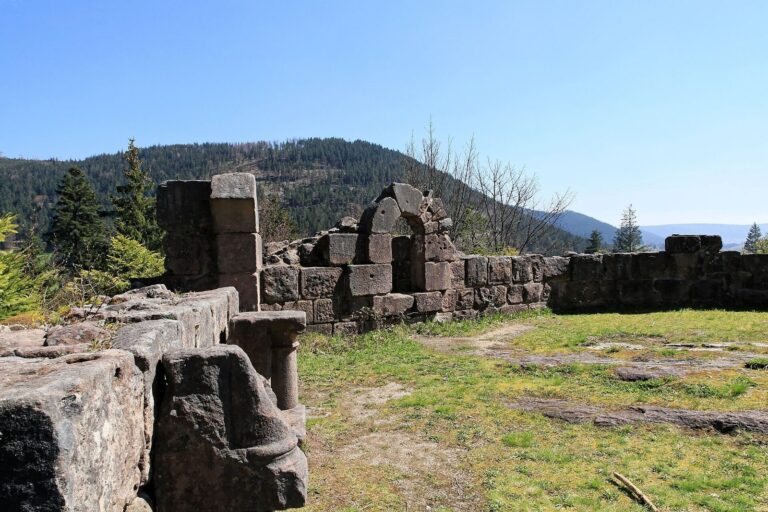
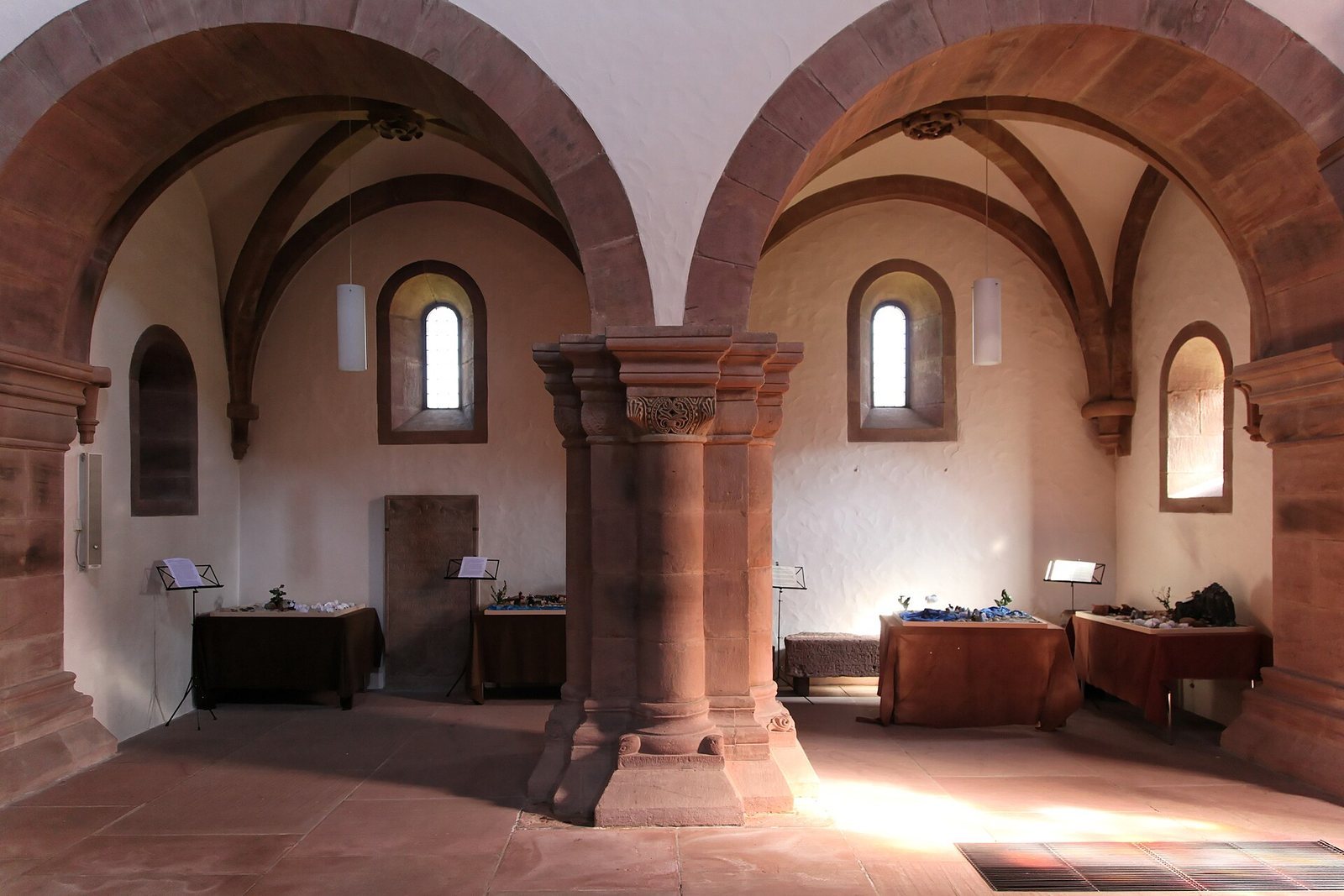
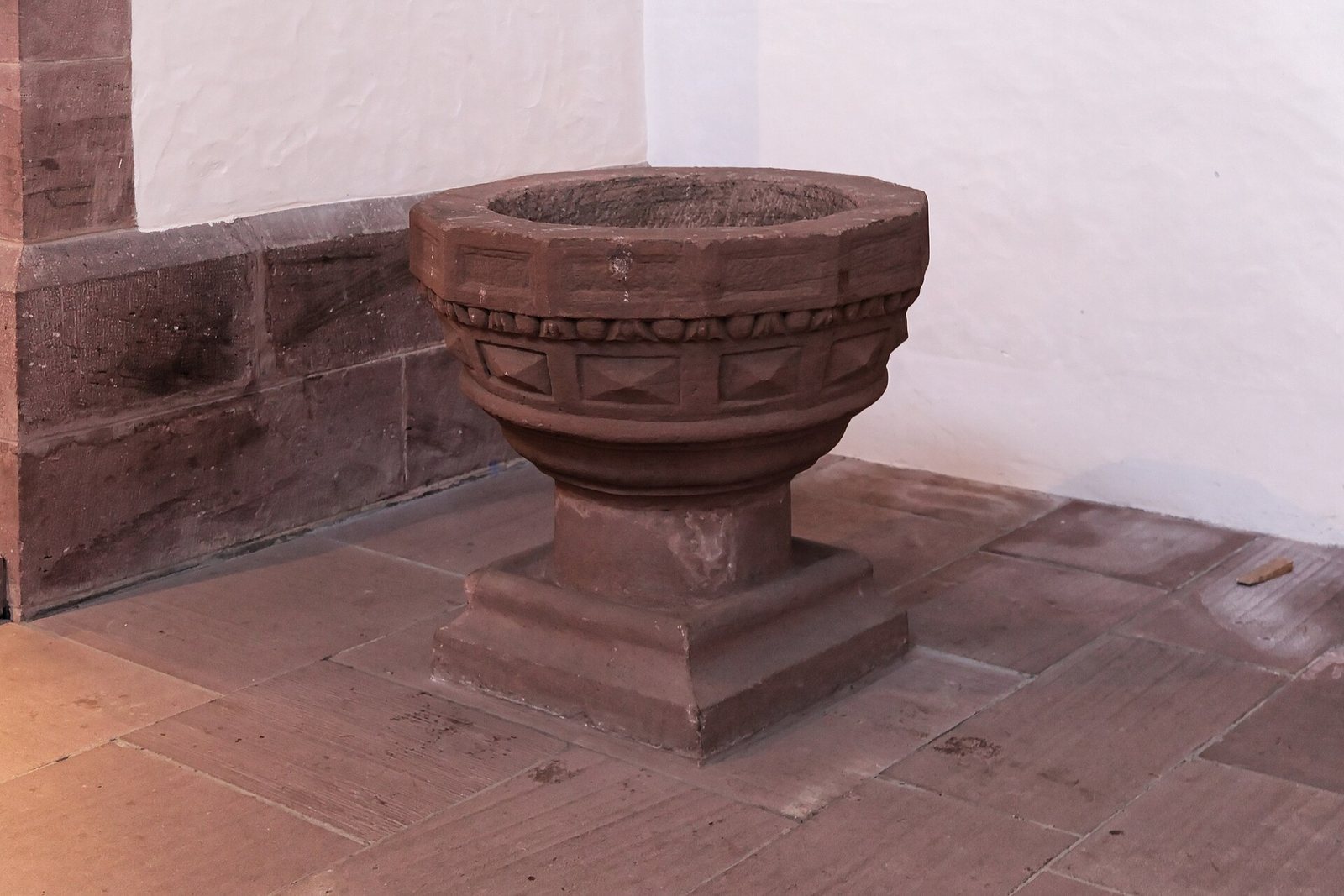
Romanesque features include a column and rounded arches in the choir, as well as a Romanesque baptismal font. In the south choir, a pier base, the lower part of a substantial support, has projecting ornaments at its corners. One of the church towers was once used by the municipality as a drunk tank.
Other monastery buildings
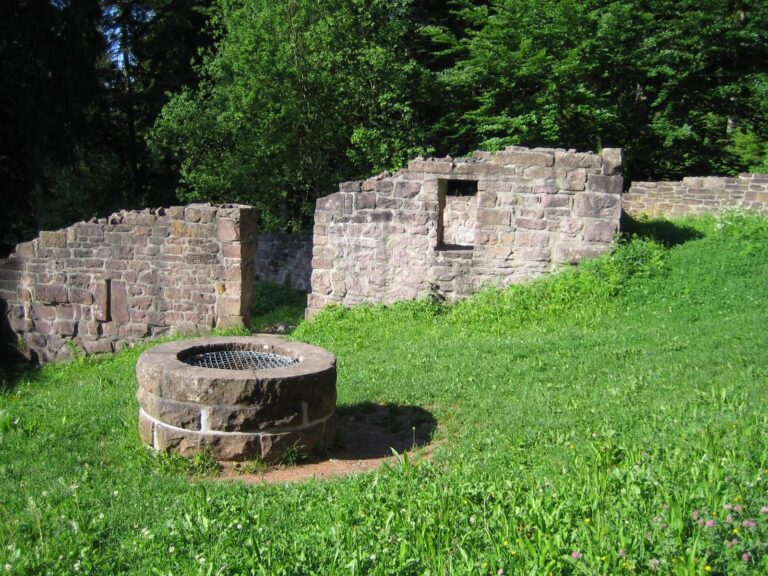
Buildings beside the church included a monastic wing, an infirmary, a novice house, a mill, a livestock farm, and a guesthouse. A former granary was first used as a hospital and later as a grain store. In 1991 it became a kindergarten named for Beate Paulus, daughter of Philipp Matthäus Hahn and wife of a pastor at Klosterreichenbach from 1800 to 1810.