Tannenfels Castle: A Medieval Tower Castle in Germany
Site at a Glance
- Popularity
- Medium
- Country
- Germany
- Primary era
- Medieval
- Eras represented
- Medieval
- Civilizations
- Holy Roman Empire
- Site type
- Military
- Remains
- Castle
On this page8 sections
History
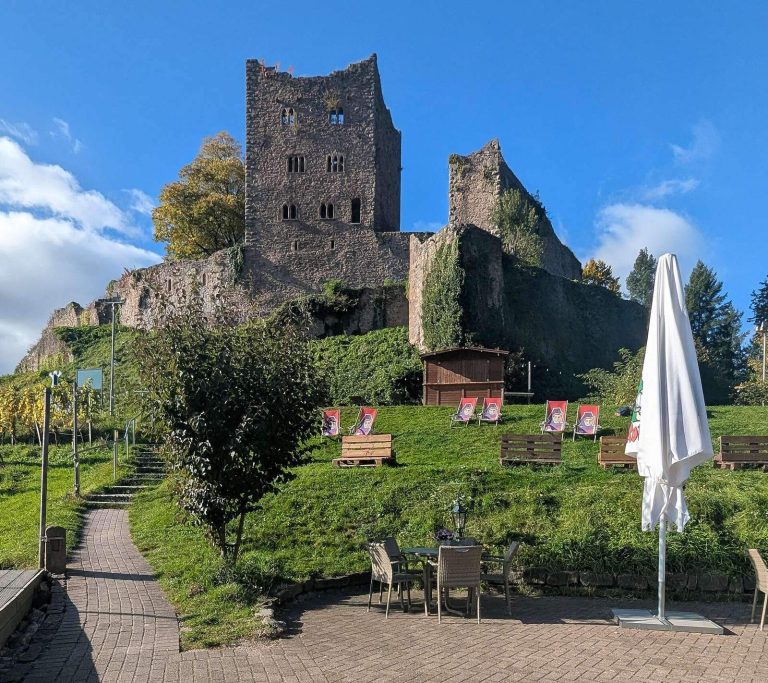
Tannenfels Castle is a ruined medieval rock castle at Obertal, within Baiersbronn, Germany. Its tower-castle phase was built in the first half of the 13th century. A castle had occupied the rock around 1100, before the later construction replaced it.
Early occupation and the tower castle
Archaeological evidence indicates that the earlier castle stood on the site in the 11th or early 12th century. A new tower castle was built in the first half of the 13th century, clearing away the earlier structure. The castle remained in use for a relatively short time.
Destruction and later traditions
A fire destroyed the castle in the first half of the 14th century. Armed conflict may have been involved. An 18th-century note attributed its destruction to a campaign of 1371–1373 involving Eberhard the Greiner, a 14th-century Count of Württemberg, the Bishopric of Strasbourg, and the city of Strasbourg. Evidence places the destruction before that campaign.
No noble family is known to have been associated with the castle. The Tannenfels family sometimes connected to it belonged to the Allgäu, where it held property including Aigeltshofen and Rohrdorf near Isny. Its namesake castle stood opposite Burg Eglofs and was unrelated to the Murgtal site. A legend says an underground passage began at an entrance once visible in the tower, now supposedly buried. In a 1624 Württemberg land book, Johannes Öttinger proposed that the castle had been a robber’s stronghold because it stood in inaccessible wilderness. Both stories resemble familiar castle legends.
Archaeological excavations
As the ruins deteriorated, the Karlsruhe branch of the State Office for Monument Preservation excavated the site for eleven weeks during 1977 and 1978. The work examined the castle’s construction and occupation, recorded the remains, and prepared for repair work. Its findings were later published in a series on medieval archaeology in Baden-Württemberg.
Remains
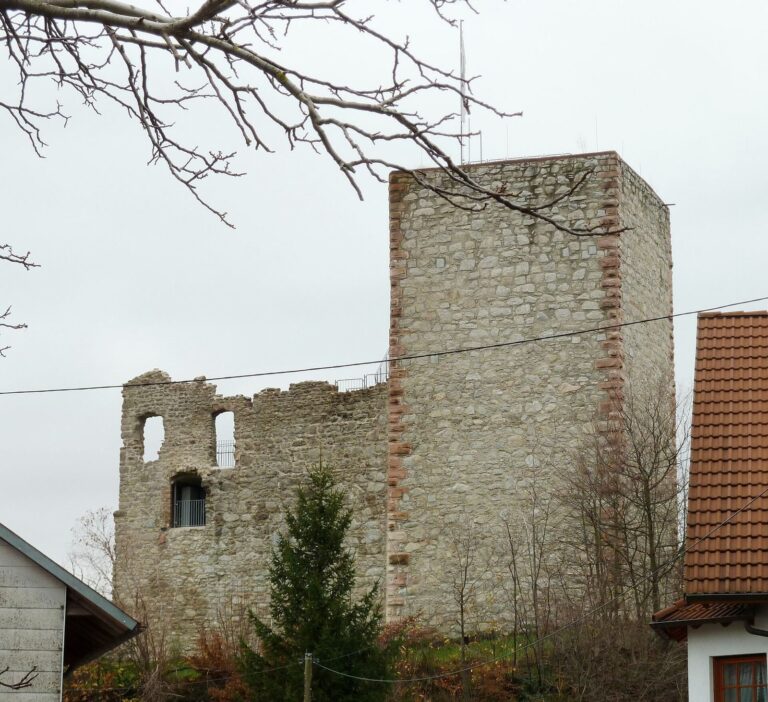
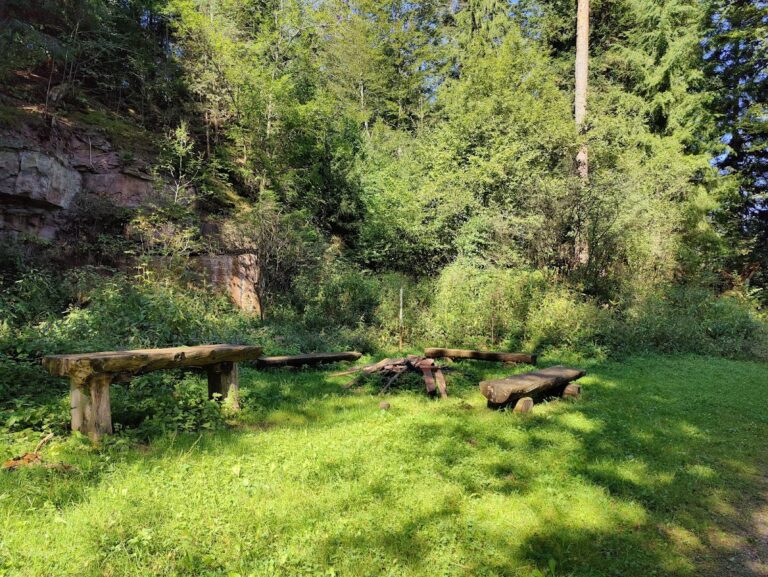
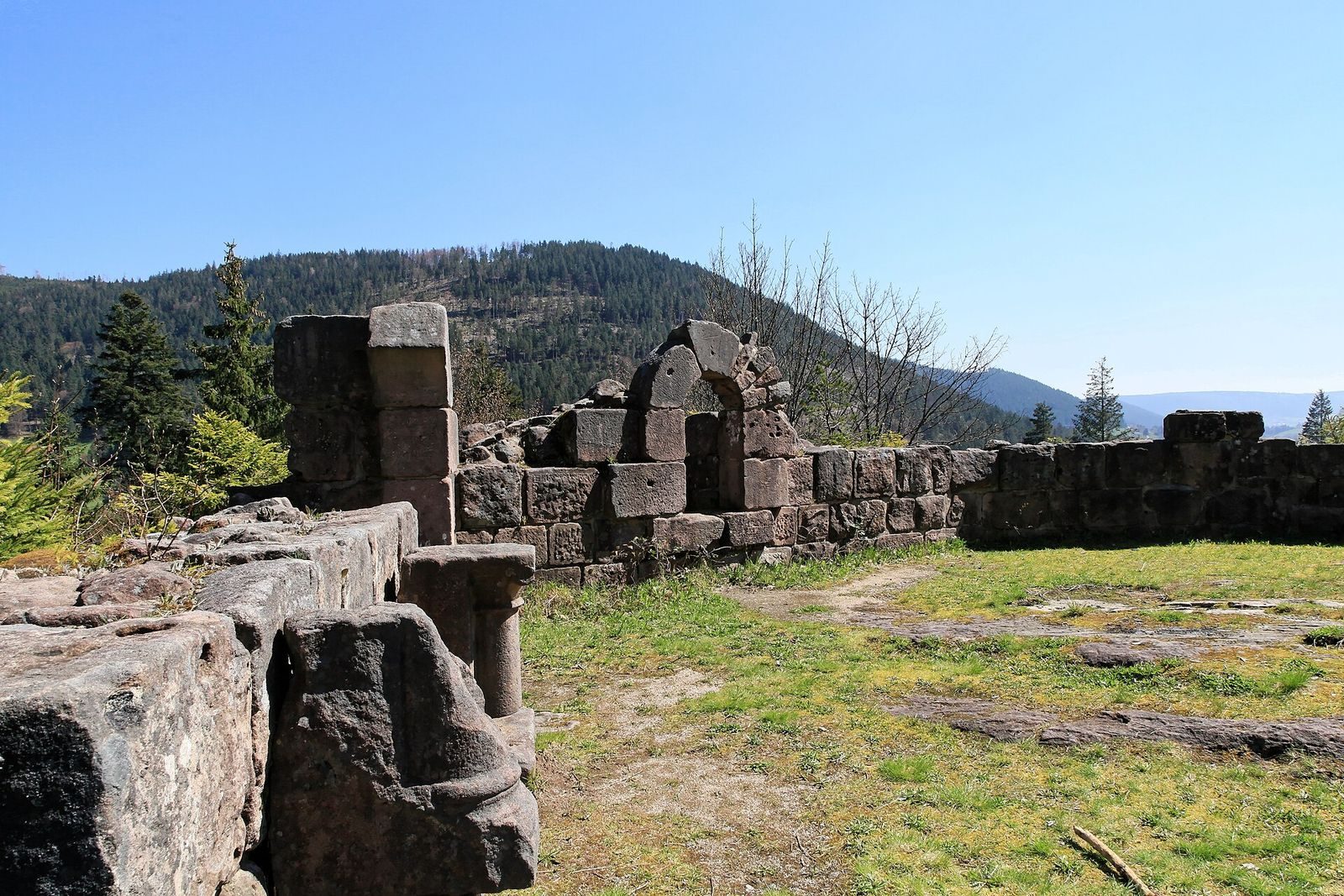
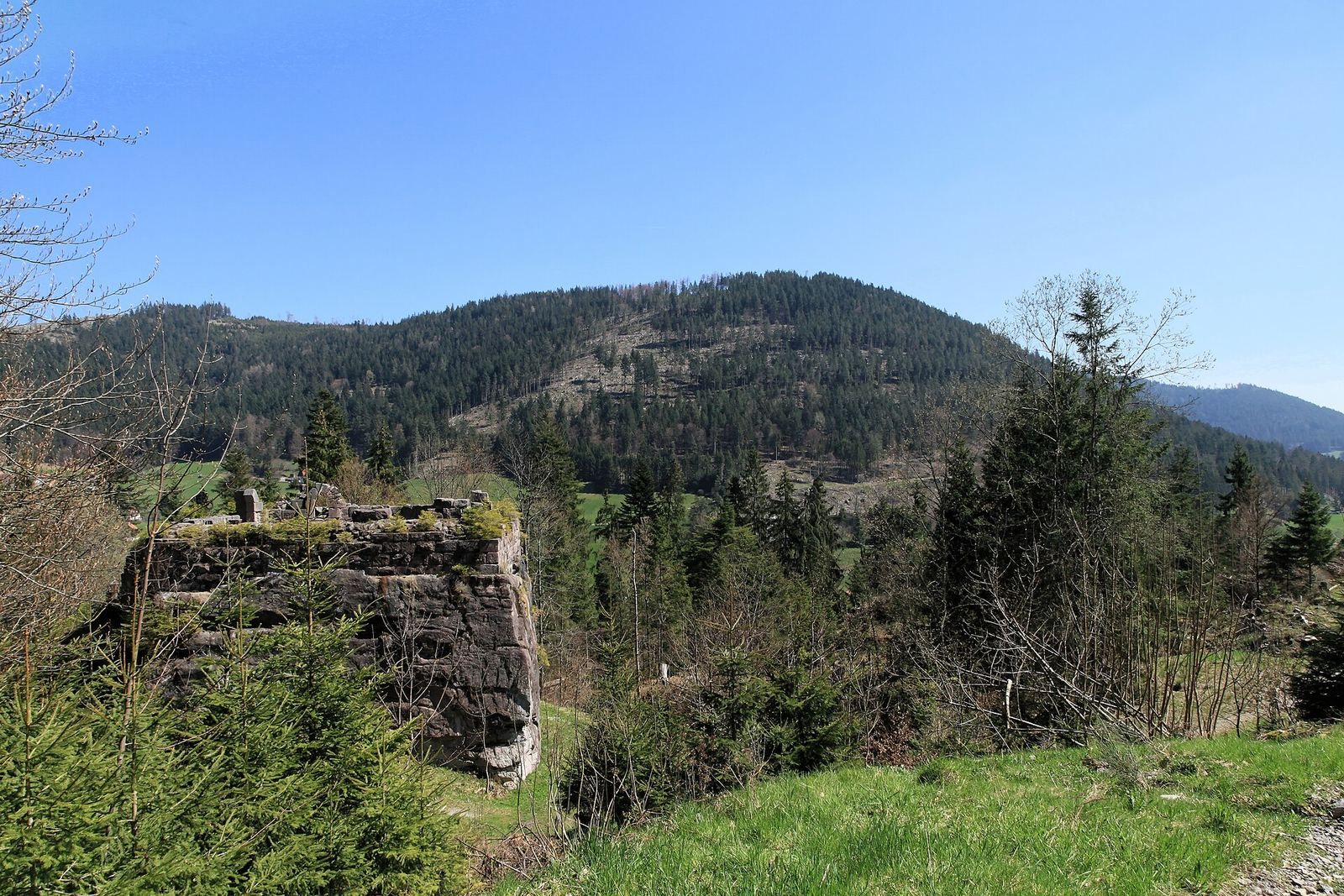
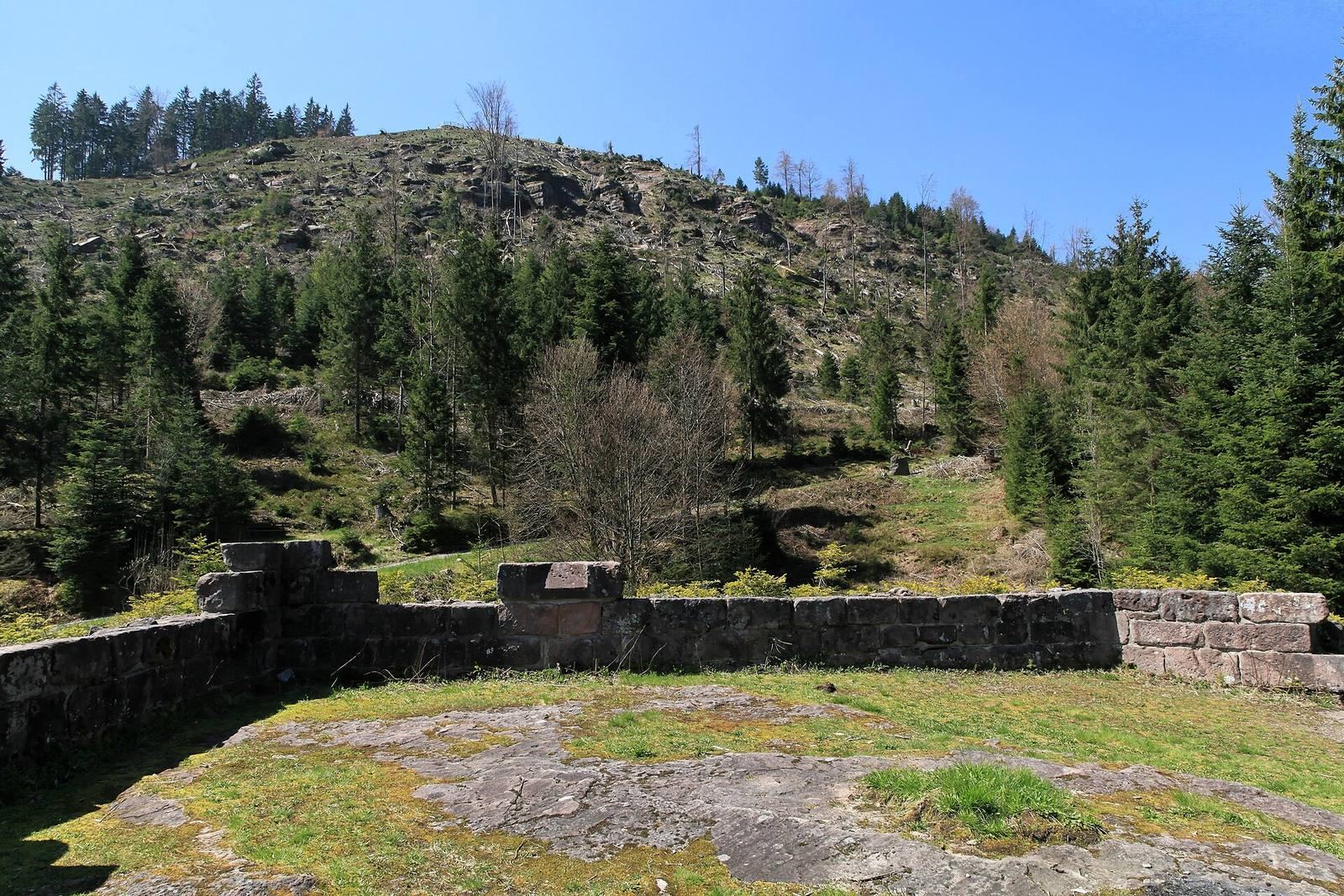
The ruined castle was arranged around a tower with an irregular plan, set on a sandstone outcrop. Its position and natural defenses shaped the layout: the rock drops steeply on every side, while ditches and a small natural valley also helped protect the site.
Rock setting and approach
The outcrop lies on the right side of the Murgtal, between the Rechtmurg and Ilgenbach, at 645 metres above sea level. It is made of Bunter sandstone, a Triassic sandstone formation found in Central Europe. The steep rock faces descend by about 10–12 metres. A smaller nearby rock may have been crossed by wooden stairs leading to the castle entrance.
Tower and construction
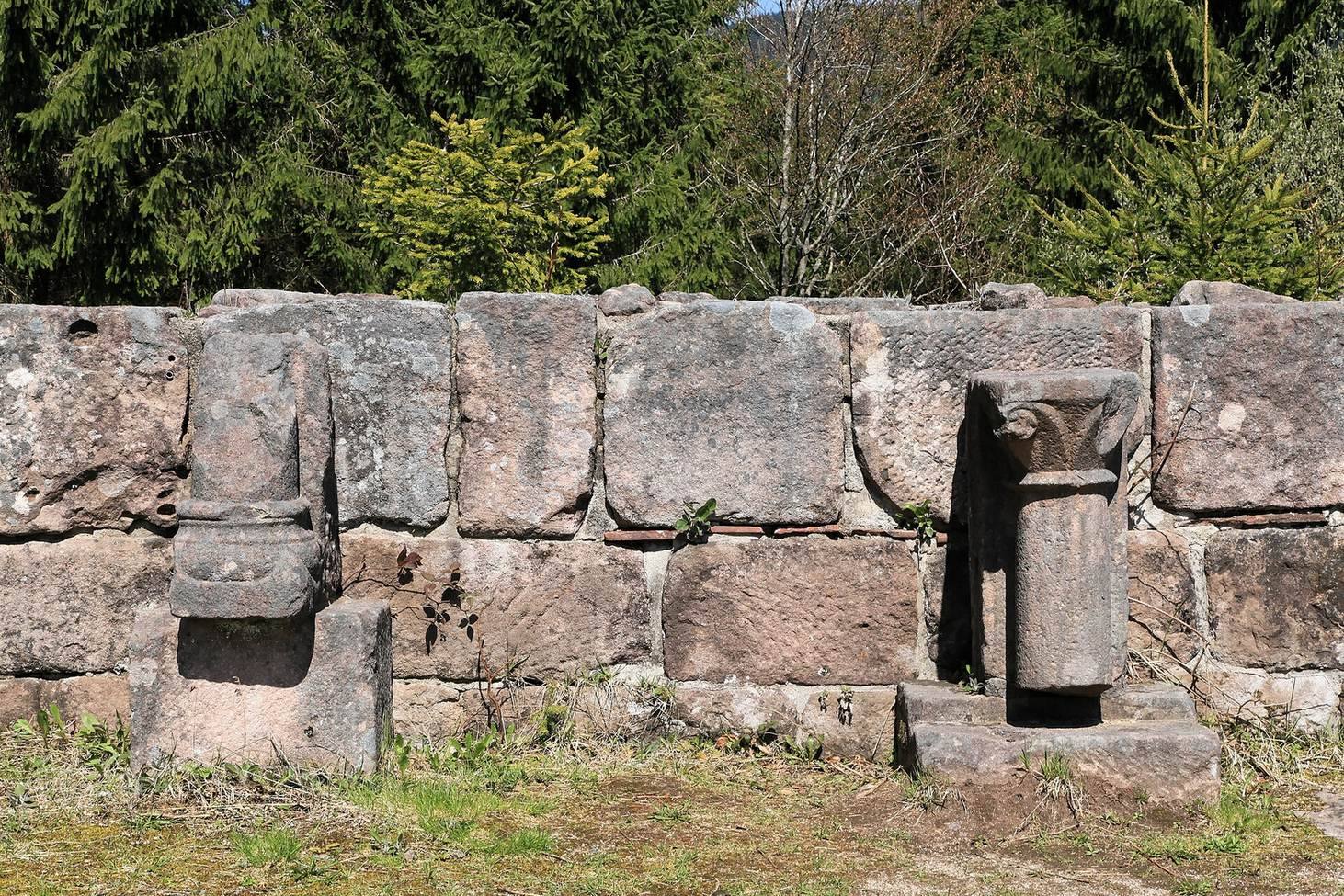
The tower rose three or four storeys, and its highest level may have been built of timber. Its dressed stone blocks had rough, projecting faces and notches on each side. The notches suggest that builders raised the blocks with a crane-like hoist; lime mortar held them together. The roof was probably either sloped on all sides or formed by a single sloping surface.
Excavated features and finds
Excavations uncovered an older ditch and ceramic finds. Three arrowheads came from a burnt layer and may be connected with the fire that destroyed the castle.